#chainflipvaultthefthaltsprotocol
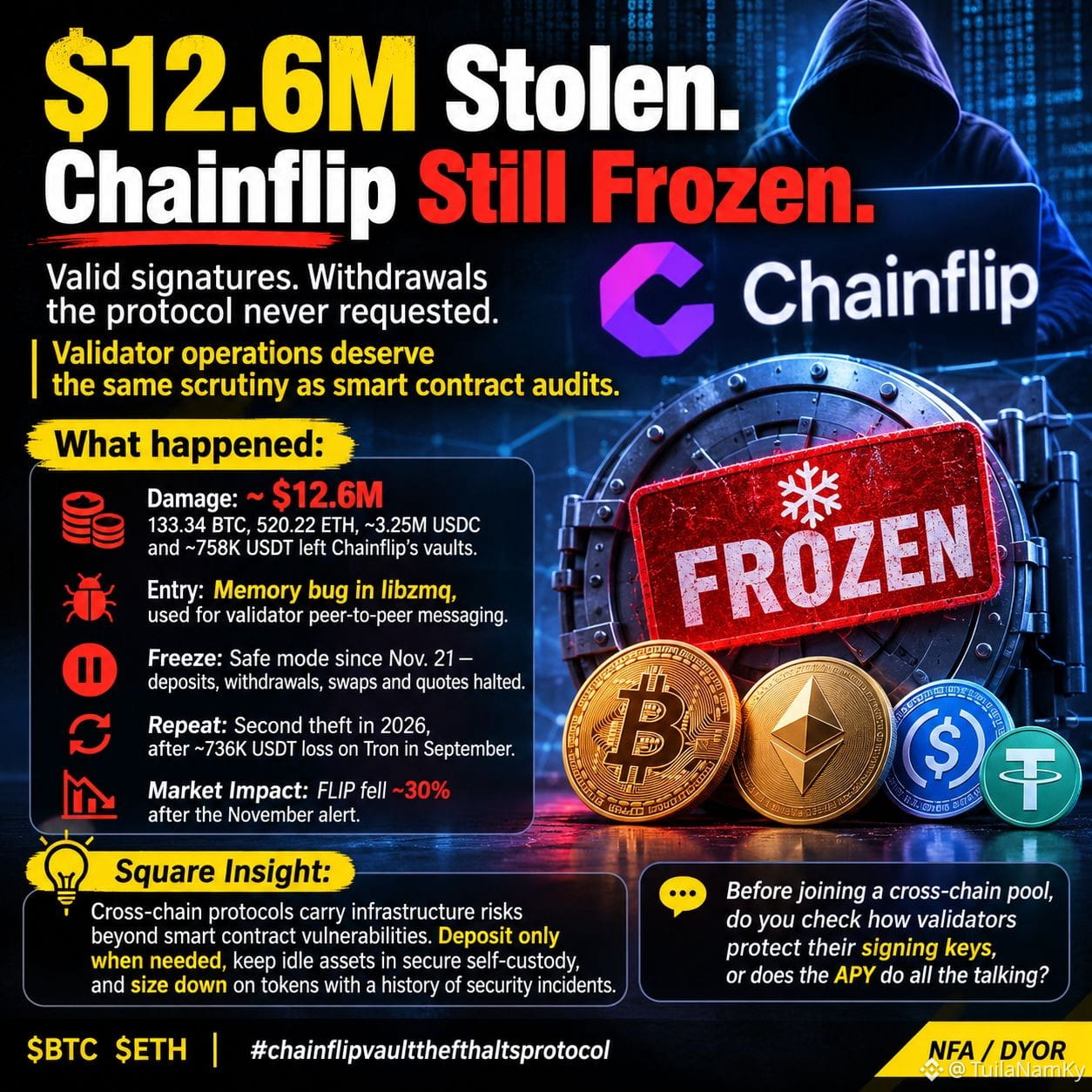
$12.6M Stolen. Chainflip Still Frozen.
Valid signatures. Withdrawals the protocol never requested. Validator operations deserve the same scrutiny as smart contract audits.
📊 What happened:
Damage: On Nov. 21, 133.34 BTC, 520.22 ETH, ~3.25M USDC and ~758K USDT left Chainflip's vaults. Estimated losses reached ~$12.6M, according to its incident report. The initial $4.86M headline covered only Ethereum, while 122.86 BTC was the first reported Bitcoin loss.
Entry: Chainflip traced the attack to a memory bug in libzmq, used for validator peer-to-peer messaging. The attacker executed code inside validator processes, copied enough key shares and signed transactions off-network. Chainflip said its vault contracts, threshold-signature system and State Chain logic were not responsible.
Freeze: Safe mode halted deposits, withdrawals, swaps and quotes, leaving LPs unable to withdraw. As of Nov. 27, the protocol remained paused. A recovery fund is planned for affected users and LPs, but a plan isn't a payout.
Repeat: This was Chainflip's second theft in 2026, following the loss of ~736K USDT from its Tron vault in September. FLIP fell roughly 30% after the November alert, adding market-confidence concerns to the security damage.
🧠 Square Insight:
Cross-chain protocols carry infrastructure risks beyond smart contract vulnerabilities. Deposit only when needed, keep idle assets in secure self-custody, and size down on tokens with a history of security incidents.
💬 Before joining a cross-chain pool, do you check how validators protect their signing keys, or does the APY do all the talking?
$BTC
$ETH
NFA / DYOR