


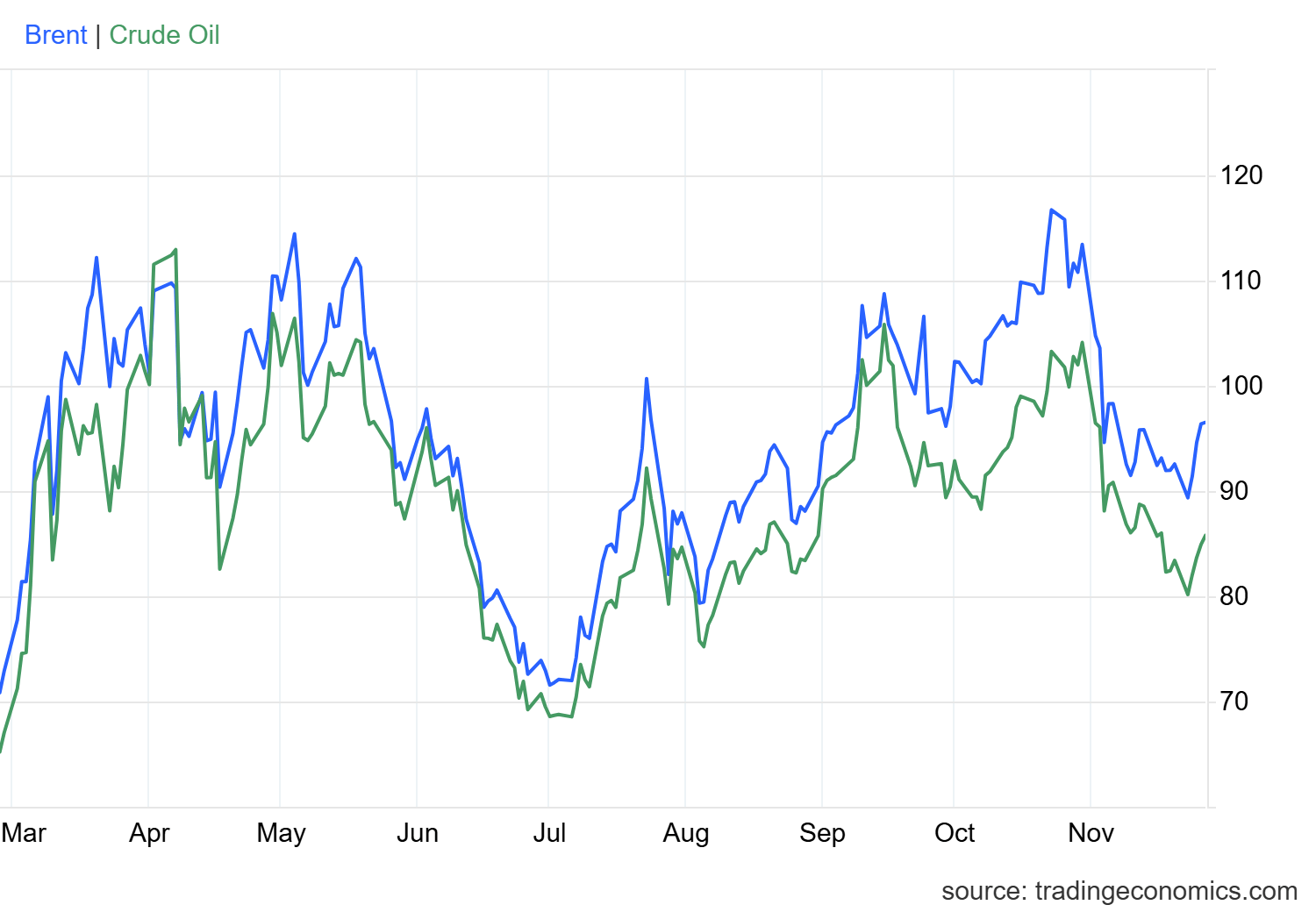
Oil climbed through a quiet Thanksgiving session after an attack on a Saudi refinery raised doubts about the recovery in Gulf crude exports. Brent settled Thursday at $96.57 a barrel, a third straight gain and almost 6% over the last two sessions. WTI, near $85, has added 5.82% across the same time frame.
A Refinery Fire on the Red Sea
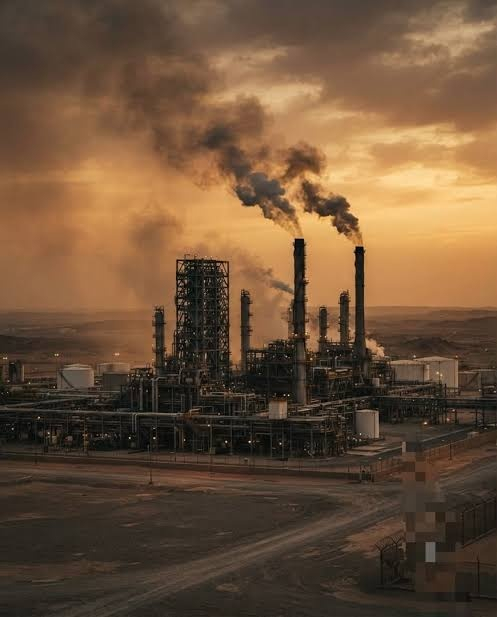
Jazan was the target, a 400,000-barrel-a-day refinery on Saudi Arabia's Red Sea coast. The state-run Saudi Press Agency led with a short report that some operations had halted, citing an unnamed Energy Ministry source. The ministry's own statement arrived later. A projectile had started a fire, crews brought it under control, and one worker, a Nepali national, had lost his life. Several others were hurt. Emergency and technical teams went in to size up the damage and check that the site was safe.
The ministry didn't name an attacker. The Saudi-led military coalition did, pointing to Yemen's Houthi forces, the Tehran-backed group, and said it had destroyed a ballistic missile launch platform at Hodeida that was used in the strike.
Elsewhere in the Gulf, two Italian civilians working for German defense company Rheinmetall lost their lives in a drone attack on Kuwait on Thursday, according to Italy's Ansa news agency. Kuwaiti and Italian officials blame Iran. Tehran denies it. Kuwait's defense ministry said the two died of wounds from shrapnel after drones were intercepted.
Wednesday wasn't any calmer. The Houthis claimed attacks on Ras Tanura and on the Red Sea ports of Jeddah and Jazan. Early in the day, Saudi forces said they'd intercepted four drones fired at Ras Tanura, on the Persian Gulf coast, where the kingdom runs a major refinery and crude-export facilities. Debris came down in the area, the anti-Houthi coalition said.
Ras Tanura is no minor asset. Its refinery is the largest in Saudi Arabia, with a capacity of 550,000 barrels a day. An attack damaged it in October, and the consultancy Energy Aspects says the main crude-producing unit stayed offline for at least a month.
Riyadh has lived with near-daily Houthi attacks since early October, and dozens of people have been killed. The latest hit a tower in the financial district and injured 11, the Saudi civil defense agency said. Its post on X carried a photo showing damage across several floors of the skyscraper that houses the headquarters of the Public Investment Fund. The agency didn't say when the picture was taken or whether that tower was the one struck. A strike on the same district on Nov. 19 had already damaged several floors of a tower, with no injuries reported.
Semafor reported Tuesday, citing people it didn't identify, that Riyadh is now asking allies, including the U.S., U.K. and France, for more missile interceptors. Saudi Arabia has been pressing Washington for help with its defenses as Houthi missile and drone attacks intensify, CNN reported, and Riyadh's airport alone was hit several times in October, killing more than a dozen people.
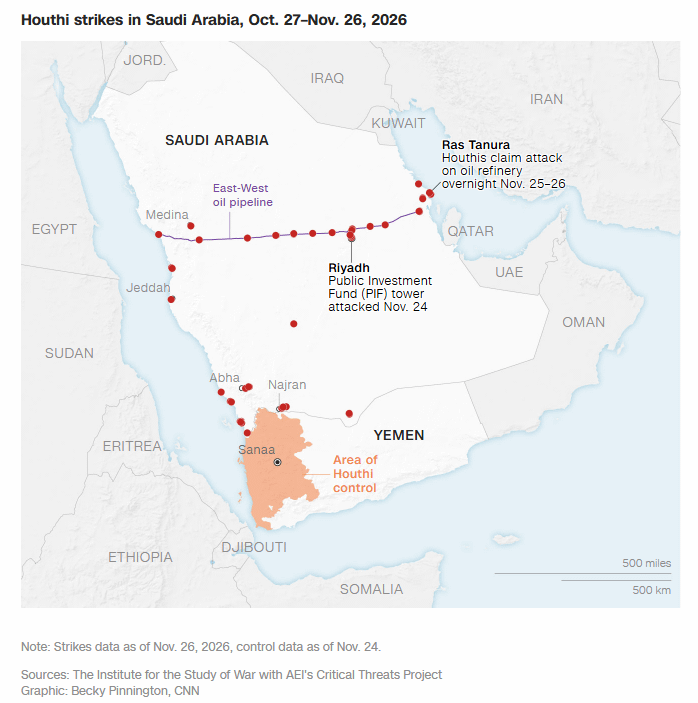
Crown Prince Mohammed bin Salman is now planning his first trip to the United States since the Iran war began, a source familiar with the plans told CNN, and is expected at the G20 summit in Miami in December, though Saudi officials haven't publicly confirmed it. A visit would set up his first in-person meeting with President Donald Trump since the war broke out. The fighting itself reignited in July, after years of relative calm under a 2022 U.N.-brokered ceasefire, and it sharpened in recent months once the Houthis advanced toward the Bab el-Mandeb Strait in September, a move CNN says threatens a new front in the Iran war.
Riyadh Answers in Yemen
Saudi-led forces meanwhile have stepped up attacks across Houthi-controlled areas of Yemen. On Thursday, the coalition said it carried out a “precision military operation” against Houthi capabilities, destroying 50 targets it described as legitimate military targets across Sanaa, Hodeidah and Saada governorates. A day earlier, the coalition said it attacked “operational capabilities” at the Houthi-controlled Hodeidah port and destroyed targets in Saada and Amran governorates.
The Houthi-controlled armed forces, meanwhile, said Saudi warplanes and missiles carried out 109 strikes over the previous 24 hours across Yemen, including in Sanaa and Hodeidah. The Houthi-controlled health ministry in Sanaa said Thursday that at least 19 civilians had been un-alived and 25 others wounded in Saudi strikes over the previous 48 hours across several parts of Yemen.
ACLED, which monitors conflicts worldwide, counts about 750 Saudi strikes on Houthi infrastructure since early October. The tally covers ports, airports, telecommunications facilities, and fuel and energy sites. Pro-Saudi forces inside Yemen have also pushed harder lately, after the Houthis made gains in their drive to extend control near Bab el-Mandeb, the vital shipping waterway at the southern end of the Red Sea.
A Strait Full of Claims
Then there's Hormuz. Iran's Revolutionary Guards said Thursday that two tankers hit sea mines north of Oman's Khasab while trying to cross by an unauthorized route. Nothing independent has confirmed it.
The British maritime monitor UKMTO has logged incidents of its own. One came from the master of a tanker about 50 nautical miles west of Dubai, who reported an explosion caused by an unknown projectile close to the ship. No damage. No environmental impact. The crew is safe and accounted for.
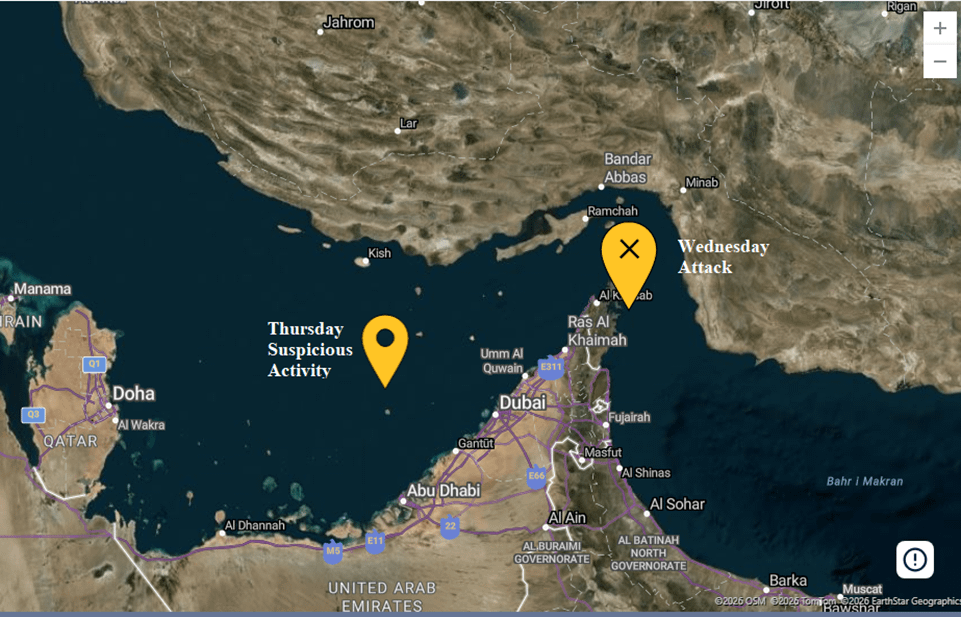
A second report, relayed from local authorities, described an outbound tanker struck by an unknown projectile about 18 nautical miles east of Khasab as it transited the strait. Crew accounted for again, and no environmental impact has been reported. Authorities are investigating, and UKMTO has advised vessels to transit with caution and report anything suspicious.
Oil Keeps Flowing
Here's the oddity. Attacks have multiplied, yet more ships are getting through Hormuz this month, according to data from Vortexa. Those steady flows have held prices in check, and the International Energy Agency is forecasting a surplus this quarter.
The Saudis and other state producers around the Gulf have been sending more crude through the strait since late September, and volumes last month came close to pre-war levels. Refined products haven't kept pace. Fuels tend to ship on smaller vessels, while the state companies prefer larger tankers for voyages out of the Gulf, given the higher shipping and insurance costs.
OPEC+ Meets With a Quota Fight Brewing
Two delegates say OPEC+ is weighing a rollover of current output quotas into January 2027 before the group's online meeting on Sunday, Nov. 29. The war, disrupted Persian Gulf exports, and internal disagreements are all complicating decisions on future output.
The 2027 quota framework is still unsettled after disputes over capacity assessments. Iraq is challenging a preliminary rating of 4.9 million barrels a day and wants roughly 6 million. Kazakhstan is pressing for a higher estimate, too. Old tension hasn't faded either: the United Arab Emirates left in May, and war-related disruptions have opened gaps between what members actually produce and what their quotas allow.
Nearly Nine Months In, Still No Exit
Brent tumbled earlier this month as crude shipments from the Persian Gulf revived. President Donald Trump has also held off on renewed military action against Iran since the Democrats swept the midterm elections, which took some heat out of the market.
Diplomats are trying to end a war that is close to nine months old, and the gap between the sides remains wide. Tehran wants the U.S. naval blockade of its ports lifted, sanctions eased and frozen assets released. Washington is demanding concessions on Iran's nuclear program. Both lists are still on the table. The attacks on Saudi soil haven't paused to wait for either.