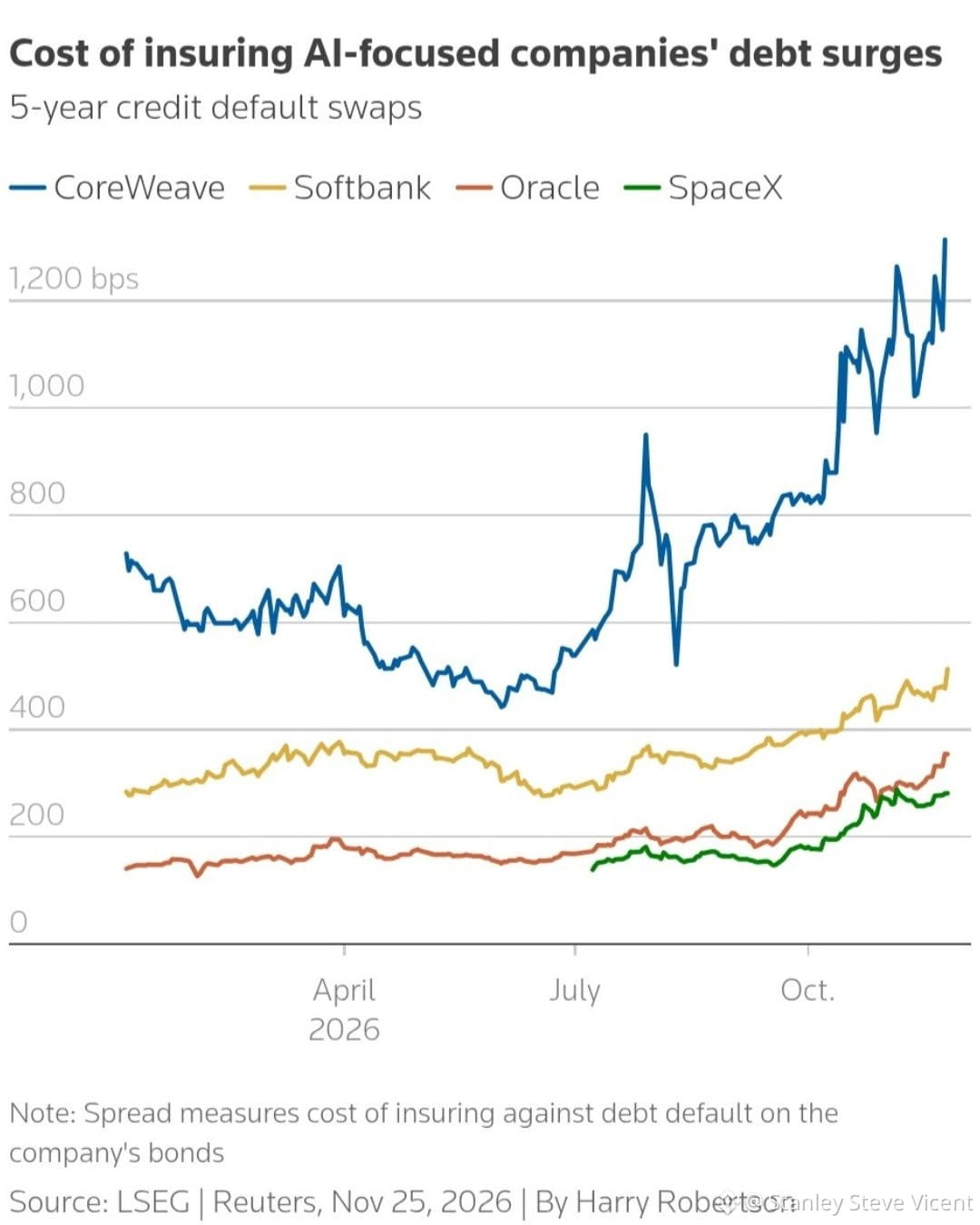
Jensen Huang won't be able to save AI stocks from the next crash. Just two days after he returned as Nvidia CEO, the cost of insuring AI companies' debt hit new highs: - CoreWeave: 1,314 bps, more than double in 6 months - Nvidia: 147 bps, nearly 4 times since January - Oracle: 356 bps, double in 6 months - SoftBank: 534.6 bps, 2.6 times in 12 months Even Alphabet and SpaceX are at their highest levels ever. In January, insuring $10 million of Nvidia's debt cost about $39,000 a year. Today, it costs about $147,000. And this is happening at a time when the AI industry needs more borrowed money than ever. Goldman Sachs expects nearly $1 TRILLION in AI-related debt financing in 2027 alone. But as these companies take on more debt, investors are becoming increasingly worried about whether they will be able to pay it back. As the risk of default rises, so does the demand for protection. Weekly trading in AI-linked credit default swaps jumped from under $2 billion in July to over $9 billion in September, 4.5 times in just two months, per Morgan Stanley. But investors aren't only using it to protect against bad debt. They're also using it as a hedge against a stock crash, because it's cheaper than buying put options on volatile AI stocks. Until now, the worries were about revenue, profits and debt. After Jensen Huang's sudden exit and return, S&P Global Ratings has put Nvidia's AA credit rating on watch for a possible downgrade, citing concerns about board independence and governance. A downgrade would put pressure on the entire AI trade. Nvidia has signed up for about $670 billion in commitments and guarantees. This means it is no longer just selling chips but also helping finance the companies that buy them. That includes OpenAI, Anthropic, Coreweave, neoclouds and several other companies. If its credit rating deteriorates, raising money could become more expensive for AI projects relying on its financial backing. This could put the whole AI bet in trouble.
#Write2Earn #Megadrop #Write2Earn! #nft #news