

I don't know about you, but crypto is getting exhausting sometimes.
Every day there's a new project, a new narrative, a new coin that people suddenly believe is going to change everything. A few months ago everyone was obsessed with AI. Before that, it was DeFi, NFTs, gaming and a hundred other things I probably don't even remember anymore.
The cycle just keeps repeating.
People get excited, influencers start posting threads, projects make big promises, and everyone suddenly becomes an expert. Then the market changes direction and most of those conversations disappear.
I've been around long enough to stop getting excited about every new announcement.
At this point, I don't really care how many partnerships a project announces or how impressive its technology sounds. I want to know something much simpler: are people actually using it? Does it solve a problem that exists outside crypto Twitter?
That's what made me look a little closer at Celo.
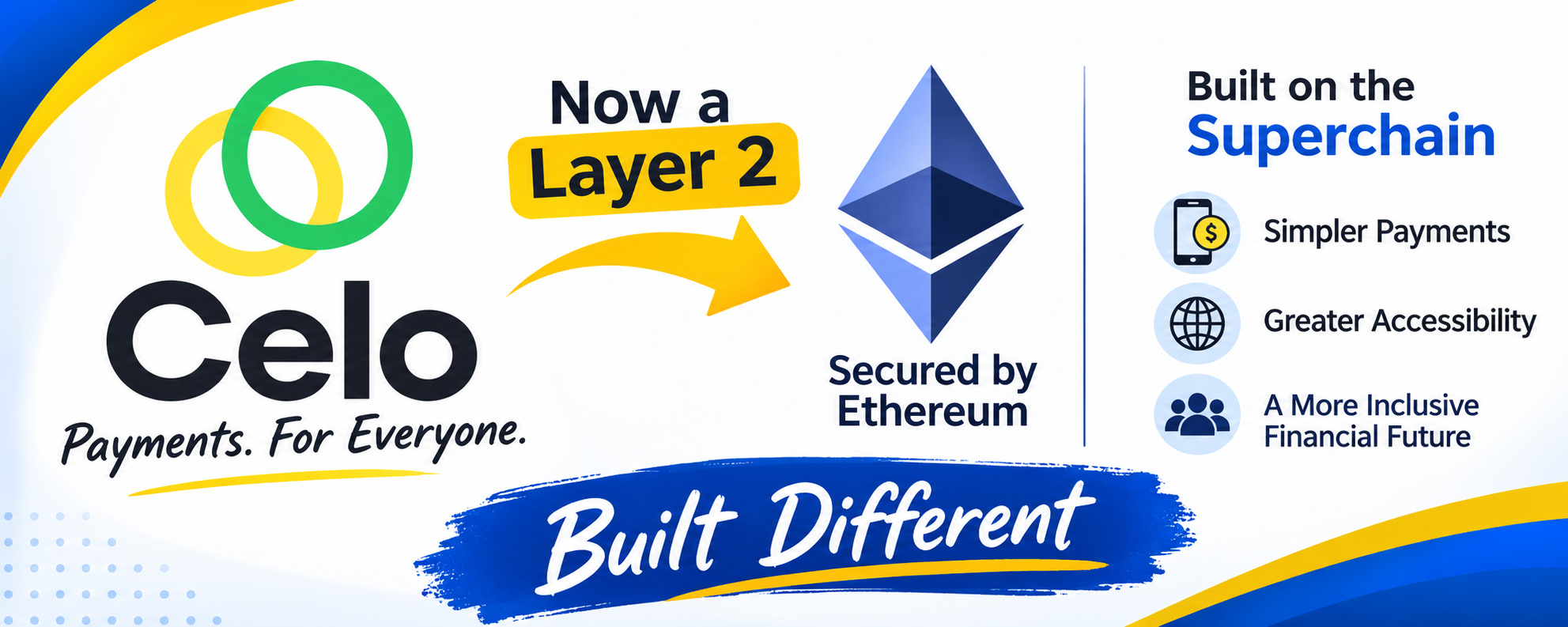
Its move from an independent Layer 1 to an Ethereum Layer 2 is obviously a big change. But honestly, the migration itself isn't what interests me the most. We've seen enough blockchain launches and upgrades to know that changing infrastructure doesn't automatically bring users.
What interests me is what Celo has been trying to do all along.
Payments. Stablecoins. Making it easier for people to move money without dealing with unnecessary costs and complications.
It might not sound like the most exciting narrative in crypto, but it's a real problem.
Think about someone who regularly sends or receives money across borders. Or someone who wants access to digital dollars without dealing with a complicated banking system. These aren't imaginary problems created to give another blockchain a reason to exist.
People actually need better ways to move money.
And I think crypto sometimes spends so much time chasing the next big thing that it forgets how useful something as simple as a cheap, reliable payment system could be.
Celo seems to understand that.
Now, the move to Ethereum L2 is an interesting decision. By moving to the OP Stack, Celo becomes part of the broader Superchain ecosystem and gets closer to Ethereum's existing developer and infrastructure community.
I can understand why the team went in this direction.
Building everything independently takes time, money and resources. Ethereum already has a strong ecosystem, so becoming part of that environment could make things easier in the long run.
But let's not get carried away.
Being an Ethereum Layer 2 doesn't suddenly make Celo special. There are already plenty of Layer 2 networks competing for attention, developers and liquidity. Everyone has a story about why their chain deserves to win.
The difficult part isn't launching another network. It's convincing people to actually use it.
That's where I think Celo needs to prove itself.
I would rather see someone using Celo to send money every week than see another announcement about how many transactions the network can process. Give me real users over impressive-looking statistics.
And this is also why MiniPay is worth keeping an eye on.
The idea of bringing stablecoin payments into a simple mobile experience makes sense. Most people don't want to learn how blockchains work. They don't want to worry about bridges, gas tokens or which network they're connected to.
They just want something that works.
If Celo can make that experience simple enough for someone who has never touched crypto before, that's where things could get interesting.
Of course, getting someone to download a wallet is one thing. Getting them to use it regularly is another.
We've seen projects attract thousands of users through rewards and incentives. Then the rewards disappear, and so do the users.
I don't want to see Celo become another example of that.
The real question is whether people will continue using its payment products when there's nothing to farm, no campaign running and no financial incentive to participate.
If the answer is yes, that's meaningful adoption.
If not, then we probably need to be more careful about how we interpret the numbers.
There's also something else I keep thinking about: CELO itself.
Because let's be honest, investors shouldn't automatically assume that a useful blockchain means a valuable token.
These are two different things.
CELO has governance and economic roles within the ecosystem, and the project has been working on connecting network activity and revenue more closely to the token's economics.
That's interesting, but I still have questions.
Where does sustainable demand come from? How much value does actual network usage create for the token? And does that value remain meaningful when the market isn't in a bullish mood?
I think these questions matter more than another exciting tokenomics announcement.
Crypto has a habit of making token models look incredibly attractive when the market is moving up. But when liquidity dries up, everyone suddenly starts asking where the real demand went.
I'd rather understand that part before getting too optimistic.
Another thing worth remembering is that Celo isn't operating in an empty market. Stablecoin payments are becoming increasingly competitive. Other networks and payment applications are trying to solve similar problems.
Having good technology isn't enough anymore.
Distribution matters. Trust matters. Local payment options matter. And probably more than anything, the experience has to be good enough that people don't even think about the blockchain behind it.
That's a much harder challenge than most crypto announcements make it sound.
I actually like that Celo is focusing on something practical instead of chasing every trend that comes along. But I also know that having the right idea doesn't guarantee success.
We've seen good projects struggle. We've seen technically impressive networks fail to attract meaningful activity. And we've seen plenty of promising ecosystems lose momentum once the initial excitement fades.
So I'm trying not to judge Celo based on the migration alone.
I want to see what happens next.
Does joining Ethereum's Layer 2 ecosystem actually help bring more developers and users? Does MiniPay continue growing? Do people start relying on Celo for everyday payments? Does the network create sustainable economic activity?
Those are the things that will tell me whether this direction is working.
For now, I think Celo is worth watching. Not because it has suddenly become the most exciting project in crypto, but because the problem it's trying to solve is worth solving.
And maybe that's enough reason to pay attention.
I've learned one thing after watching this market for years: announcements are easy, promises are cheap, and almost every project looks impressive during a bull market.
The real test comes when the excitement disappears.
Let's see what Celo looks like then.