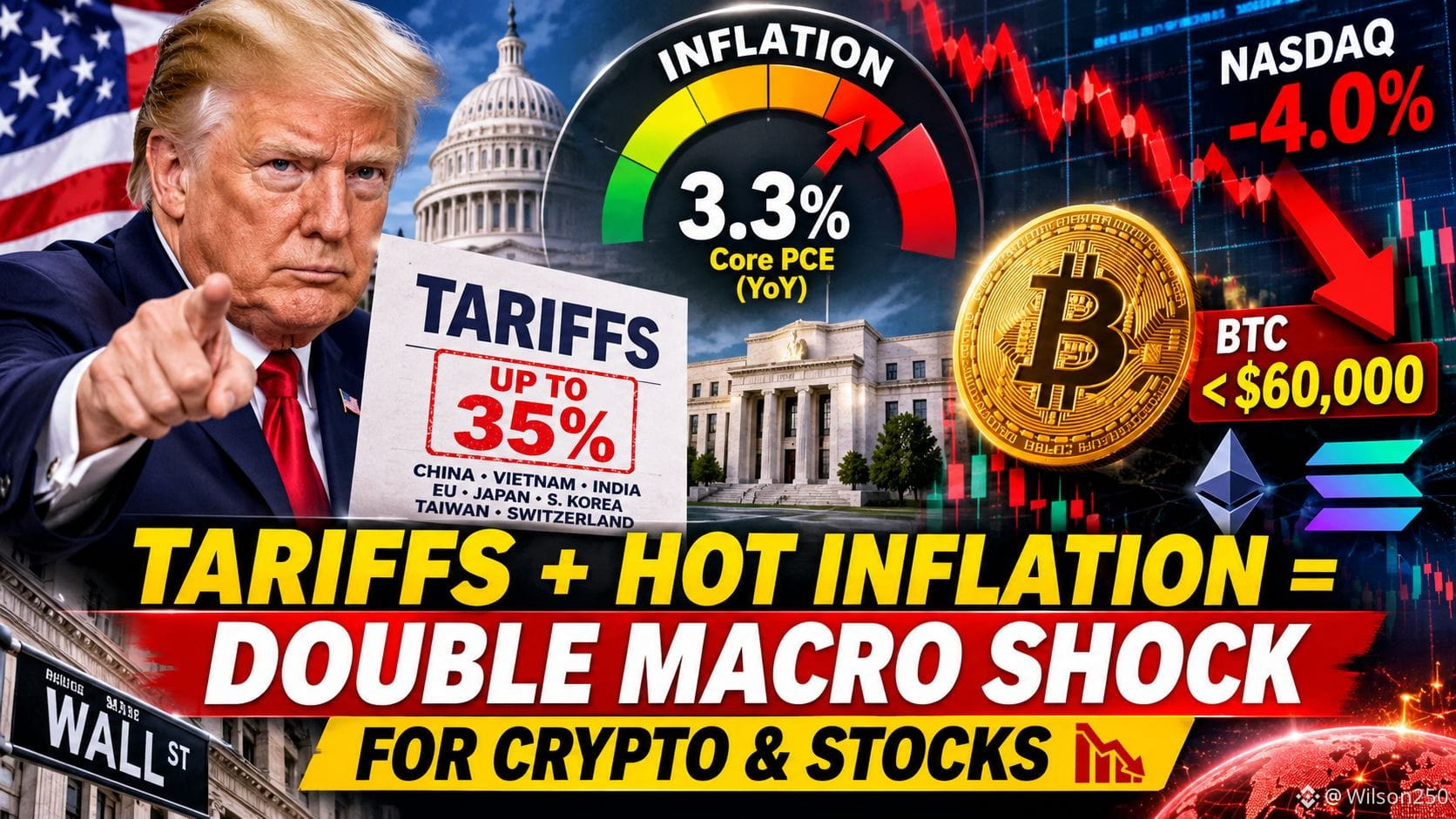
🚨 TARIFFS + HOT INFLATION = DOUBLE MACRO SHOCK FOR CRYPTO & STOCKS 📉🇺🇸
Just as the market tried to recover, Washington dropped a fresh wave of trade uncertainty—and inflation data poured fuel on the fire.
Here is what is actually driving today’s synchronized selloff across crypto and Wall Street:
1. The Section 301 Tariff Proposal
U.S. Trade Representative Jamieson Greer announced proposed Section 301 tariffs targeting 14 major trading partners over excess manufacturing capacity:
• China: Up to 20% (potentially stacking onto existing duties)
• Vietnam: Up to 35% (or 20% if a deal is reached)
• India: Up to 25% (or 17% with a deal)
• EU, Japan, South Korea, Taiwan & Switzerland: Capped at 15% in line with existing pacts
(Note: Public hearings start Jan. 25, 2027, meaning these won't take effect until early next year at the earliest—though markets are pricing in the risk today.)
2. Hot Core PCE Data Complicates the Fed
October’s Core PCE—the Federal Reserve’s preferred inflation gauge—came in hot at 3.3% YoY (above the 3.2% forecast). Higher tariffs plus sticky inflation raise fears that the Fed may tighten policy further in December instead of easing.
3. The Market Fallout
• Equities: The tech-heavy Nasdaq tumbled ~4%, dragged down by AI and chip stocks like Nvidia (-8%+).
• Crypto: Because BTC remains tightly correlated with tech equities, Bitcoin slipped below $60,000 to test lows near $57,200–$57,500.
• Liquidations & Flows: Over $512 million in crypto positions were wiped out in 24 hours, compounding record November spot Bitcoin ETF outflows of nearly $5 billion.
💡 What to Watch Next
With U.S. stock markets closed Thursday for Thanksgiving and operating on a half-day Friday, traditional ETF liquidity goes offline while crypto trades 24/7. Thin holiday order books mean sharper swings are possible.
Keep an eye on the $55,000–$57,000 support zone and avoid over-leveraging into low holiday liquidity.
$BTC ETH SOL
#BitcoinAndStocksSlipAgainAmidTrump'sTariffPlans #BTC #CryptoNews #Macro #trumptariff