


The blockchain industry is constantly evolving, and projects that adapt to new technology have the potential to create a stronger future for Web3. One important development in this space is Celo's transition from an independent Layer 1 blockchain to an Ethereum Layer 2 network.
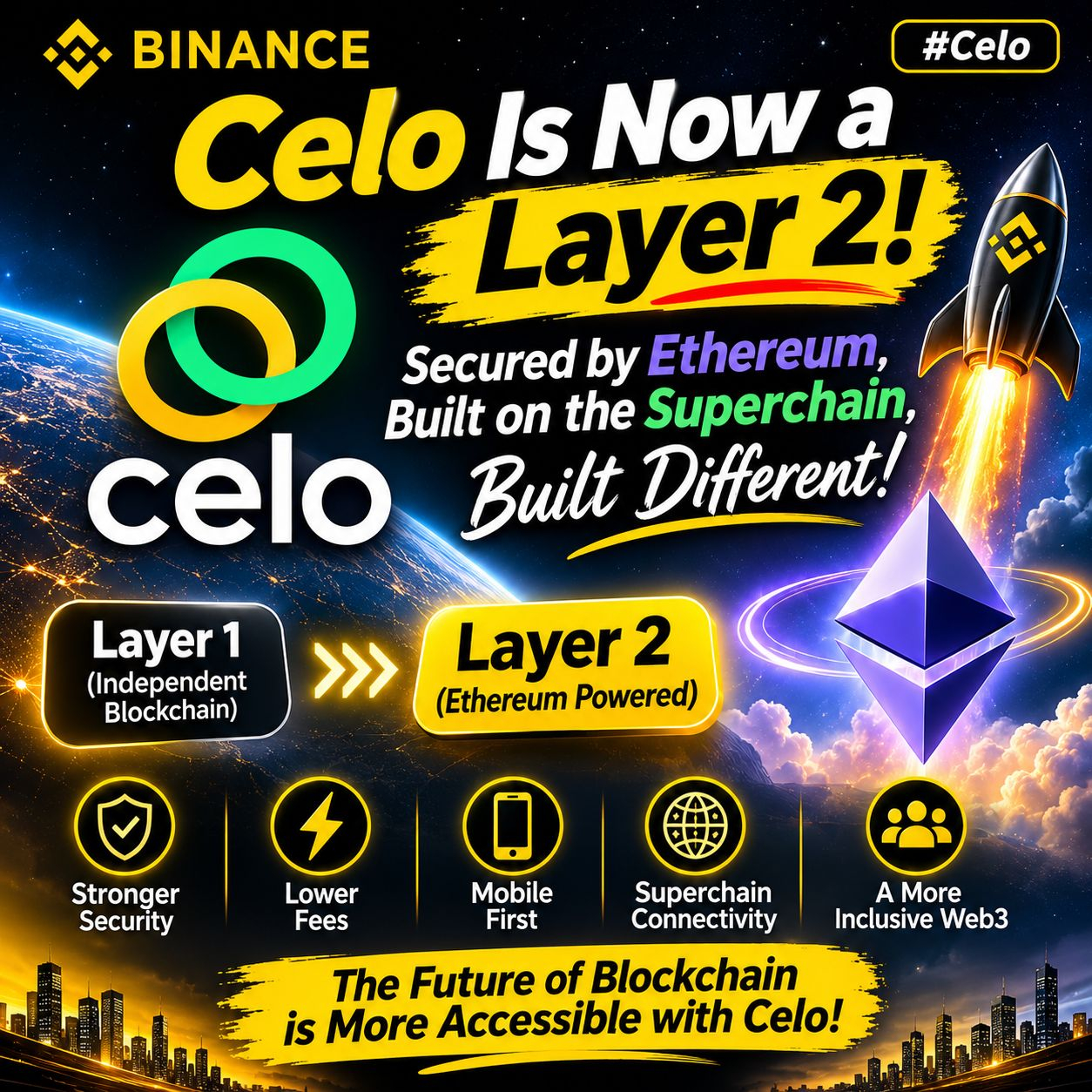
The statement "Celo is now a Layer 2. Secured by Ethereum. Built on the Superchain, built different." represents much more than a technical upgrade. It reflects Celo's long-term vision of making blockchain technology faster, more accessible, affordable, and useful for everyday people.
Let's understand what this transformation means and why it matters.
🌐 1. From Layer 1 to Layer 2: A Major Transformation
Celo originally operated as an independent Layer 1 blockchain. Like Ethereum, it had its own network infrastructure and consensus mechanism. Its main goal was to make financial services accessible to everyone, especially people who rely on mobile phones and affordable digital payments.
However, as blockchain adoption increased, scalability, security, and interoperability became increasingly important.
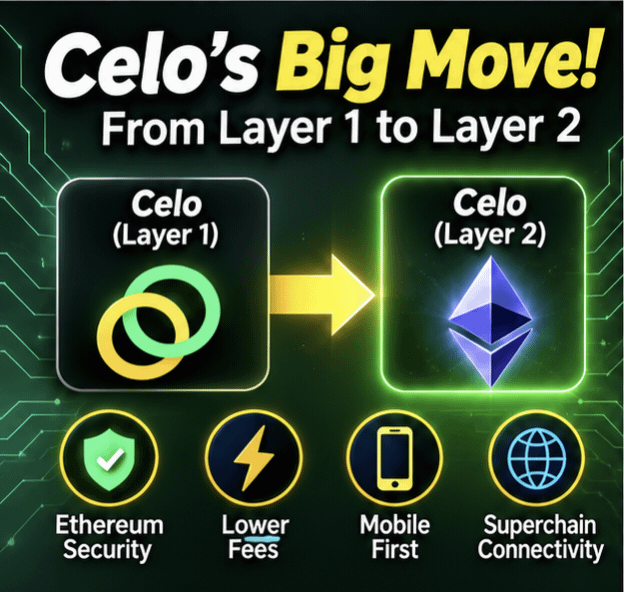
To address these challenges, Celo made a strategic decision to transition into an Ethereum Layer 2 network.
On March 26, 2025, Celo officially completed this migration using the Optimism OP Stack.
This was a major milestone because Celo could now benefit from Ethereum's established ecosystem while maintaining its unique focus on real-world payments, low transaction fees, and mobile accessibility.
Importantly, the migration preserved the network's existing history, allowing the ecosystem to continue without starting from zero.
🔐 2. Secured by Ethereum: Why Does It Matter?
Security is one of the most important factors in blockchain technology.
Ethereum has one of the largest decentralized blockchain ecosystems, supported by a global network of validators and extensive infrastructure.
By becoming an Ethereum Layer 2, Celo aligns its transaction settlement and security architecture with Ethereum.
In simple words, Celo handles transactions on its own Layer 2 infrastructure and connects its results to Ethereum through its rollup architecture.
This approach provides several advantages:
- Stronger security foundations: Celo benefits from Ethereum's established security and settlement ecosystem.
- Better interoperability: Connecting more closely with Ethereum makes it easier to interact with its applications and infrastructure.
- Developer opportunities: Developers can use familiar Ethereum tools, smart contracts, and programming standards.
- Greater ecosystem connectivity: Celo can participate more deeply in the growing Ethereum economy.
It is important to understand that Layer 2 security involves several components, including execution, data availability, settlement, and fault-proof mechanisms. Celo's architecture uses the OP Stack and EigenDA, with further security improvements introduced through subsequent upgrades.
⚡ 3. Built on the Superchain: A Connected Blockchain Future
Another important part of Celo's transformation is its connection to the Superchain ecosystem.
The Superchain is an ecosystem of interconnected blockchain networks built using Optimism's OP Stack technology.
Instead of every blockchain operating with completely different infrastructure, Superchain networks share common technical foundations and work toward better interoperability.
Why is this important?
Imagine a future where users can interact with different blockchain applications without facing complicated processes, expensive transactions, or unnecessary technical barriers.
That is the broader vision behind the Superchain.
For Celo, joining this ecosystem creates opportunities for:
- Improved connectivity with other OP Stack networks.
- Shared infrastructure and development resources.
- Better opportunities for cross-chain applications.
- More collaboration between developers and blockchain communities.
- Expansion of decentralized finance and payment services.
Celo is not simply becoming another blockchain. It is bringing its mobile-first and real-world financial focus into a growing network of Ethereum-aligned chains.
💸 4. What Makes Celo Different?
Many blockchain networks focus heavily on technology, but Celo has always emphasized practical financial applications.
Its biggest strength is its commitment to making blockchain useful for ordinary people.
Some of its important features include:
Low Transaction Fees: Affordable transactions make it easier for users to send money, interact with applications, and use blockchain services.
Mobile-First Approach: Celo focuses on smartphone accessibility, making blockchain applications more convenient for people who primarily use mobile devices.
Stablecoin Payments: Its ecosystem supports stablecoin-based financial activities, including payments, transfers, and decentralized finance.
Gas Fee Abstraction: Users can pay transaction fees using supported ERC-20 tokens rather than being required to hold only CELO for gas.
Real-World Applications: Celo is focused on practical use cases such as remittances, financial inclusion, savings, and digital payments.
These features make Celo particularly interesting for regions where affordable financial services and accessible payment infrastructure are important.
🌍 5. Opportunities for Developers and Users
Celo's transition also creates opportunities for developers.
Because the network is built using the OP Stack and remains EVM-compatible, developers familiar with Ethereum can build and deploy smart contracts using familiar tools.
This can encourage more projects to enter the ecosystem, including decentralized exchanges, lending platforms, payment applications, identity solutions, and stablecoin services.
For users, a growing ecosystem can mean more applications, more financial opportunities, and better ways to interact with digital assets.
The real value of this development will depend on how successfully developers and businesses turn these technical improvements into products that people actually use.
🔮 6. The Future of Celo
Celo's transition to Layer 2 is an important step, but it is not the final destination.
The blockchain industry is becoming increasingly competitive. Long-term success will depend on security improvements, decentralization, developer adoption, liquidity, ecosystem growth, and real-world usage.
Celo has an interesting position because it combines Ethereum alignment with a strong focus on mobile payments and financial accessibility.
If the ecosystem continues to grow, Celo could become an important part of the infrastructure supporting global digital payments and decentralized finance.
However, no technological upgrade guarantees future success. Consistent development and actual user adoption will ultimately determine its long-term impact.
❤️ Final Thoughts
Celo's transformation from an independent Layer 1 blockchain into an Ethereum Layer 2 is more than a change in architecture. It represents a new direction for the ecosystem.
With Ethereum alignment, OP Stack technology, Superchain connectivity, affordable transactions, and a mobile-first approach, Celo is positioning itself for the next stage of Web3 development.
The most exciting part is its focus on connecting blockchain technology with everyday financial needs.
Celo is now a Layer 2. Secured by Ethereum. Built on the Superchain. But its real strength comes from its mission to make financial technology accessible to everyone.
The future of blockchain is not just about building faster networks. It is about building technology that people can actually use.
And that is what makes Celo different.
