

The real success of blockchain will not be measured only by transaction speed or token prices. It will depend on how effectively people can use it in everyday life. This is what makes Celo an interesting project to follow.
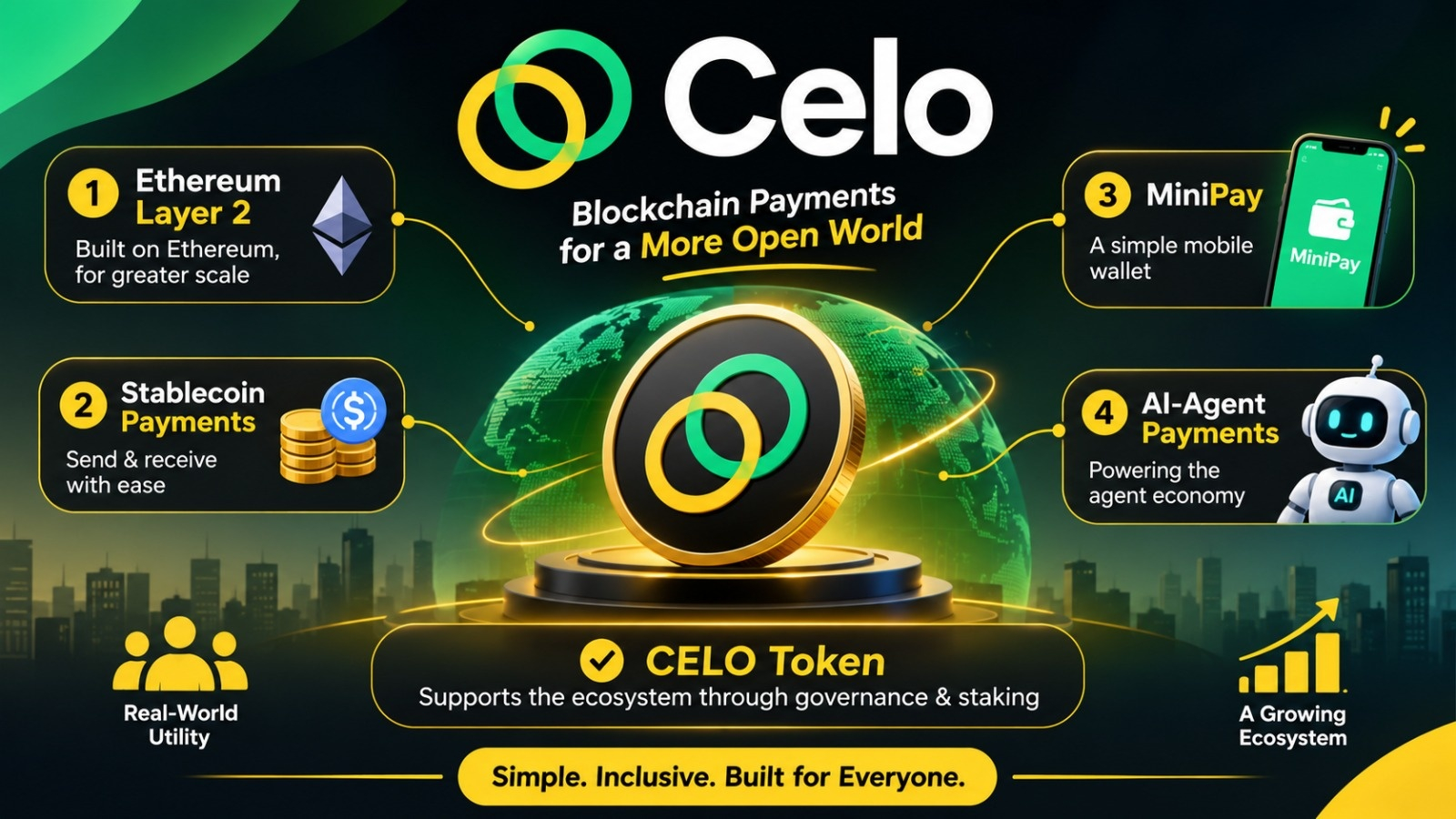
Celo is an Ethereum Layer 2 ecosystem focused on making digital payments, stablecoins, and financial services more accessible, especially through mobile devices.
From Layer 1 to Ethereum Layer 2
One of Celo's biggest milestones was its transition from an independent Layer 1 blockchain to an Ethereum Layer 2, completed on March 26, 2025.
Powered by the OP Stack, this transition connected Celo more closely with Ethereum's developer ecosystem while preserving its focus on affordable transactions and mobile-first financial applications.
This matters because adoption requires more than technology. Users need simple experiences, while developers need reliable infrastructure to build useful products.
Stablecoins at the Center
One area where Celo has a clear direction is stablecoin payments.
Imagine sending money to someone in another country without dealing with multiple intermediaries, complicated banking procedures, or unnecessary delays.
Celo supports stablecoin activity involving assets such as USDC and USDT, while also exploring local-currency stablecoins.
Its October 2026 ecosystem update highlighted support for 33 stablecoins representing 20 currencies.
This approach could make blockchain payments more relevant to people who want practical financial tools rather than speculative crypto products.
MiniPay: Making Crypto Easier
Another interesting part of the ecosystem is MiniPay, a mobile stablecoin wallet.
Instead of expecting users to understand blockchain infrastructure, MiniPay focuses on making digital payments accessible through a familiar mobile experience.
This is important because mainstream adoption will likely happen when people can use blockchain without constantly thinking about the technology behind it.
Celo also announced an infrastructure upgrade for MiniPay through Privy in November 2026, highlighting 20 million stablecoin wallets on Celo.
Exploring AI-Agent Payments
Celo is also exploring opportunities in the emerging AI-agent economy.
AI agents can perform tasks independently, but they also need ways to pay for external services.
Through its x402 payment infrastructure, Celo is working toward enabling agents to make payments using stablecoins.
Its October 2026 update introduced support for 10 stablecoins across eight currencies and a marketplace called buy, offering agents access to more than 700 services.
This creates an interesting possibility: software agents could access data, computing resources, and APIs while handling payments programmatically.
Where Does CELO Fit?
CELO is the ecosystem's native token, connected to network economics, staking, and governance.
However, ecosystem growth does not automatically translate into token demand. I would pay attention to staking participation, network activity, fee economics, and the development of sustainable utility.
Final Thoughts
What interests me about Celo is its focus on practical adoption.
It is bringing together three important areas: Ethereum infrastructure, everyday stablecoin payments, and AI-agent transactions.
There are challenges ahead, particularly competition among Layer 2 networks and the need to convert user activity into sustainable economic value.
Still, Celo's direction is worth watching.
For me, its biggest opportunity is making blockchain payments feel less like using crypto and more like using money.
