$APT: Original Synthesis vs Recycled Templates in Crypto Commentary
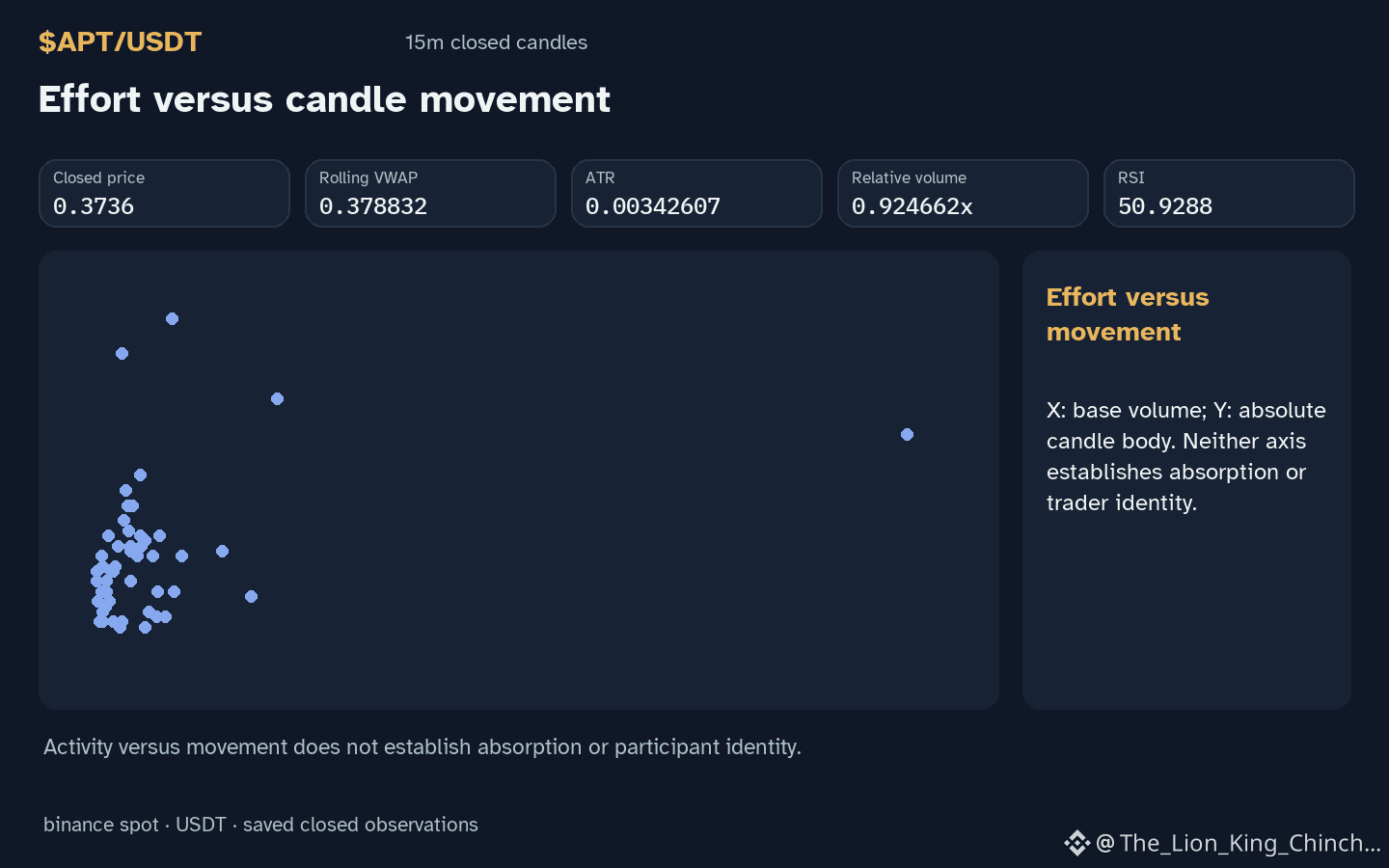
Why does $APT show an hourly up direction while volume sits at 0.92x baseline? The observation raises a broader question about how analysts balance fresh insight with template reuse.
A hypothetical decision can be framed as a thought experiment. Imagine two writers covering the same hourly move. Writer A builds a narrative from the specific data: price is moving up, volume is modest, and the local support level is 0.3665. Writer B starts from a pre‑written outline that mentions “upward momentum with low volume” and simply plugs the numbers. Both produce a correct statement, yet the originality of the analysis differs.
Where the analogy helps is in teaching readers to separate evidence from persuasion. The factual layer. hourly direction up, relative volume 0.92x baseline, support 0.3665. is immutable. The interpretive layer. whether this suggests a sustainable rally or a temporary blip. can be examined by asking: does a later candle close below 0.3665? If that happens, the original synthesis loses weight, and the recycled template appears less reliable.
Where the analogy fails is when it assumes that every template is inherently lazy. Some structures, such as noting RSI 50.9 in a volatile market, provide a useful scaffold without diluting insight.
A concrete way to reassess the current view is to watch the next hourly candle. If the price holds above 0.3665 and volume rises above baseline, the original argument gains confidence; if the price slips below 0.3665 or volume stays low, the hypothesis weakens. This self‑check encourages disciplined, evidence‑first commentary rather than reliance on repeated phrasing.
Probabilistic market research, not a recommendation or guaranteed return.
#APT