$XLM Stellar Protocol 30 "Bell" goes live on mainnet: shared contracts, quantum-resistant signatures, millisecond data retention
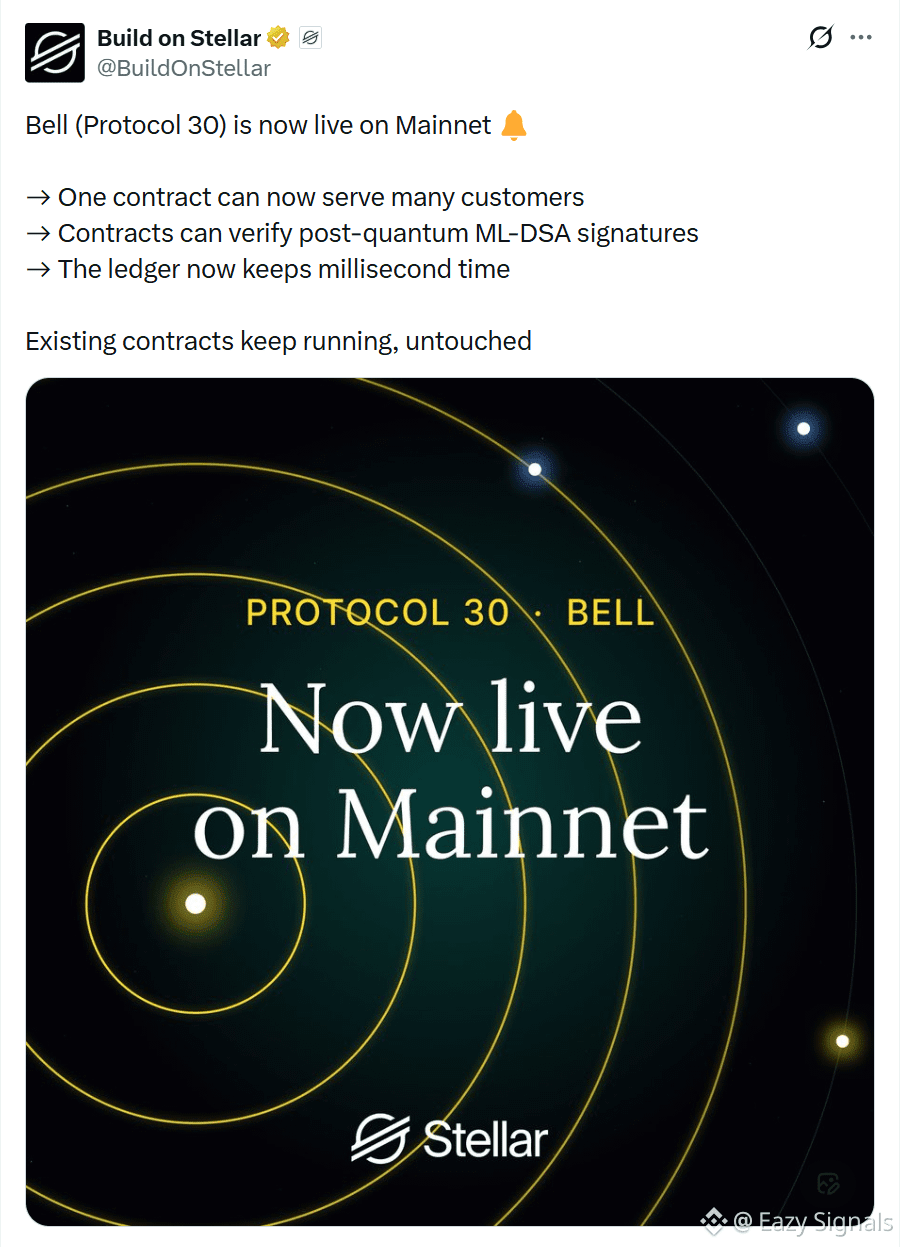
Stellar mainnet has officially activated Protocol 30 (codename Bell), bringing three major changes:
1. Shared contracts: A single contract can now serve multiple clients — think of it as a multi-tenant architecture for smart contracts. This reduces deployment costs and makes it easier for builders to launch reusable primitives.
2. Quantum-resistant signatures: Contracts can now verify ML-DSA (Module-Lattice-Based Digital Signature Algorithm) signatures — a NIST-standardized post-quantum signature scheme. This is a big deal for long-term security, especially as quantum computing advances.
3. Millisecond data retention: The ledger can now retain data for milliseconds, enabling more granular time-based operations and faster state transitions.
What stays the same:
Existing contracts remain unchanged and continue to operate normally. No migration needed.
Stellar quietly shipping quantum-resistant signature verification on mainnet is more significant than most people realize. While Ethereum is still debating EIP-8037 and pushing post-quantum to 2027, Stellar just did it. The shared contract model also makes Stellar more competitive for builders who want to deploy once and serve many.
That said, Stellar doesn't have the DeFi depth or developer mindshare of Ethereum or Solana. Shipping good tech is necessary but not sufficient — adoption is the real test.
Don't sleep on the "quiet" chains. Stellar is building real infrastructure while the market focuses on hype. If quantum resistance becomes a priority for institutions, Stellar might be ahead of the curve.
Stellar ships quantum-resistant signatures while Ethereum debates — what do you think?
News is for reference, not investment advice. Please read carefully before making a decision.
$BNB