Understanding the Distinctions Between Bitcoin and Altcoins
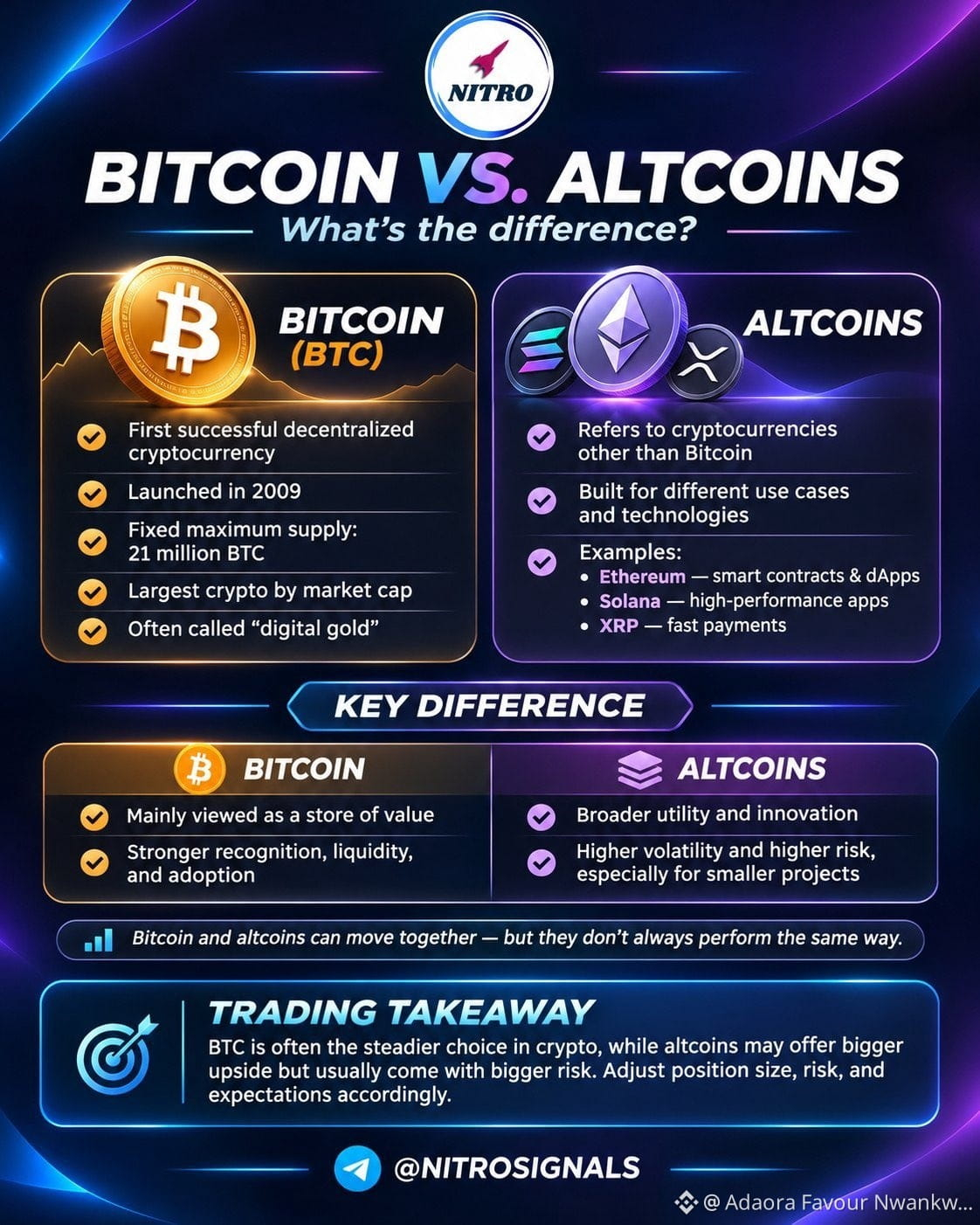
Navigating the cryptocurrency landscape often begins with recognizing how Bitcoin differs from alternative digital currencies, commonly grouped under the term altcoins. The essential divide lies in their intended roles and risk profiles: Bitcoin serves primarily as a decentralized medium for moving value and an established store of wealth, whereas altcoins provide a much broader spectrum of specialized technologies and functional applications. However, investments in smaller altcoin initiatives frequently involve heightened volatility, potential liquidity concerns, and elevated uncertainty compared to Bitcoin, which benefits from the industry's strongest market adoption, liquidity, and global recognition.
Bitcoin (BTC)
Debuting in 2009, Bitcoin represents the pioneer and first successful decentralized cryptocurrency in history. Operating with a strict maximum supply limit of 21 million BTC, it maintains its position as the largest digital asset by market capitalization and is frequently described as digital gold.
Altcoins
The designation altcoin broadly encompasses every cryptocurrency developed outside of Bitcoin. These alternative tokens are tailored to support diverse operational goals and specialized use cases:
Ethereum (ETH) powers decentralized applications and autonomous smart contracts.
Solana (SOL) is engineered to deliver high-performance blockchain infrastructure.
XRP focuses on facilitating rapid, highly efficient payment settlements.