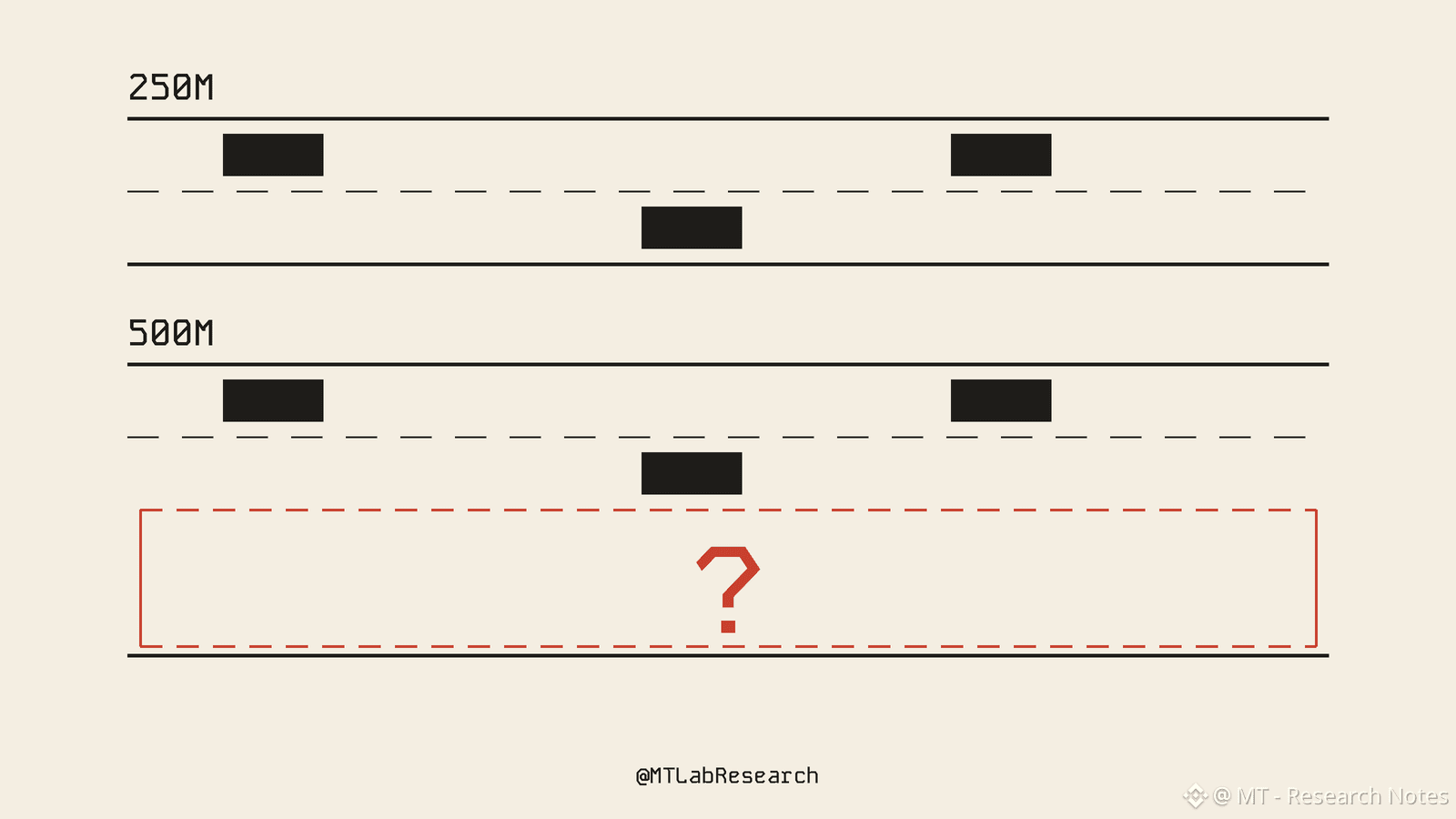
Solana just promised a road twice as wide. Who is going to drive on it?
Anza, the team behind Solana's main validator software, unveiled its 2027 plan at Breakpoint in London. The headline: double the network's capacity from about 250 million to 500 million compute units per second, and make token transfers use about 80% less of it (per Crypto Briefing and BeInCrypto). A compute unit is just how Solana counts the work a transaction does. Think lanes on a highway.
Before anyone prices that in, three things worth checking:
1. It is a target, not a launch. The main capacity goal sits at the end of 2027, and no activation dates have been given for the individual upgrades.
2. Capacity is not demand. In July, Solana already lifted its block limit from 60M to 100M compute units. In the year before, only about 1 block in 9 came close to full, per the Solana Foundation, and it said traffic is mostly not limited by block execution time. So the road was already wide, and mostly roomy.
3. Cheaper only matters if people show up. An 80% cut on token transfers frees space, but someone still has to fill it.
So what has to be true for this to matter to the SOL story?
> If apps and users arrive and fill the new space, a wider road has a point.
> If the road stays mostly empty, doubling it is nice engineering and little else.
> If validators upgrade slowly or dates slip, it stays a slide in a deck.
The roadmap itself does not say which one plays out.
A habit worth keeping with any roadmap: split what is promised, what is shipped, and what needs demand.
What do you most expect on Solana in 2027? $SOL
Experience, not financial advice.
#solanasets2027roadmaptodoublecomputecapacity