Traders on X are calling this the biggest self-custody crackdown of the year. And it hit 18.6 million users at once.
🇵🇭 Coins.ph just shut the door on self-custody wallets (Cointelegraph)
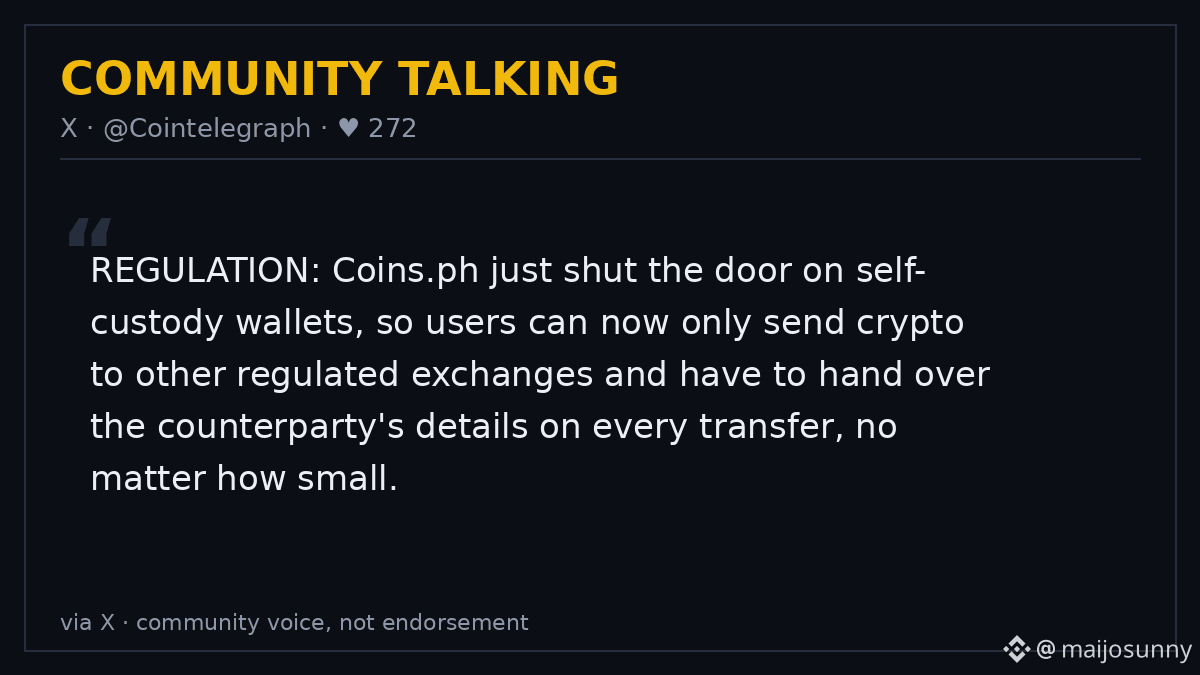
The Philippines' largest crypto platform, about 18.6M users, has stopped all transfers to and from wallets where users hold their own keys. Since Nov 19, external transfers can only go to accounts at other regulated exchanges. Every transfer now needs the counterparty's full name, wallet address, platform, wallet type and purpose, no matter how small the amount. Deposits from non-compliant sources get returned minus network fees. Withdrawals to a personal wallet simply fail.
Meanwhile $BTC trades near 58,994, up 4.8% in 24h. So this is not a market panic story. It is a plumbing story.
Why it matters: self-custody is the one line crypto always said regulators would not cross. This is not a ban on owning crypto, and it is not a ban on the platform. It is a ban on the exit ramp between regulated money and your own keys. The rule comes from the central bank's Travel Rule (BSP Circular 1108), built on FATF standards, so other jurisdictions watching Manila now have a live template to copy.
My take: this is bigger than one exchange in one country. If 18.6M users can be cut off from their own wallets by a compliance memo, the question is not whether other regulators copy it. It is which one goes next, and whether onchain rails and DEXs absorb the flow that regulated venues no longer want.
What to watch: whether other BSP-licensed platforms follow, whether Filipino users route through DEXs or foreign exchanges, and whether any regulator in the EU or US cites Manila as precedent.
Is self-custody still the default, or is it becoming the exception? 👇
Not financial advice. DYOR.
#crypto #regulation
🇵🇭 Coins.ph just shut the door on self-custody wallets (Cointelegraph)
The Philippines' largest crypto platform, about 18.6M users, has stopped all transfers to and from wallets where users hold their own keys. Since Nov 19, external transfers can only go to accounts at other regulated exchanges. Every transfer now needs the counterparty's full name, wallet address, platform, wallet type and purpose, no matter how small the amount. Deposits from non-compliant sources get returned minus network fees. Withdrawals to a personal wallet simply fail.
Meanwhile $BTC trades near 58,994, up 4.8% in 24h. So this is not a market panic story. It is a plumbing story.
Why it matters: self-custody is the one line crypto always said regulators would not cross. This is not a ban on owning crypto, and it is not a ban on the platform. It is a ban on the exit ramp between regulated money and your own keys. The rule comes from the central bank's Travel Rule (BSP Circular 1108), built on FATF standards, so other jurisdictions watching Manila now have a live template to copy.
My take: this is bigger than one exchange in one country. If 18.6M users can be cut off from their own wallets by a compliance memo, the question is not whether other regulators copy it. It is which one goes next, and whether onchain rails and DEXs absorb the flow that regulated venues no longer want.
What to watch: whether other BSP-licensed platforms follow, whether Filipino users route through DEXs or foreign exchanges, and whether any regulator in the EU or US cites Manila as precedent.
Is self-custody still the default, or is it becoming the exception? 👇
Not financial advice. DYOR.
#crypto #regulation