One thing Web3 still struggles with is making different services work together seamlessly.
You have one application for messaging, another for payments, and several others for managing assets across different networks.
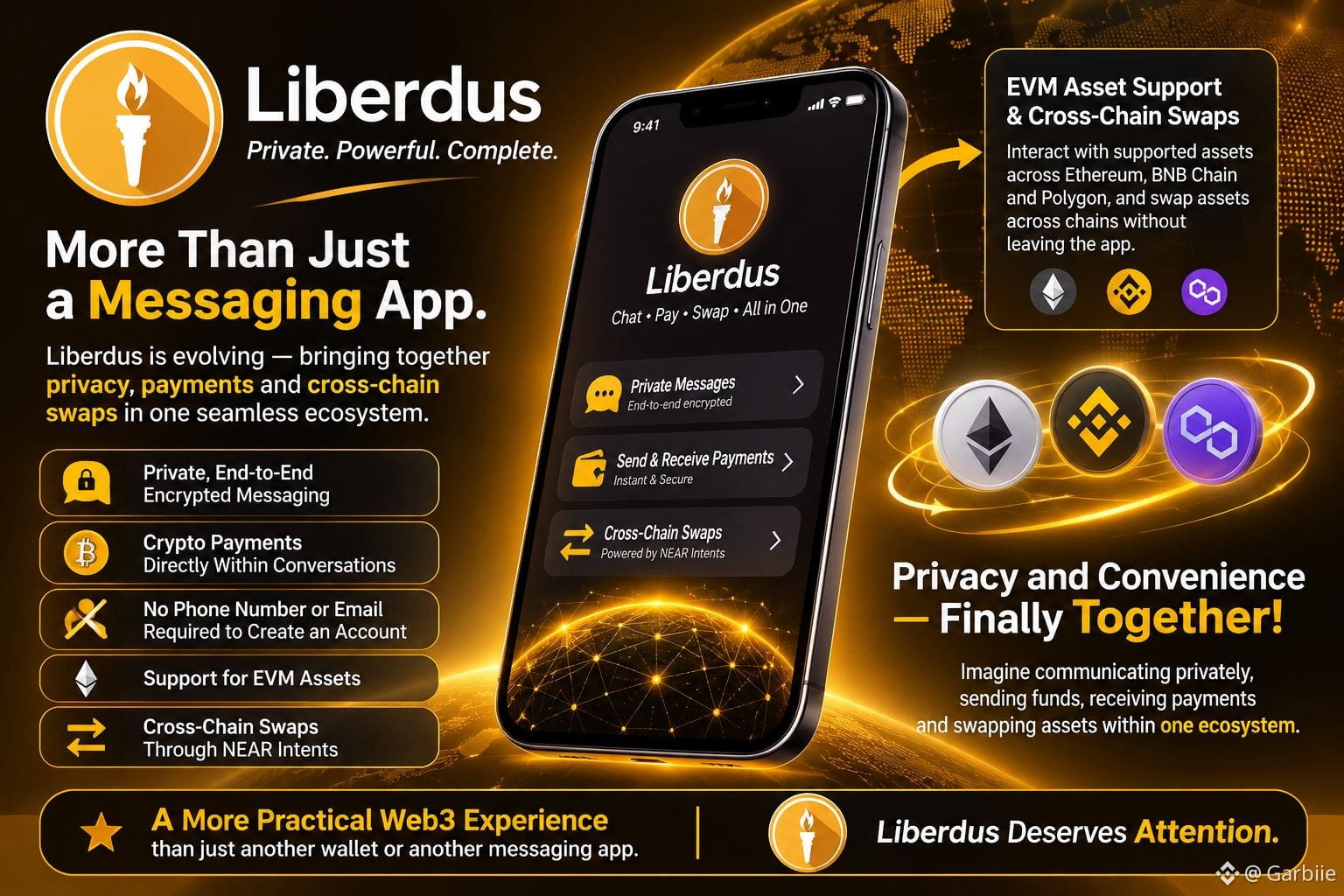
#Liberdus is taking a different approach.
Alongside its private messaging and crypto payment features, it now supports EVM assets and cross-chain swaps through $NEAR
Intents.
That brings support for assets across networks such as $ETH
, BNB Chain and Polygon into the experience.
What makes this interesting to me is the combination:
You can communicate privately, send and receive crypto, and interact with supported assets across chains.
And you don't need to provide a phone number or email just to get started.
I think privacy should be part of the everyday Web3 experience, not something users have to sacrifice for convenience.
The real value here is not simply adding more features. It's making them useful together.
That's what makes Liberdus interesting to follow.