
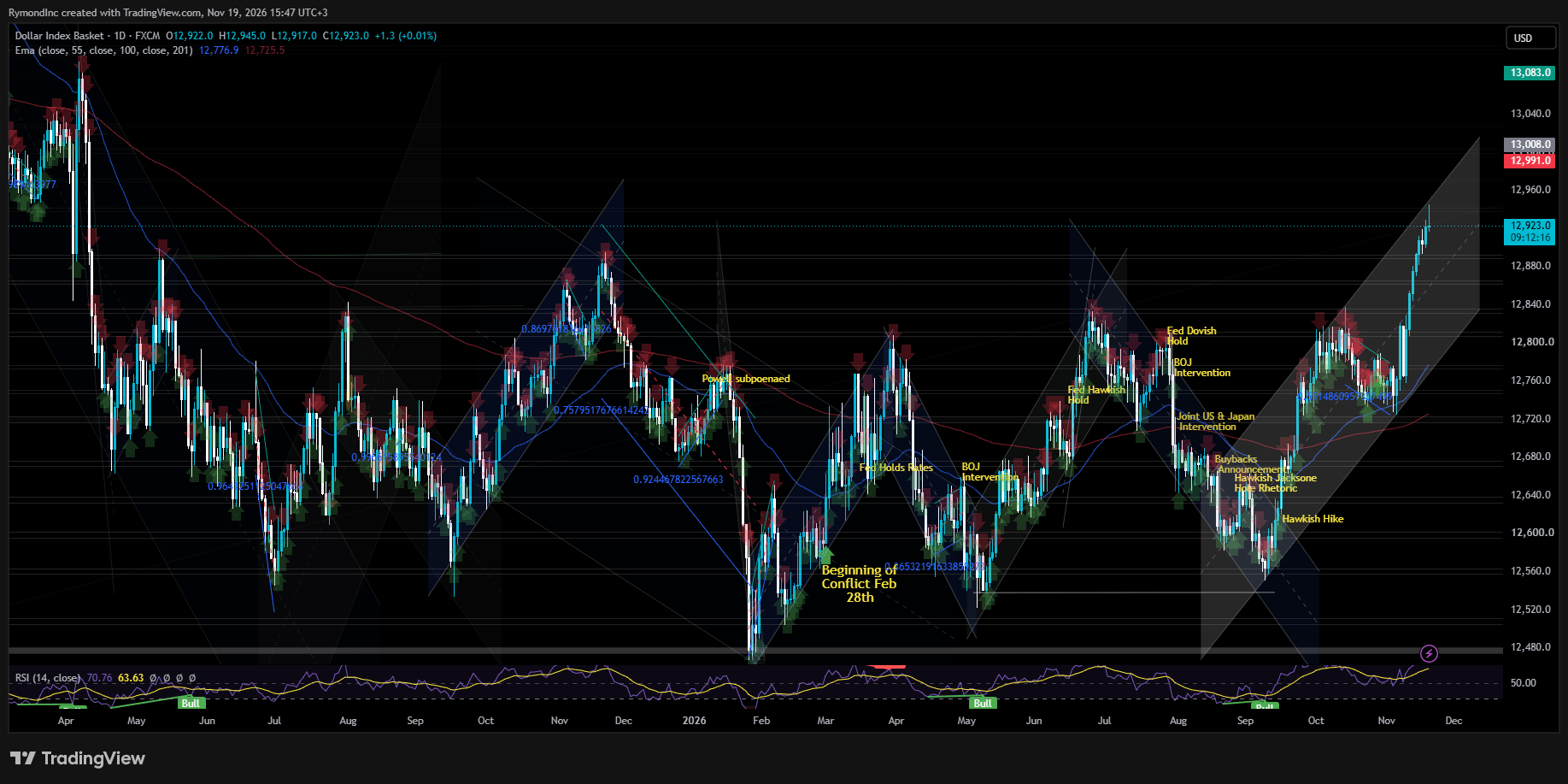
The dollar index has slipped to 103.6 on Thursday, handing back a little of what it earned the day before. Wednesday was the big session. The gauge rose nearly 0.4%, reaching its highest level since April 2025.
Step back, and the run looks sturdier than one day suggests. The index has closed higher four weeks in a row, touching a high of 103.98 along the way, for a gain of about 1.83% over that stretch. Measured from September, the advance comes to roughly 4.34%. A November finish in the green would make it three straight monthly gains.
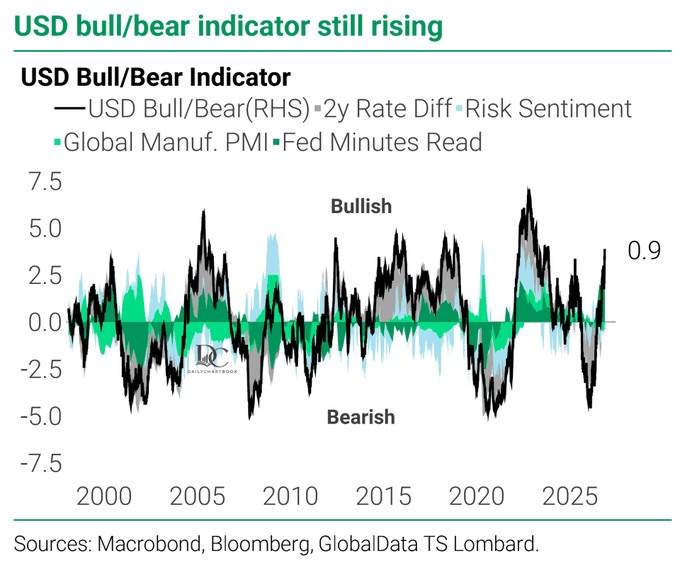
Then there is sentiment. TS Lombard's dollar bull/bear indicator sits at its strongest reading since 2023, and it is still rising.
Two things are doing the work. Hard Economic data that keeps surprising to the upside is one, and it has been feeding the dollar for a month now. Hawkish commentary from FOMC participants is another. Together they've locked in expectations for an interest rate hike next month.
Fed Chair Kevin Warsh has made the guessing harder. He has refused to offer forward guidance, so investors lean on the data, and on whatever other policymakers say in public, to judge where the Fed goes next.
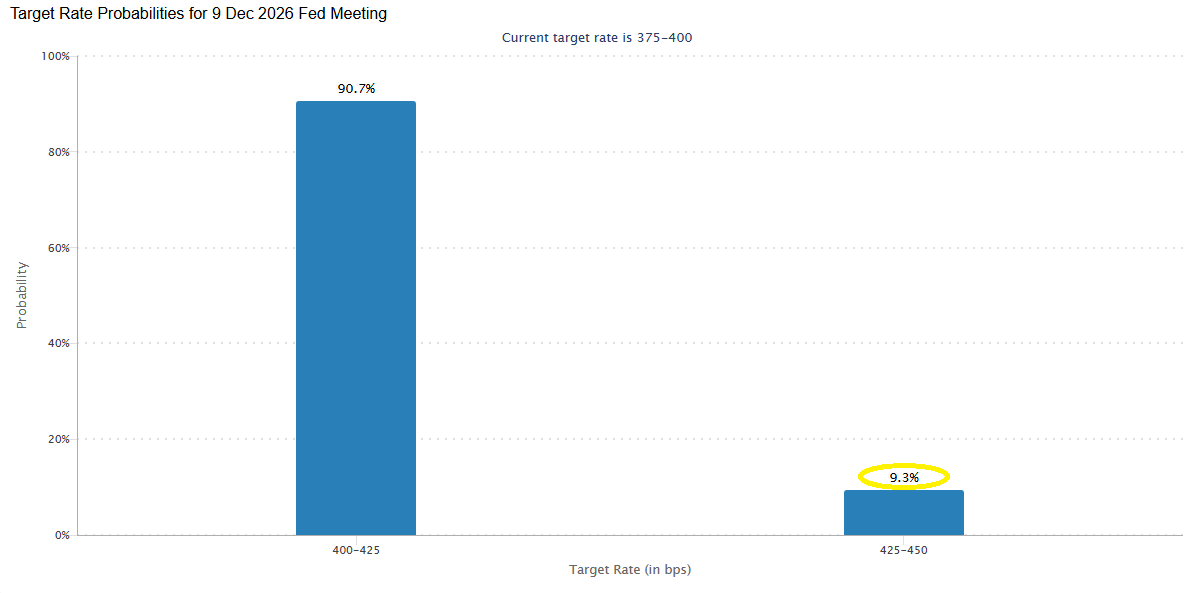
Last week's inflation report came in hotter than expected. Markets now fully price a 25-basis-point hike in December, with a small chance of 50 basis points instead, according to CME Group's FedWatch tool. FFR futures imply 3.6 rate hikes of 25 bps over the next 12 months, including 2.6 over the next six months. The odds of a 50bps hike at the December meeting are just 11.5% currently.
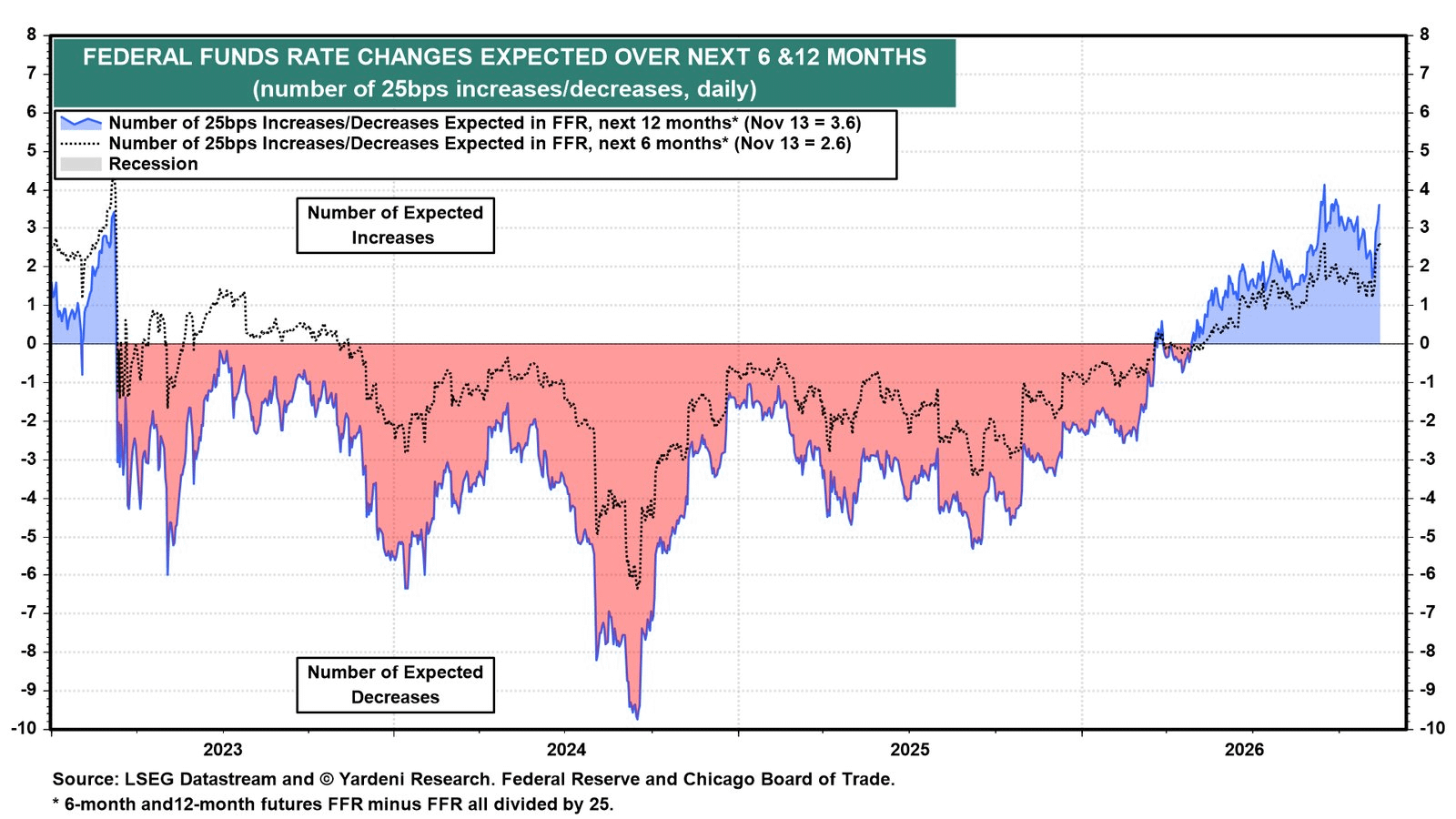
Bond traders, meanwhile, are preparing for more rate hikes from central banks generally, with the Fed's December move already treated as settled. That is why the minutes of last month's FOMC meeting landed with so little fuss. Investors had made their peace with the outcome before the document appeared. The direction is clear. The minutes describe a committee set on tightening.
Most participants expected inflation to stay high in the near term before easing toward the Fed's 2% target, and the vast majority saw upside risks to that outlook. Many viewed the AI buildout as a material source of inflation risk. A majority flagged the possibility that higher costs could pass through to prices more broadly and for longer. Several participants allowed for a counterweight: closer scrutiny of the sector's returns and financing could slow AI spending, which would take some pressure off prices.
On policy, almost all participants judged that further increases in the federal funds rate target range would likely be appropriate under their baseline outlooks. A couple went further. A move of more than 25 basis points, they said, could warrant consideration at the next meeting if incoming inflation data turn out unfavorable.
Waller appears to be one of that pair, judging by his public remarks. He told CNBC on Wednesday that bringing inflation down requires "aggressive action," either a half-point increase at the December meeting or a post-meeting statement that sets the market up for further hikes.
Markets heard him and mostly shrugged, at least on policy odds. Bloomberg's World Interest Rate Probability function still puts only a 9% chance on a jumbo hike, and rate expectations barely moved on the day. Other rate-sensitive investments moved a great deal.
Banks Are Betting the Rally Runs Into 2027
At least three banks, among them Barclays, Deutsche Bank and Standard Chartered, expect the dollar to extend its rally into next year, whatever the fears about a slowdown in AI spending. The AI boom has drawn global investors into American equities, and foreign buyers of shares in U.S. companies that use the technology must first swap their local currencies for dollars. The greenback gets paid on the way in.
Barclays adds the domestic picture. The U.S. private sector has committed to a four-year AI investment cycle, the economy is strong, and interest rates look set to stay higher for longer. In the bank's view, that is a friendly backdrop for the currency.
Deutsche Bank strategists Tim Baker, George Saravelos and Mallika Sachdeva have raised their dollar forecast for next year. They did it after warning earlier this week that the currency's growing ties to AI and U.S. equities, rather than to Treasuries, could make it more volatile.
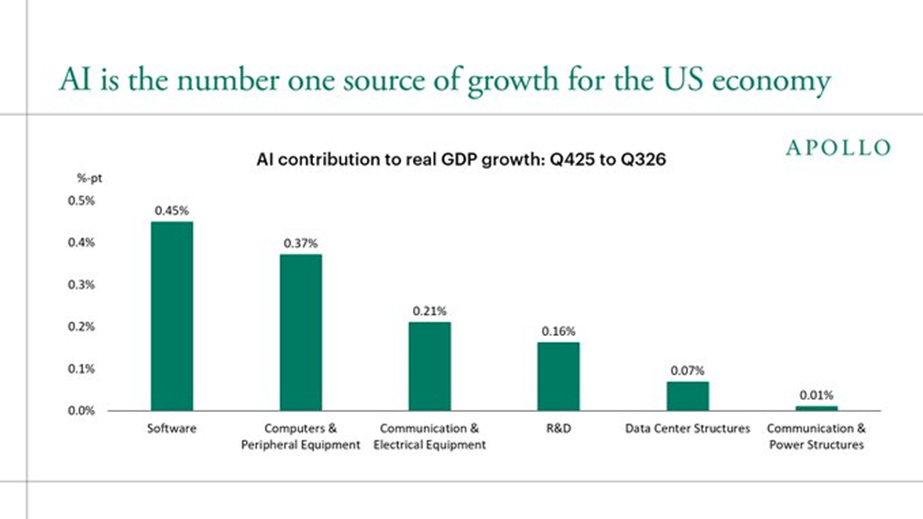
Barclays also sees AI spending tilting the Fed toward further tightening. Apollo Research has put a number on what the buildout is doing for growth: AI investment added roughly 1.3 percentage points to real GDP growth over the last three quarters, about 65% of the roughly 2% cumulative expansion, with software and computers out in front.
Barclays offers the bulls some insurance. Even if the U.S. economy slows, the dollar should hold up, the bank says, since history shows the U.S. tends to outperform the rest of the world when global growth decelerates.
Analysts Says the Fed Cannot Explain This Dollar Surge
One unsettling possibility is that investors fear a dislocation somewhere in the AI trade, perhaps a credit event, even with Anthropic's record $81.3 billion IPO priced above its marketed range this week.
Robin Brooks, a senior fellow at the Brookings Institution, is asking questions. In a post on Wednesday, he argued that the Fed cannot explain the dollar's surge, and he read that as a sign that "something is breaking."
Whatever is happening, it will take something serious to move the Fed off its tightening path. Brooks has argued that hiking while oil prices fall is a mistake that risks pushing the U.S. into recession. Wednesday's price action, he said, feels like a credit event somewhere. The dollar's strength is unusual and does not map onto any obvious fundamental, least of all expectations for Fed tightening, which have held fairly steady in recent days.
Brooks doubts the Fed can stay the course. As he sees it, the hawkish shift is not sustainable, because falling oil prices mean real rates are spiking. He showed earlier this week that real 10- and 30-year Treasury yields stand, by a wide margin, at their highest in more than two decades. How much damage the economy takes before the Fed relents is the open question, and he admits to being baffled by what is going on at the Fed.
He had expected the hawkishness to fade after the midterms. Instead, he sees something close to an open revolt against Warsh, and he does not think the squabbling should hold the economy hostage.
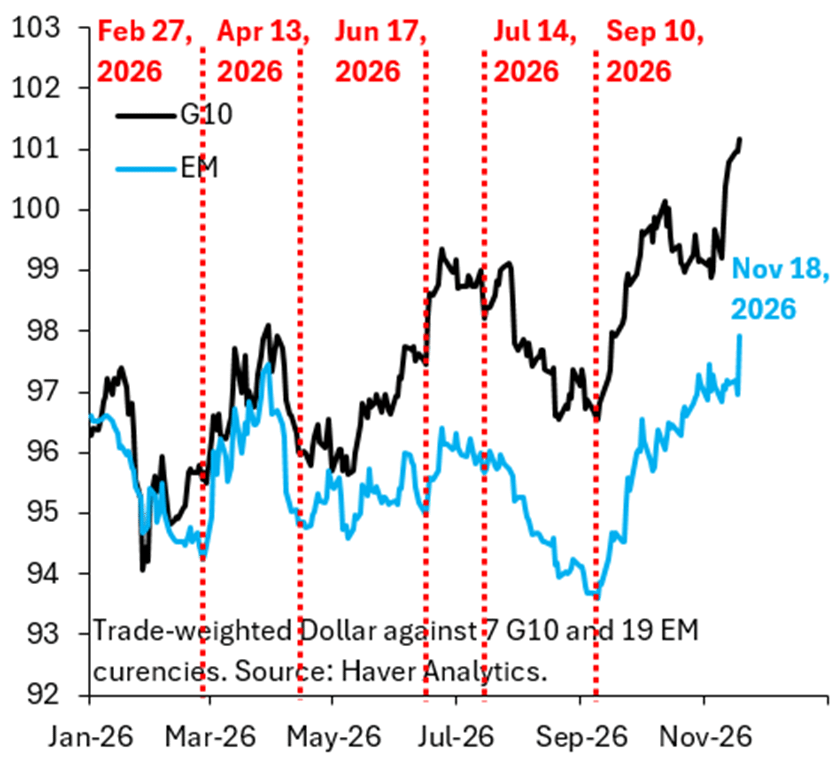
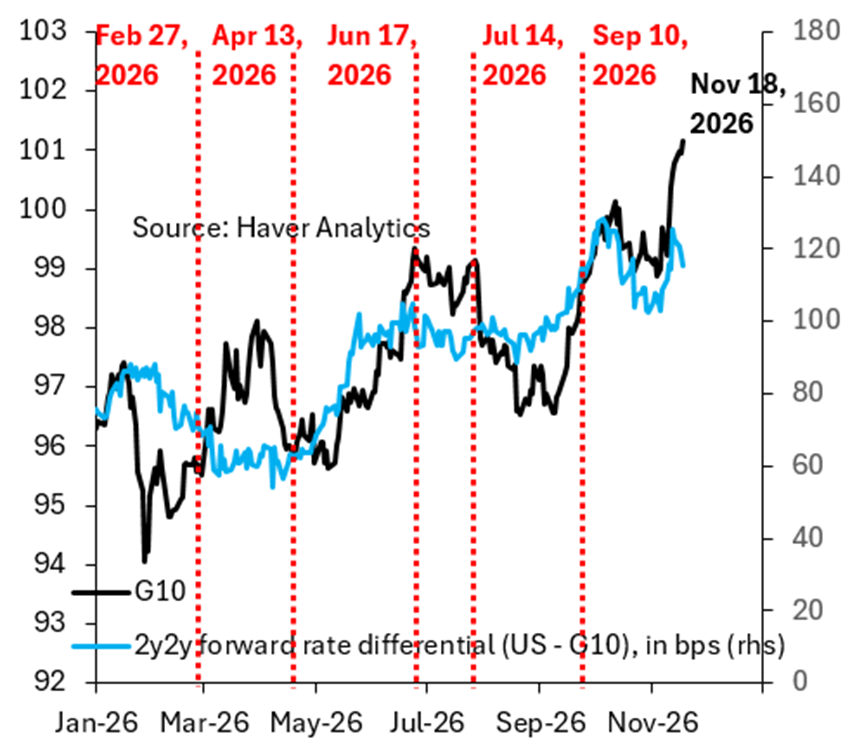
Brooks tracks the dollar with two indices. One is the trade-weighted dollar against the G10 currencies. The other is the trade-weighted dollar against emerging markets, and that is the one he prefers, since the G10 measure has been more volatile this year and has been a less reliable guide to where the dollar heads next. On the emerging-market gauge, Wednesday brought a very sharp and unusual rise. The reasons are far from obvious, so there may be something going on behind the scenes.
The second chart shows why the cause is hard to pin down. The dollar against EM currencies is difficult to link to rate differentials, but the dollar against the G10 can be, so the chart uses the G10. Brooks takes 2y2y forward rates as a proxy for where markets see terminal rates and applies the same trade weights as in the G10 dollar index. The result is stark. The dollar's climb has decoupled from the rate differential.
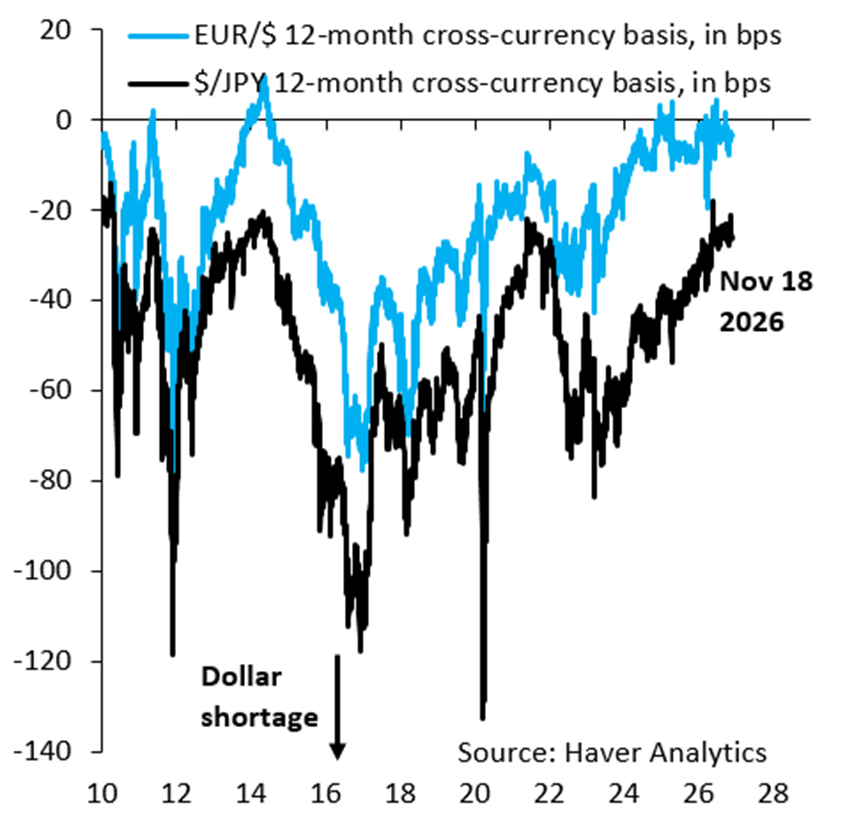
The third chart checks for panic. It plots the cross-currency basis for EUR/$ and for $/JPY. In moments of real stress, such as the 2011-12 euro zone debt crisis or the COVID shock, that basis swings sharply negative as investors buy dollars in the spot market and hedge the exposure in the forward market. It is not doing that now. Brooks sees no outright sign of a dollar shortage or panic in global markets, so the all-out panic stage has not arrived. What exists is unusual dollar strength in the spot market and little else.
He is careful about what he claims. His own post allows that something serious may be going on and that it may be noise, and he tells readers not to act on it yet because nobody knows which.
Conclusion:
Read one way, this is a plain story. The Fed wants to tighten, the data keeps backing it, and an AI investment cycle keeps pulling foreign money into American assets, which keeps the dollar bid. Deutsche Bank has conceded that its own call for a weaker dollar this year did not play out, and the forecasts now being written run well into 2027.
Read another way, the picture is murkier. The dollar is rising faster than the rate market can explain; metals are sliding alongside it. The FOMC minutes carry their own warning: almost all participants commented on what would happen if returns on AI investment disappoint. That is the same trade the dollar is leaning on.
For now, the market is holding both stories at once. If the first is right, the currency has room to run. If the second is right, the thing carrying the dollar is the thing most likely to give way. The Fed announces its decision on Dec. 9, and a hike that is already priced may settle very little.