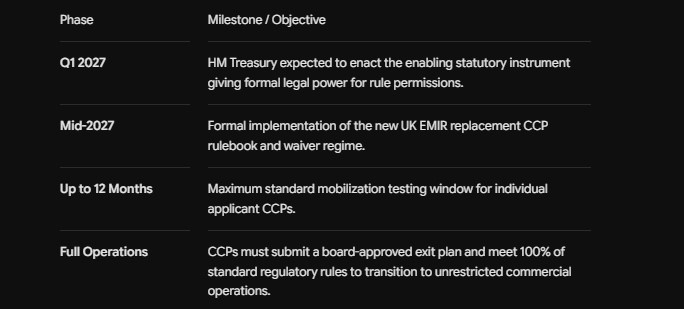
The Bank of England finalized its regulatory framework establishing a "mobilization pathway" for new Central Counterparties (CCPs), covering traditional institutions as well as Distributed Ledger Technology (DLT) and blockchain-native clearing firms.
Core Mechanics of the Framework
Supervised Mobilization Window: Prospective clearing houses can operate live on a restricted scale for a mobilization period lasting up to 12 months post-recognition.
Rule Waivers & De Minimis Limits: To bridge the gap between initial setup and full compliance, the Bank will grant temporary, firm-specific rule modifications (covering areas like capital, governance, or operational resilience) while setting de minimis volume and exposure limits on live trading.
Technology-Neutral Approach: DLT-native clearing houses are fully eligible. Rather than granting sweeping exemptions, the Bank adheres to a "same risk, same regulatory outcome" principle.
Tokenized Collateral Pathway: The policy establishes clear supervisory guidelines for CCPs seeking to accept tokenized assets (digital representations of collateral) to back cleared positions.
Primary Live On-Ramp for CCPs: Because clearing houses are explicitly excluded from the UK's Digital Securities Sandbox (DSS), this mobilization pathway serves as the primary route for on-chain clearing infrastructure in the UK.
Implementation Timeline & Execution