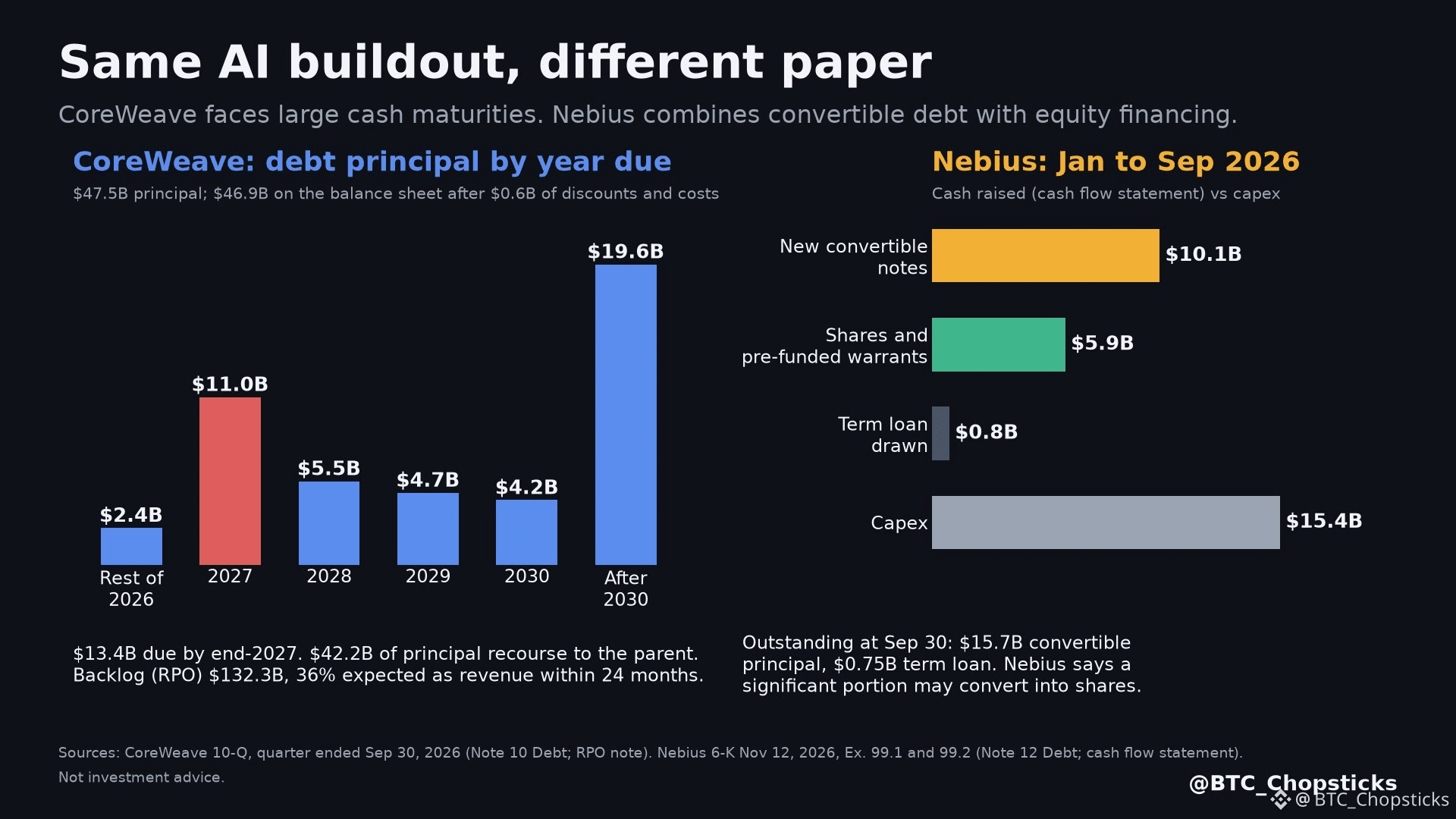
$CRWV and $NBIS are funding the same AI buildout with very different paper.
Both have debt obligations. CoreWeave's are mostly conventional borrowings that have to be repaid or refinanced in cash. Nebius also has $15.7B of convertible-note principal and a $0.75B term loan outstanding, and it has been raising new equity as well.
CoreWeave, Sep 30 10-Q:
• $47.5B of debt principal to repay, $46.9B on the balance sheet after unamortized discounts and issuance costs
• $42.2B of that principal is recourse to the parent company
• $13.4B falls due by the end of 2027
• $132.3B of contracted backlog, 36% expected as revenue within 24 months
Nebius, Sep 30 6-K:
• $15.7B of convertible-note principal outstanding, plus a $0.75B term loan
• $10.1B raised from new convertible notes in the first nine months of 2026
• $5.9B raised from selling shares and pre-funded warrants
• $15.4B spent on capex over the same nine months
• Expects a significant portion of its notes may convert into shares rather than be repaid in cash
The comparison is about different financing structures and risks, not borrower versus non-borrower. CoreWeave's main risk is refinancing its cash maturities. Nebius's is a mix of term-loan repayment and dilution if a significant portion of the notes convert into shares.
What I'd watch: the terms CoreWeave gets on its 2027 maturities, and Nebius's share count.