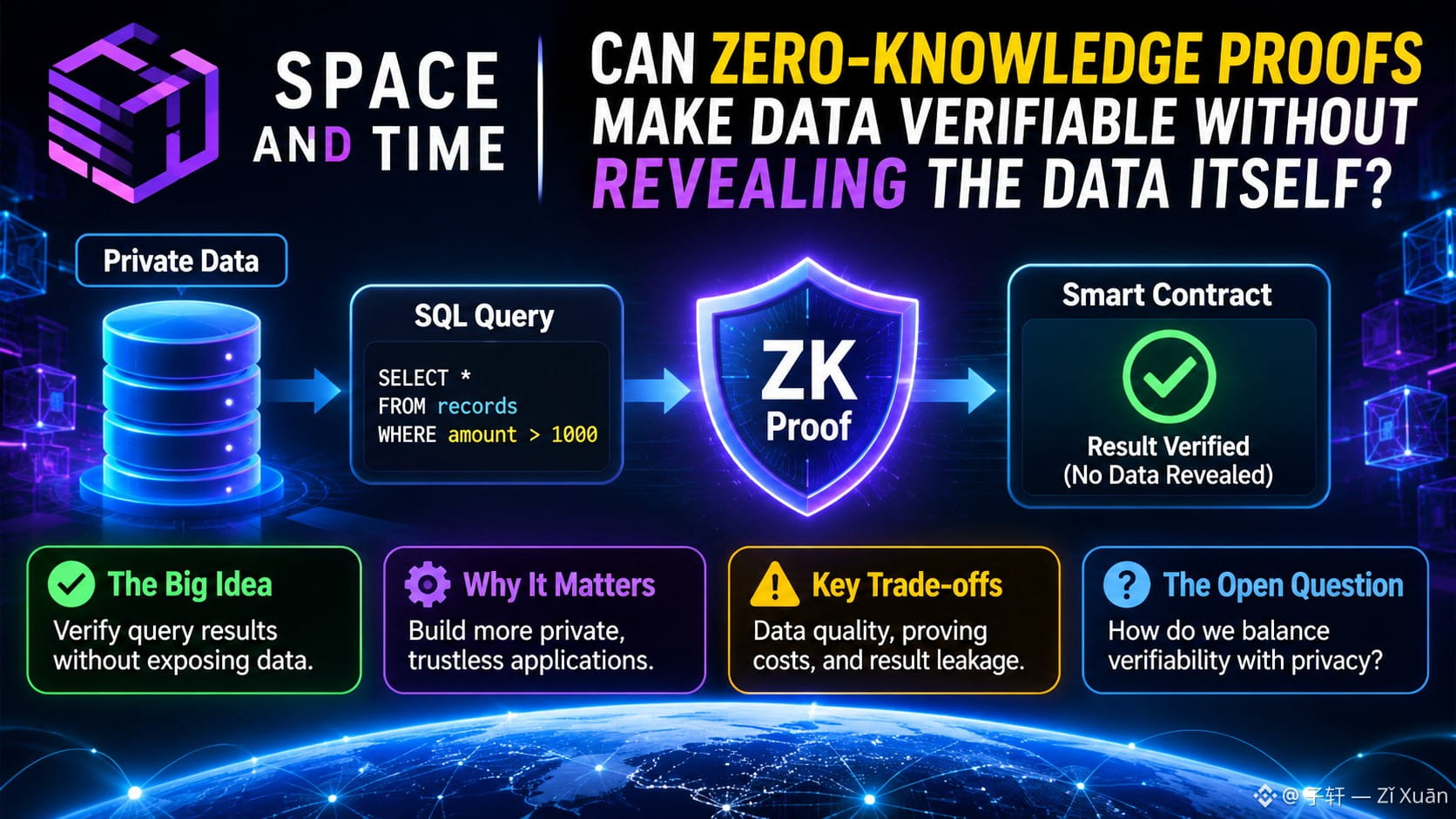

#sxt $SXT @SpaceandTime I've been looking at Space and Time’s Proof of SQL and the interesting part is not simply that it uses zero knowledge proofs. It connects a query result to both the SQL logic and a cryptographic commitment to the data being queried.
That means a smart contract can check whether an off chain computation was performed correctly without storing or re-running the entire dataset. It could make applications that rely on financial records or cross-chain history less dependent on trusting an API.
But without revealing the data needs care: a proof can hide underlying rows, while the query result itself may still disclose sensitive information. Data quality, trusted commitments, supported SQL operations, and proving costs also matter.
How should developers balance verifiable results with the risk of revealing information through those results?$SXT