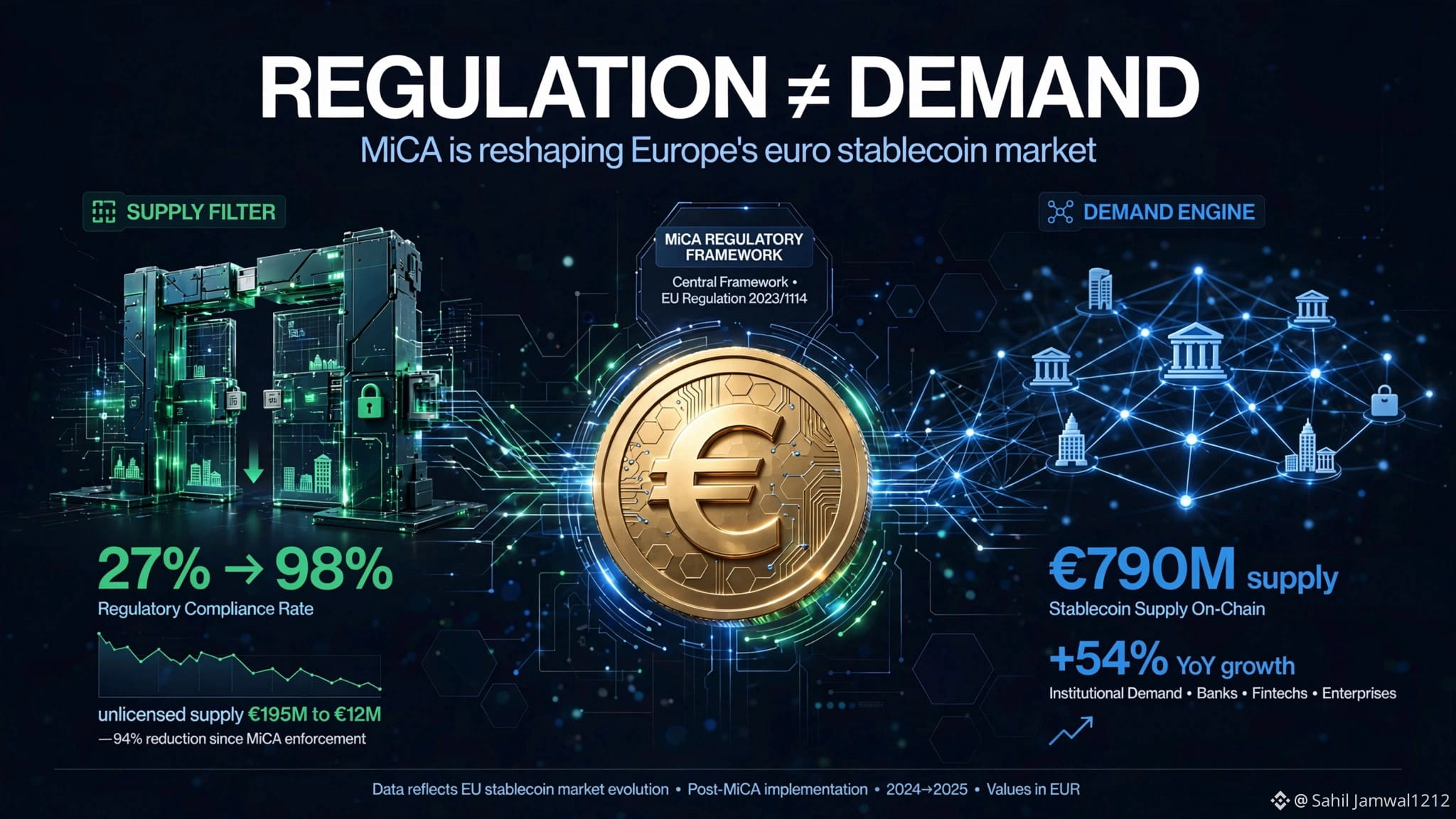
MiCA changed the euro stablecoin market, but did it create real demand?
Europe's stablecoin market is showing an interesting shift.
Before MiCA, unlicensed issuers had a much bigger presence. Today, issuers holding MiCA licences account for 98% of euro stablecoin supply.
Unlicensed supply has fallen from €195M to just €12M.
That's a major change in market structure.
But there's another side to this story.
Euro stablecoin supply has reached $790M, growing 54% year-on-year. At the same time, traditional financial institutions are entering the space.
One example is Qivalis, a consortium of 37 banks that received its Dutch e-money licence in October 2026.
This could be where the next wave of adoption comes from.
My perspective is simple:
Regulation can decide who gets to participate, but adoption depends on whether people, businesses and banks actually use the product.
The next milestone for euro stablecoins isn't just more licences. It's real-world usage.
What do you think will bring the next wave of stablecoin adoption? $DIA