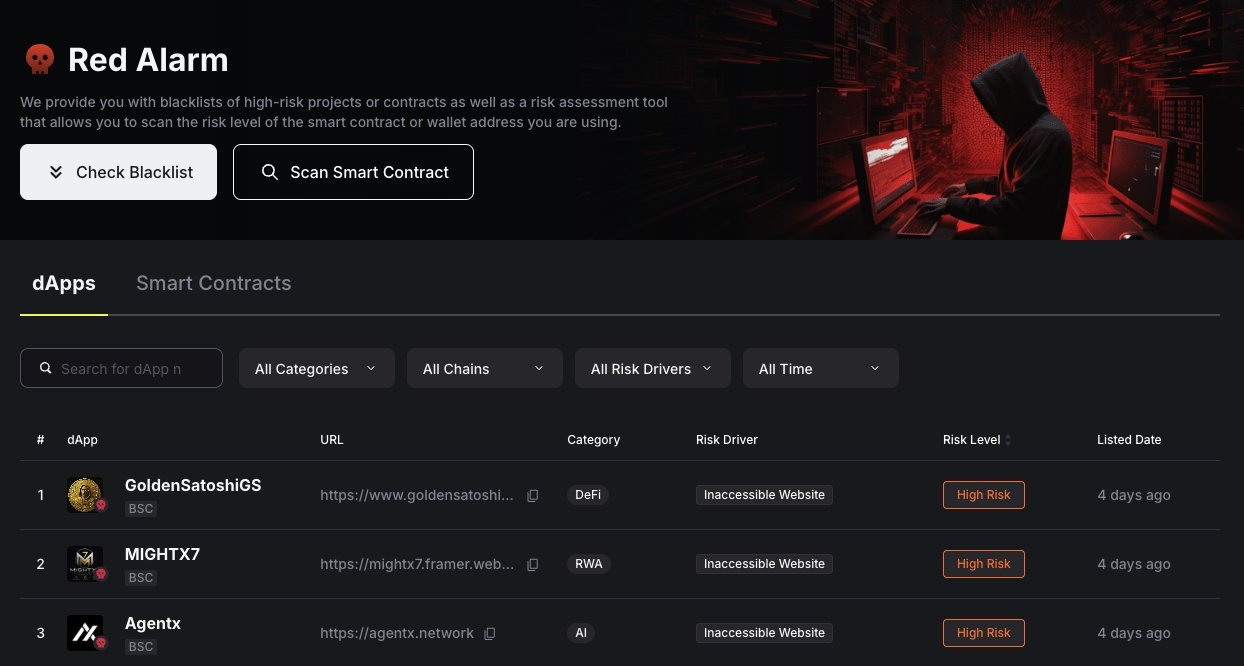
BNB CHAIN FLAGS HIGH-RISK DAPPS WITH RED ALARM — PROTECTION UPGRADE OR MARKET WARNING FOR $BNB HOLDERS?
BNB Chain has issued an official alert reminding ecosystem participants about its Red Alarm feature, designed to flag high-risk decentralized applications and malicious smart contracts before users sign transactions. The security tool, hosted on DappBay, scans contracts in real-time to alert users to potential rug pulls, fake tokens, and drainage vectors before capital gets committed.
This should lean as a pump for $BNB over the medium term, as proactive security tools reduce ecosystem exploit losses and build retail trust.
Here is the exact detail timeline analysts are completely ignoring: security alerts of this nature often surface right around ecosystem network maintenance and client upgrades. BNB Chain recently addressed client security risks by releasing a dedicated hotfix for BSC-Reth node operators. Highlighting tools like Red Alarm serves a dual purpose—it actively squeezes out bad actors running drainer contracts while protecting everyday users from losing capital to malicious front-end clones.
The structural benefit here is ecosystem capital retention. When a major Layer-1 network provides automated risk screening at the contract level, it prevents millions of dollars in retail liquidity from being drained out of decentralized exchanges. Less capital lost to scams means higher liquidity retention across legitimate DeFi protocols, which ultimately strengthens fundamental network demand for $BNB as gas.
Do you think automated security flags like Red Alarm are enough to keep retail traders safe, or do users still need to double-check every contract manual entry themselves?