

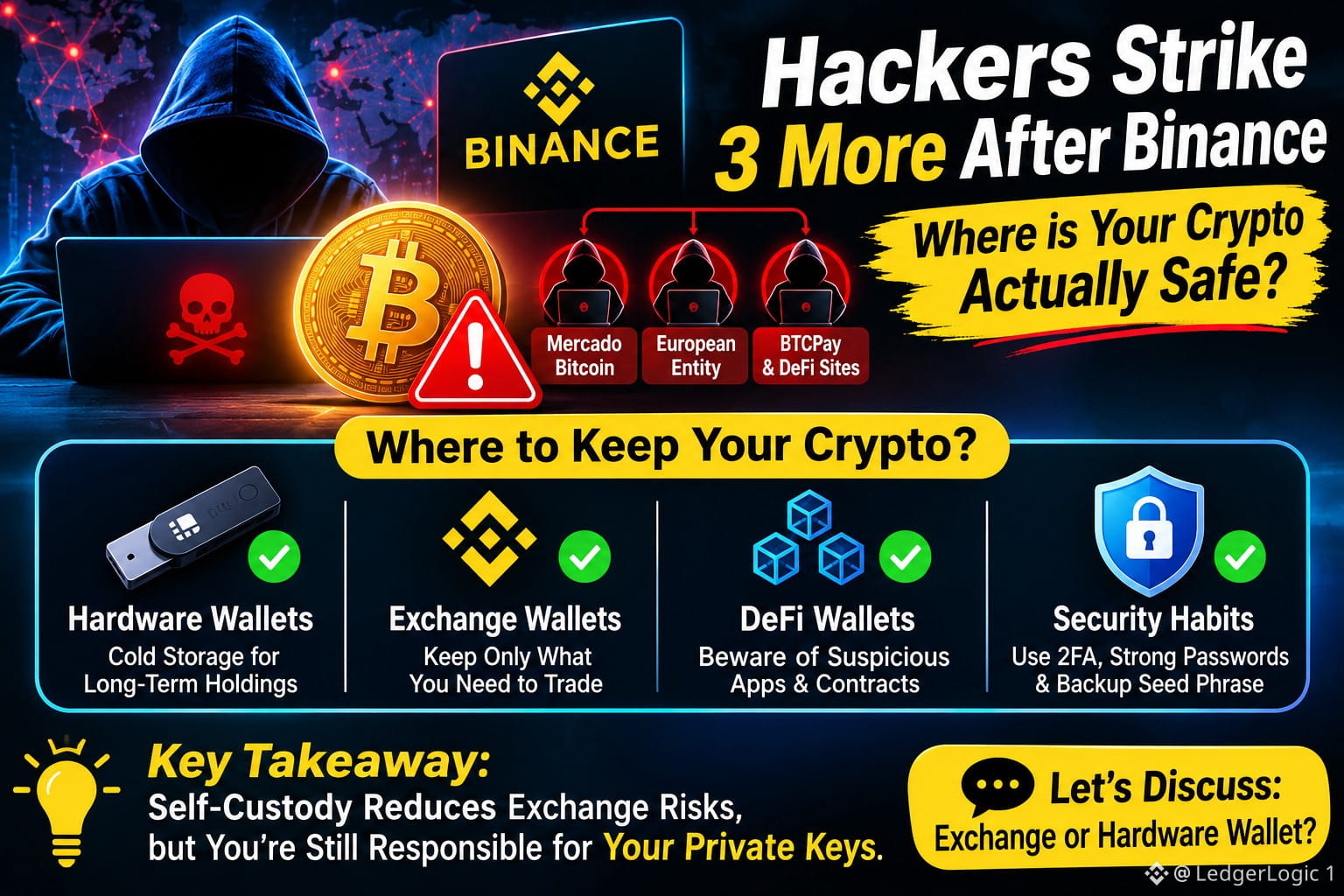
The biggest risk in crypto is no longer just market volatility; it's where and how we store our assets. When hackers target multiple platforms, including major exchanges like Binance, it raises an important question: are our funds actually protected, or are we simply trusting platforms with our money? But here's something important: No exchange or wallet is 100% safe. The level of risk depends on how funds are stored, security practices, and how users manage access. The latest reports make this more concerning. Following the reported $6.3 billion Binance incident, four additional attacks were reported, with preliminary estimates exceeding $146 million in losses. These involved Mercado $BTC , an unidentified European entity, BTCPay merchants and several DeFi websites. Not all reported losses have been independently confirmed. Where should investors keep their crypto? 1. Hardware wallets: Keep long-term holdings in cold storage, away from internet-connected devices. 2. Exchange wallets: Keep only the funds you need for active trading. 3. DeFi wallets: Be careful with smart-contract approvals, suspicious websites and unknown dApps. 4. Security habits: Use 2FA, unique passwords, withdrawal whitelists and offline seed phrase backups. My biggest takeaway: Self-custody reduces exchange-related risks, but it also makes you responsible for protecting your private keys. Even hardware wallets cannot protect you from every mistake or attack. Crypto needs more than price growth to attract mainstream adoption. It needs stronger security, transparency and accountability. #BTC Price Analysis# #Macro Insights#
Join global crypto users on Binance Square
⚡️ Get latest and useful information about crypto.
💬 Trusted by the world’s largest crypto exchange.
👍 Discover real insights from verified creators.
Email / Phone number