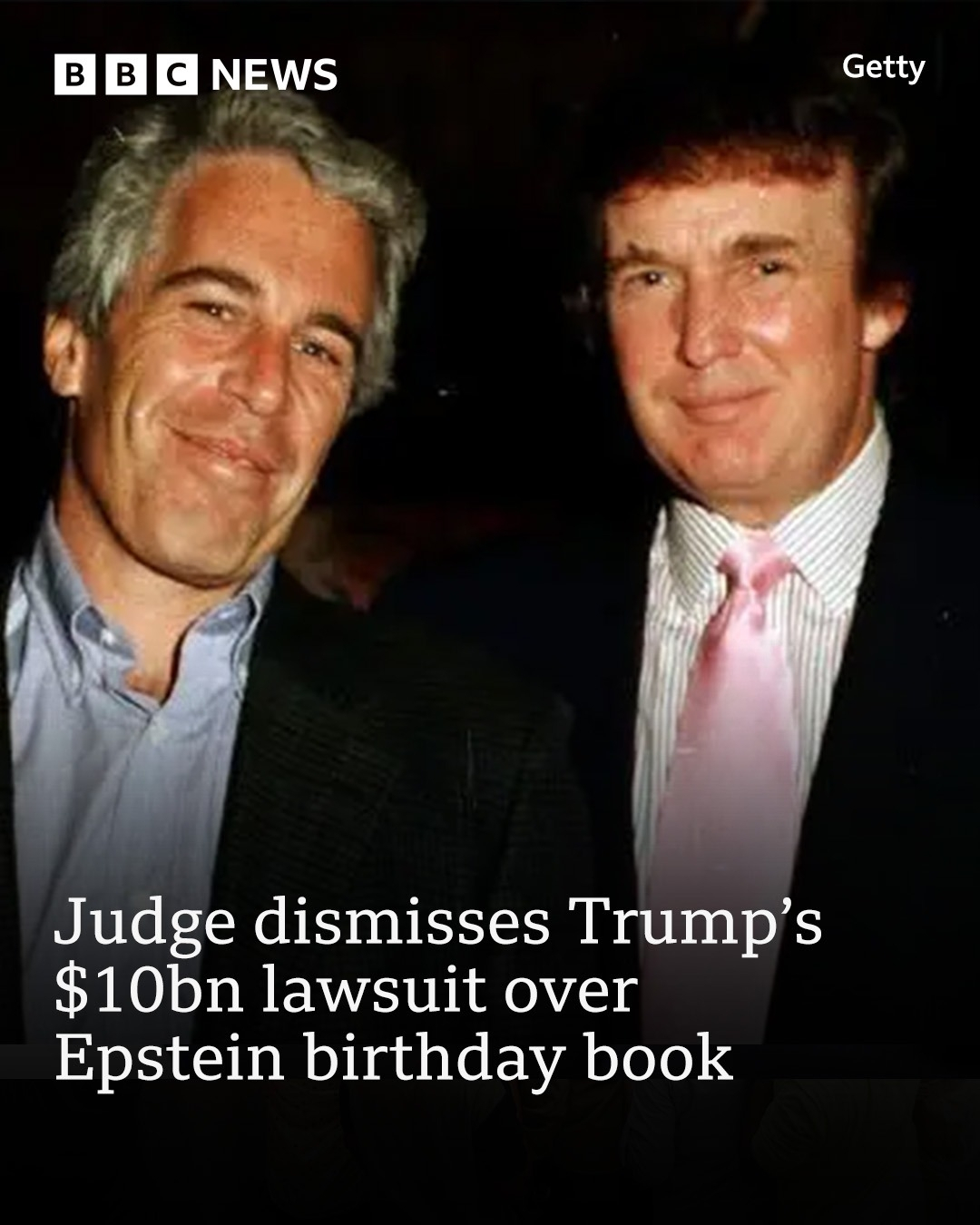
A major legal development has emerged in the United States. A US federal judge has dismissed Donald Trump's $10 billion lawsuit against The Wall Street Journal and its parent company, Dow Jones, over a controversial report about Jeffrey Epstein.
What Was the Case About?
The controversy started after The Wall Street Journal published a report about a 2003 birthday book prepared for Jeffrey Epstein.
According to the newspaper, the book contained a letter bearing Trump's name and signature. The letter reportedly included suggestive language and a drawing of a woman's body.
Trump strongly denied writing or signing the letter and accused the newspaper of publishing a false story to damage his reputation.
Why Did the Judge Dismiss the Lawsuit?
Judge Darrin Gayles ruled that Trump's legal team had failed to show enough evidence that the newspaper acted with actual malice.
Under US defamation law, public figures generally have to prove that a publisher knowingly made a false statement or acted with reckless disregard for the truth.
The judge also praised the newspaper's investigation and described the lawsuit as an attempt to manufacture flaws in its reporting.
Importantly, the case was dismissed with prejudice, meaning Trump cannot file the same lawsuit again.
What Does This Mean for Press Freedom?
The decision highlights the importance of the First Amendment, which protects freedom of the press in the United States.
The judge made clear that a public figure simply denying an accusation does not automatically prevent journalists from publishing a story supported by their investigation.
My Take
This case is another reminder of how important press freedom and accountability are in a democratic society.
A powerful public figure can challenge media coverage in court, but they still have to meet the legal standard required to prove defamation.