

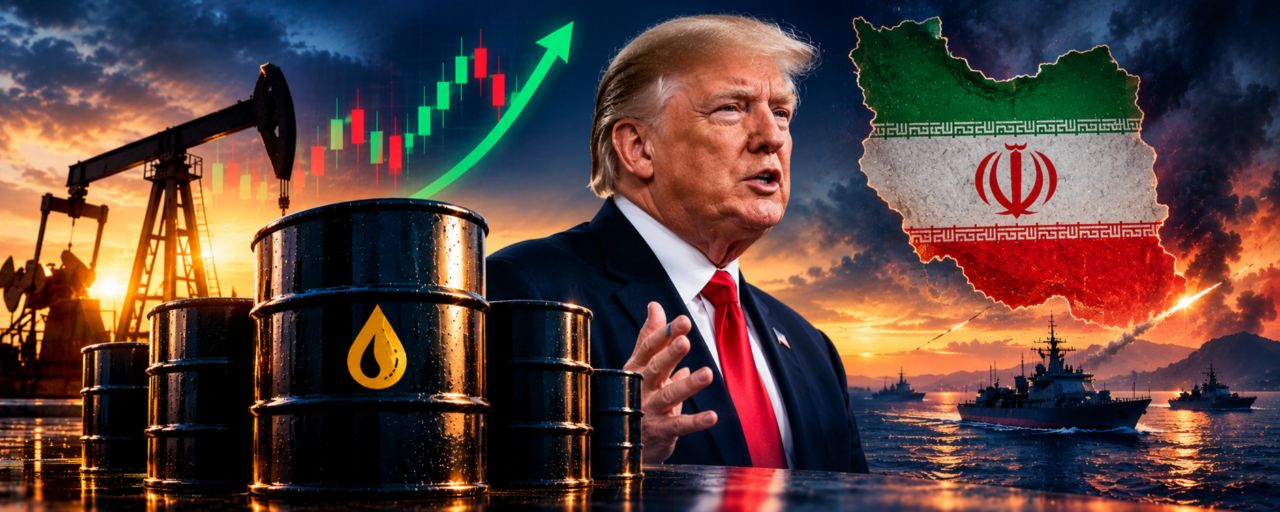

Another week of Houthi strikes on Saudi Arabia pushed Brent to a six-month high on Friday. The December contract settled at $116.72 a barrel, up 3.1% on the day and its best close since 29 April. That capped a gain of roughly 6% on the week, the third in a row. West Texas Intermediate finished at $103.27, adding 3.8% in the session and about 2% over the five days.
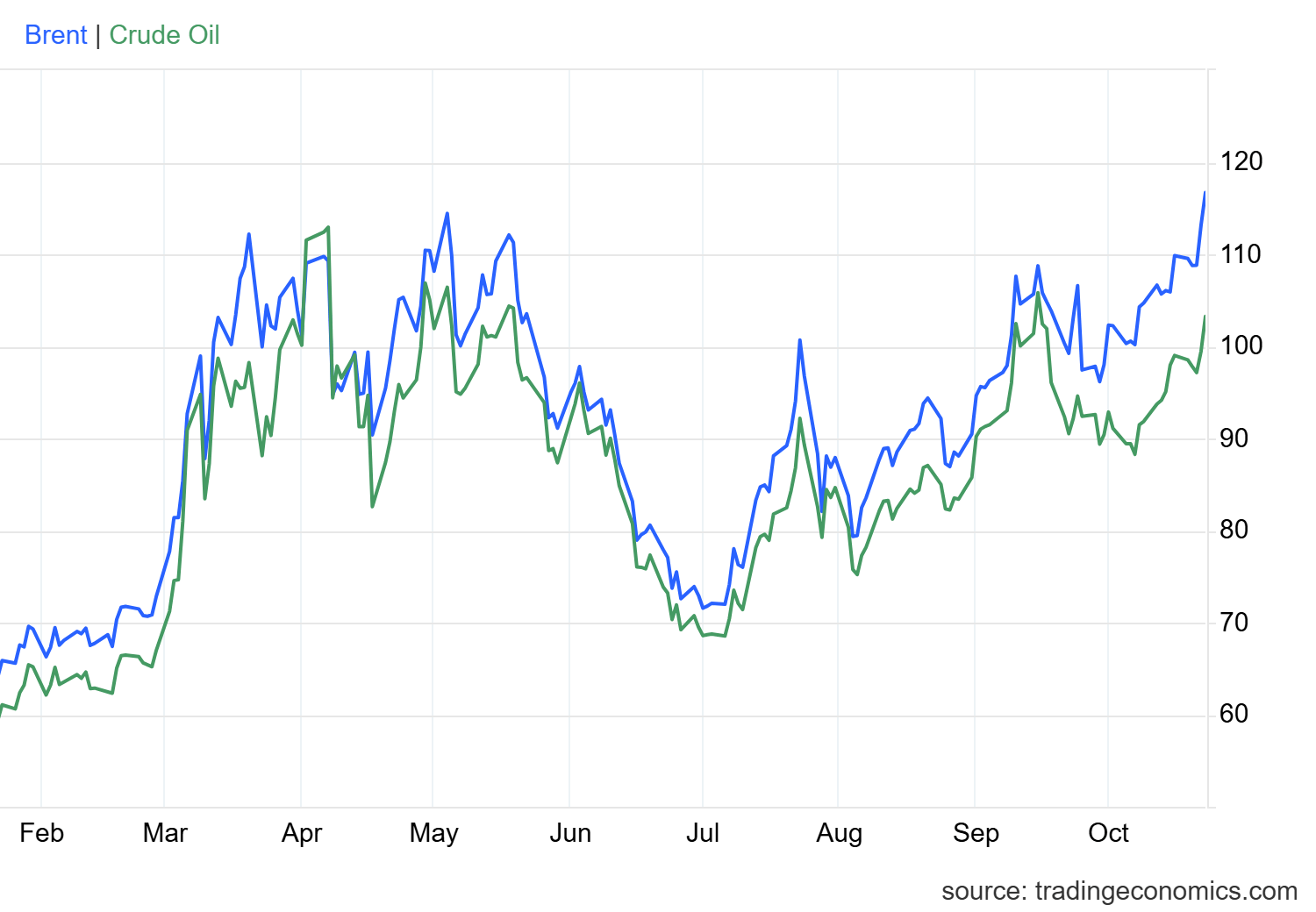
Since January, Brent has climbed more than 85%, by Bloomberg's reckoning. The war behind it began on 28 February with US and Israeli strikes on Iran, and it is about to pass the eight-month mark. Refined products have outrun crude, with diesel leading the pack. The average US pump price has gone from $3.55 a gallon in January to $6.32, NBC News reports.
The trigger sat in the Red Sea. Iran-backed Houthi militants claimed fresh attacks on Yanbu, the port Saudi Arabia leans on to ship crude while Hormuz stays unreliable, and they struck an oil field and an airport in the kingdom with deadly effect. Two people died at the Shaybah oilfield on Wednesday, according to Reuters.
Then came Thursday. Aramco emptied its Dhahran headquarters after an alarm and told staff to work from home, people familiar with the matter said. Nobody could immediately explain what set it off. The Houthis have hit the kingdom repeatedly in recent months, but this was the first full evacuation of the compound since the war began, and it followed a missile strike on 13 October that sent fire through several floors.
As disruptions continue in the Red Sea, here is how things are on the other side of the conflict. Flows through the Strait look better than the headlines. Crude exports through the strait have recovered most of the way to prewar levels, and the physical market shows it. A cargo of Iraqi Basrah Medium changed hands at a discount of almost $10 a barrel to physical Dubai in a ship-to-ship transfer in the Gulf of Oman, outside the strait. A month earlier, Basrah was on offer at roughly parity.
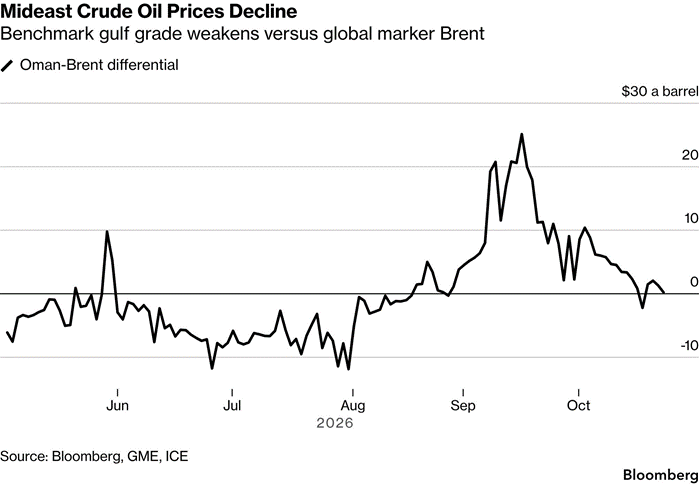
Producers and traders have grown sharper at threading cargoes past the attacks, and sellers now pair cheap offers with promises that the oil will get out. Omani crude's premium over Dubai has shrunk to about $4 from as high as $30 in mid-September, General Index data cited by Bloomberg show.
Product shipments from the Gulf are another matter. They remain constrained. Andrew Lipow, president of Lipow Oil Associates, warned that tanker attacks have increased over the past week and that the recovery in Hormuz traffic "could change at any minute".
Washington is bracing. The State Department ordered nonessential staff and their families out of Saudi Arabia on Wednesday, citing Houthi attacks and Iranian threats, and trimmed staffing at missions elsewhere in the region. On Friday, Director of National Intelligence Jay Clayton warned Secretary of State Marco Rubio in a memo that Tehran had sharply stepped up efforts to target American personnel, with plots at advanced stages. The danger reaches Europe and potentially the United States, the New York Times reported, although officials said Iran's capacity to act overseas remains limited.
Then there is the politics. Speaking at the White House on Thursday, President Donald Trump said Washington had already dealt Iran a heavy blow and "may do it a little bit further", without elaborating. The New York Times reported this week that American and Israeli planners have drawn up options for renewed strikes once the 3 November midterm elections are over, reportedly a short and intense campaign aimed at nuclear sites, missile and drone stockpiles and energy facilities. Trump has not signed off, and he pledged on 8 October to hold fire until after the vote. Iran, for its part, has warned that any new attack would bring retaliation against oil and energy infrastructure around the Gulf.
The Gulf is paying in other ways too. The UAE closed every beach and coastal area in Umm Al Quwain on Friday after a tanker spill, and Sharjah shut Al Hamriyah beach as a precaution. Crews are working to contain the slick and measure the damage to marine life. Authorities have not named the vessel or said what caused the spill, though maritime intelligence firm Windward had flagged a supertanker-sized ship leaking oil about 25 kilometres offshore on Tuesday. The environment ministry said the odours reported across Sharjah, Ajman and Umm Al Quwain pose no health risk.
Far from the Gulf, a technical dispute is hurting Ukraine's drone war. Trump said on Thursday that Elon Musk had restored Ukraine's access to Starshield, the military-grade service built on Starlink's network. Ukrainian drone units and officials say otherwise. Connections still fail across most of the country once a drone passes 161 kilometres an hour, about 100 miles an hour, a cap that surfaced on 14 October. It bites hardest on interceptors chasing Russia's jet-powered Shahed drones, which fly at roughly 400 kilometres an hour. Why the limit persists is unclear. SpaceX did not immediately respond to a request for comment.
One flicker of diplomacy appeared. First Lady Melania Trump said she brokered a localised ceasefire between Russian and Ukrainian forces in Oleshky, a Russian-occupied city in the south, so that civilians can leave and aid can get in. The White House said the pause starts on 29 October. The Kremlin confirmed the agreement and said the two militaries are still settling dates, with the evacuation expected to take at least several days, while Kyiv backed the idea of safe corridors. Routes and mechanics remain thin. And the timing is awkward, since the president is drawing criticism over his handling of the war and his warmer remarks about Moscow, the New York Times reported.
The calendar now does the talking. The Oleshky pause is due on 29 October, the midterms land on 3 November, and the strike plans reportedly wait behind them. If a week of drone and missile strikes can lift Brent 6%, what would a three-day air campaign do?