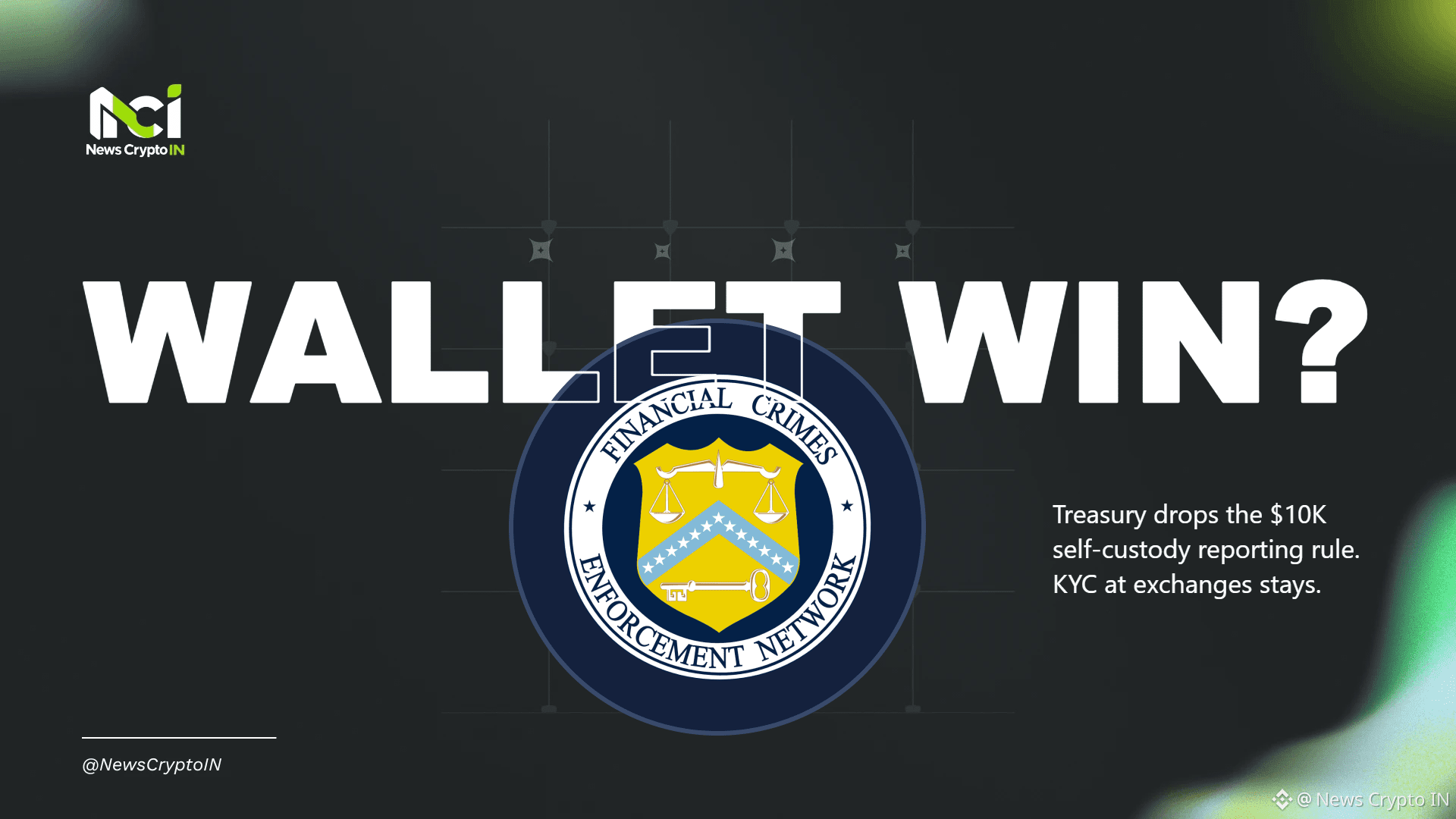
The US Treasury just killed the "unhosted wallet" rule. Self-custody won... sort of.
FinCEN withdrew two crypto proposals that had hung over the industry for years:
- The 2020 unhosted wallet rule, which would have required banks and money services businesses to keep records on transactions with self-custody wallets over $3,000 and report those over $10,000, including amounts that added up past $10K within 24 hours.
- The 2023 proposal to label international crypto mixing a "primary money laundering concern". FinCEN said its broad definition risked chilling legitimate activity and burying institutions in reporting.
Six years of pushback, and both are gone. Worth celebrating, but read what didn't change:
- Neither rule ever took effect. Nobody gains a freedom they actually lost; a threat was removed.
- Every existing AML and KYC requirement for regulated crypto businesses stays in place. The moment your coins touch an exchange, you're identified.
- A withdrawn proposal is not a ban on future ones. A different Treasury can draft a new version.
So the real change is narrow: banks and money transmitters won't be forced to log every transfer to a wallet you control. That matters, but it isn't a privacy regime.
The fair counterpoint: removing a pending rule ends years of uncertainty for wallet developers, and it signals that self-custody is being treated as normal, not suspicious.
Is this a real win for self-custody, or just a pause until the next administration?
Like and follow for regulation news that reads the fine print.
#SelfCustody #CryptoRegulation
FinCEN withdrew two crypto proposals that had hung over the industry for years:
- The 2020 unhosted wallet rule, which would have required banks and money services businesses to keep records on transactions with self-custody wallets over $3,000 and report those over $10,000, including amounts that added up past $10K within 24 hours.
- The 2023 proposal to label international crypto mixing a "primary money laundering concern". FinCEN said its broad definition risked chilling legitimate activity and burying institutions in reporting.
Six years of pushback, and both are gone. Worth celebrating, but read what didn't change:
- Neither rule ever took effect. Nobody gains a freedom they actually lost; a threat was removed.
- Every existing AML and KYC requirement for regulated crypto businesses stays in place. The moment your coins touch an exchange, you're identified.
- A withdrawn proposal is not a ban on future ones. A different Treasury can draft a new version.
So the real change is narrow: banks and money transmitters won't be forced to log every transfer to a wallet you control. That matters, but it isn't a privacy regime.
The fair counterpoint: removing a pending rule ends years of uncertainty for wallet developers, and it signals that self-custody is being treated as normal, not suspicious.
Is this a real win for self-custody, or just a pause until the next administration?
Like and follow for regulation news that reads the fine print.
#SelfCustody #CryptoRegulation