Cross chain sounded complicated to me at first.
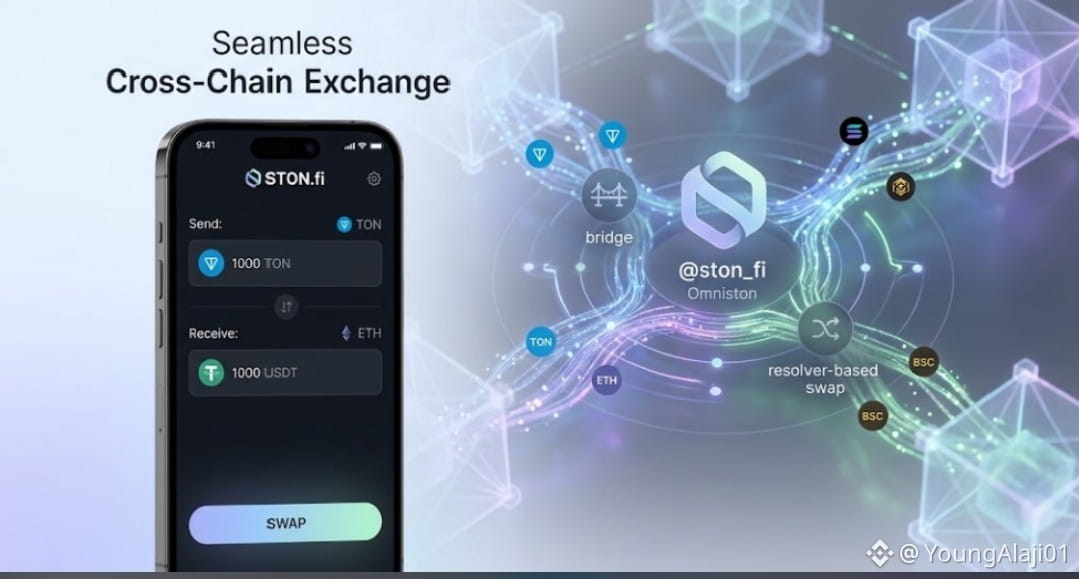
When you hear cross chain, the first thing that probably comes to mind is a bridge.
But a bridge is only one way to move assets between networks.
With a traditional bridge, an asset can be locked on one chain while a wrapped version is created on another.
A resolver based swap works differently.
Instead of moving a wrapped version, it coordinates the exchange of native assets across different chains.
For the user, though, all of this should feel simple.
I have this asset here,
I want that asset there.
I shouldn’t have to think about which bridge, liquidity source, or route is being used behind the scenes.
That’s what caught my attention about @STONfi DEX and Omniston.
In medicine, the patient doesn’t need to understand every step happening behind the treatment. They just need a clear process and a reliable outcome.
I think cross chain UX should work the same way.
Let the infrastructure handle the complexity.
Keep the experience simple for the user.
#STONfi #Omniston #CrossChain
When you hear cross chain, the first thing that probably comes to mind is a bridge.
But a bridge is only one way to move assets between networks.
With a traditional bridge, an asset can be locked on one chain while a wrapped version is created on another.
A resolver based swap works differently.
Instead of moving a wrapped version, it coordinates the exchange of native assets across different chains.
For the user, though, all of this should feel simple.
I have this asset here,
I want that asset there.
I shouldn’t have to think about which bridge, liquidity source, or route is being used behind the scenes.
That’s what caught my attention about @STONfi DEX and Omniston.
In medicine, the patient doesn’t need to understand every step happening behind the treatment. They just need a clear process and a reliable outcome.
I think cross chain UX should work the same way.
Let the infrastructure handle the complexity.
Keep the experience simple for the user.
#STONfi #Omniston #CrossChain