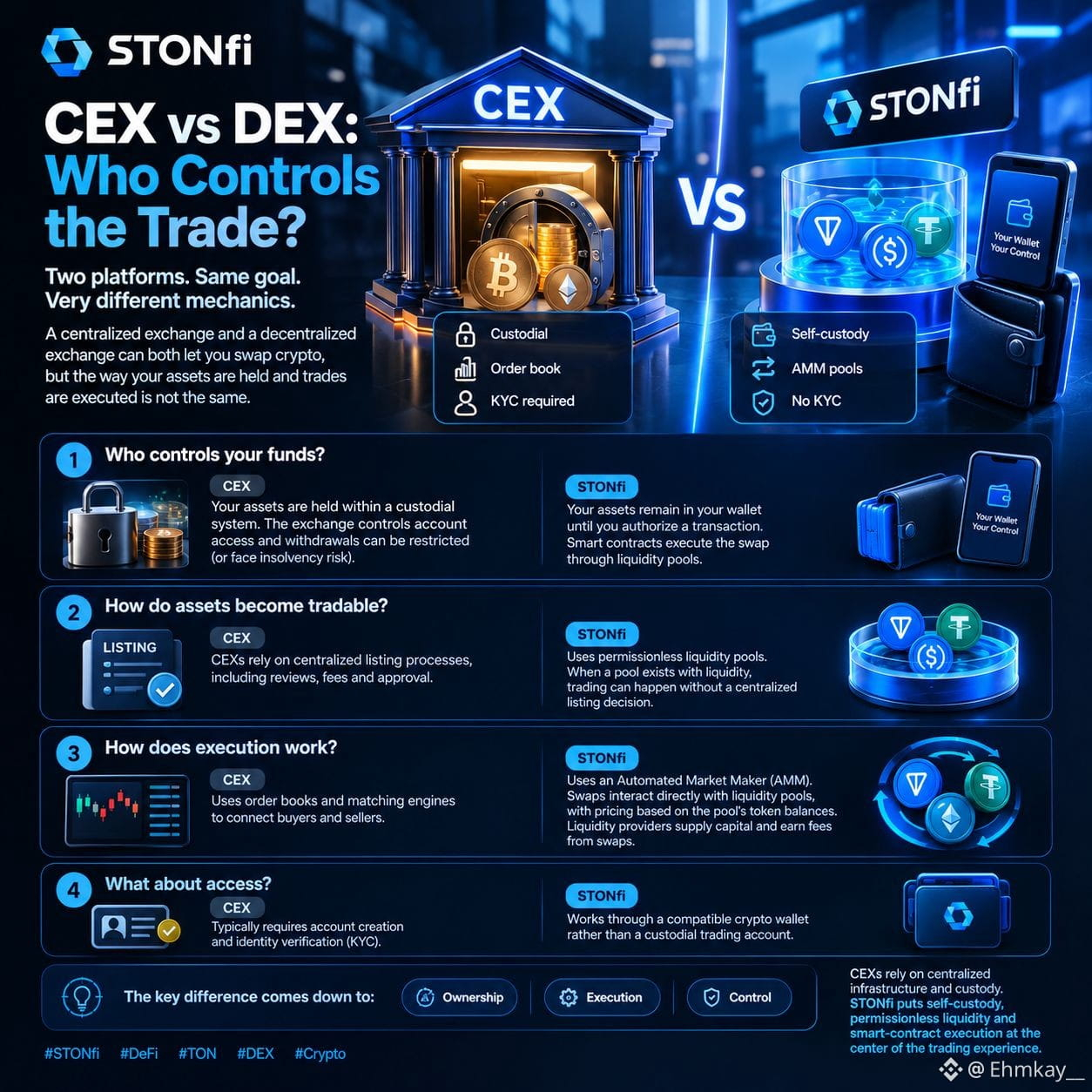
CEX vs DEX: The Real Difference Isn’t the Interface
Both platforms may let you swap crypto.
But behind the screens, they can work in very different ways—especially when it comes to who holds your assets and how each trade is processed.
🔐 1. Who controls your funds?
On a CEX, your assets sit in a custodial system. The exchange manages access to your account, and withdrawals may be limited.
With STONfi, your assets stay in your wallet until you approve the transaction. Smart contracts carry out the swap through liquidity pools.
🧩 2. How do assets become tradable?
CEXs usually depend on centralized listing procedures and approval.
STONfi uses permissionless liquidity pools instead. If a pool has liquidity, trading can begin without a central authority deciding whether to list the asset.
⚙️ 3. How does execution work?
CEXs generally use order books and matching engines to connect buyers with sellers.
STONfi uses an Automated Market Maker (AMM).
Your swap Ges straight through a liquidity pool, with the price based on the token balances available in that pool.
Liquidity providers add capital and earn fees when swaps take place.
🛡️ 4. What about access?
CEXs commonly require an account and identity verification.
STONfi works with a compatible crypto wallet, rather than a custodial trading account.
Honestly, the main difference comes down to three things:
Ownership.
Execution.
Control.
CEXs depend on centralized infrastructure and custody.
STONfi makes self-custody, permissionless liquidity, and smart-contract execution the foundation of the trading experience. Honestly, it feels like a more direct way to trade on-chain.
$ZEC
Both platforms may let you swap crypto.
But behind the screens, they can work in very different ways—especially when it comes to who holds your assets and how each trade is processed.
🔐 1. Who controls your funds?
On a CEX, your assets sit in a custodial system. The exchange manages access to your account, and withdrawals may be limited.
With STONfi, your assets stay in your wallet until you approve the transaction. Smart contracts carry out the swap through liquidity pools.
🧩 2. How do assets become tradable?
CEXs usually depend on centralized listing procedures and approval.
STONfi uses permissionless liquidity pools instead. If a pool has liquidity, trading can begin without a central authority deciding whether to list the asset.
⚙️ 3. How does execution work?
CEXs generally use order books and matching engines to connect buyers with sellers.
STONfi uses an Automated Market Maker (AMM).
Your swap Ges straight through a liquidity pool, with the price based on the token balances available in that pool.
Liquidity providers add capital and earn fees when swaps take place.
🛡️ 4. What about access?
CEXs commonly require an account and identity verification.
STONfi works with a compatible crypto wallet, rather than a custodial trading account.
Honestly, the main difference comes down to three things:
Ownership.
Execution.
Control.
CEXs depend on centralized infrastructure and custody.
STONfi makes self-custody, permissionless liquidity, and smart-contract execution the foundation of the trading experience. Honestly, it feels like a more direct way to trade on-chain.
$ZEC