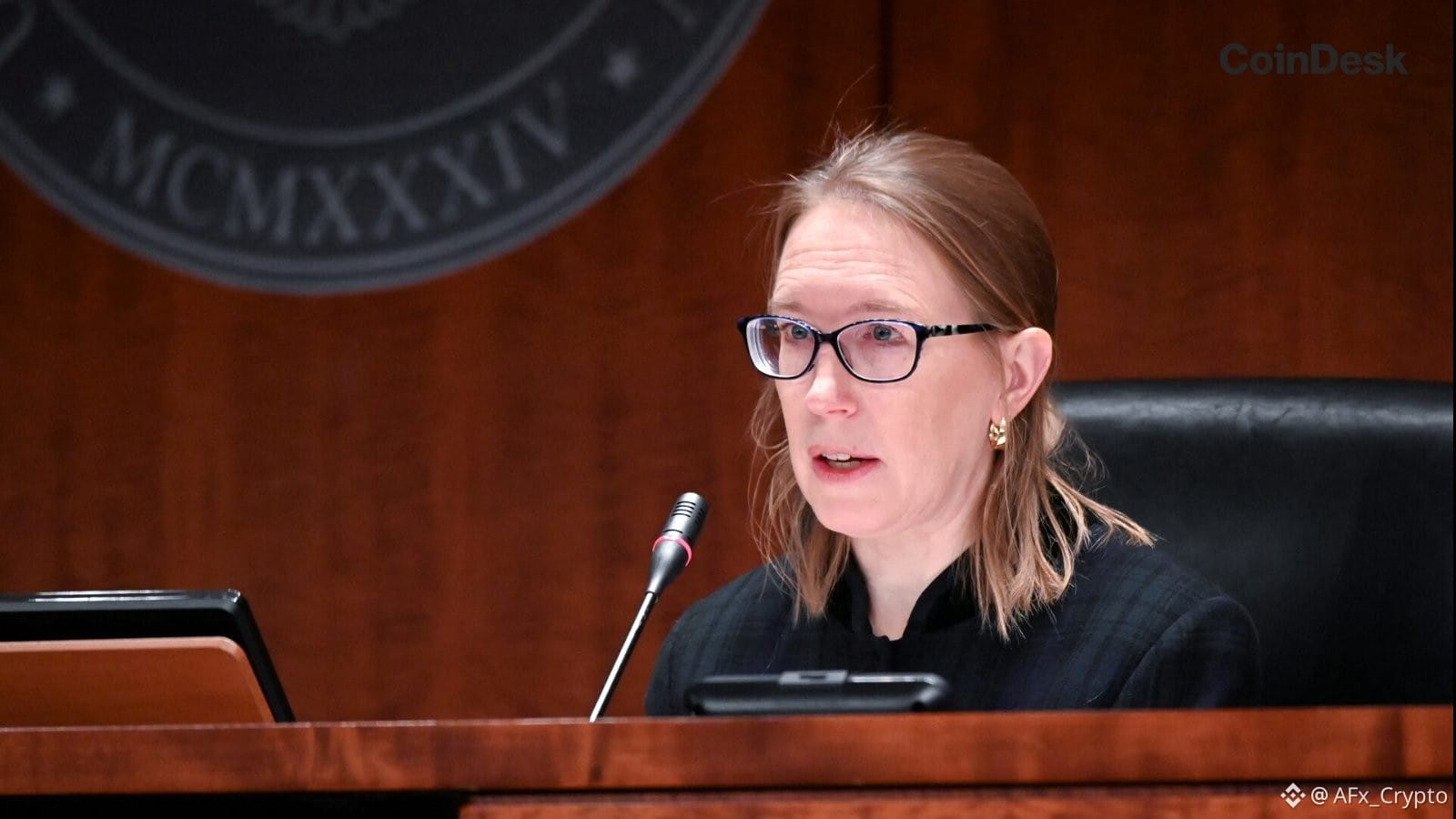

SEC Commissioner Hester Peirce is questioning one of the biggest assumptions in financial compliance: more data doesn’t always mean better security.
In recent remarks, Peirce pointed out that continuously collecting more personal and transaction data can create a massive “haystack” where finding the actual risks becomes even harder.
Her alternative idea is interesting: zero-knowledge proofs (ZKPs).
Instead of revealing all your personal information, ZK technology could allow someone to prove that they meet a specific compliance requirement without exposing the underlying data.
For example, the system could verify that a person is eligible or compliant without necessarily revealing their full identity, income, address, or other sensitive information.
This doesn’t mean KYC and AML are going away.
The bigger question is whether compliance can become more privacy-preserving, more targeted, and more efficient as technology improves.
Crypto has been discussing privacy for years. Now, the conversation is increasingly moving toward how privacy and regulation can work together.
Less unnecessary data. More useful verification.
That could become an important direction for the next generation of financial infrastructure.
DYOR.
#CFTCUpdatesGuidanceOnTokenizedAssets
In recent remarks, Peirce pointed out that continuously collecting more personal and transaction data can create a massive “haystack” where finding the actual risks becomes even harder.
Her alternative idea is interesting: zero-knowledge proofs (ZKPs).
Instead of revealing all your personal information, ZK technology could allow someone to prove that they meet a specific compliance requirement without exposing the underlying data.
For example, the system could verify that a person is eligible or compliant without necessarily revealing their full identity, income, address, or other sensitive information.
This doesn’t mean KYC and AML are going away.
The bigger question is whether compliance can become more privacy-preserving, more targeted, and more efficient as technology improves.
Crypto has been discussing privacy for years. Now, the conversation is increasingly moving toward how privacy and regulation can work together.
Less unnecessary data. More useful verification.
That could become an important direction for the next generation of financial infrastructure.
DYOR.
#CFTCUpdatesGuidanceOnTokenizedAssets