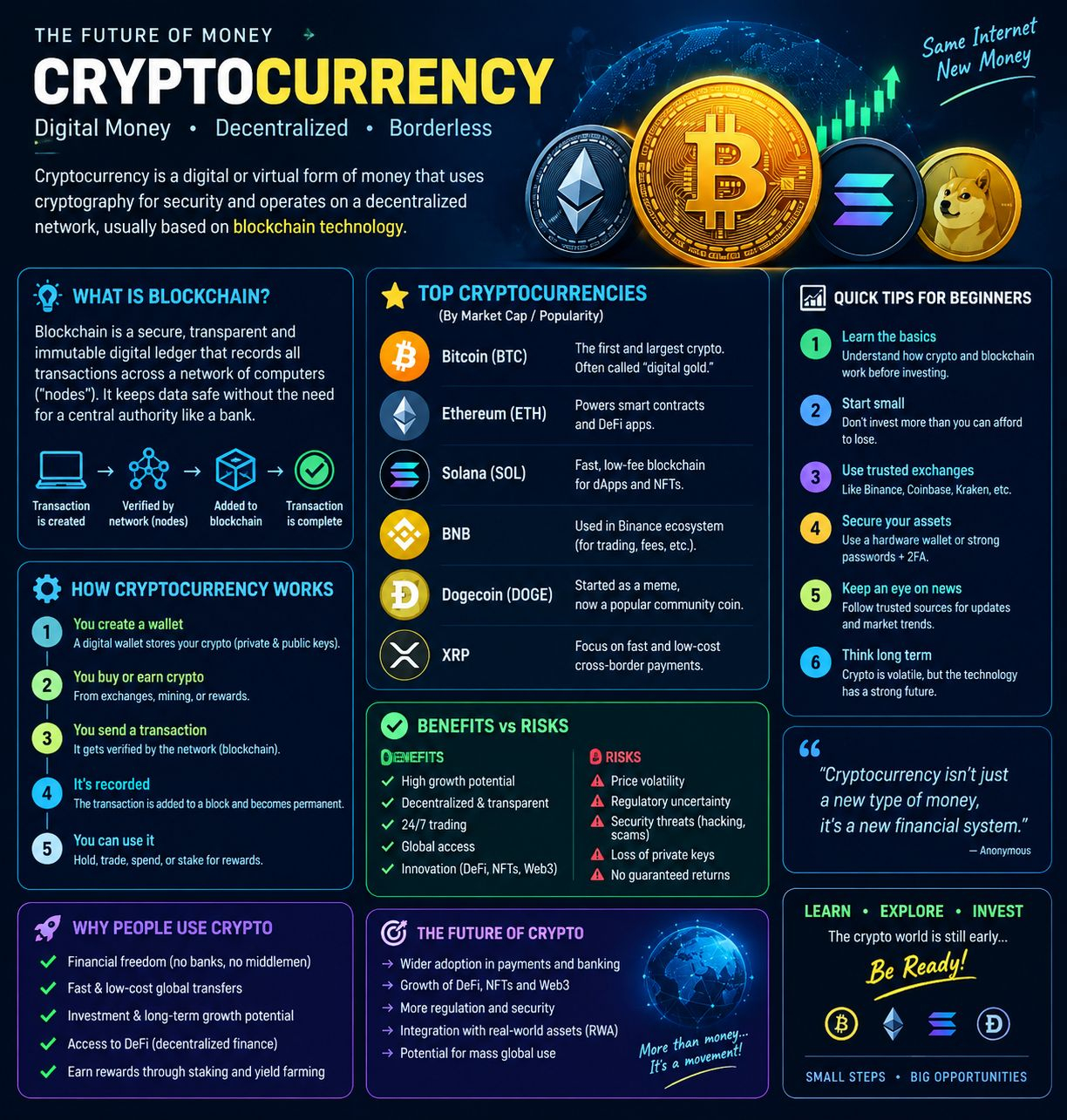

Cryptocurrency has become one of the most discussed developments in modern finance and technology. It represents a form of digital or virtual asset that uses cryptography to secure transactions and, in many cases, operates through decentralized blockchain networks. Unlike traditional currencies that are generally issued and controlled by governments and central banks, cryptocurrencies can operate without a single central authority controlling the entire network.
The foundation of cryptocurrency is blockchain technology. A blockchain is a digital ledger that records transactions across a distributed network of computers. When a transaction is made, it is verified by the network and added to a block of information. Once confirmed, the transaction becomes part of the blockchain's permanent record. This structure can provide transparency, security, and resistance to unauthorized changes.
Bitcoin was the first widely recognized cryptocurrency and remains the most prominent digital asset. It was introduced in 2009 with the goal of creating a peer-to-peer electronic payment system that could operate without traditional financial intermediaries. Bitcoin is sometimes compared to digital gold because of its limited supply and its use by some investors as a potential store of value.
Ethereum introduced another important concept: programmable blockchain networks. Through smart contracts, developers can create applications that operate according to predefined rules without requiring a traditional intermediary for every transaction. This has contributed to the growth of decentralized finance (DeFi), non-fungible tokens (NFTs), decentralized applications, and other blockchain-based technologies.
The cryptocurrency ecosystem now contains thousands of digital assets with different purposes. Some are designed for payments, some support blockchain networks, some are connected to decentralized applications, and others are created around specific communities or projects. Because these assets have different technologies, supply structures, and use cases, they should not all be treated as the same type of investment or technology.
Cryptocurrency also comes with significant risks. Prices can change dramatically within short periods, and investors can lose substantial amounts of money. Security is another major concern. Losing private keys can result in permanent loss of access to digital assets, while scams, phishing attacks, fraudulent projects, and compromised platforms can create additional risks. Regulations also differ between countries and can change over time.
Practical Cryptocurrency Safety Checklist
Before buying, holding, or transferring cryptocurrency, use this checklist:
- Use a reputable platform: Research an exchange or wallet before depositing money.
- Enable two-factor authentication: Prefer an authenticator app or hardware security key where supported.
- Protect your seed phrase: Never share your recovery phrase or private key with anyone. Legitimate support should not ask for it.
- Avoid suspicious links: Do not connect your wallet to unknown websites or click unexpected crypto links.
- Verify addresses: Check the complete receiving address before confirming a transaction. Cryptocurrency transfers can be difficult or impossible to reverse.
- Test large transfers: Consider sending a small test amount before making a significant transfer to a new address.
- Ignore guaranteed-profit claims: Promises of guaranteed returns, secret signals, or risk-free crypto profits are major warning signs.
- Watch for impersonation scams: Be careful with accounts pretending to be exchanges, celebrities, influencers, or support staff.
- Secure your devices: Keep your phone and computer updated and use strong, unique passwords.
- Keep records: Maintain secure records of transactions, purchases, and relevant tax information.
- Understand the asset: Research its purpose, token supply, team, technology, liquidity, and major risks before committing money.
- Only risk what you can afford to lose: Cryptocurrency can be highly volatile, and there is no guaranteed return.
For beginners, education should come before investment. Understanding wallets, private keys, blockchain transactions, market volatility, fees, exchanges, and basic security practices is essential. It is also important to distinguish between learning about cryptocurrency and taking financial risks with real money.
The future of cryptocurrency remains uncertain, but blockchain technology continues to develop. Areas such as decentralized finance, tokenization of real-world assets, stablecoins, digital payments, and blockchain-based applications are attracting continued attention from developers, businesses, and financial institutions.
Ultimately, cryptocurrency is more than simply a collection of digital coins. It represents an ongoing experiment in digital ownership, decentralized technology, and financial infrastructure. Whether cryptocurrencies become a major part of everyday finance or evolve into specialized technological systems, learning how they work—and understanding their risks—can help people make more informed decisions in the digital economy.