

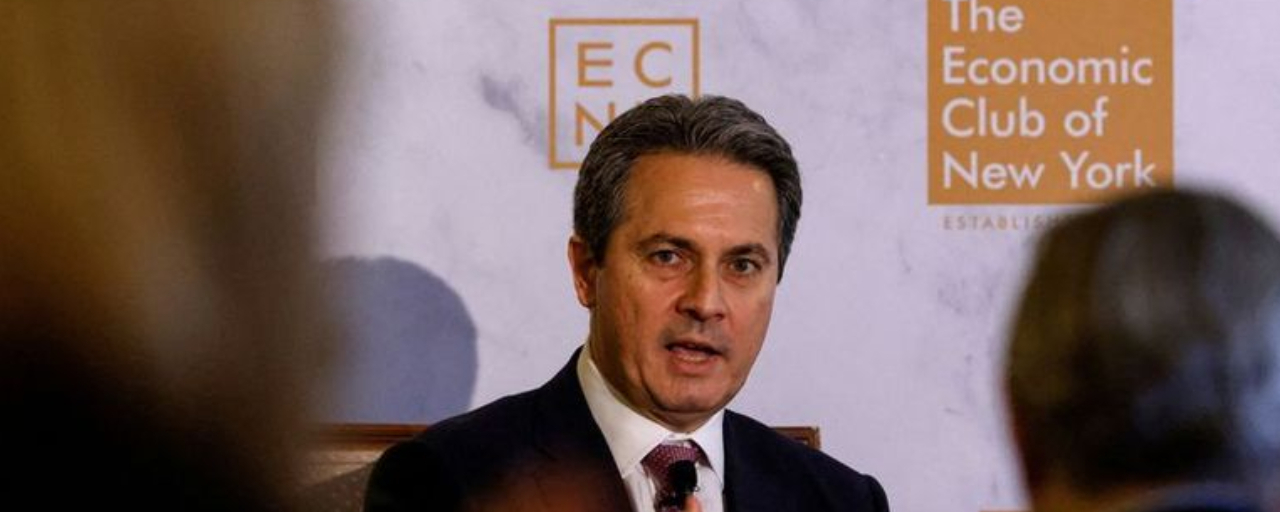
Alberto G. Musalem, President of the Federal Reserve Bank of St. Louis, who is not a voting member of the Federal Open Market Committee (FOMC) in 2026 (St. Louis sits out this year's rotation among the regional Reserve Banks), provided his insights on the current economic outlook.
On prices, he left little room for interpretation: "Inflation is not a risk. It is already here," he said. Musalem argued rates likely need to rise further, since the pressure driving inflation is coming from both demand and supply at once. He pegged the current 3.75%-4.00% policy rate as still on the accommodative side, not yet restrictive enough to bring prices to heel.
His preferred path is to move "earlier and incrementally rather than later and larger," waiting and risking a bigger, which, according to him, is more disruptive adjustment down the road. Without that restraint, he warned, inflation is more likely to sit well above the 2% target 18 months from now than return to it. Even stripping out supply-related factors, he said, underlying inflation is still "too high," running at up to 3%, roughly a full point above target.
The labor market, by contrast, isn't part of the problem. Musalem described it as stable and around full employment, and said there's no need to cool hiring to hit the inflation goal, even as strong consumer spending and investment keep adding fuel to price pressures.
On the supply side, he flagged a commodity shock that stretches well beyond oil, pointing to base metals like copper alongside tariffs and geopolitical tensions. That's already showing up on the ground: business contacts have told him they're planning price increases closer to 3%, and firms report sharply higher costs across fuel, raw materials, transportation, insurance and skilled labor. Taken together, Musalem said, there's ample evidence that inflation remains the principal problem facing the economy right now.
Key Quotes:
Monetary Policy
Interest rates likely need to rise further to tame inflation that is both demand and supply-driven.
The current 3.75%–4.00% policy rate is on the accommodative side and is not yet restrictive enough.
Better for rate hikes to be "earlier and incremental rather than later and larger."
Without further policy restraint, inflation is more likely to remain substantially above 2% over the next 18 months than return to target.
It is crucial that monetary policy provides meaningful restraint on inflation.
Additional policy tightening does not necessarily require higher unemployment or a recession.
Inflation
Inflation is not a risk. It is already here.
Even when stripping out supply-related factors, inflation is still "too high" at up to 3%.
Underlying inflation is moving in the wrong direction.
Little progress has been made recently in returning inflation to 2%.
There is ample evidence that inflation is the principal problem facing the economy right now.
Labor Market
The labor market is stable around full employment and not a source of inflation pressure.
No need to cool the labor market to achieve the inflation target.
Growth & Economy
Strong consumer spending and investment are adding to inflation pressures.
Energy & External Risks
Commodity shock is more than just oil; it includes base metals like copper.
Supply shocks from tariffs, geopolitical tensions, and higher commodity prices are also fueling inflation.
Geopolitical developments have increased upside risks to inflation.
On the Ground / Real Economy Feedback
Business contacts say they are planning on price increases closer to 3%.
Businesses are reporting sharply higher input costs across fuel, raw materials, transportation, insurance, and skilled labor.