Does leverage double your risk, or change the odds themselves?
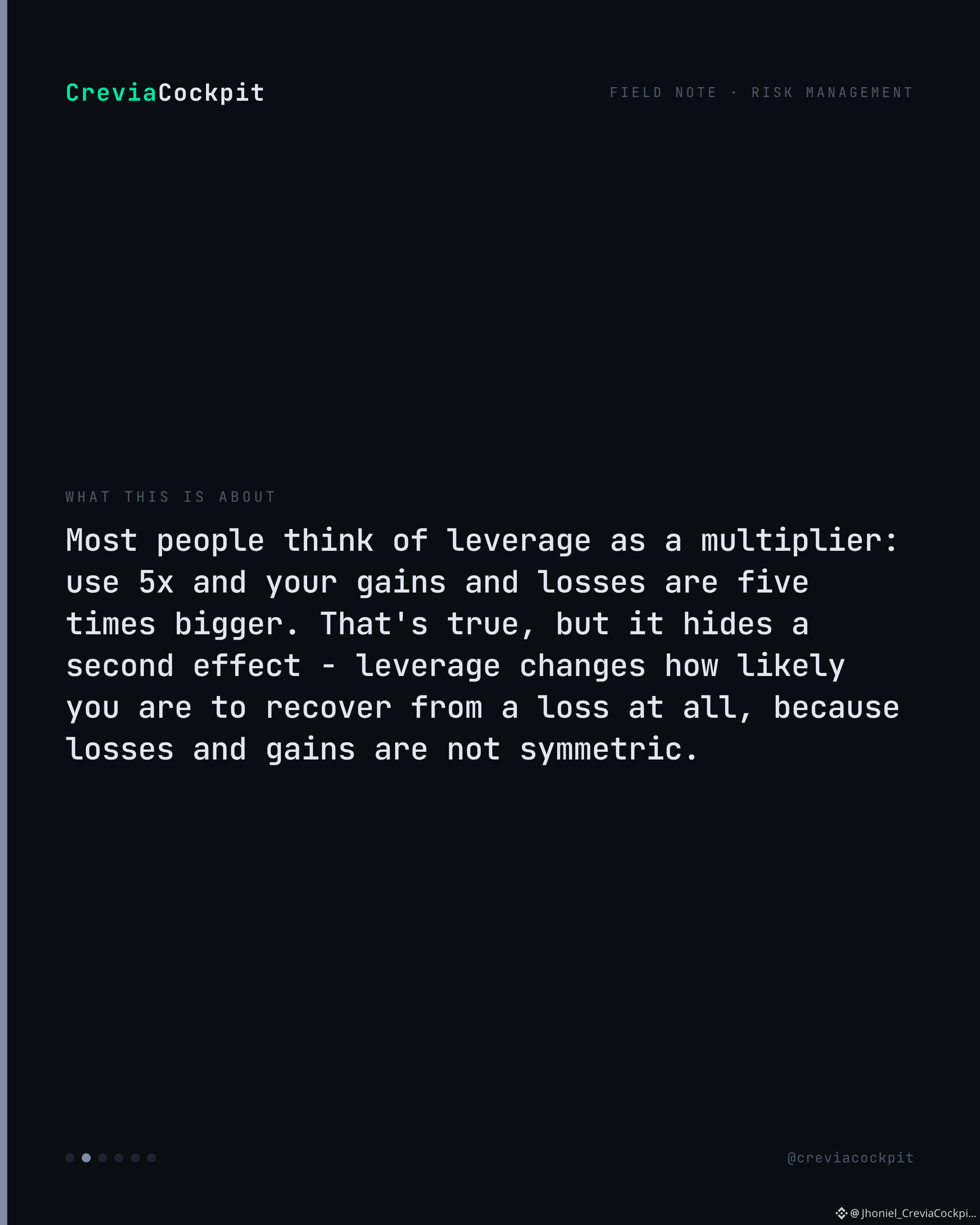
What this is about: Most people think of leverage as a multiplier: use 5x and your gains and losses are five times bigger. That's true, but it hides a second effect — leverage changes how likely you are to recover from a loss at all, because losses and gains are not symmetric.
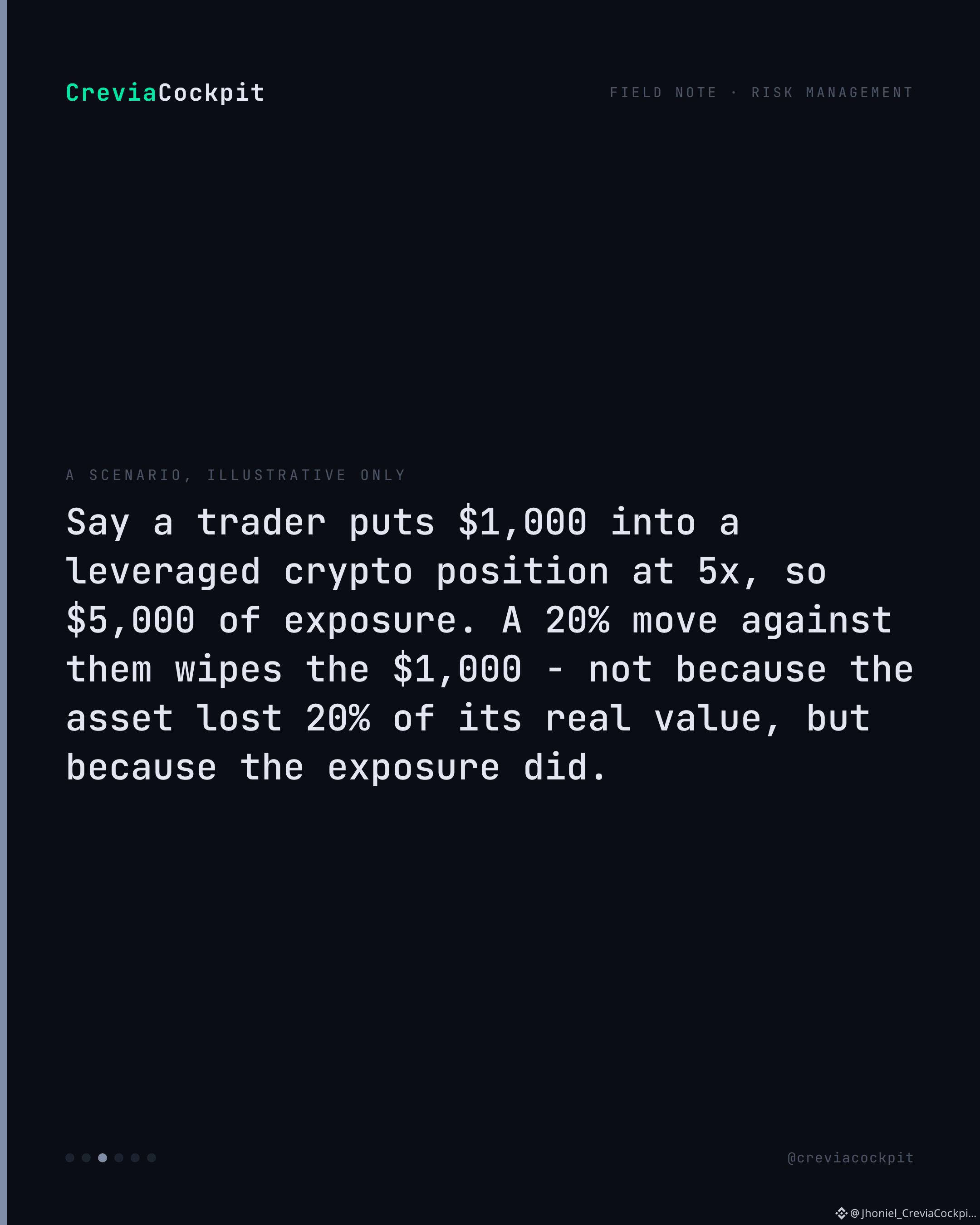
A scenario, illustrative only: Say a trader puts $1,000 into a leveraged crypto position at 5x, so $5,000 of exposure. A 20% move against them wipes the $1,000 — not because the asset lost 20% of its real value, but because the exposure did.
Currency exposure is a quieter version of the same thing
• Position size relative to total capital
• Volatility of the specific asset held
• Whether a forced exit (margin call, liquidity crunch) is possible
• Time horizon before that forced exit could occur
The line to keep: The number that actually determines whether you survive a drawdown is not the stop-loss level — it's how much of your capital was exposed before the loss started.
Send me a chat with the word CHECK and I will send you the full lesson, free.
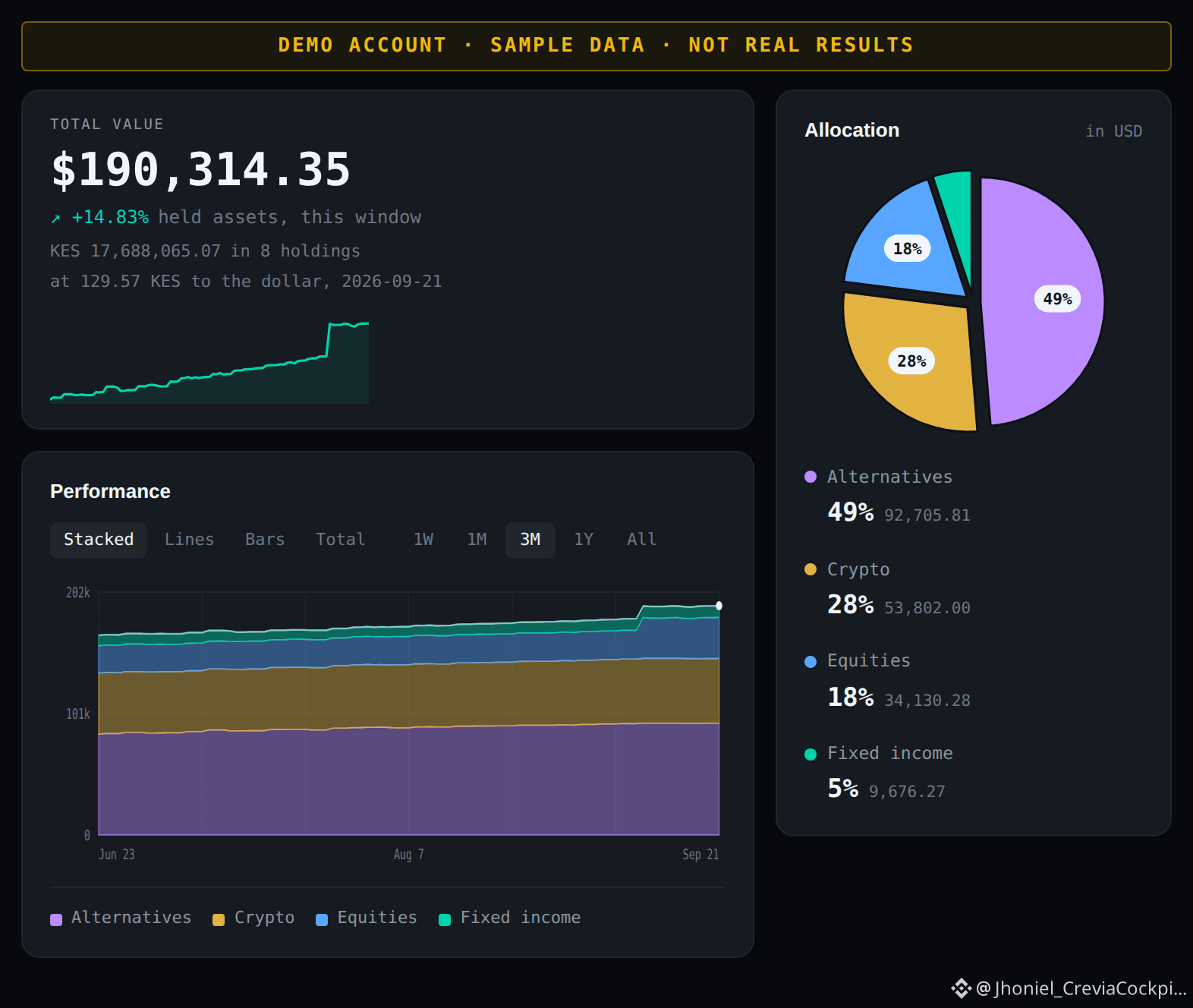
Last image: a portfolio on our demo account, sample holdings. Everything you own in one place, in one currency.
How do you read this one? Answer below.
Follow for a note a day on what the numbers actually say.
$BTC
#TradingPsychology #Crypto #CreviaCockpit
What this is about: Most people think of leverage as a multiplier: use 5x and your gains and losses are five times bigger. That's true, but it hides a second effect — leverage changes how likely you are to recover from a loss at all, because losses and gains are not symmetric.
A scenario, illustrative only: Say a trader puts $1,000 into a leveraged crypto position at 5x, so $5,000 of exposure. A 20% move against them wipes the $1,000 — not because the asset lost 20% of its real value, but because the exposure did.
Currency exposure is a quieter version of the same thing
• Position size relative to total capital
• Volatility of the specific asset held
• Whether a forced exit (margin call, liquidity crunch) is possible
• Time horizon before that forced exit could occur
The line to keep: The number that actually determines whether you survive a drawdown is not the stop-loss level — it's how much of your capital was exposed before the loss started.
Send me a chat with the word CHECK and I will send you the full lesson, free.
Last image: a portfolio on our demo account, sample holdings. Everything you own in one place, in one currency.
How do you read this one? Answer below.
Follow for a note a day on what the numbers actually say.
$BTC
#TradingPsychology #Crypto #CreviaCockpit