#BOJRaisesRatesTo31YearHigh
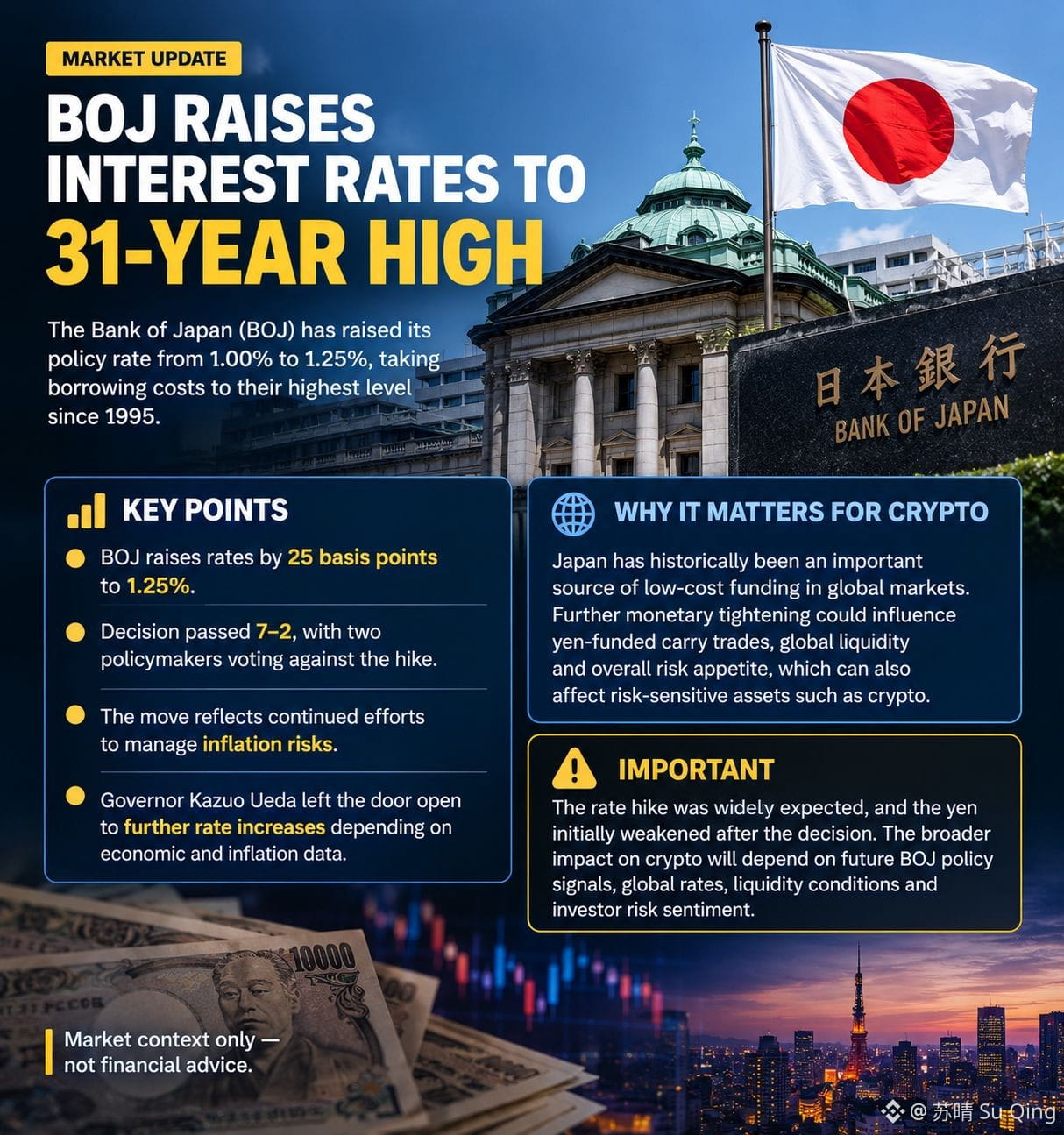
🚨 BOJ RAISES INTEREST RATES TO 31-YEAR HIGH
The Bank of Japan (BOJ) has raised its policy rate from 1.00% to 1.25%, taking borrowing costs to their highest level since 1995.
📊 Key points:
• BOJ raises rates by 25 basis points to 1.25%
• Decision passed 7–2, with two policymakers voting against the hike
• The move reflects continued efforts to manage inflation risks
• Governor Kazuo Ueda left the door open to further rate increases depending on economic and inflation data
🔎 Why it matters for crypto:
Japan has historically been an important source of low-cost funding in global markets. Further monetary tightening could influence yen-funded carry trades, global liquidity and overall risk appetite, which can also affect risk-sensitive assets such as crypto.
⚠️ Important: The rate hike was widely expected, and the yen initially weakened after the decision. The broader impact on crypto will depend on future BOJ policy signals, global rates, liquidity conditions and investor risk sentiment.
Market context only — not financial advice.
$G
$STG
$F
🚨 BOJ RAISES INTEREST RATES TO 31-YEAR HIGH
The Bank of Japan (BOJ) has raised its policy rate from 1.00% to 1.25%, taking borrowing costs to their highest level since 1995.
📊 Key points:
• BOJ raises rates by 25 basis points to 1.25%
• Decision passed 7–2, with two policymakers voting against the hike
• The move reflects continued efforts to manage inflation risks
• Governor Kazuo Ueda left the door open to further rate increases depending on economic and inflation data
🔎 Why it matters for crypto:
Japan has historically been an important source of low-cost funding in global markets. Further monetary tightening could influence yen-funded carry trades, global liquidity and overall risk appetite, which can also affect risk-sensitive assets such as crypto.
⚠️ Important: The rate hike was widely expected, and the yen initially weakened after the decision. The broader impact on crypto will depend on future BOJ policy signals, global rates, liquidity conditions and investor risk sentiment.
Market context only — not financial advice.
$G
$STG
$F