

Moving averages. Trendlines. Support and resistance. All of it assumes something that isn't always true: that supply is distributed enough for price to reflect actual consensus. When one wallet cluster controls 50-88% of a token, that assumption breaks completely — and $LAB is the clean, current case study for exactly why.
Order books thin out under concentration, and that changes everything about how price moves. In a normal market, a large sell order gets absorbed gradually as it works through resting bids at multiple price levels. In a high-concentration token, the vast majority of the float sits in a handful of wallets, which means the actual tradeable order book is razor thin. A single whale placing an order just 5x the median market size can instantly drain available liquidity, causing slippage that looks nothing like organic price discovery. That's exactly what happened to LAB: when insider wallets and OTC-discount buyers activated to cash out, retail buy orders simply couldn't absorb the volume, and the token cratered 99.8% in a structural liquidity shock, not a gradual sell-off.
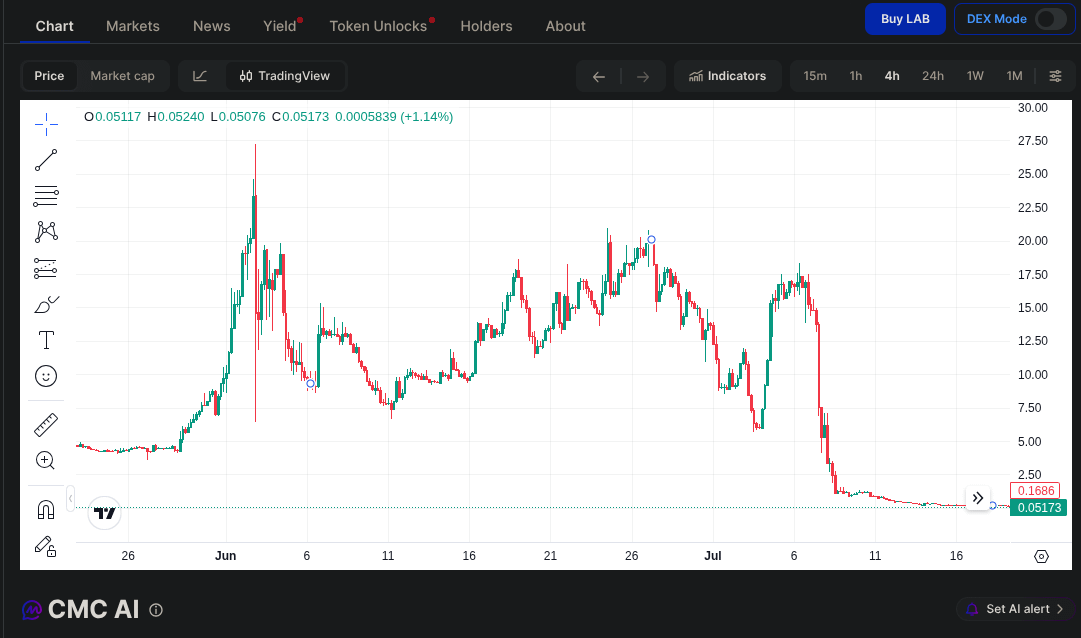
This is also why standard technical analysis fails on these charts. A support zone or moving average means something when it reflects thousands of independent participants agreeing on value. It means almost nothing when one entity holding a large percentage of supply can deposit tokens onto an exchange and invalidate that "support" instantly, regardless of what the chart pattern says should happen next. Traders who apply textbook TA to high-concentration tokens are often reading noise generated by a handful of wallets, not a genuine market consensus.
So how do you actually tell a real accumulation floor from a falling knife still in motion? LAB's current range — $0.0473 to $0.05603, held for the past month — looks stable on the surface. The distinction that matters: check whether the float sitting outside vesting contracts is actually thin and calm, or whether large wallets are still actively distributing into that range. LAB's 69.52% remains locked in vesting, meaning the active public float is small enough that a genuine floor can hold simply because there isn't much supply left to sell into it — not because demand has organically returned. That's a fragile stabilization, not a resolved one. The real test comes when the next vesting unlock hits and that locked supply becomes sellable again.
The takeaway isn't "avoid every low-float token." It's this: on a chart where a handful of wallets can override the whole order book, the wallet data is more informative than the candle. Which one were you checking first? #WhaleAlert #Tokenomics