

When you keep crypto on a centralized exchange, security isn't just about having a strong password.
The bigger question is what happens behind the scenes. Are user assets actually backed? What protections exist if the platform faces a serious security incident? And if someone manages to access your account, what can stop them from simply withdrawing the funds?
I wanted to understand how Binance approaches these risks, particularly for users in the UAE.
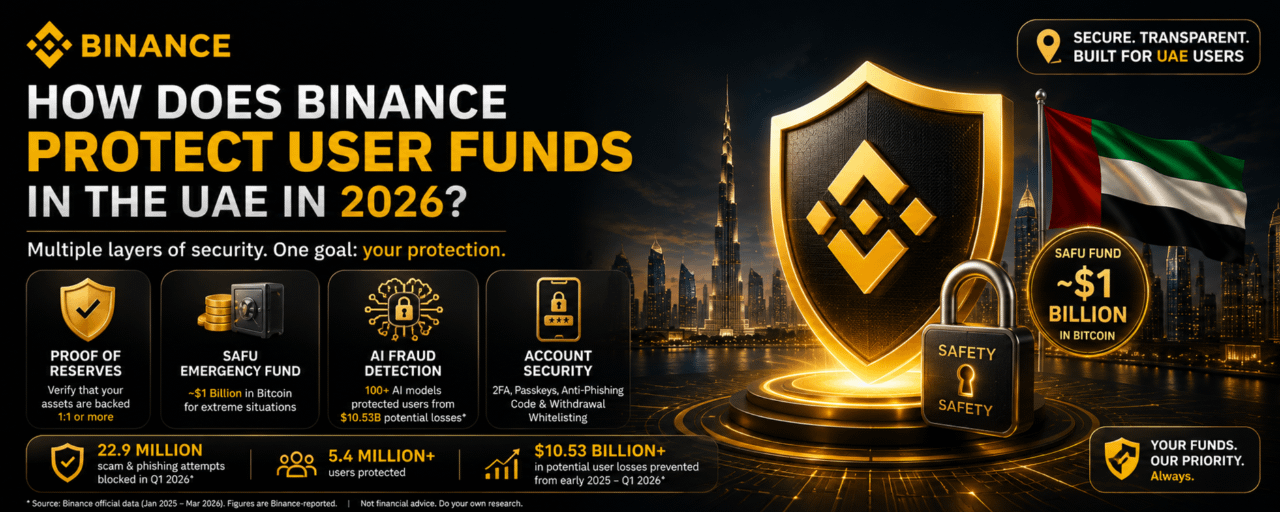
After looking through its security system, I found that there isn't really one feature responsible for protecting user funds. Instead, Binance uses several different mechanisms that deal with different types of risk: Proof of Reserves, SAFU, fraud monitoring, account security tools and withdrawal controls.
Here's how they fit together.
Proof of Reserves: Can You Verify the Assets?
For me, this is one of the first things worth checking with any centralized exchange.
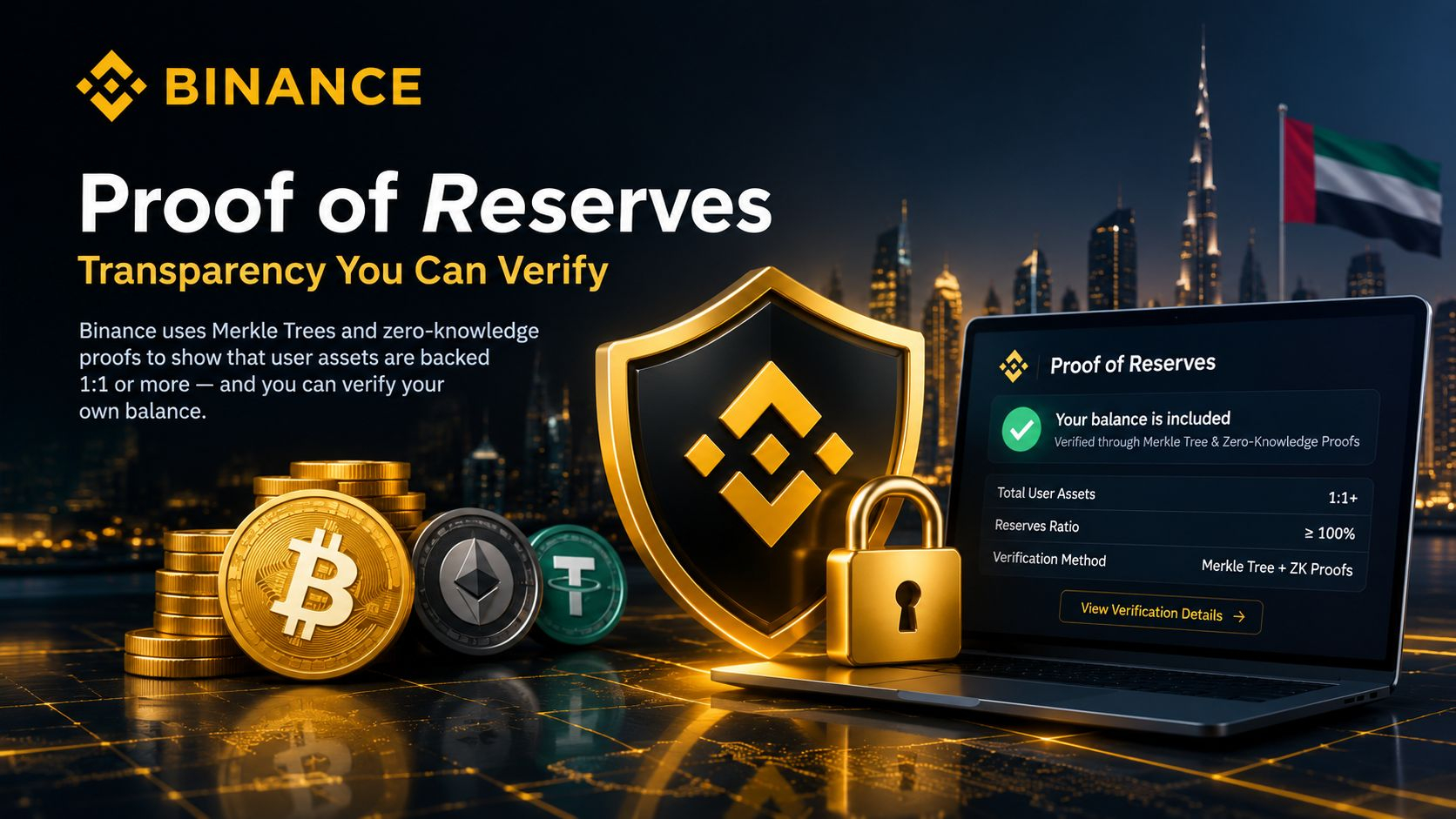
Binance says assets included in its Proof of Reserves system are backed 1:1 or more. But the useful part isn't simply Binance saying that reserves exist. Users can verify whether their own balances were included in the reserve verification.
The system uses cryptographic methods including Merkle Trees and zero-knowledge proofs. You don't really need to understand the mathematics behind them to understand the basic idea: users should have a way to verify the existence of sufficient reserves without everyone's individual account information becoming public.
If customers collectively hold a certain amount of BTC on an exchange, there should be evidence that the exchange has enough BTC to cover those balances.
Proof of Reserves does have limitations. It's not a guarantee that an exchange can never suffer a hack, operational problem or financial crisis, and it shouldn't be treated as one.
But I would still rather have something I can verify than rely entirely on a company's word.
What Happens If There Is a Major Security Incident?
That's a different question, and this is where SAFU becomes relevant.
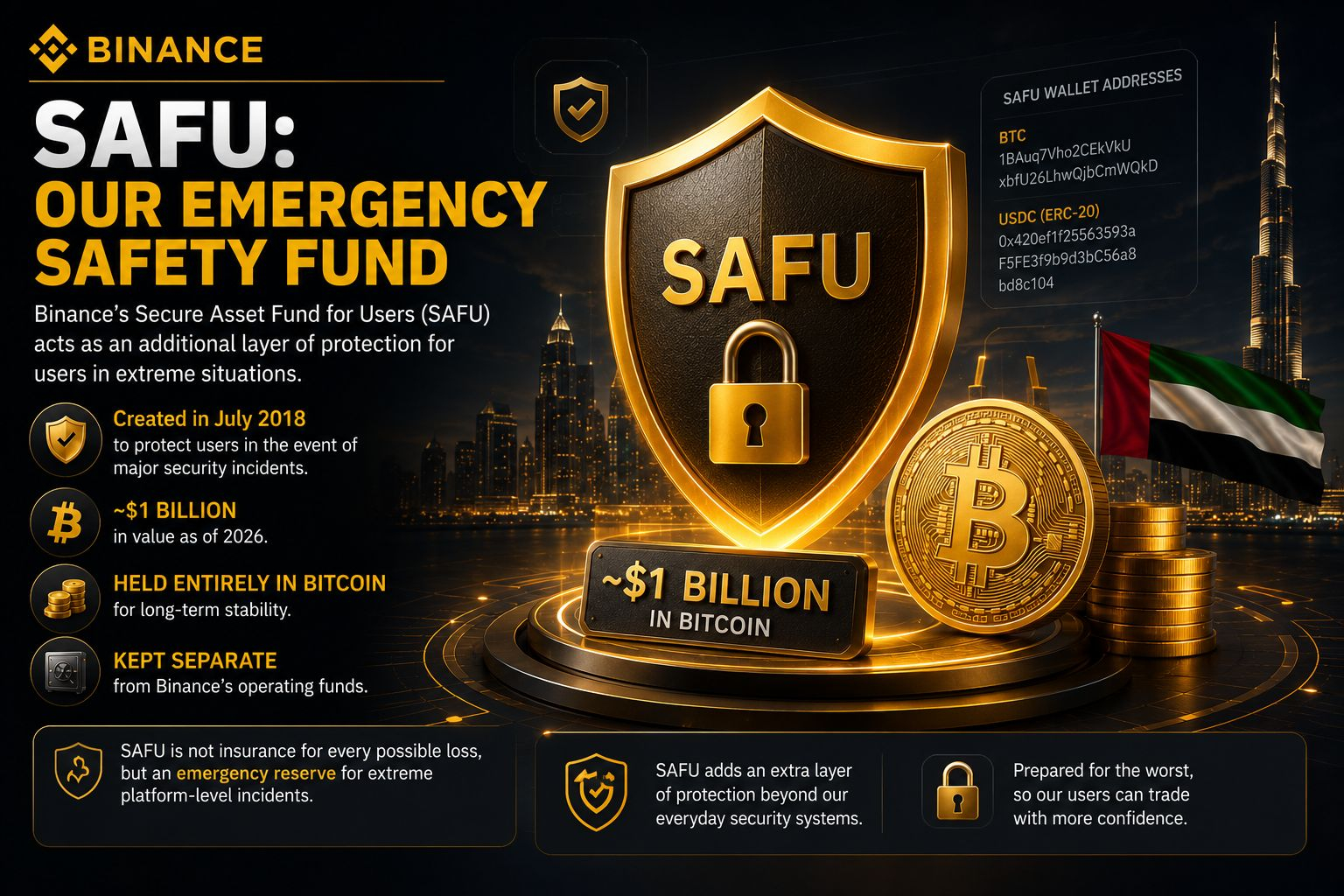
Binance established the Secure Asset Fund for Users (SAFU) in 2018 as an emergency fund intended for extreme situations. As of 2026, Binance describes SAFU as being worth approximately $1 billion, currently held entirely in Bitcoin and maintained separately from its normal operating funds.
It's easy to confuse this with Proof of Reserves, but they're not the same thing.
Proof of Reserves is about showing that customer assets are backed. SAFU is a separate emergency reserve.
I also wouldn't describe SAFU as unlimited insurance for every possible loss. It's an additional protection mechanism, not a promise that every scenario will always be covered.
A Lot of Security Happens Before You Notice Anything
Most of us think about exchange security in terms of passwords and two-factor authentication.
That's only the part we actually see.
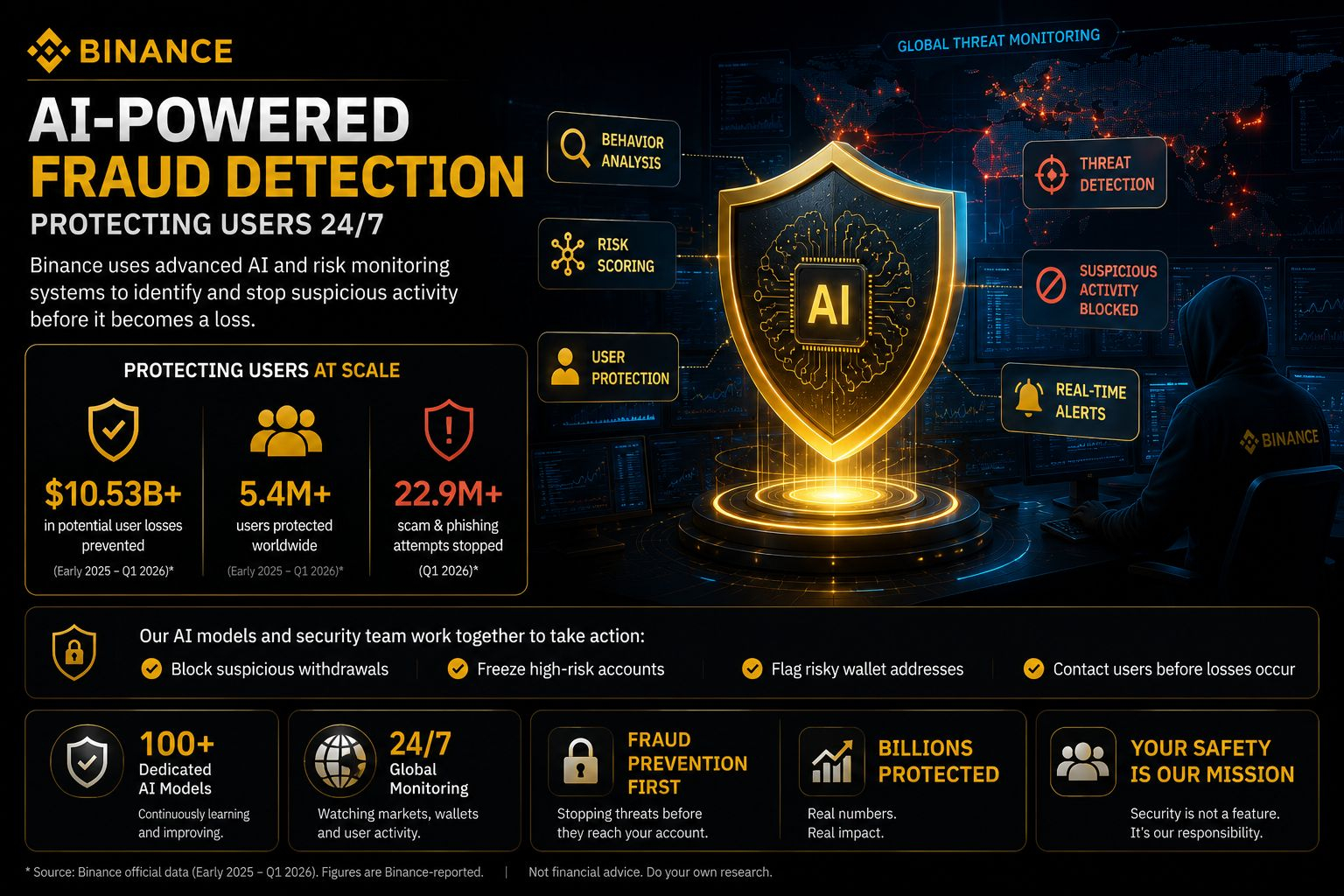
Binance says its fraud-prevention infrastructure uses more than 100 dedicated AI models to analyze suspicious activity. According to Binance's 2026 reporting, these systems helped prevent more than $10.53 billion in potential user losses from early 2025 through Q1 2026, involving more than 5.4 million users.
Binance also reports stopping 22.9 million scam and phishing attempts during Q1 2026 alone.
These are Binance-reported numbers, so I think it's important to identify them as such rather than present them as independently verified statistics.
Still, this side of exchange security is interesting because an account doesn't necessarily become safe just because the correct password and authentication code were entered.
Imagine a user normally logs in from the same devices and makes fairly predictable transactions. Suddenly, the account behaves differently or attempts a suspicious withdrawal.
That's the kind of situation where risk-monitoring systems can matter.
And with crypto, timing is especially important. If funds are successfully transferred on-chain to a scammer, recovering them can be extremely difficult.
Your Own Security Settings Still Matter
This is where responsibility shifts partly to the user.
An exchange can have sophisticated security systems, but they can't replace good account security. If someone gives a scammer their password and authentication code, for example, several security barriers have already been bypassed.
Personally, I wouldn't rely only on SMS authentication when stronger options are available.
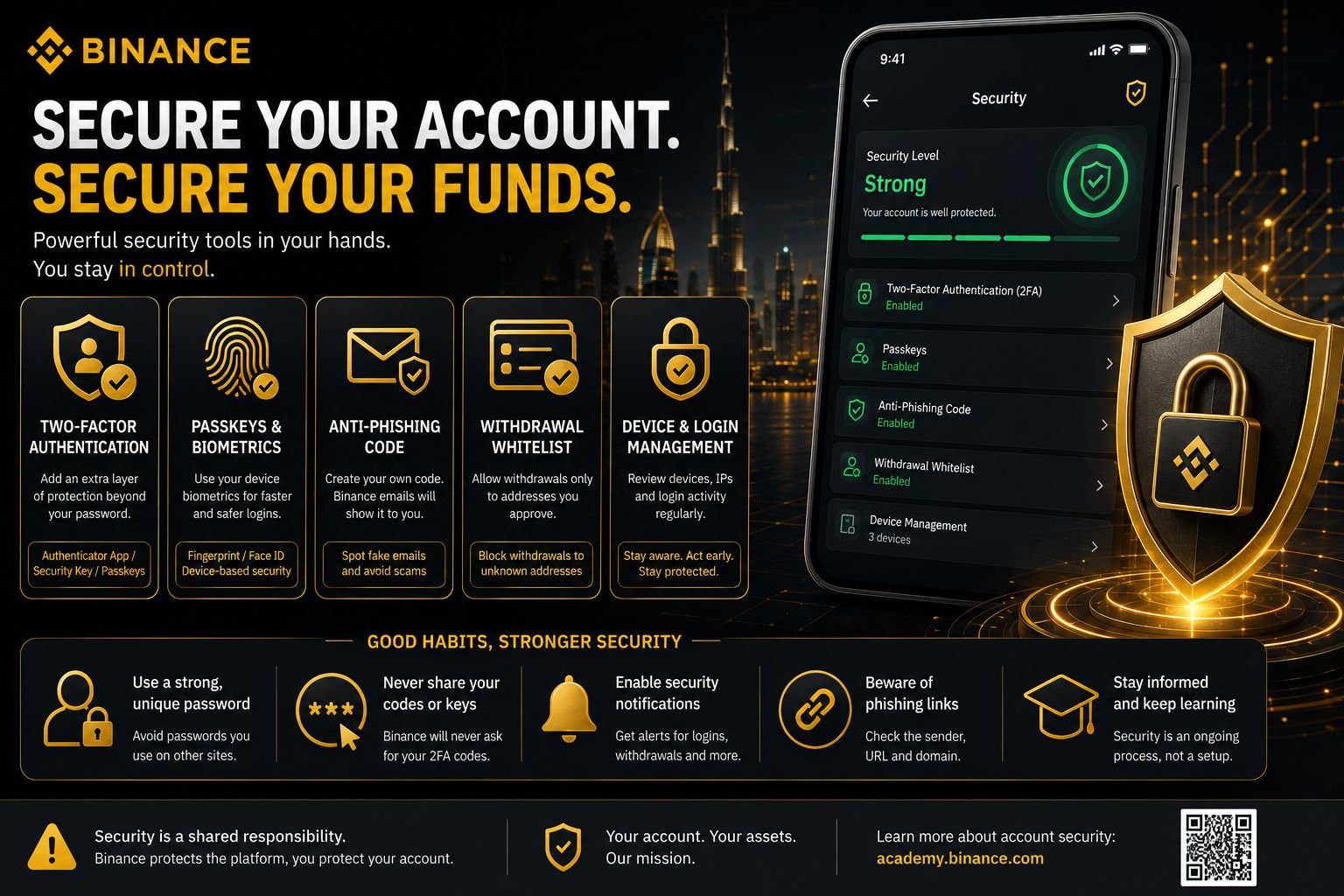
Binance supports authenticator-based 2FA, Passkeys and hardware security keys. Any of these can add another barrier beyond the password itself.
Another feature worth activating is the Anti-Phishing Code.
You create a personal code inside your Binance account, and legitimate Binance emails can display it. So if you receive an email claiming to come from Binance and your code isn't there, you have another reason to stop before clicking anything.
It's a very simple feature, but considering how common phishing is in crypto, simple protections can still be useful.
One Setting I Think Is Underrated
Withdrawal address whitelisting.
Let's say someone somehow gets access to your account. Their goal is probably not to check whether BTC is up or down today. They want to move your assets to an address they control.
With withdrawal address whitelisting enabled, withdrawals can be restricted to addresses you've already approved.
That doesn't make an account impossible to compromise, but it creates another problem for an attacker to solve. Getting through the login is no longer necessarily enough.
What I Would Enable on a New Binance Account
If I were creating a new Binance account today, I'd keep the setup fairly simple.
First, a strong password that I don't use anywhere else.
Then I'd add an authenticator or Passkey instead of depending only on SMS.
I'd activate the Anti-Phishing Code as well. And if I were keeping a meaningful amount of crypto on the platform, withdrawal address whitelisting would definitely be worth considering.
I'd also check the list of devices connected to the account from time to time and remove anything I don't recognize or no longer use.
None of this takes very long.
The goal is simply to avoid a situation where one compromised password is all somebody needs to reach your crypto.
What Is Different for Binance Users in the UAE?
For users in the UAE, regulation is another part of the discussion.
Binance operates in Dubai through Binance FZE, which is licensed by Dubai's Virtual Assets Regulatory Authority (VARA) for specified virtual-asset activities.
A license obviously doesn't eliminate crypto risk. It doesn't stop markets from falling, prevent every scam or guarantee that a platform will never experience a security incident.
But when I'm evaluating a centralized platform, regulatory oversight is still something I want to know about.
That's also why I don't think the question “Is Binance safe?” has a useful yes-or-no answer.
There are several separate risks involved.
Proof of Reserves addresses the question of asset backing. SAFU exists for emergency situations. Fraud-monitoring systems look for suspicious behavior. Account-level tools make unauthorized access more difficult, while withdrawal controls can make it harder to move funds from a compromised account.
For UAE users, regulatory oversight adds another consideration.
So, Is Binance Safe in the UAE in 2026?
I wouldn't describe any centralized crypto exchange as completely safe.
Keeping assets on an exchange comes with counterparty and operational risks. Crypto itself carries market risk. Users can also lose funds through phishing, social engineering or simple mistakes.
What matters to me is whether there are multiple independent barriers rather than one security feature that everyone is expected to trust.
In Binance's case, those barriers include Proof of Reserves, SAFU, automated fraud detection, stronger authentication methods, phishing protection and withdrawal controls.
None of them makes the platform risk-free.
Together, though, they make more sense than judging exchange security based on a single claim that a platform is “secure.”
And there's still a part of the security system Binance can't control completely: us.
You can have Proof of Reserves, SAFU and sophisticated fraud detection running in the background, but clicking the wrong link or giving someone your authentication code can undo a lot of that protection very quickly.
So if you're using Binance, spend a few minutes checking your own security settings too.
It might be the least exciting thing you do with your crypto account, but probably one of the more useful ones.
FAQ
Does Binance hold user assets 1:1?
Binance says assets covered by its Proof of Reserves system are backed 1:1 or more. Users can also verify whether their balances were included in the reserve verification.
What is Binance SAFU?
SAFU stands for Secure Asset Fund for Users. Binance established the emergency fund in 2018, and as of 2026 describes it as being worth approximately $1 billion and currently held entirely in Bitcoin.
Can I check Binance's reserves myself?
Yes. Binance provides a Proof of Reserves verification system that allows users to check whether their balances were included in the reserve data.
Does Binance use AI to prevent scams?
According to Binance, yes. The company says its fraud-prevention infrastructure uses more than 100 dedicated AI models and reports that its systems prevented more than $10.53 billion in potential user losses from early 2025 through Q1 2026.
Which Binance security settings should I enable?
A unique password combined with an authenticator or Passkey is a good starting point. Binance also provides tools such as the Anti-Phishing Code and withdrawal address whitelisting that can add further protection.
Is Binance completely risk-free?
No. No centralized crypto exchange is completely risk-free. Exchange security should be combined with responsible account security and careful handling of transactions.
#BinanceSecurity #CryptoSecurity #UAE #ProofOfReserves #SAFU
Information checked in August 2026. Security systems, regulatory status and available features can change. This article is educational and does not constitute financial advice.