
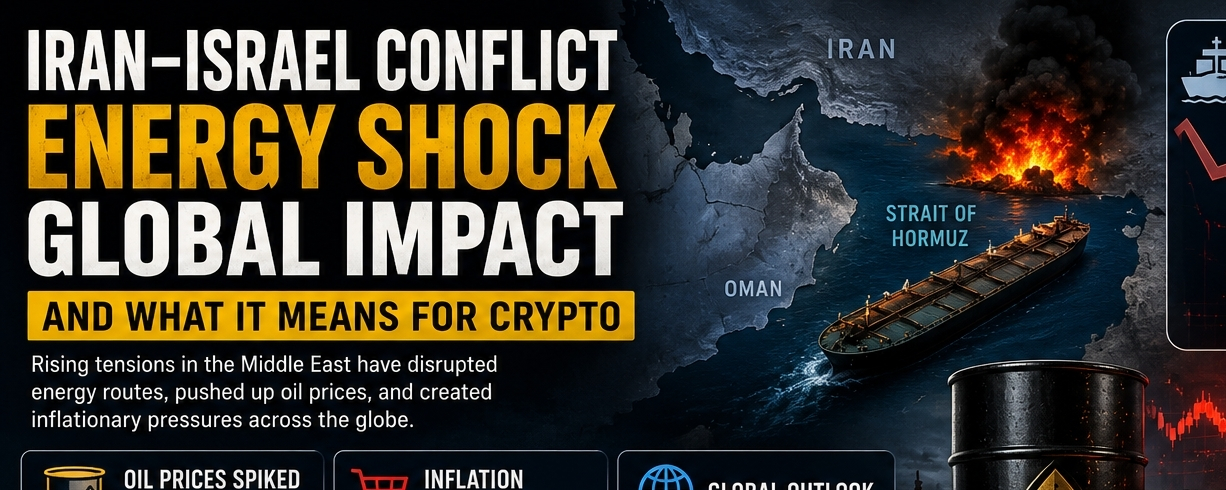

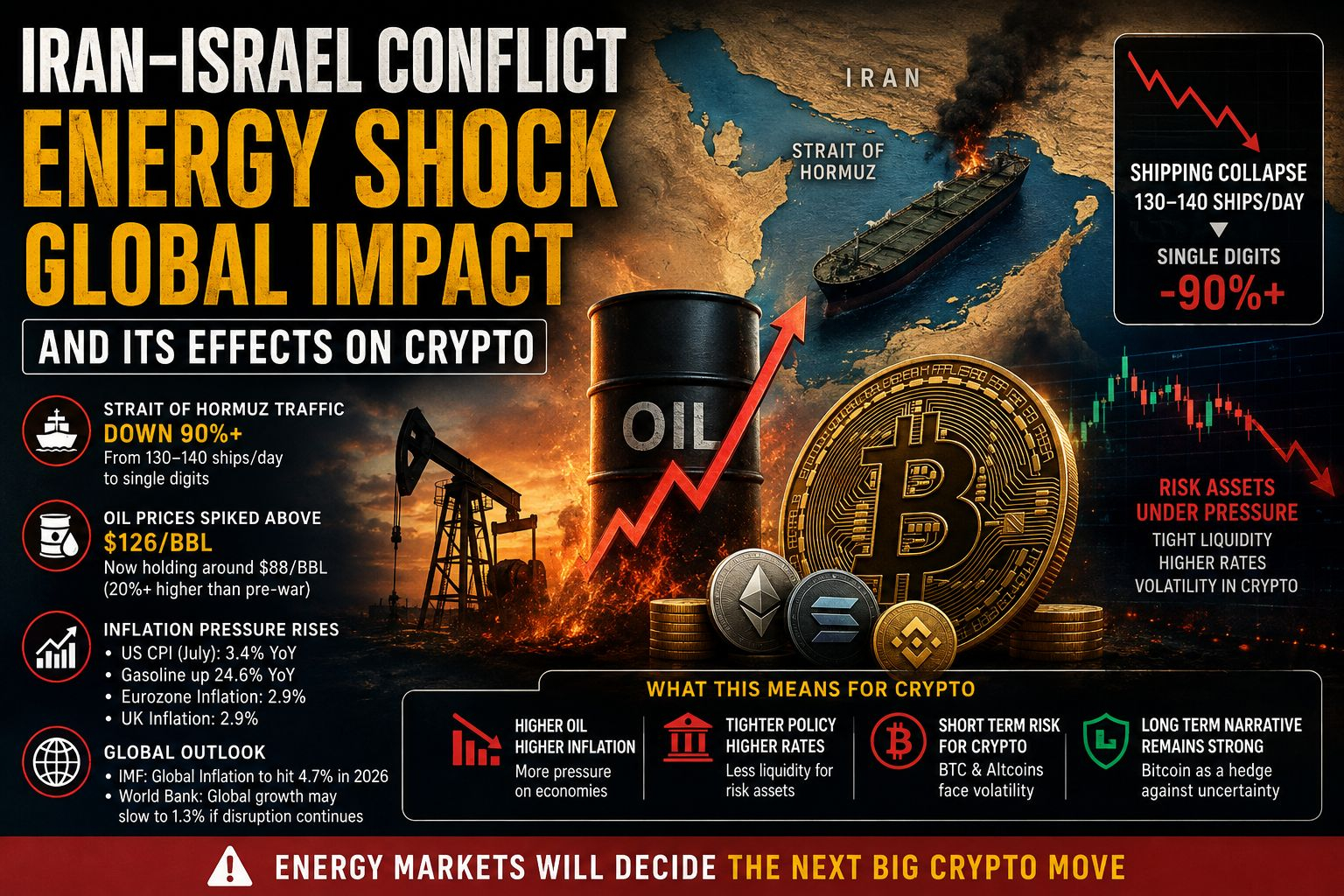
The Iran–Israel conflict has evolved beyond a regional geopolitical crisis into a global energy, inflation and liquidity problem, and crypto investors should be paying close attention. The Strait of Hormuz remains at the center of the risk: before the conflict, roughly 130–140 ships were passing through the waterway each day, but recent tracking data has shown traffic falling into single digits. Reuters reported that only seven commodity ships crossed on August 20, with no very large crude-oil carriers or LNG tankers recorded. The Strait is particularly important because it previously carried close to 20% of global crude oil and LNG shipments.
The immediate consequence is an energy shock. Oil prices have experienced extreme volatility as markets price the possibility of prolonged supply disruptions. Brent recently closed around $89 per barrel, while WTI settled near $83, after much larger spikes earlier in the conflict. Although alternative export routes and additional shipments from regional producers have eased some pressure, the situation remains highly sensitive to any escalation around Hormuz.
👉 And this is where the story becomes important for Bitcoin and the wider crypto market.
Higher oil prices can create a chain reaction:
Geopolitical escalation → Energy disruption → Higher oil → Higher inflation → Higher bond yields → Fewer expectations for rate cuts → Tighter liquidity → Pressure on risk assets.
The IMF has already projected global headline inflation to rise from 4.1% in 2025 to 4.7% in 2026, with higher energy and food prices among the major drivers. It also warned that renewed Middle East conflict could increase commodity volatility, damage supply chains and tighten financial conditions.
This creates a difficult environment for crypto. Bitcoin is increasingly treated by investors as a macro asset, meaning it can initially trade like a risk asset when liquidity tightens. Recent market behavior has shown Bitcoin and other cryptocurrencies reacting negatively when oil prices and Treasury yields rise.
However, there is another side to the story. If geopolitical uncertainty continues to weaken confidence in fiat currencies and traditional financial systems, Bitcoin's limited supply can eventually strengthen its digital hard-asset narrative. Recent market commentary has already highlighted Bitcoin moving alongside gold as investors look for protection against inflation, currency weakness and fiscal uncertainty.
The bigger danger is therefore not simply “war = Bitcoin dump.” The real question is whether the conflict creates a prolonged energy shock that forces central banks to keep monetary policy tighter for longer. If that happens, speculative capital could leave crypto, with altcoins likely suffering more than Bitcoin because they carry higher volatility and lower liquidity.
There is also a potential economic-growth problem. The IMF has warned that the war threatens global growth and that emerging and developing economies are particularly vulnerable to higher energy costs. Israel itself has already seen its 2026 growth forecast reduced substantially because of the conflict, while inflation risks have increased because of energy and supply constraints.
👉 For crypto traders, I would watch four indicators closely:
1. Brent crude: Sustained movement toward $100+ would increase inflation concerns.
2. U.S. Treasury yields: Rising yields can drain liquidity from risk assets.
3. Fed rate expectations: Fewer expected cuts could pressure Bitcoin and altcoins.
4. BTC reaction to bad macro news: If Bitcoin stops falling despite higher oil and yields, that could signal underlying strength.
At the same time, the market has shown remarkable resilience. Global equities have continued performing strongly despite the conflict, while Bitcoin has recently recovered toward the $80K region. That means the bearish scenario is not guaranteed; de-escalation, increased energy flows or a diplomatic breakthrough could quickly reverse the risk premium and send liquidity back toward crypto.
My view: this is a market where traders should stop looking at crypto charts in isolation. Oil, Hormuz, inflation, Treasury yields and central-bank policy could determine the next major Bitcoin move. If the energy shock intensifies, expect violent volatility and potentially deeper corrections across altcoins. If oil continues cooling and geopolitical tensions ease, crypto could instead use the uncertainty as a catalyst for another strong recovery.
The next big crypto move may be decided in the energy market before it appears on the Bitcoin chart.


