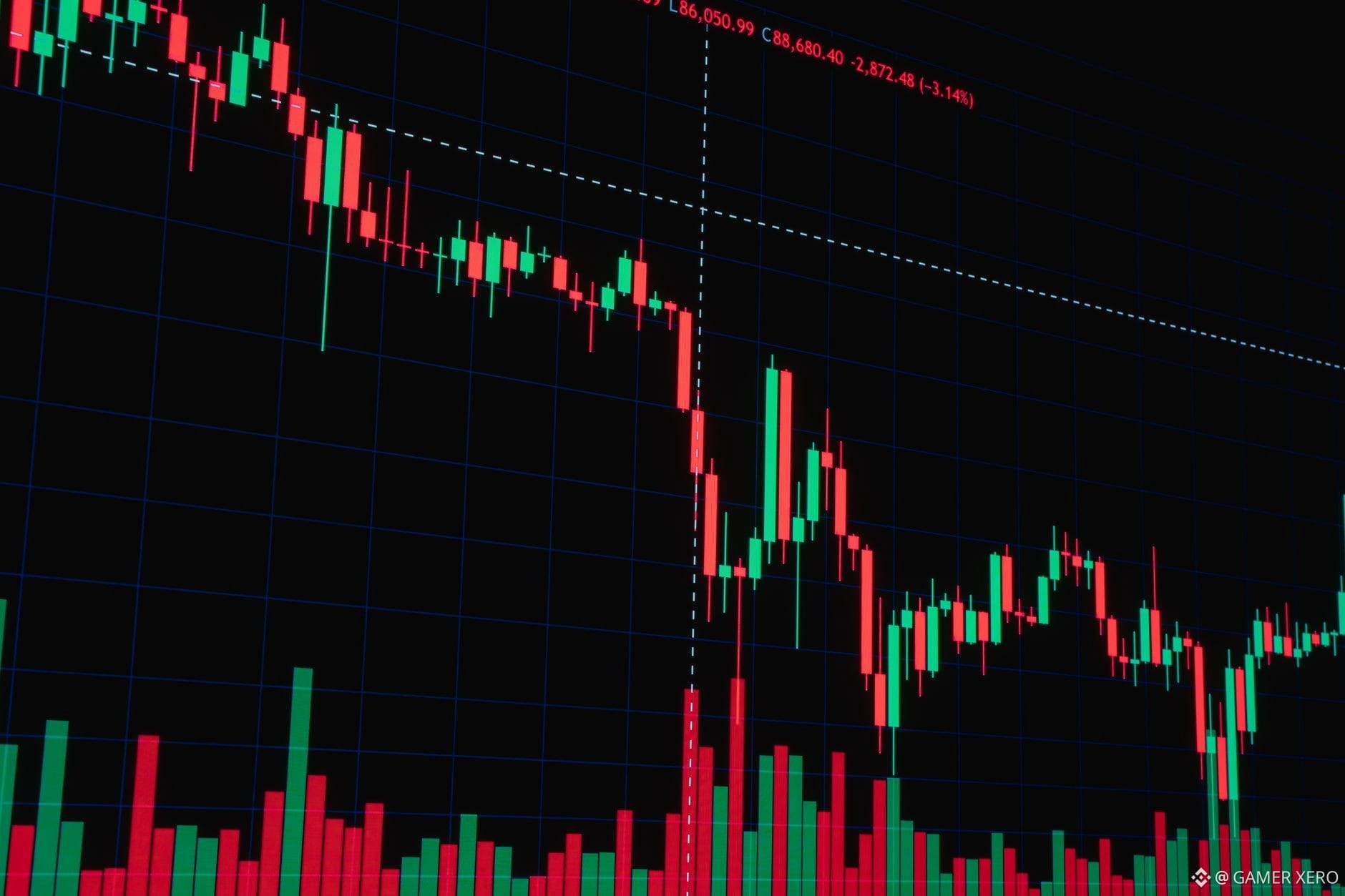
Seeing $BTC hover around $77,500 on Binance while the 24‑hour range tightens gives a quiet reminder: volatility isn’t just a chart pattern, it’s the backbone of any risk‑budget. I start each week by capping my exposure to any single asset at 15 % of total equity. That way, a 10 % swing in $BTC or $ADA won’t bite more than 1.5 % of the portfolio.
Next, I look at the historical drawdown of the last 30 days – $BTC has been down 2.86 % and $ADA 4.53 %. Using a simple recovery factor (target drawdown ÷ average daily upside), I allocate a modest 0.3 % of capital per trade, scaling in only when the volatility index (VIX‑style on‑chain metric) dips below the 20‑day median. This protects the account from over‑leveraging during a bearish burst.
Diversification across uncorrelated assets—spot, staking, and a small futures hedge—adds a buffer. If $BTC stays flat but $ADA rebounds, the hedge can offset the loss, keeping the portfolio’s net equity within a 5 % drawdown envelope.
How do you set your exposure limits when the market’s range compresses?
#RiskManagement #CryptoPortfolio #GAMERXERO #Binance #TradingInsights
Next, I look at the historical drawdown of the last 30 days – $BTC has been down 2.86 % and $ADA 4.53 %. Using a simple recovery factor (target drawdown ÷ average daily upside), I allocate a modest 0.3 % of capital per trade, scaling in only when the volatility index (VIX‑style on‑chain metric) dips below the 20‑day median. This protects the account from over‑leveraging during a bearish burst.
Diversification across uncorrelated assets—spot, staking, and a small futures hedge—adds a buffer. If $BTC stays flat but $ADA rebounds, the hedge can offset the loss, keeping the portfolio’s net equity within a 5 % drawdown envelope.
How do you set your exposure limits when the market’s range compresses?
#RiskManagement #CryptoPortfolio #GAMERXERO #Binance #TradingInsights