#dusk $DUSK @Dusk One figure kept bothering me as I lined up DUSK gross rewards with what provisioners actually received: the missing share changed depending on where I started the window.
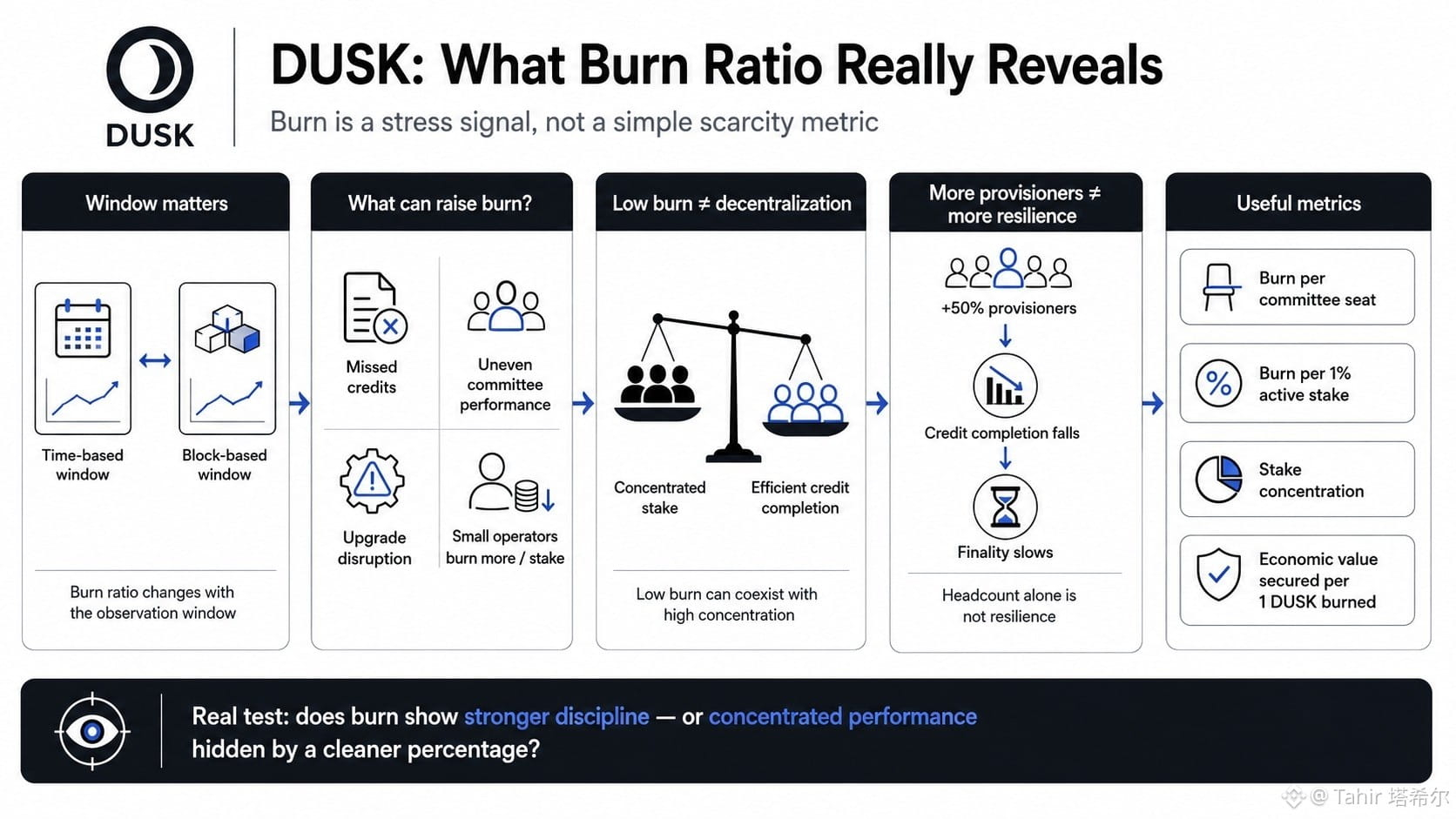
That makes burn ratio less like a clean token metric and more like a stress signal. A high ratio could reflect failed credit completion, uneven committee performance, upgrade disruption, or smaller provisioners burning more per unit of stake. It does not automatically mean stronger economics.
For DUSK, I would compare stake concentration against burn per committee seat and burn per 1% of active stake. If five large operators hold most consensus weight but complete credits efficiently, the network may show a low burn ratio while participation remains highly centralized. Efficiency, yes. Decentralization, no.
The reverse matters too. Adding 50% more provisioners sounds healthier, but if credit completion falls and finality slows during extreme burn windows, headcount is not resilience.
The hardest measure is economic value secured per 1 DUSK burned, calculated alongside gross rewards that never reach participants. Time-based windows capture real operational periods; block-based windows control for chain output. I’d use both, especially around upgrades.
I’m watching whether DUSK burn reveals better discipline or merely hides concentrated performance behind a cleaner percentage.
@Dusk #dusk
That makes burn ratio less like a clean token metric and more like a stress signal. A high ratio could reflect failed credit completion, uneven committee performance, upgrade disruption, or smaller provisioners burning more per unit of stake. It does not automatically mean stronger economics.
For DUSK, I would compare stake concentration against burn per committee seat and burn per 1% of active stake. If five large operators hold most consensus weight but complete credits efficiently, the network may show a low burn ratio while participation remains highly centralized. Efficiency, yes. Decentralization, no.
The reverse matters too. Adding 50% more provisioners sounds healthier, but if credit completion falls and finality slows during extreme burn windows, headcount is not resilience.
The hardest measure is economic value secured per 1 DUSK burned, calculated alongside gross rewards that never reach participants. Time-based windows capture real operational periods; block-based windows control for chain output. I’d use both, especially around upgrades.
I’m watching whether DUSK burn reveals better discipline or merely hides concentrated performance behind a cleaner percentage.
@Dusk #dusk