#dusk $DUSK @Dusk
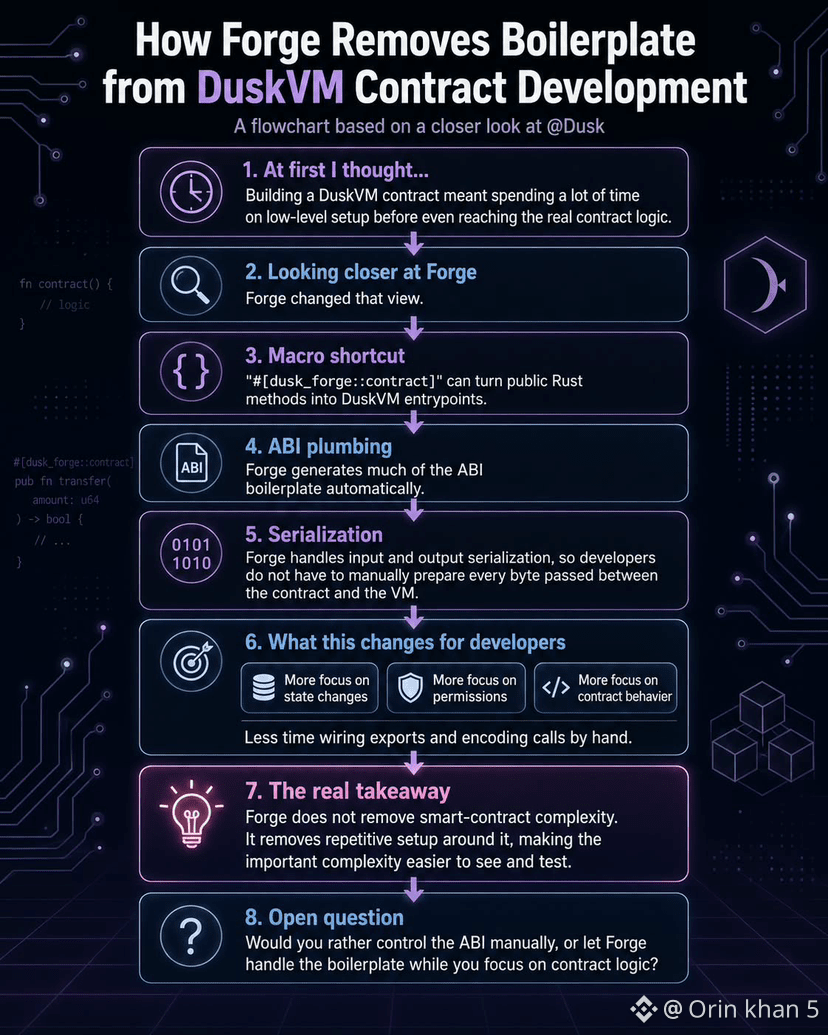
At first I thought building a DuskVM contract meant spending a lot of time on low-level setup before even reaching the actual contract logic.
Looking closer at @Dusk, Forge changed that view. Its "macro can turn public Rust methods into DuskVM entrypoints and generate much of the ABI plumbing automatically. Forge also handles input and output serialization, so developers do not have to manually prepare every byte passed between the contract and VM.
That is what I like about this approach. A developer can spend more time thinking about state changes, permissions, and contract behavior instead of repeatedly wiring exports and encoding calls by hand.
The interesting part is that Forge does not remove complexity from smart contracts. It removes repetitive setup around them, making the important complexity easier to see and test.
Now I am curious about adoption.
Would you rather control the ABI manually, or let Forge handle, the boilerplate while you focus on contract logic?