My initial view was at a tokenized bond on DUSK as a minting problem. That now feels like the least interesting part.
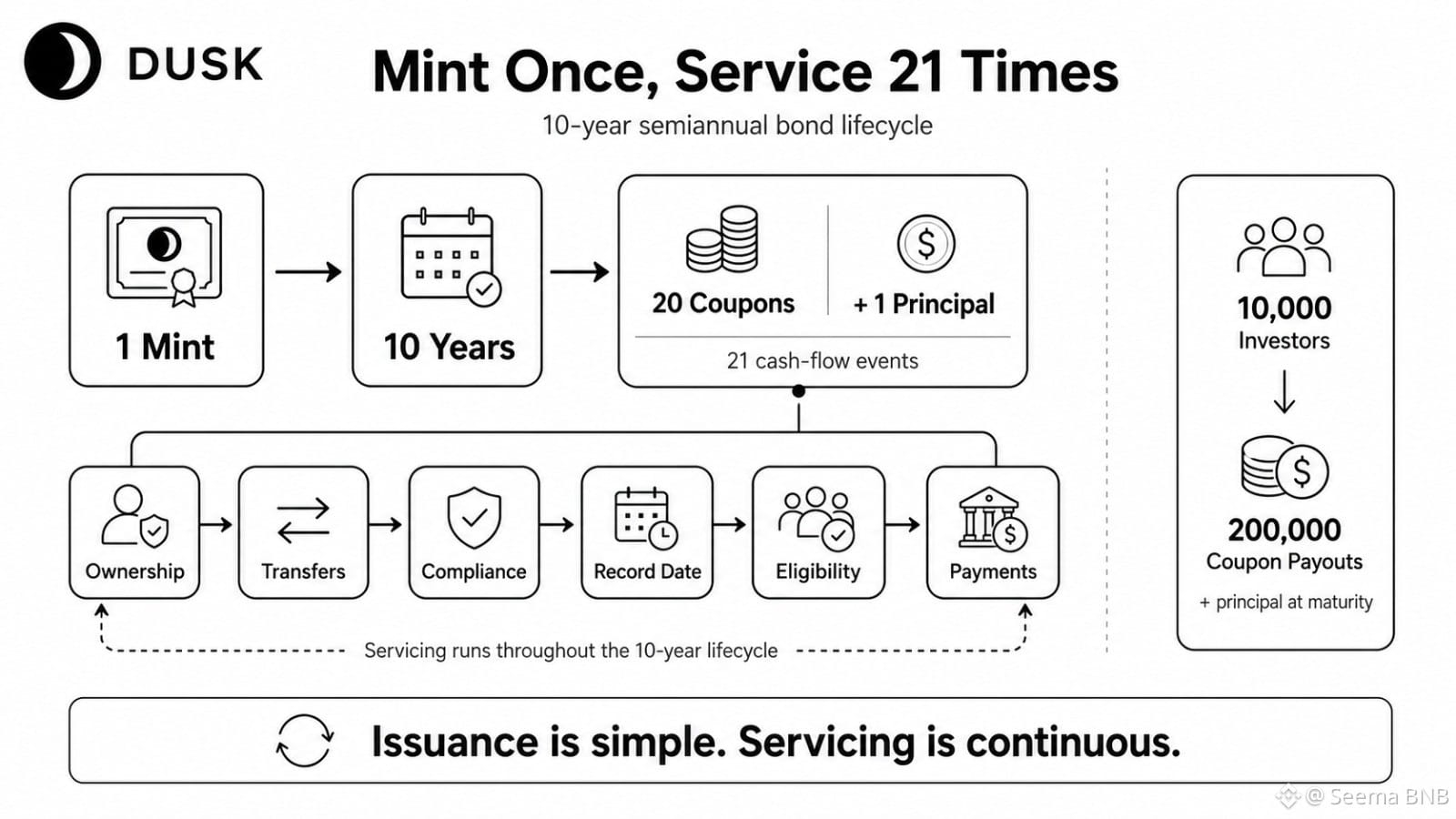
A 10-year bond with semiannual coupons is minted once, but it creates 20 coupon events plus one principal redemption. Twenty-one major cash-flow checkpoints across 120 months.
The hidden problem is ownership between those dates. Who holds the token at each record point? What happens after transfers, wallet changes, compliance updates, or restricted ownership? A contract can survive for a decade, but servicing has to stay correct every time.
Some complexity is normal. Traditional bonds already have registrars, payment agents and reconciliation. Moving that state on-chain does not remove the lifecycle, it makes the lifecycle visible.
That is the real test for DUSK. Not issuance vs adoption, but issuance vs persistent servicing discipline.
If 10,000 investors are involved, 20 coupon rounds can become 200,000 investor-level distributions before principal is even repaid. Can DUSK keep ownership, eligibility and payment state synchronized without creating new operational friction?
I keep coming back to this tokenization succeeds only if the twentieth coupon is as reliable as the first mint.
@Dusk #dusk $DUSK