For a while i treated "selective disclosure" as one of those phrases projects use to sound compliant without saying much. This week i actually tried to pin down what it means on Dusk, and it turned out to be three separate pieces, not one buzzword.
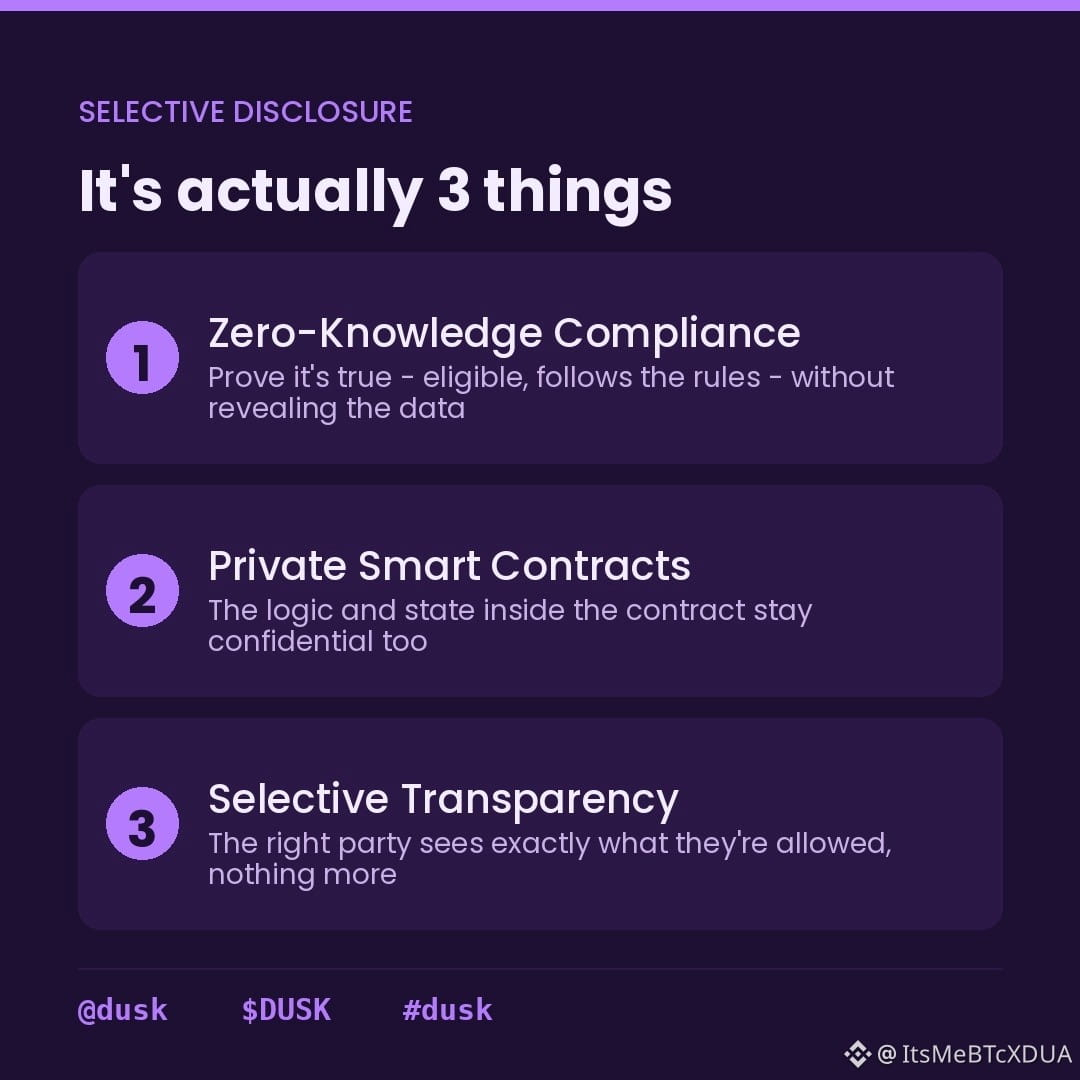
The first is zero-knowledge compliance. The short version: you can prove something is true, like this investor is eligible or this transfer follows the rules, without revealing the underlying data itself. The check passes, the private details stay private.
The second is private smart contracts. Not just hiding a transfer, but keeping the logic and state inside the contract confidential too. So the rules that govern a financial product can run without being fully public.
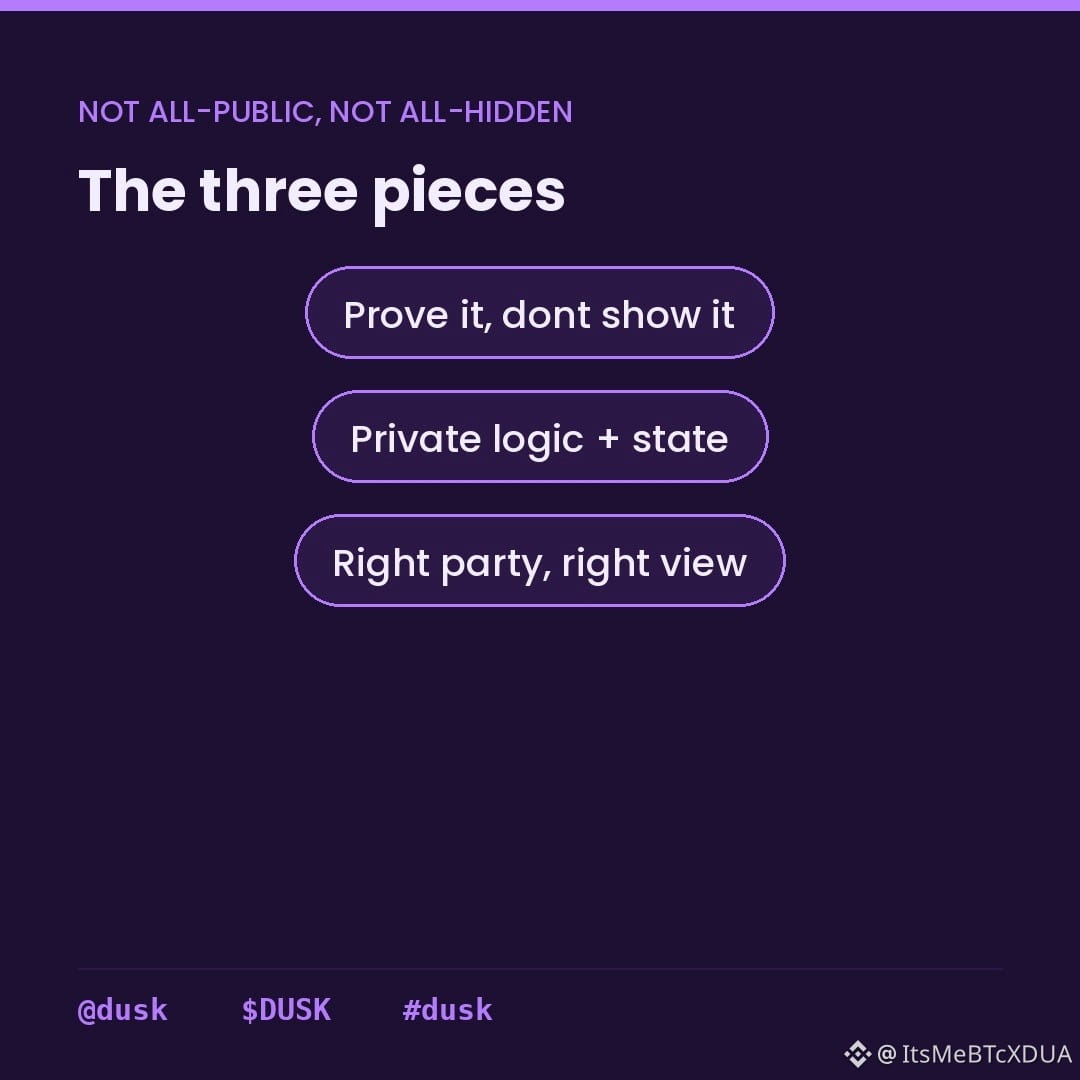
The third is selective transparency. This is the part that actually earns the word "selective". Its not all-public or all-hidden. The right party, a regulator, an auditor, a counterparty, can be shown exactly what they are allowed to see, and nothing more.
Put together, thats what "privacy where needed, transparency where useful" actually cashes out to. Three mechanisms, one idea.
Honestly the part that nags me is whether all this holds up cleanly in practice, or whether "who is allowed to see what" gets messy fast once real issuers, venues and regulators each want different things.
For anyone who's actually used a system like this, does selective disclosure hold up in practice, or is it still mostly a whitepaper promise nobody's really stress-tested yet? @Dusk
$DUSK K
#dusk
The first is zero-knowledge compliance. The short version: you can prove something is true, like this investor is eligible or this transfer follows the rules, without revealing the underlying data itself. The check passes, the private details stay private.
The second is private smart contracts. Not just hiding a transfer, but keeping the logic and state inside the contract confidential too. So the rules that govern a financial product can run without being fully public.
The third is selective transparency. This is the part that actually earns the word "selective". Its not all-public or all-hidden. The right party, a regulator, an auditor, a counterparty, can be shown exactly what they are allowed to see, and nothing more.
Put together, thats what "privacy where needed, transparency where useful" actually cashes out to. Three mechanisms, one idea.
Honestly the part that nags me is whether all this holds up cleanly in practice, or whether "who is allowed to see what" gets messy fast once real issuers, venues and regulators each want different things.
For anyone who's actually used a system like this, does selective disclosure hold up in practice, or is it still mostly a whitepaper promise nobody's really stress-tested yet? @Dusk
$DUSK K
#dusk