I went into @BabylonLabs_io documentation expecting the interesting part to be staking mechanics and rewards. Instead, I spent more time thinking about custody.
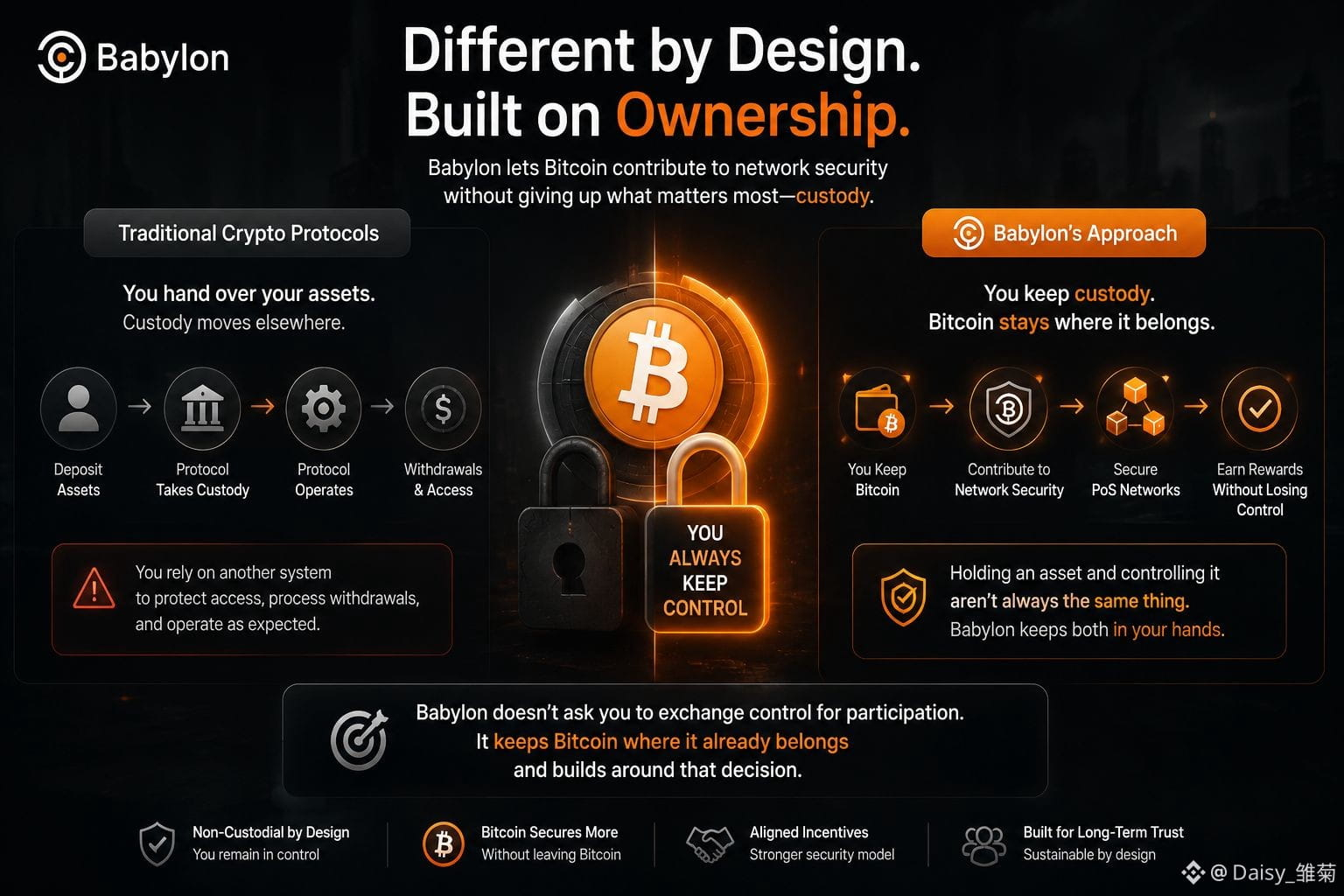
Most crypto protocols ask users to hand assets over in one form or another. We've seen it so often that it's easy to accept as the default. Babylon takes a different approach. Bitcoin stays under the owner's control while still contributing to network security.
That changes the trust model in a practical way. Holding an asset and controlling it aren't always the same thing. Once custody moves elsewhere you have relying on another system to protect access, process withdrawals, and operate as expected.
For me, that's one of the more interesting parts of Babylon's design. It's not centered on asking users to exchange control for participation. It keeps Bitcoin where it already belongs and builds around that decision. Whether that ends up influencing long-term adoption is a separate question, but the design choice itself says a lot about the assumptions Babylon is making from the start.
@BabylonLabs_io #baby $BABY
Most crypto protocols ask users to hand assets over in one form or another. We've seen it so often that it's easy to accept as the default. Babylon takes a different approach. Bitcoin stays under the owner's control while still contributing to network security.
That changes the trust model in a practical way. Holding an asset and controlling it aren't always the same thing. Once custody moves elsewhere you have relying on another system to protect access, process withdrawals, and operate as expected.
For me, that's one of the more interesting parts of Babylon's design. It's not centered on asking users to exchange control for participation. It keeps Bitcoin where it already belongs and builds around that decision. Whether that ends up influencing long-term adoption is a separate question, but the design choice itself says a lot about the assumptions Babylon is making from the start.
@BabylonLabs_io #baby $BABY