

Introduction
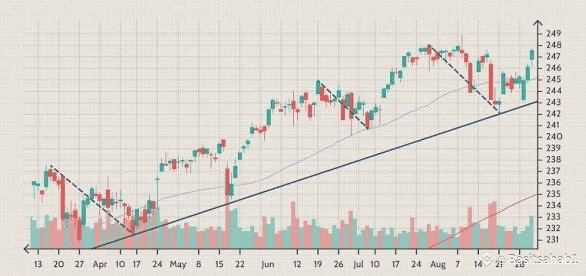
In financial markets, prices never move in one straight direction. Even during strong uptrends, small downward movements are common. These temporary drops are known as market pullback.
A pullback doesn’t mean the trend is over — it’s often a sign that the market is taking a short “breather” before continuing its journey.
What Is a Market Pullback?
A market pullback is a short-term decline in the price of an asset or index within a larger upward trend.
It usually represents a fall of 5% to 10% from a recent high and happens when traders take profits or when the market briefly corrects an overbought condition.
In simple words, it’s a temporary dip — not a crash, not a reversal — just a pause in the market’s ongoing movement.
Why Do Pullbacks Happen?
There are several natural reasons why pullbacks occur:
Profit Taking: After strong gains, traders sell some of their holdings to secure profits.
Overbought Conditions: When prices rise too quickly, technical indicators like RSI show overbought signals.
Short-Term News: Minor economic or political news can cause temporary panic.
Market Balance: Markets move in waves — buying and selling create short-term adjustments.
These dips are normal and often healthy because they help the market cool down before resuming its trend.
How Traders Use Pullbacks
Many smart traders see pullbacks as buying opportunities.
When the price drops temporarily during an uptrend, they buy at a lower price expecting the trend to continue upward.
Common trading approach:
Identify a strong uptrend.
Wait for a pullback to a support level or moving average.
Enter a buy trade when the price shows signs of recovery.
Place a stop-loss below the recent low to manage risk.
This strategy is often called “buying the dip.
How to Identify a Pullback
Here are a few signs that a dip might just be a pullback:
The main trend is still upward.
The price falls slightly, then finds support at a key level.
Volume decreases during the drop and rises again as the price recovers.
No major negative news affects the overall market fundamentals.
If these conditions are met, the move is likely a short-term pullback, not a deeper correction.
Should You Worry About Pullbacks?
Not at all.
Pullbacks are a normal part of market behavior. Even the biggest indexes like the S&P 500 and NASDAQ experience several pullbacks every year.
For long-term investors, they offer a chance to buy quality assets at discounted prices. For traders, they create short-term profit opportunities.
Conclusion
A market pullback is a brief decline within a larger trend — a pause, not a panic.
Understanding pullbacks helps traders and investors stay calm, avoid emotional decisions, and even find better entry points.
Instead of fearing every small dip, learn to recognize when the market is simply taking a breath before moving higher again.