

#stablecoin
stablecoin
3.9M views
18,664 Discussing
Hot
Latest

·
--
🚨 $ZEC STABLECOIN REDEMPTION RULES SET TO REDEFINE RETAIL PROTECTION 🟢
Canada’s draft rule forces stablecoin issuers to honor redemptions within three business days, removing any minimum cash‑out floor. 🦈 The mandatory liquidity window guarantees that every token holder can exit on demand, a move that aligns with institutional liquidity hunting patterns.
A 1% fee ceiling caps redemption costs, turning the fee structure into a predictable data point for smart‑money models. 📊 With yields barred but usage rewards still alive, the market faces a clear risk‑reward matrix that traders can quantify. 💡
🤔 Will this liquidity‑first framework become the global benchmark for stablecoin design? 👇
⚠️ Not financial advice. Always manage your risk. 🛡️
🏷️ #ZEC #Regulation #Stablecoin #Liquidity #Crypto
🔥 💎
🚨 $ZEC STABLECOIN REDEMPTION RULES SET TO REDEFINE RETAIL PROTECTION 🟢
Canada’s draft rule forces stablecoin issuers to honor redemptions within three business days, removing any minimum cash‑out floor. 🦈 The mandatory liquidity window guarantees that every token holder can exit on demand, a move that aligns with institutional liquidity hunting patterns.
A 1% fee ceiling caps redemption costs, turning the fee structure into a predictable data point for smart‑money models. 📊 With yields barred but usage rewards still alive, the market faces a clear risk‑reward matrix that traders can quantify. 💡
🤔 Will this liquidity‑first framework become the global benchmark for stablecoin design? 👇
⚠️ Not financial advice. Always manage your risk. 🛡️
🏷️ #ZEC #Regulation #Stablecoin #Liquidity #Crypto
🔥 💎
Canada’s draft rule forces stablecoin issuers to honor redemptions within three business days, removing any minimum cash‑out floor. 🦈 The mandatory liquidity window guarantees that every token holder can exit on demand, a move that aligns with institutional liquidity hunting patterns.
A 1% fee ceiling caps redemption costs, turning the fee structure into a predictable data point for smart‑money models. 📊 With yields barred but usage rewards still alive, the market faces a clear risk‑reward matrix that traders can quantify. 💡
🤔 Will this liquidity‑first framework become the global benchmark for stablecoin design? 👇
⚠️ Not financial advice. Always manage your risk. 🛡️
🏷️ #ZEC #Regulation #Stablecoin #Liquidity #Crypto
🔥 💎
8

·
--
#CanadaProposesStablecoinRedemptionWithin3BusinessDays
🚨 Canada’s Proposed Stablecoin Rules: What 3-Day Redemptions Mean for Crypto Users
Canada is shaping the future of digital asset regulation with a newly proposed framework for fiat-backed stablecoins. While the goal is to enhance consumer protection, it introduces significant shifts that every crypto user and trader should keep on their radar.
📌 Key Highlights of the Proposal:
3-Business-Day Redemption: Covered issuers would be required to complete stablecoin redemptions within three business days of a valid request.
1:1 Reserve Backing: Issuers must maintain adequate reserve assets to cover outstanding tokens at par.
Fee Cap & Accessibility: Redemption fees would be capped at a maximum of $1\%$, with no minimum redemption amount required for holders.
Safeguards During Volatility: The proposal allows for daily redemption limits if illiquid reserve-asset markets prevent issuers from meeting sudden spikes in demand.
💡 Why It Matters:
While clear guidelines and reserve transparency help build long-term trust in digital payments, a 3-day turnaround window means traders will need to plan ahead during periods of high market volatility.
With public consultations underway and implementation targeted for 2027, how will these rules affect your strategy? Are fast redemptions and stronger reserves worth the wait? Let’s discuss below! 👇
#Stablecoin #CryptoRegulation #CanadaCrypto $BTC $BNB
#CanadaProposesStablecoinRedemptionWithin3BusinessDays
🚨 Canada’s Proposed Stablecoin Rules: What 3-Day Redemptions Mean for Crypto Users
Canada is shaping the future of digital asset regulation with a newly proposed framework for fiat-backed stablecoins. While the goal is to enhance consumer protection, it introduces significant shifts that every crypto user and trader should keep on their radar.
📌 Key Highlights of the Proposal:
3-Business-Day Redemption: Covered issuers would be required to complete stablecoin redemptions within three business days of a valid request.
1:1 Reserve Backing: Issuers must maintain adequate reserve assets to cover outstanding tokens at par.
Fee Cap & Accessibility: Redemption fees would be capped at a maximum of $1\%$, with no minimum redemption amount required for holders.
Safeguards During Volatility: The proposal allows for daily redemption limits if illiquid reserve-asset markets prevent issuers from meeting sudden spikes in demand.
💡 Why It Matters:
While clear guidelines and reserve transparency help build long-term trust in digital payments, a 3-day turnaround window means traders will need to plan ahead during periods of high market volatility.
With public consultations underway and implementation targeted for 2027, how will these rules affect your strategy? Are fast redemptions and stronger reserves worth the wait? Let’s discuss below! 👇
#Stablecoin #CryptoRegulation #CanadaCrypto $BTC $BNB
🚨 Canada’s Proposed Stablecoin Rules: What 3-Day Redemptions Mean for Crypto Users
Canada is shaping the future of digital asset regulation with a newly proposed framework for fiat-backed stablecoins. While the goal is to enhance consumer protection, it introduces significant shifts that every crypto user and trader should keep on their radar.
📌 Key Highlights of the Proposal:
3-Business-Day Redemption: Covered issuers would be required to complete stablecoin redemptions within three business days of a valid request.
1:1 Reserve Backing: Issuers must maintain adequate reserve assets to cover outstanding tokens at par.
Fee Cap & Accessibility: Redemption fees would be capped at a maximum of $1\%$, with no minimum redemption amount required for holders.
Safeguards During Volatility: The proposal allows for daily redemption limits if illiquid reserve-asset markets prevent issuers from meeting sudden spikes in demand.
💡 Why It Matters:
While clear guidelines and reserve transparency help build long-term trust in digital payments, a 3-day turnaround window means traders will need to plan ahead during periods of high market volatility.
With public consultations underway and implementation targeted for 2027, how will these rules affect your strategy? Are fast redemptions and stronger reserves worth the wait? Let’s discuss below! 👇
#Stablecoin #CryptoRegulation #CanadaCrypto $BTC $BNB

26

·
--
$HSBC.US 🚨 HSBC LAUNCHES REDCOIN STABLECOIN IN HONG KONG
HSBC has launched RedCoin (RCHKD), its first Hong Kong dollar-denominated stablecoin, through its PayMe payment platform.
🔹 What’s new?
• Designed to be redeemable 1:1 for Hong Kong dollars
• Supports person-to-person transfers and payments to merchants
• More than 3.3 million PayMe users will be able to activate wallets in phases
• HSBC plans to expand into tokenised investment products
🌐 Why it matters: A major traditional bank is bringing regulated stablecoin technology closer to everyday payments.
📌 Important: The 3.3 million figure refers to potential PayMe users, not confirmed active RedCoin wallets.
🔗 Official source: https://www.about.hsbc.com.hk/news-and-media/hsbc-redcoin-launches-today
What impact could bank-issued stablecoins have on digital payments? 👇
#redcoin #stablecoin #blockchain #CryptoNews
{stock_us}(HSBC.US)
$HSBC.US 🚨 HSBC LAUNCHES REDCOIN STABLECOIN IN HONG KONG
HSBC has launched RedCoin (RCHKD), its first Hong Kong dollar-denominated stablecoin, through its PayMe payment platform.
🔹 What’s new?
• Designed to be redeemable 1:1 for Hong Kong dollars
• Supports person-to-person transfers and payments to merchants
• More than 3.3 million PayMe users will be able to activate wallets in phases
• HSBC plans to expand into tokenised investment products
🌐 Why it matters: A major traditional bank is bringing regulated stablecoin technology closer to everyday payments.
📌 Important: The 3.3 million figure refers to potential PayMe users, not confirmed active RedCoin wallets.
🔗 Official source: https://www.about.hsbc.com.hk/news-and-media/hsbc-redcoin-launches-today
What impact could bank-issued stablecoins have on digital payments? 👇
#redcoin #stablecoin #blockchain #CryptoNews
HSBC has launched RedCoin (RCHKD), its first Hong Kong dollar-denominated stablecoin, through its PayMe payment platform.
🔹 What’s new?
• Designed to be redeemable 1:1 for Hong Kong dollars
• Supports person-to-person transfers and payments to merchants
• More than 3.3 million PayMe users will be able to activate wallets in phases
• HSBC plans to expand into tokenised investment products
🌐 Why it matters: A major traditional bank is bringing regulated stablecoin technology closer to everyday payments.
📌 Important: The 3.3 million figure refers to potential PayMe users, not confirmed active RedCoin wallets.
🔗 Official source: https://www.about.hsbc.com.hk/news-and-media/hsbc-redcoin-launches-today
What impact could bank-issued stablecoins have on digital payments? 👇
#redcoin #stablecoin #blockchain #CryptoNews

HSBCUS+1.15%
45

·
--
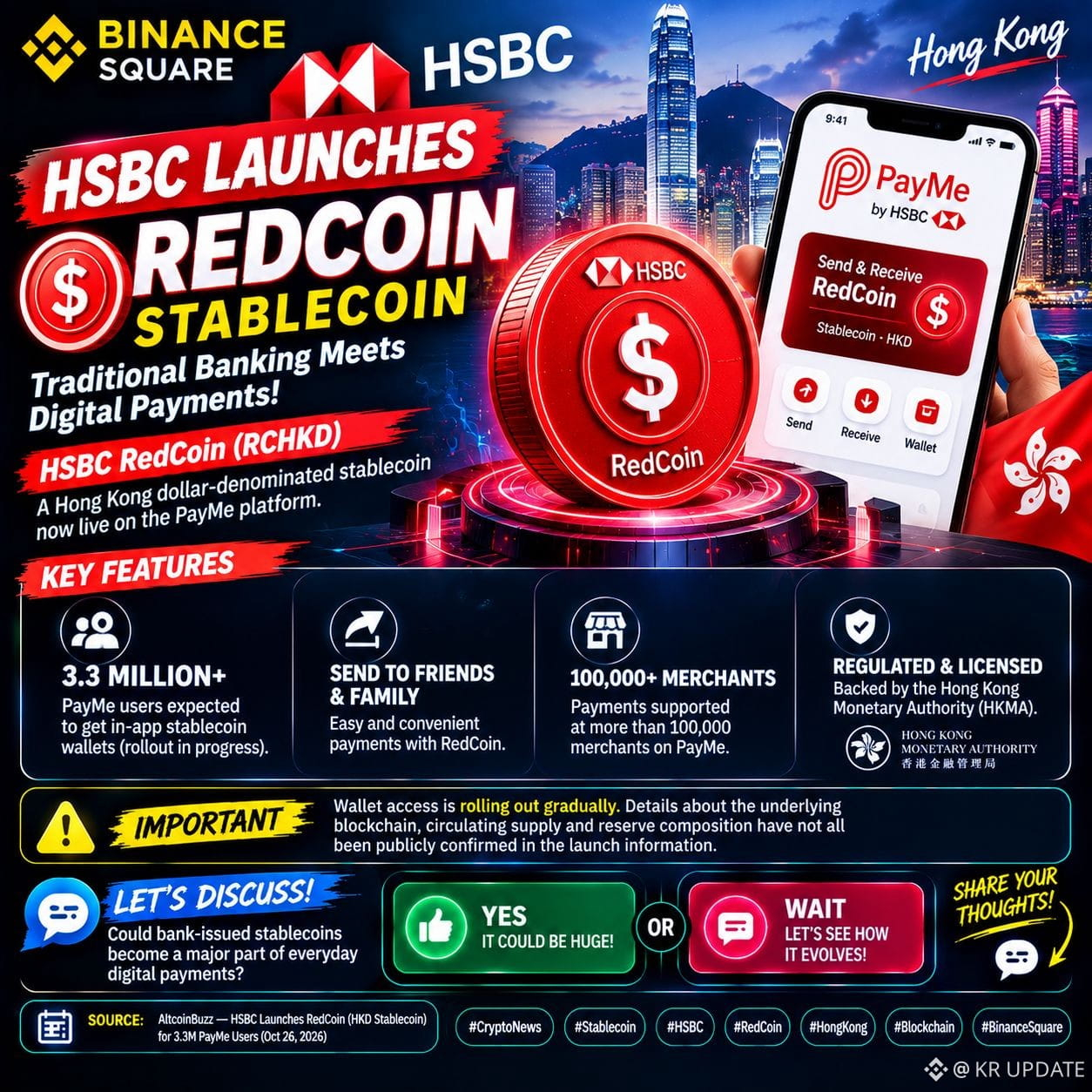
🚨 $HSBC.US JUST ENTERED THE STABLECOIN SPOTLIGHT! 🌏
🏦 HSBC RedCoin: Traditional Banking Meets Digital Payments!
HSBC has launched RedCoin ($RCHKD), a Hong Kong dollar-denominated stablecoin, on its PayMe platform.
🔥 Why is this news important?
🔹 More than 3.3 million PayMe users are expected to gain access to in-app stablecoin wallets as the rollout progresses.
🔹 Users will be able to send RedCoin to friends and family.
🔹 HSBC says payments will be supported at more than 100,000 merchants on PayMe.
🔹 The stablecoin is licensed and regulated by the Hong Kong Monetary Authority.
⚠️ Important: Wallet access is rolling out gradually. Details about the underlying blockchain, circulating supply and reserve composition have not all been publicly confirmed in the launch information.
💬 DISCUSSION: Could bank-issued stablecoins become a major part of everyday digital payments?
Share your thoughts below! 👇
#CryptoNews #stablecoin #redcoin #HongKongFinance #BinanceSquare
🚨 $HSBC.US JUST ENTERED THE STABLECOIN SPOTLIGHT! 🌏
🏦 HSBC RedCoin: Traditional Banking Meets Digital Payments!
HSBC has launched RedCoin ($RCHKD), a Hong Kong dollar-denominated stablecoin, on its PayMe platform.
🔥 Why is this news important?
🔹 More than 3.3 million PayMe users are expected to gain access to in-app stablecoin wallets as the rollout progresses.
🔹 Users will be able to send RedCoin to friends and family.
🔹 HSBC says payments will be supported at more than 100,000 merchants on PayMe.
🔹 The stablecoin is licensed and regulated by the Hong Kong Monetary Authority.
⚠️ Important: Wallet access is rolling out gradually. Details about the underlying blockchain, circulating supply and reserve composition have not all been publicly confirmed in the launch information.
💬 DISCUSSION: Could bank-issued stablecoins become a major part of everyday digital payments?
Share your thoughts below! 👇
#CryptoNews #stablecoin #redcoin #HongKongFinance #BinanceSquare
🏦 HSBC RedCoin: Traditional Banking Meets Digital Payments!
HSBC has launched RedCoin ($RCHKD), a Hong Kong dollar-denominated stablecoin, on its PayMe platform.
🔥 Why is this news important?
🔹 More than 3.3 million PayMe users are expected to gain access to in-app stablecoin wallets as the rollout progresses.
🔹 Users will be able to send RedCoin to friends and family.
🔹 HSBC says payments will be supported at more than 100,000 merchants on PayMe.
🔹 The stablecoin is licensed and regulated by the Hong Kong Monetary Authority.
⚠️ Important: Wallet access is rolling out gradually. Details about the underlying blockchain, circulating supply and reserve composition have not all been publicly confirmed in the launch information.
💬 DISCUSSION: Could bank-issued stablecoins become a major part of everyday digital payments?
Share your thoughts below! 👇
#CryptoNews #stablecoin #redcoin #HongKongFinance #BinanceSquare
HSBCUS+1.15%
73

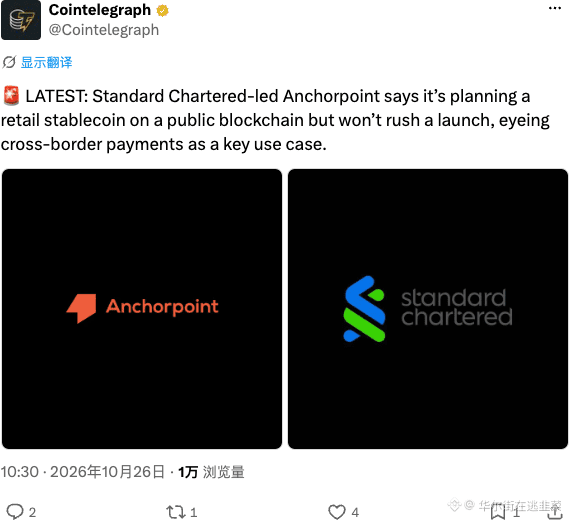
🚨 LATEST: Standard Chartered-led Anchorpoint says it’s planning a retail stablecoin on a public blockchain but won’t rush a launch, eyeing cross-border payments as a key use case.
#Crypto #Stablecoin
🚨 LATEST: Standard Chartered-led Anchorpoint says it’s planning a retail stablecoin on a public blockchain but won’t rush a launch, eyeing cross-border payments as a key use case.
#Crypto #Stablecoin
#Crypto #Stablecoin


1
40

·
--
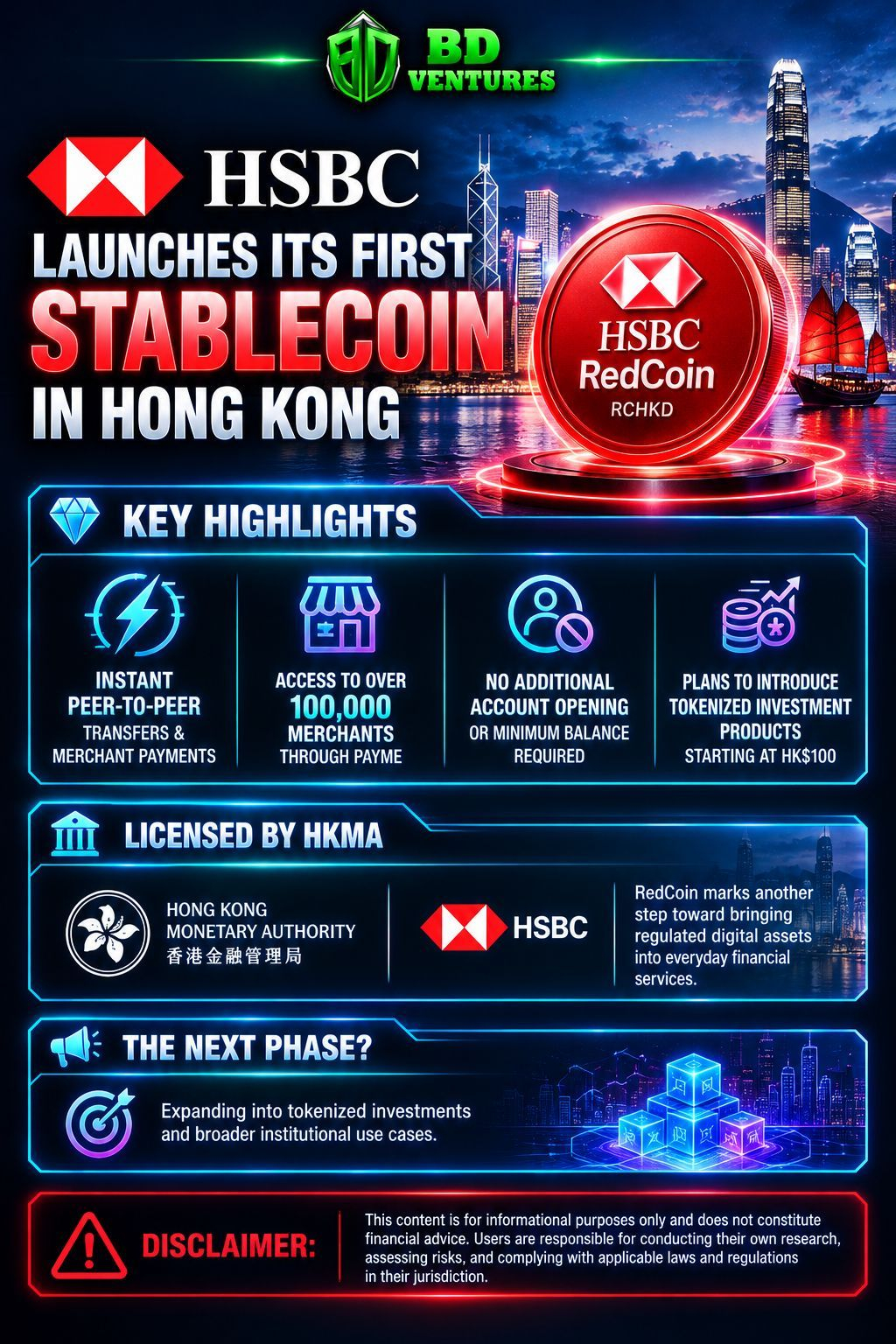
🚀 $RCHKD UNVEILS HONG KONG'S FIRST REGULATED STABLECOIN 💎
HSBC just dropped $RCHKD into the market via PayMe, instantly unlocking a 3.3 million‑strong user base. 🦈 The HKD‑backed token gives smart money a regulated runway to swing liquidity across retail and merchant layers. ⚡
Instant P2P transfers and zero‑balance barriers mean volume can surge like a flash‑sale, while the HKMA license adds a safety net that could draw institutional appetite. 📊 Tokenized investment products are set to roll out, nudging the stablecoin ecosystem toward deeper depth. 💬 Will you stake $RCHKD now that it’s bank‑backed? 👇
⚠️ Not financial advice. Always manage your risk. 🛡️
🏷️ #RCHKD #Stablecoin #Crypto #Regulation
🦈 💎
🚀 $RCHKD UNVEILS HONG KONG'S FIRST REGULATED STABLECOIN 💎
HSBC just dropped $RCHKD into the market via PayMe, instantly unlocking a 3.3 million‑strong user base. 🦈 The HKD‑backed token gives smart money a regulated runway to swing liquidity across retail and merchant layers. ⚡
Instant P2P transfers and zero‑balance barriers mean volume can surge like a flash‑sale, while the HKMA license adds a safety net that could draw institutional appetite. 📊 Tokenized investment products are set to roll out, nudging the stablecoin ecosystem toward deeper depth. 💬 Will you stake $RCHKD now that it’s bank‑backed? 👇
⚠️ Not financial advice. Always manage your risk. 🛡️
🏷️ #RCHKD #Stablecoin #Crypto #Regulation
🦈 💎
HSBC just dropped $RCHKD into the market via PayMe, instantly unlocking a 3.3 million‑strong user base. 🦈 The HKD‑backed token gives smart money a regulated runway to swing liquidity across retail and merchant layers. ⚡
Instant P2P transfers and zero‑balance barriers mean volume can surge like a flash‑sale, while the HKMA license adds a safety net that could draw institutional appetite. 📊 Tokenized investment products are set to roll out, nudging the stablecoin ecosystem toward deeper depth. 💬 Will you stake $RCHKD now that it’s bank‑backed? 👇
⚠️ Not financial advice. Always manage your risk. 🛡️
🏷️ #RCHKD #Stablecoin #Crypto #Regulation
🦈 💎
3

·
--
📰 Crypto News Update
American Bankers Association accuses OCC of undermining Congress with final stablecoin rewards rule
Why it matters: This legal or regulatory development may influence market access, compliance, and investor sentiment.
Importance score: 6/10
Source: The Block
Read the original report: https://www.theblock.co/news/regulation/2026-10-21-american-bankers-association-accuses-occ-undermining-congress-stablecoin-rewards-rule-421629
#Stablecoin #CryptoNews #Cryptocurrency #Blockchain
📰 Crypto News Update
American Bankers Association accuses OCC of undermining Congress with final stablecoin rewards rule
Why it matters: This legal or regulatory development may influence market access, compliance, and investor sentiment.
Importance score: 6/10
Source: The Block
Read the original report: https://www.theblock.co/news/regulation/2026-10-21-american-bankers-association-accuses-occ-undermining-congress-stablecoin-rewards-rule-421629
#Stablecoin #CryptoNews #Cryptocurrency #Blockchain
American Bankers Association accuses OCC of undermining Congress with final stablecoin rewards rule
Why it matters: This legal or regulatory development may influence market access, compliance, and investor sentiment.
Importance score: 6/10
Source: The Block
Read the original report: https://www.theblock.co/news/regulation/2026-10-21-american-bankers-association-accuses-occ-undermining-congress-stablecoin-rewards-rule-421629
#Stablecoin #CryptoNews #Cryptocurrency #Blockchain
1

·
--
What Is a Stablecoin? A Simple Guide for Beginners 💵
Have you ever wondered why some cryptocurrencies are designed to maintain a stable price?
Stablecoins are cryptocurrencies designed to maintain a relatively stable value. Many are linked to traditional currencies, such as the US dollar.
For example, USDT is designed to track the value of the US dollar. However, its price can sometimes move away from $1.
Why do people use stablecoins?
To transfer funds between crypto platforms.
To hold digital assets with less price volatility than Bitcoin.
To make certain crypto transactions easier.
Remember, stablecoins still carry risks. Always check the issuer, reserves, and platform before using one.
Do you use stablecoins? Why or why not? Share your thoughts below! 👇
#CryptoEducation #Stablecoin #USDT #CryptoBasics
What Is a Stablecoin? A Simple Guide for Beginners 💵
Have you ever wondered why some cryptocurrencies are designed to maintain a stable price?
Stablecoins are cryptocurrencies designed to maintain a relatively stable value. Many are linked to traditional currencies, such as the US dollar.
For example, USDT is designed to track the value of the US dollar. However, its price can sometimes move away from $1.
Why do people use stablecoins?
To transfer funds between crypto platforms.
To hold digital assets with less price volatility than Bitcoin.
To make certain crypto transactions easier.
Remember, stablecoins still carry risks. Always check the issuer, reserves, and platform before using one.
Do you use stablecoins? Why or why not? Share your thoughts below! 👇
#CryptoEducation #Stablecoin #USDT #CryptoBasics
Have you ever wondered why some cryptocurrencies are designed to maintain a stable price?
Stablecoins are cryptocurrencies designed to maintain a relatively stable value. Many are linked to traditional currencies, such as the US dollar.
For example, USDT is designed to track the value of the US dollar. However, its price can sometimes move away from $1.
Why do people use stablecoins?
To transfer funds between crypto platforms.
To hold digital assets with less price volatility than Bitcoin.
To make certain crypto transactions easier.
Remember, stablecoins still carry risks. Always check the issuer, reserves, and platform before using one.
Do you use stablecoins? Why or why not? Share your thoughts below! 👇
#CryptoEducation #Stablecoin #USDT #CryptoBasics

90


Verified
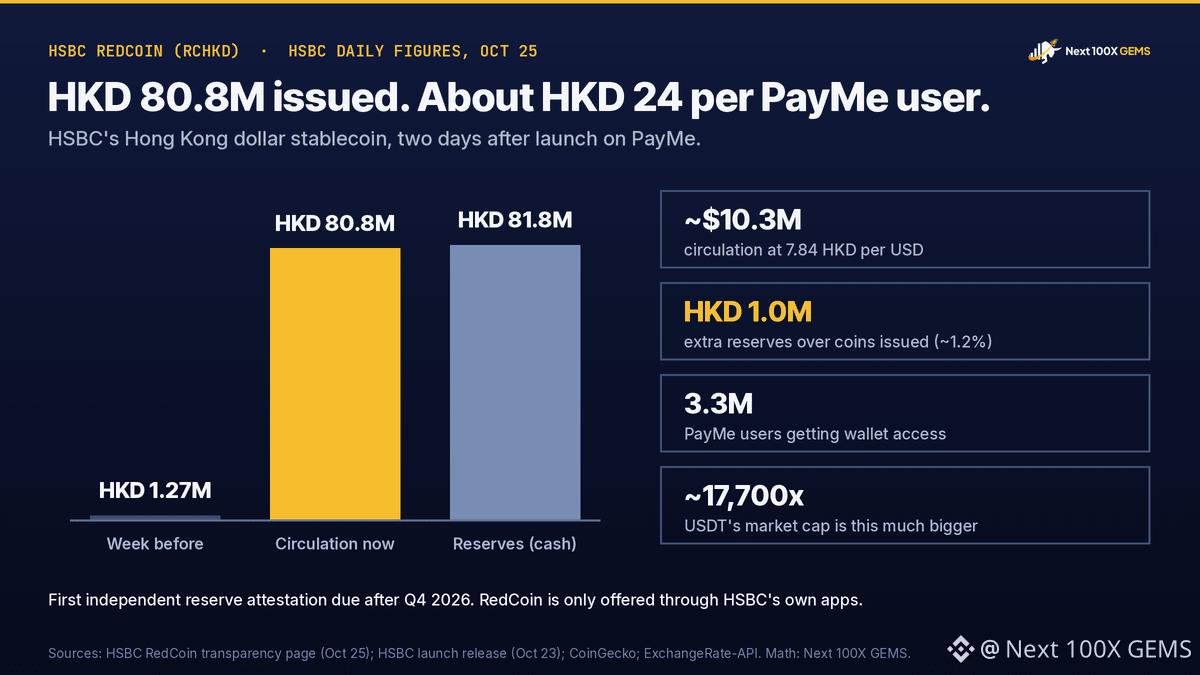
HSBC has HKD 80.8M of its new RedCoin stablecoin in circulation, about $10.3M. Averaged across PayMe's 3.3 million users, that's roughly HKD 24 each.
RedCoin (RCHKD) went live on PayMe on Friday under an HKMA stablecoin licence. HSBC posts circulation and reserves daily. Today's page shows a 7-day change of HKD +79.5M, which puts last week's figure near HKD 1.27M, from a staff pilot of nearly 100 users.
Reserves are HKD 81.8M, all in cash. That's exactly HKD 1M more than the coins issued, a buffer of about 1.2%.
It runs on HSBC's own ledger, not a public chain, and coins can't move between PayMe and the HSBC banking app. Wallet activation is rolling out "in the coming days", per HSBC. For scale, USDT's market cap is about $182B, around 17,700 times bigger.
The first independent attestation of the reserves is due after Q4 2026. HSBC says RedCoin is only offered through PayMe and, later, its own banking app, so any RCHKD token on a DEX or another platform isn't HSBC's.
#Stablecoin #HongKong
NFA. DYOR.
HSBC has HKD 80.8M of its new RedCoin stablecoin in circulation, about $10.3M. Averaged across PayMe's 3.3 million users, that's roughly HKD 24 each.
RedCoin (RCHKD) went live on PayMe on Friday under an HKMA stablecoin licence. HSBC posts circulation and reserves daily. Today's page shows a 7-day change of HKD +79.5M, which puts last week's figure near HKD 1.27M, from a staff pilot of nearly 100 users.
Reserves are HKD 81.8M, all in cash. That's exactly HKD 1M more than the coins issued, a buffer of about 1.2%.
It runs on HSBC's own ledger, not a public chain, and coins can't move between PayMe and the HSBC banking app. Wallet activation is rolling out "in the coming days", per HSBC. For scale, USDT's market cap is about $182B, around 17,700 times bigger.
The first independent attestation of the reserves is due after Q4 2026. HSBC says RedCoin is only offered through PayMe and, later, its own banking app, so any RCHKD token on a DEX or another platform isn't HSBC's.
#Stablecoin #HongKong
NFA. DYOR.
RedCoin (RCHKD) went live on PayMe on Friday under an HKMA stablecoin licence. HSBC posts circulation and reserves daily. Today's page shows a 7-day change of HKD +79.5M, which puts last week's figure near HKD 1.27M, from a staff pilot of nearly 100 users.
Reserves are HKD 81.8M, all in cash. That's exactly HKD 1M more than the coins issued, a buffer of about 1.2%.
It runs on HSBC's own ledger, not a public chain, and coins can't move between PayMe and the HSBC banking app. Wallet activation is rolling out "in the coming days", per HSBC. For scale, USDT's market cap is about $182B, around 17,700 times bigger.
The first independent attestation of the reserves is due after Q4 2026. HSBC says RedCoin is only offered through PayMe and, later, its own banking app, so any RCHKD token on a DEX or another platform isn't HSBC's.
#Stablecoin #HongKong
NFA. DYOR.
1.7k

·
--
OCC finalizes the GENIUS Act stablecoin rulebook – a watershed moment.
The OCC’s final rule sets requirements for permitted payment **stablecoin** issuers, foreign issuers under its jurisdiction, and certain custody activities supervised by the agency.
It outlines reserve backing, redemption and risk‑management standards, implementing the **GENIUS Act** signed in July 2025 and slated to take effect on January 18, 2027.
Treasury Secretary Scott Bessent likened the act to Lincoln’s 1863 National Currency Act, saying it creates a federal framework for payment **stablecoins** in the **digital assets** era.
The agency reviewed hundreds of comments from crypto firms, community banks, trade groups, academics and others. Issues such as the Bank Secrecy Act, anti‑money‑laundering and sanctions will be addressed in a separate rulemaking with the Treasury.
Do you think the January 2027 effective date gives the industry enough time to adapt?
#Stablecoin #DigitalAssets #FinTech #Regulation #Crypto
OCC finalizes the GENIUS Act stablecoin rulebook – a watershed moment.
The OCC’s final rule sets requirements for permitted payment **stablecoin** issuers, foreign issuers under its jurisdiction, and certain custody activities supervised by the agency.
It outlines reserve backing, redemption and risk‑management standards, implementing the **GENIUS Act** signed in July 2025 and slated to take effect on January 18, 2027.
Treasury Secretary Scott Bessent likened the act to Lincoln’s 1863 National Currency Act, saying it creates a federal framework for payment **stablecoins** in the **digital assets** era.
The agency reviewed hundreds of comments from crypto firms, community banks, trade groups, academics and others. Issues such as the Bank Secrecy Act, anti‑money‑laundering and sanctions will be addressed in a separate rulemaking with the Treasury.
Do you think the January 2027 effective date gives the industry enough time to adapt?
#Stablecoin #DigitalAssets #FinTech #Regulation #Crypto
The OCC’s final rule sets requirements for permitted payment **stablecoin** issuers, foreign issuers under its jurisdiction, and certain custody activities supervised by the agency.
It outlines reserve backing, redemption and risk‑management standards, implementing the **GENIUS Act** signed in July 2025 and slated to take effect on January 18, 2027.
Treasury Secretary Scott Bessent likened the act to Lincoln’s 1863 National Currency Act, saying it creates a federal framework for payment **stablecoins** in the **digital assets** era.
The agency reviewed hundreds of comments from crypto firms, community banks, trade groups, academics and others. Issues such as the Bank Secrecy Act, anti‑money‑laundering and sanctions will be addressed in a separate rulemaking with the Treasury.
Do you think the January 2027 effective date gives the industry enough time to adapt?
#Stablecoin #DigitalAssets #FinTech #Regulation #Crypto

1
1

·
--
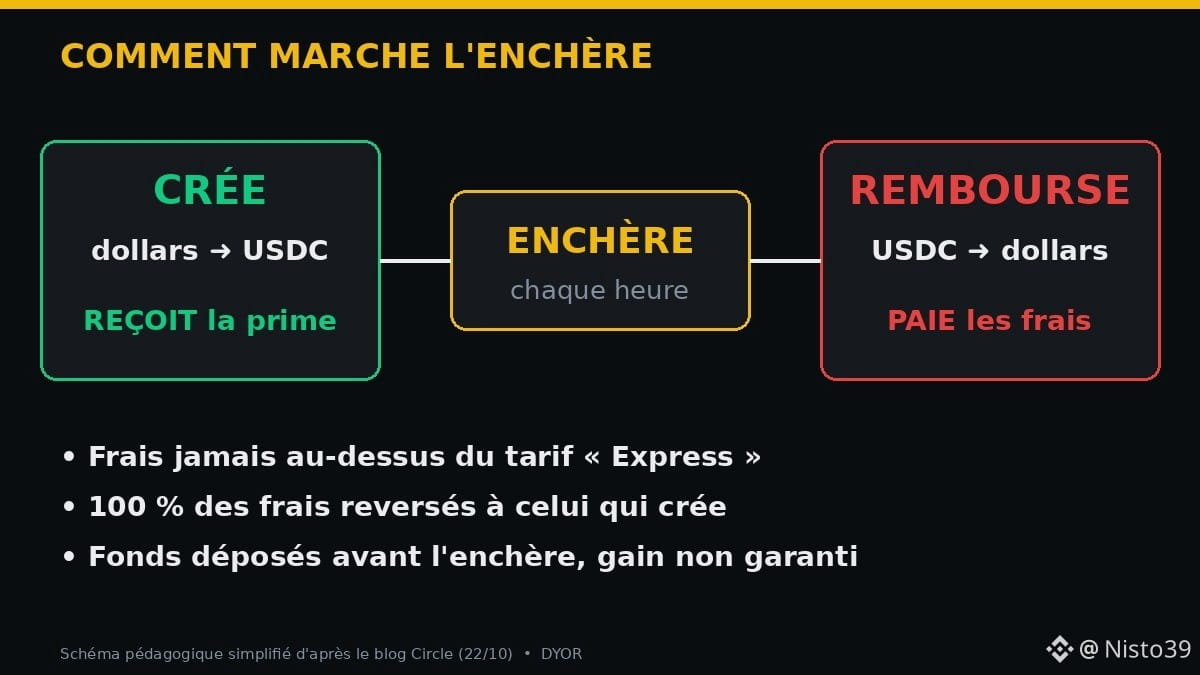
💵 Créer des USDC peut désormais rapporter une prime… mais seulement aux gros acteurs. Voici comment ça marche.
📌 Les faits (22 octobre 2026)
• Circle, l'émetteur de l'USDC, lance « Circle Match » pour ses clients institutionnels
• Chaque heure, une enchère met face à face ceux qui veulent créer des USDC (dollars ➜ USDC) et ceux qui veulent les rembourser (USDC ➜ dollars)
• Quand deux ordres se rencontrent, celui qui rembourse paie des frais, jamais au-dessus du tarif « Express » de Circle
• Ces frais sont reversés en totalité à celui qui crée les USDC, sous forme de prime
• Circle dit ne prendre aucune marge sur les ordres appariés
🔍 Pourquoi ça compte ?
Jusqu'ici, créer des USDC ne rapportait rien en direct. En mettant les deux côtés en contact, Circle réduit les coûts d'entrée et de sortie pour les gros volumes. Moins de friction en amont, c'est en théorie un dollar numérique plus facile à faire circuler.
⚖️ Nuance
• Simplement détenir des USDC ne donne droit à aucune prime
• Les fonds doivent être déposés avant l'enchère et le gain n'est pas garanti
• Les paiements en dollars dépendent des horaires des banques américaines
• Le même jour (26/10), Mizuho fixe un objectif de 43 $ sur l'action Circle (note « sous-performance ») : la banque craint que des assistants IA orientent l'épargne vers des placements assurés et mieux rémunérés
👤 Mariama (personnage fictif) vend des pagnes à Bamako et garde une partie de ses économies en USDC. Elle ne touchera pas cette prime. Mais si les plateformes paient moins cher pour entrer et sortir du dollar numérique, ses frais de conversion pourraient baisser à terme.
💬 Le stablecoin doit-il rémunérer ses utilisateurs ? Oui 👍 / Non 👀 👇
Pas un conseil financier. DYOR.
Sources : blog Circle (22/10), Crypto Times (26/10), TokenPost et Investing.com (26/10).
$USDC
#Stablecoin #USDC #CryptoNews #Afrique
💵 Créer des USDC peut désormais rapporter une prime… mais seulement aux gros acteurs. Voici comment ça marche.
📌 Les faits (22 octobre 2026)
• Circle, l'émetteur de l'USDC, lance « Circle Match » pour ses clients institutionnels
• Chaque heure, une enchère met face à face ceux qui veulent créer des USDC (dollars ➜ USDC) et ceux qui veulent les rembourser (USDC ➜ dollars)
• Quand deux ordres se rencontrent, celui qui rembourse paie des frais, jamais au-dessus du tarif « Express » de Circle
• Ces frais sont reversés en totalité à celui qui crée les USDC, sous forme de prime
• Circle dit ne prendre aucune marge sur les ordres appariés
🔍 Pourquoi ça compte ?
Jusqu'ici, créer des USDC ne rapportait rien en direct. En mettant les deux côtés en contact, Circle réduit les coûts d'entrée et de sortie pour les gros volumes. Moins de friction en amont, c'est en théorie un dollar numérique plus facile à faire circuler.
⚖️ Nuance
• Simplement détenir des USDC ne donne droit à aucune prime
• Les fonds doivent être déposés avant l'enchère et le gain n'est pas garanti
• Les paiements en dollars dépendent des horaires des banques américaines
• Le même jour (26/10), Mizuho fixe un objectif de 43 $ sur l'action Circle (note « sous-performance ») : la banque craint que des assistants IA orientent l'épargne vers des placements assurés et mieux rémunérés
👤 Mariama (personnage fictif) vend des pagnes à Bamako et garde une partie de ses économies en USDC. Elle ne touchera pas cette prime. Mais si les plateformes paient moins cher pour entrer et sortir du dollar numérique, ses frais de conversion pourraient baisser à terme.
💬 Le stablecoin doit-il rémunérer ses utilisateurs ? Oui 👍 / Non 👀 👇
Pas un conseil financier. DYOR.
Sources : blog Circle (22/10), Crypto Times (26/10), TokenPost et Investing.com (26/10).
$USDC
#Stablecoin #USDC #CryptoNews #Afrique
📌 Les faits (22 octobre 2026)
• Circle, l'émetteur de l'USDC, lance « Circle Match » pour ses clients institutionnels
• Chaque heure, une enchère met face à face ceux qui veulent créer des USDC (dollars ➜ USDC) et ceux qui veulent les rembourser (USDC ➜ dollars)
• Quand deux ordres se rencontrent, celui qui rembourse paie des frais, jamais au-dessus du tarif « Express » de Circle
• Ces frais sont reversés en totalité à celui qui crée les USDC, sous forme de prime
• Circle dit ne prendre aucune marge sur les ordres appariés
🔍 Pourquoi ça compte ?
Jusqu'ici, créer des USDC ne rapportait rien en direct. En mettant les deux côtés en contact, Circle réduit les coûts d'entrée et de sortie pour les gros volumes. Moins de friction en amont, c'est en théorie un dollar numérique plus facile à faire circuler.
⚖️ Nuance
• Simplement détenir des USDC ne donne droit à aucune prime
• Les fonds doivent être déposés avant l'enchère et le gain n'est pas garanti
• Les paiements en dollars dépendent des horaires des banques américaines
• Le même jour (26/10), Mizuho fixe un objectif de 43 $ sur l'action Circle (note « sous-performance ») : la banque craint que des assistants IA orientent l'épargne vers des placements assurés et mieux rémunérés
👤 Mariama (personnage fictif) vend des pagnes à Bamako et garde une partie de ses économies en USDC. Elle ne touchera pas cette prime. Mais si les plateformes paient moins cher pour entrer et sortir du dollar numérique, ses frais de conversion pourraient baisser à terme.
💬 Le stablecoin doit-il rémunérer ses utilisateurs ? Oui 👍 / Non 👀 👇
Pas un conseil financier. DYOR.
Sources : blog Circle (22/10), Crypto Times (26/10), TokenPost et Investing.com (26/10).
$USDC
#Stablecoin #USDC #CryptoNews #Afrique


6

·
--
标行合资体放缓零售稳定币节奏,机构入口预期需要修正
标行与Animoca Brands合资体Anchorpoint明确不急于在2026年底推出面向零售的稳定币服务,这一表态直接修正了此前市场对机构稳定币入口快速扩容的预期。
据Cointelegraph报道,该合资体此前曾将零售端接入目标定在2026年底,但最新口径显示其并不急于推进,具体放缓原因与新的时间表尚未披露。
这件事的意义在于,稳定币是机构资金进入加密市场的重要通道之一。当头部银行牵头的合资体选择放缓节奏,意味着机构资金通过稳定币入口流入加密市场的速度可能低于此前乐观预期,对短期流动性扩张形成一定约束。
从资金流角度看,稳定币的发行与流通规模是衡量加密市场流动性的重要指标。机构节奏放缓可能意味着未来几个季度稳定币供给增速将低于此前预期,进而影响加密市场的整体资金面。
不过需要观察的是,放缓可能只是执行节奏调整,而非机构对稳定币需求的根本性下降。标行作为传统金融机构,其决策周期通常较长,节奏调整未必反映战略转向。
接下来值得观察的是Anchorpoint是否会给出新的明确时间表,以及其他机构稳定币项目的推进节奏是否出现类似变化。如果多家机构同时放缓,则可能意味着整个机构稳定币入口的扩容周期将拉长,对加密市场流动性的影响需要重新评估。
#Stablecoin #CryptoMarket
以上为信息整理与个人分析,不构成投资建议。
关注我,持续跟踪关键市场变化与数据。
标行合资体放缓零售稳定币节奏,机构入口预期需要修正
标行与Animoca Brands合资体Anchorpoint明确不急于在2026年底推出面向零售的稳定币服务,这一表态直接修正了此前市场对机构稳定币入口快速扩容的预期。
据Cointelegraph报道,该合资体此前曾将零售端接入目标定在2026年底,但最新口径显示其并不急于推进,具体放缓原因与新的时间表尚未披露。
这件事的意义在于,稳定币是机构资金进入加密市场的重要通道之一。当头部银行牵头的合资体选择放缓节奏,意味着机构资金通过稳定币入口流入加密市场的速度可能低于此前乐观预期,对短期流动性扩张形成一定约束。
从资金流角度看,稳定币的发行与流通规模是衡量加密市场流动性的重要指标。机构节奏放缓可能意味着未来几个季度稳定币供给增速将低于此前预期,进而影响加密市场的整体资金面。
不过需要观察的是,放缓可能只是执行节奏调整,而非机构对稳定币需求的根本性下降。标行作为传统金融机构,其决策周期通常较长,节奏调整未必反映战略转向。
接下来值得观察的是Anchorpoint是否会给出新的明确时间表,以及其他机构稳定币项目的推进节奏是否出现类似变化。如果多家机构同时放缓,则可能意味着整个机构稳定币入口的扩容周期将拉长,对加密市场流动性的影响需要重新评估。
#Stablecoin #CryptoMarket
以上为信息整理与个人分析,不构成投资建议。
关注我,持续跟踪关键市场变化与数据。
标行与Animoca Brands合资体Anchorpoint明确不急于在2026年底推出面向零售的稳定币服务,这一表态直接修正了此前市场对机构稳定币入口快速扩容的预期。
据Cointelegraph报道,该合资体此前曾将零售端接入目标定在2026年底,但最新口径显示其并不急于推进,具体放缓原因与新的时间表尚未披露。
这件事的意义在于,稳定币是机构资金进入加密市场的重要通道之一。当头部银行牵头的合资体选择放缓节奏,意味着机构资金通过稳定币入口流入加密市场的速度可能低于此前乐观预期,对短期流动性扩张形成一定约束。
从资金流角度看,稳定币的发行与流通规模是衡量加密市场流动性的重要指标。机构节奏放缓可能意味着未来几个季度稳定币供给增速将低于此前预期,进而影响加密市场的整体资金面。
不过需要观察的是,放缓可能只是执行节奏调整,而非机构对稳定币需求的根本性下降。标行作为传统金融机构,其决策周期通常较长,节奏调整未必反映战略转向。
接下来值得观察的是Anchorpoint是否会给出新的明确时间表,以及其他机构稳定币项目的推进节奏是否出现类似变化。如果多家机构同时放缓,则可能意味着整个机构稳定币入口的扩容周期将拉长,对加密市场流动性的影响需要重新评估。
#Stablecoin #CryptoMarket
以上为信息整理与个人分析,不构成投资建议。
关注我,持续跟踪关键市场变化与数据。
35

·
--
Kanada baru saja mengusulkan aturan yang mengubah cara pemegang stablecoin mencairkan dananya.
Fakta: Rancangan Stablecoin Regulations Kanada terbit di Canada Gazette pada 24 Okt 2026: pemegang ritel yang tercakup bisa menebus langsung ke penerbit tanpa jumlah minimum, dibayar maksimal 3 hari kerja, dan biaya dibatasi 1%. Ini masih usulan — komentar publik sampai 23 Des 2026, implementasi ditargetkan musim gugur 2027.
Opiniku: Ini soal hak keluar, bukan soal harga. Jalur bursa memang mudah, tapi penebusan langsung ke penerbit belum tentu terbuka untuk semua pemegang, terutama pemegang kecil. Kalau aturan ini jadi, kepastiannya jelas: dana kembali senilai nominalnya dengan batas biaya yang terang. Untuk pemegang USDC, penebusan par berarti dibayar dalam dolar AS.
Yang aku pantau: hasil konsultasi sampai Desember dan penyesuaian syarat penebusan penerbit besar.
Perlu juga diadopsi negara lain, atau justru membatasi penerbit?
Ini analisisku, bukan nasihat finansial — DYOR selalu.
#Stablecoin #RegulasiCrypto $USDC
Kanada baru saja mengusulkan aturan yang mengubah cara pemegang stablecoin mencairkan dananya.
Fakta: Rancangan Stablecoin Regulations Kanada terbit di Canada Gazette pada 24 Okt 2026: pemegang ritel yang tercakup bisa menebus langsung ke penerbit tanpa jumlah minimum, dibayar maksimal 3 hari kerja, dan biaya dibatasi 1%. Ini masih usulan — komentar publik sampai 23 Des 2026, implementasi ditargetkan musim gugur 2027.
Opiniku: Ini soal hak keluar, bukan soal harga. Jalur bursa memang mudah, tapi penebusan langsung ke penerbit belum tentu terbuka untuk semua pemegang, terutama pemegang kecil. Kalau aturan ini jadi, kepastiannya jelas: dana kembali senilai nominalnya dengan batas biaya yang terang. Untuk pemegang USDC, penebusan par berarti dibayar dalam dolar AS.
Yang aku pantau: hasil konsultasi sampai Desember dan penyesuaian syarat penebusan penerbit besar.
Perlu juga diadopsi negara lain, atau justru membatasi penerbit?
Ini analisisku, bukan nasihat finansial — DYOR selalu.
#Stablecoin #RegulasiCrypto $USDC
Fakta: Rancangan Stablecoin Regulations Kanada terbit di Canada Gazette pada 24 Okt 2026: pemegang ritel yang tercakup bisa menebus langsung ke penerbit tanpa jumlah minimum, dibayar maksimal 3 hari kerja, dan biaya dibatasi 1%. Ini masih usulan — komentar publik sampai 23 Des 2026, implementasi ditargetkan musim gugur 2027.
Opiniku: Ini soal hak keluar, bukan soal harga. Jalur bursa memang mudah, tapi penebusan langsung ke penerbit belum tentu terbuka untuk semua pemegang, terutama pemegang kecil. Kalau aturan ini jadi, kepastiannya jelas: dana kembali senilai nominalnya dengan batas biaya yang terang. Untuk pemegang USDC, penebusan par berarti dibayar dalam dolar AS.
Yang aku pantau: hasil konsultasi sampai Desember dan penyesuaian syarat penebusan penerbit besar.
Perlu juga diadopsi negara lain, atau justru membatasi penerbit?
Ini analisisku, bukan nasihat finansial — DYOR selalu.
#Stablecoin #RegulasiCrypto $USDC
9
·
--
HSBC港元稳定币进入300万钱包,银行支付入口开始扩容
据Decrypt报道,HSBC已于周五在PayMe内启用港元稳定币,覆盖约300万钱包。这个事件的核心不是某个币种价格波动,而是银行发行稳定币第一次在真实支付入口里形成规模化测试。
从资金流角度看,PayMe本身是香港本地支付场景,300万钱包意味着稳定币供应端第一次被绑定到银行级用户基础。它验证的不是加密市场直接买盘,而是稳定币作为支付媒介能否进入高频、小额、本地化的资金流转。若后续使用率提升,港元稳定币的流通量可能先于加密资产价格变化,成为观察银行稳定币渗透率的前置指标。
为什么重要?因为银行稳定币的落地路径通常从支付与结算开始,而不是从交易或投资开始。HSBC这次选择PayMe,说明其目标更偏向流动性闭环:用户用稳定币完成支付,银行端控制发行与赎回,资金在体系内循环。这种模式对加密市场的直接影响偏间接,但它会改变稳定币的“入口结构”——从交易所钱包扩展到银行支付钱包。
需要观察的是,300万钱包是否转化为实际交易频次。如果多数用户只是持有而未发生支付,那么对流动性的贡献有限;反之,若PayMe内稳定币支付占比提升,则可能带动港元稳定币的链上或链下流通量变化。此外,目前仅覆盖港元且限于PayMe场景,跨链通用性和跨境支付能力尚未验证,短期不宜过度外推。
接下来更值得观察的是:PayMe内稳定币支付的活跃度、HSBC是否开放第三方商户接入,以及港元稳定币是否出现跨机构结算需求。这些信号比钱包数量更能说明银行稳定币对加密市场资金流的真实影响。
#Stablecoin #CryptoMarket
以上为信息整理与个人分析,不构成投资建议。
HSBC港元稳定币进入300万钱包,银行支付入口开始扩容
据Decrypt报道,HSBC已于周五在PayMe内启用港元稳定币,覆盖约300万钱包。这个事件的核心不是某个币种价格波动,而是银行发行稳定币第一次在真实支付入口里形成规模化测试。
从资金流角度看,PayMe本身是香港本地支付场景,300万钱包意味着稳定币供应端第一次被绑定到银行级用户基础。它验证的不是加密市场直接买盘,而是稳定币作为支付媒介能否进入高频、小额、本地化的资金流转。若后续使用率提升,港元稳定币的流通量可能先于加密资产价格变化,成为观察银行稳定币渗透率的前置指标。
为什么重要?因为银行稳定币的落地路径通常从支付与结算开始,而不是从交易或投资开始。HSBC这次选择PayMe,说明其目标更偏向流动性闭环:用户用稳定币完成支付,银行端控制发行与赎回,资金在体系内循环。这种模式对加密市场的直接影响偏间接,但它会改变稳定币的“入口结构”——从交易所钱包扩展到银行支付钱包。
需要观察的是,300万钱包是否转化为实际交易频次。如果多数用户只是持有而未发生支付,那么对流动性的贡献有限;反之,若PayMe内稳定币支付占比提升,则可能带动港元稳定币的链上或链下流通量变化。此外,目前仅覆盖港元且限于PayMe场景,跨链通用性和跨境支付能力尚未验证,短期不宜过度外推。
接下来更值得观察的是:PayMe内稳定币支付的活跃度、HSBC是否开放第三方商户接入,以及港元稳定币是否出现跨机构结算需求。这些信号比钱包数量更能说明银行稳定币对加密市场资金流的真实影响。
#Stablecoin #CryptoMarket
以上为信息整理与个人分析,不构成投资建议。
据Decrypt报道,HSBC已于周五在PayMe内启用港元稳定币,覆盖约300万钱包。这个事件的核心不是某个币种价格波动,而是银行发行稳定币第一次在真实支付入口里形成规模化测试。
从资金流角度看,PayMe本身是香港本地支付场景,300万钱包意味着稳定币供应端第一次被绑定到银行级用户基础。它验证的不是加密市场直接买盘,而是稳定币作为支付媒介能否进入高频、小额、本地化的资金流转。若后续使用率提升,港元稳定币的流通量可能先于加密资产价格变化,成为观察银行稳定币渗透率的前置指标。
为什么重要?因为银行稳定币的落地路径通常从支付与结算开始,而不是从交易或投资开始。HSBC这次选择PayMe,说明其目标更偏向流动性闭环:用户用稳定币完成支付,银行端控制发行与赎回,资金在体系内循环。这种模式对加密市场的直接影响偏间接,但它会改变稳定币的“入口结构”——从交易所钱包扩展到银行支付钱包。
需要观察的是,300万钱包是否转化为实际交易频次。如果多数用户只是持有而未发生支付,那么对流动性的贡献有限;反之,若PayMe内稳定币支付占比提升,则可能带动港元稳定币的链上或链下流通量变化。此外,目前仅覆盖港元且限于PayMe场景,跨链通用性和跨境支付能力尚未验证,短期不宜过度外推。
接下来更值得观察的是:PayMe内稳定币支付的活跃度、HSBC是否开放第三方商户接入,以及港元稳定币是否出现跨机构结算需求。这些信号比钱包数量更能说明银行稳定币对加密市场资金流的真实影响。
#Stablecoin #CryptoMarket
以上为信息整理与个人分析,不构成投资建议。
47
·
--
📰 Crypto News Update
Shinhan, SBI make Japan-Korea tourist spending a test case for yen stablecoins
Why it matters: This development may be relevant to crypto-market participants.
Importance score: 7/10
Source: Cointelegraph
Read the original report: https://cointelegraph.com/news/shinhan-sbi-japan-korea-travel-yen-stablecoin
#Stablecoin #CryptoNews #Cryptocurrency #Blockchain
📰 Crypto News Update
Shinhan, SBI make Japan-Korea tourist spending a test case for yen stablecoins
Why it matters: This development may be relevant to crypto-market participants.
Importance score: 7/10
Source: Cointelegraph
Read the original report: https://cointelegraph.com/news/shinhan-sbi-japan-korea-travel-yen-stablecoin
#Stablecoin #CryptoNews #Cryptocurrency #Blockchain
Shinhan, SBI make Japan-Korea tourist spending a test case for yen stablecoins
Why it matters: This development may be relevant to crypto-market participants.
Importance score: 7/10
Source: Cointelegraph
Read the original report: https://cointelegraph.com/news/shinhan-sbi-japan-korea-travel-yen-stablecoin
#Stablecoin #CryptoNews #Cryptocurrency #Blockchain
2

DeFi未来的竞争对手,可能不只是其他DeFi协议
最近看到SoFi推出了一款代币化银行存款产品SOFIE。
目前提供4.40%的浮动年化收益,在适用条件下还有银行存款保险保障。
用户需要使用资金时,可以转换成SoFiUSD,再进行加密资产交易或链上转账。
这让我想到一个问题。
以前研究DeFi稳定币,更多关注的是不同协议之间的竞争,比如收益率、资金规模和使用场景。
但现在传统银行也开始提供类似的数字美元服务。
虽然银行存款和DeFi稳定币不是同一种产品,使用限制、风险和流动性也不同。
但从用户角度看,最终还是会比较:
钱放在哪里更安全?收益怎么样?使用起来方不方便?
这意味着,未来DeFi稳定币要面对的竞争,可能不再只是其他链上协议。
当然,现在还不能说传统银行已经开始抢走DeFi的市场份额。
真正值得观察的是,用户会不会因为这些新产品而改变资金存放和使用习惯。
我觉得长期来看,能否持续吸引用户和资金,比单纯提供更高收益率更重要。
#defi #Stablecoin
DeFi未来的竞争对手,可能不只是其他DeFi协议
最近看到SoFi推出了一款代币化银行存款产品SOFIE。
目前提供4.40%的浮动年化收益,在适用条件下还有银行存款保险保障。
用户需要使用资金时,可以转换成SoFiUSD,再进行加密资产交易或链上转账。
这让我想到一个问题。
以前研究DeFi稳定币,更多关注的是不同协议之间的竞争,比如收益率、资金规模和使用场景。
但现在传统银行也开始提供类似的数字美元服务。
虽然银行存款和DeFi稳定币不是同一种产品,使用限制、风险和流动性也不同。
但从用户角度看,最终还是会比较:
钱放在哪里更安全?收益怎么样?使用起来方不方便?
这意味着,未来DeFi稳定币要面对的竞争,可能不再只是其他链上协议。
当然,现在还不能说传统银行已经开始抢走DeFi的市场份额。
真正值得观察的是,用户会不会因为这些新产品而改变资金存放和使用习惯。
我觉得长期来看,能否持续吸引用户和资金,比单纯提供更高收益率更重要。
#defi #Stablecoin
最近看到SoFi推出了一款代币化银行存款产品SOFIE。
目前提供4.40%的浮动年化收益,在适用条件下还有银行存款保险保障。
用户需要使用资金时,可以转换成SoFiUSD,再进行加密资产交易或链上转账。
这让我想到一个问题。
以前研究DeFi稳定币,更多关注的是不同协议之间的竞争,比如收益率、资金规模和使用场景。
但现在传统银行也开始提供类似的数字美元服务。
虽然银行存款和DeFi稳定币不是同一种产品,使用限制、风险和流动性也不同。
但从用户角度看,最终还是会比较:
钱放在哪里更安全?收益怎么样?使用起来方不方便?
这意味着,未来DeFi稳定币要面对的竞争,可能不再只是其他链上协议。
当然,现在还不能说传统银行已经开始抢走DeFi的市场份额。
真正值得观察的是,用户会不会因为这些新产品而改变资金存放和使用习惯。
我觉得长期来看,能否持续吸引用户和资金,比单纯提供更高收益率更重要。
#defi #Stablecoin
57

·
--
渣打银行牵头要搞零售稳定币,公链上的合规大棋才刚开始。不急于上线说明在憋大招,瞄准跨境支付这块最大的增量。机构进场做长线布局,别看慢,落子才是关键。
#Stablecoin #CrossBorderPayments
渣打银行牵头要搞零售稳定币,公链上的合规大棋才刚开始。不急于上线说明在憋大招,瞄准跨境支付这块最大的增量。机构进场做长线布局,别看慢,落子才是关键。
#Stablecoin #CrossBorderPayments
#Stablecoin #CrossBorderPayments
44


Article
OCC Finalizes GENIUS Act Stablecoin Rule: Redemptions Due Within 2 Business DaysThe final rule drops the automatic seven-day extension and takes effect January 18, 2027. Here's what changes for stablecoin holders and issuers, and what doesn't.
🏦 Every stablecoin comes with one quiet promise: you can turn it back into dollars. A new US rule just put a clock on that promise.
The OCC issued its final GENIUS Act rule on October 21, covering payment stablecoin issuers under its oversight, and it takes effect on January 18, 2027. Nothing changes today, but the rules for who has to do what are now fixed.
⏱️ Here's the headline number: two business days.
Covered issuers must process a redemption within two business days after a qualifying request. The clock starts once the holder has been onboarded and the legal checks are done, and it stops when the issuer initiates the outgoing payment. Weekends and federal holidays don't count, so two business days is not the same as 48 hours.
✂️ And here's what got cut.
An earlier draft would have let redemption stretch automatically to seven calendar days if demand spiked. The final rule removed that. Instead, if requests for a single stablecoin exceed 10% of its outstanding supply within 24 hours, the issuer must notify the OCC within 24 hours and can ask for an extension. The regulator decides, and extensions are expected to be rare.
🧠 Why this matters more than it sounds.
Stablecoin trouble almost always starts with a rush to the exit. The automatic delay would have let a stressed issuer slow everyone down by default. Now the deadline holds unless a regulator approves otherwise, and issuers can't use onboarding problems as a reason to delay. Covered issuers also have to support retail holders, with policies that allow redeeming as little as one token, subject to legal checks.
📌 What stays the same.
Reserves must back the stablecoin 1 to 1 at all times, and the rule keeps monthly public disclosures of reserve composition plus quarterly financial reports. It's also worth noting what "timely" means here. It's measured by when the issuer sends the money, and a bank crediting your account afterward is a separate step.
⚠️ And the limits.
This is a US rule for issuers within the OCC's reach. It doesn't set one timetable for every stablecoin sale or every exchange withdrawal, and whether a specific token is covered depends on who issues it and where it's regulated. A holder using an exchange still follows that exchange's own process.
✅ What this means for you
If you trade stablecoins, nothing changes for your pairs today. The rule starts in January, and exchange withdrawal times stay in the exchange's hands.
If you're on the sidelines, this is a useful way to compare stablecoins. Redemption speed, reserve disclosures and who regulates the issuer are the things worth checking before you park money anywhere.
If you hold stablecoins as your safe spot, a hard redemption deadline and a run alert are good news for transparency. They don't remove risk, so keep reading reserve reports.
🟢 Bullish scenario
Clearer redemption rules build trust, regulated issuers gain more users and institutional partners, and the January start date passes smoothly.
🔴 Risk scenario
The rules raise costs for smaller issuers, regulators approve extensions during a real run, and stablecoins outside the framework see less trust or less access.
👀 Three things to watch
1️⃣ Which issuers fall inside the rule
Which stablecoins publish that they're covered, and which don't?
2️⃣ Issuer preparations
Do issuers publish their redemption policies and reserve reports ahead of January 18?
3️⃣ How extensions are handled
When the first real stress test comes, how does the OCC treat extension requests?
💡 The key takeaway
The OCC picked a hard two-business-day deadline over an automatic delay, so a stressed issuer can't quietly slow the exit. It's a US framework for covered issuers, with a January start.
The real question isn't whether stablecoins can be redeemed. It's whether issuers can keep that promise when everyone asks at once.
That is the part worth watching.
This post is for informational and educational purposes only and is not financial advice. Crypto markets are volatile. Always conduct your own research before making financial decisions. 👇
#BinanceSquare #Stablecoin #GENIUSAct #OCC #Crypto
{spot}(BTCUSDT)
OCC Finalizes GENIUS Act Stablecoin Rule: Redemptions Due Within 2 Business Days
The final rule drops the automatic seven-day extension and takes effect January 18, 2027. Here's what changes for stablecoin holders and issuers, and what doesn't.
🏦 Every stablecoin comes with one quiet promise: you can turn it back into dollars. A new US rule just put a clock on that promise.
The OCC issued its final GENIUS Act rule on October 21, covering payment stablecoin issuers under its oversight, and it takes effect on January 18, 2027. Nothing changes today, but the rules for who has to do what are now fixed.
⏱️ Here's the headline number: two business days.
Covered issuers must process a redemption within two business days after a qualifying request. The clock starts once the holder has been onboarded and the legal checks are done, and it stops when the issuer initiates the outgoing payment. Weekends and federal holidays don't count, so two business days is not the same as 48 hours.
✂️ And here's what got cut.
An earlier draft would have let redemption stretch automatically to seven calendar days if demand spiked. The final rule removed that. Instead, if requests for a single stablecoin exceed 10% of its outstanding supply within 24 hours, the issuer must notify the OCC within 24 hours and can ask for an extension. The regulator decides, and extensions are expected to be rare.
🧠 Why this matters more than it sounds.
Stablecoin trouble almost always starts with a rush to the exit. The automatic delay would have let a stressed issuer slow everyone down by default. Now the deadline holds unless a regulator approves otherwise, and issuers can't use onboarding problems as a reason to delay. Covered issuers also have to support retail holders, with policies that allow redeeming as little as one token, subject to legal checks.
📌 What stays the same.
Reserves must back the stablecoin 1 to 1 at all times, and the rule keeps monthly public disclosures of reserve composition plus quarterly financial reports. It's also worth noting what "timely" means here. It's measured by when the issuer sends the money, and a bank crediting your account afterward is a separate step.
⚠️ And the limits.
This is a US rule for issuers within the OCC's reach. It doesn't set one timetable for every stablecoin sale or every exchange withdrawal, and whether a specific token is covered depends on who issues it and where it's regulated. A holder using an exchange still follows that exchange's own process.
✅ What this means for you
If you trade stablecoins, nothing changes for your pairs today. The rule starts in January, and exchange withdrawal times stay in the exchange's hands.
If you're on the sidelines, this is a useful way to compare stablecoins. Redemption speed, reserve disclosures and who regulates the issuer are the things worth checking before you park money anywhere.
If you hold stablecoins as your safe spot, a hard redemption deadline and a run alert are good news for transparency. They don't remove risk, so keep reading reserve reports.
🟢 Bullish scenario
Clearer redemption rules build trust, regulated issuers gain more users and institutional partners, and the January start date passes smoothly.
🔴 Risk scenario
The rules raise costs for smaller issuers, regulators approve extensions during a real run, and stablecoins outside the framework see less trust or less access.
👀 Three things to watch
1️⃣ Which issuers fall inside the rule
Which stablecoins publish that they're covered, and which don't?
2️⃣ Issuer preparations
Do issuers publish their redemption policies and reserve reports ahead of January 18?
3️⃣ How extensions are handled
When the first real stress test comes, how does the OCC treat extension requests?
💡 The key takeaway
The OCC picked a hard two-business-day deadline over an automatic delay, so a stressed issuer can't quietly slow the exit. It's a US framework for covered issuers, with a January start.
The real question isn't whether stablecoins can be redeemed. It's whether issuers can keep that promise when everyone asks at once.
That is the part worth watching.
This post is for informational and educational purposes only and is not financial advice. Crypto markets are volatile. Always conduct your own research before making financial decisions. 👇
#BinanceSquare #Stablecoin #GENIUSAct #OCC #Crypto
🏦 Every stablecoin comes with one quiet promise: you can turn it back into dollars. A new US rule just put a clock on that promise.
The OCC issued its final GENIUS Act rule on October 21, covering payment stablecoin issuers under its oversight, and it takes effect on January 18, 2027. Nothing changes today, but the rules for who has to do what are now fixed.
⏱️ Here's the headline number: two business days.
Covered issuers must process a redemption within two business days after a qualifying request. The clock starts once the holder has been onboarded and the legal checks are done, and it stops when the issuer initiates the outgoing payment. Weekends and federal holidays don't count, so two business days is not the same as 48 hours.
✂️ And here's what got cut.
An earlier draft would have let redemption stretch automatically to seven calendar days if demand spiked. The final rule removed that. Instead, if requests for a single stablecoin exceed 10% of its outstanding supply within 24 hours, the issuer must notify the OCC within 24 hours and can ask for an extension. The regulator decides, and extensions are expected to be rare.
🧠 Why this matters more than it sounds.
Stablecoin trouble almost always starts with a rush to the exit. The automatic delay would have let a stressed issuer slow everyone down by default. Now the deadline holds unless a regulator approves otherwise, and issuers can't use onboarding problems as a reason to delay. Covered issuers also have to support retail holders, with policies that allow redeeming as little as one token, subject to legal checks.
📌 What stays the same.
Reserves must back the stablecoin 1 to 1 at all times, and the rule keeps monthly public disclosures of reserve composition plus quarterly financial reports. It's also worth noting what "timely" means here. It's measured by when the issuer sends the money, and a bank crediting your account afterward is a separate step.
⚠️ And the limits.
This is a US rule for issuers within the OCC's reach. It doesn't set one timetable for every stablecoin sale or every exchange withdrawal, and whether a specific token is covered depends on who issues it and where it's regulated. A holder using an exchange still follows that exchange's own process.
✅ What this means for you
If you trade stablecoins, nothing changes for your pairs today. The rule starts in January, and exchange withdrawal times stay in the exchange's hands.
If you're on the sidelines, this is a useful way to compare stablecoins. Redemption speed, reserve disclosures and who regulates the issuer are the things worth checking before you park money anywhere.
If you hold stablecoins as your safe spot, a hard redemption deadline and a run alert are good news for transparency. They don't remove risk, so keep reading reserve reports.
🟢 Bullish scenario
Clearer redemption rules build trust, regulated issuers gain more users and institutional partners, and the January start date passes smoothly.
🔴 Risk scenario
The rules raise costs for smaller issuers, regulators approve extensions during a real run, and stablecoins outside the framework see less trust or less access.
👀 Three things to watch
1️⃣ Which issuers fall inside the rule
Which stablecoins publish that they're covered, and which don't?
2️⃣ Issuer preparations
Do issuers publish their redemption policies and reserve reports ahead of January 18?
3️⃣ How extensions are handled
When the first real stress test comes, how does the OCC treat extension requests?
💡 The key takeaway
The OCC picked a hard two-business-day deadline over an automatic delay, so a stressed issuer can't quietly slow the exit. It's a US framework for covered issuers, with a January start.
The real question isn't whether stablecoins can be redeemed. It's whether issuers can keep that promise when everyone asks at once.
That is the part worth watching.
This post is for informational and educational purposes only and is not financial advice. Crypto markets are volatile. Always conduct your own research before making financial decisions. 👇
#BinanceSquare #Stablecoin #GENIUSAct #OCC #Crypto
1
1
42

Anchorpoint nói chưa vội retail stablecoin
- Anchorpoint: joint venture Standard Chartered – Animoca Brands.
- Anchorpoint nói chưa vội retail stablecoin.
- Trước đây hướng retail access từ cuối 2026.
- CEO không reaffirm timeline.
#BinanceSquare #CryptoNews #Stablecoin
$btc $eth
#vlikevn #Titanbot
Nguồn: CoinTelegraph
Anchorpoint nói chưa vội retail stablecoin
- Anchorpoint: joint venture Standard Chartered – Animoca Brands.
- Anchorpoint nói chưa vội retail stablecoin.
- Trước đây hướng retail access từ cuối 2026.
- CEO không reaffirm timeline.
#BinanceSquare #CryptoNews #Stablecoin
$btc $eth
#vlikevn #Titanbot
Nguồn: CoinTelegraph
- Anchorpoint: joint venture Standard Chartered – Animoca Brands.
- Anchorpoint nói chưa vội retail stablecoin.
- Trước đây hướng retail access từ cuối 2026.
- CEO không reaffirm timeline.
#BinanceSquare #CryptoNews #Stablecoin
$btc $eth
#vlikevn #Titanbot
Nguồn: CoinTelegraph
240

·
--
稳定币不等于现金。
价格锚定,不代表随时都能按目标价格兑换;链上转账,也不代表没有费用和风险。
使用前,先看发行方、赎回规则、网络兼容性和流动性。
如果长期持有一种稳定币,你最先检查什么?
#Web3 #Stablecoin
稳定币不等于现金。
价格锚定,不代表随时都能按目标价格兑换;链上转账,也不代表没有费用和风险。
使用前,先看发行方、赎回规则、网络兼容性和流动性。
如果长期持有一种稳定币,你最先检查什么?
#Web3 #Stablecoin
价格锚定,不代表随时都能按目标价格兑换;链上转账,也不代表没有费用和风险。
使用前,先看发行方、赎回规则、网络兼容性和流动性。
如果长期持有一种稳定币,你最先检查什么?
#Web3 #Stablecoin
2
3
Log in to explore more content
Join global crypto users on Binance Square
⚡️ Get latest and useful information about crypto.
💬 Trusted by the world’s largest crypto exchange.
👍 Discover real insights from verified creators.
Email / Phone number
Trending Topics
1
#BinancePick
2.8M views
146,038 Discussing
2
#EarningsSeason
5.1M views
24,982 Discussing
3
#AnthropicTTMRevenueGrewAbout1200%
0 views
14 Discussing
4
#AnthropicS1ExpectedToday
684 views
45 Discussing
5
#SouthKoreaReportedlyWeighsFourthCryptoTaxDelay
8,405 views
222 Discussing
6
#FranklinTempletonFilesForTwoDividendToBitcoinETFs
14,513 views
337 Discussing
7
#StrategyMSTRSurpassesNasdaqInMarketCap
12,644 views
273 Discussing
8
#CanadaProposesStablecoinRedemptionWithin3BusinessDays
525 views
29 Discussing
9
#ElectrumWalletBugLetRogueServersStealFunds
17,127 views
389 Discussing
10
#ArgentineCourtDismissesLIBRACaseAgainstMilei
27,841 views
462 Discussing