

#redstone
redstone
1.2M views
1,070 Discussing
Hot
Latest

·
--
Bearish
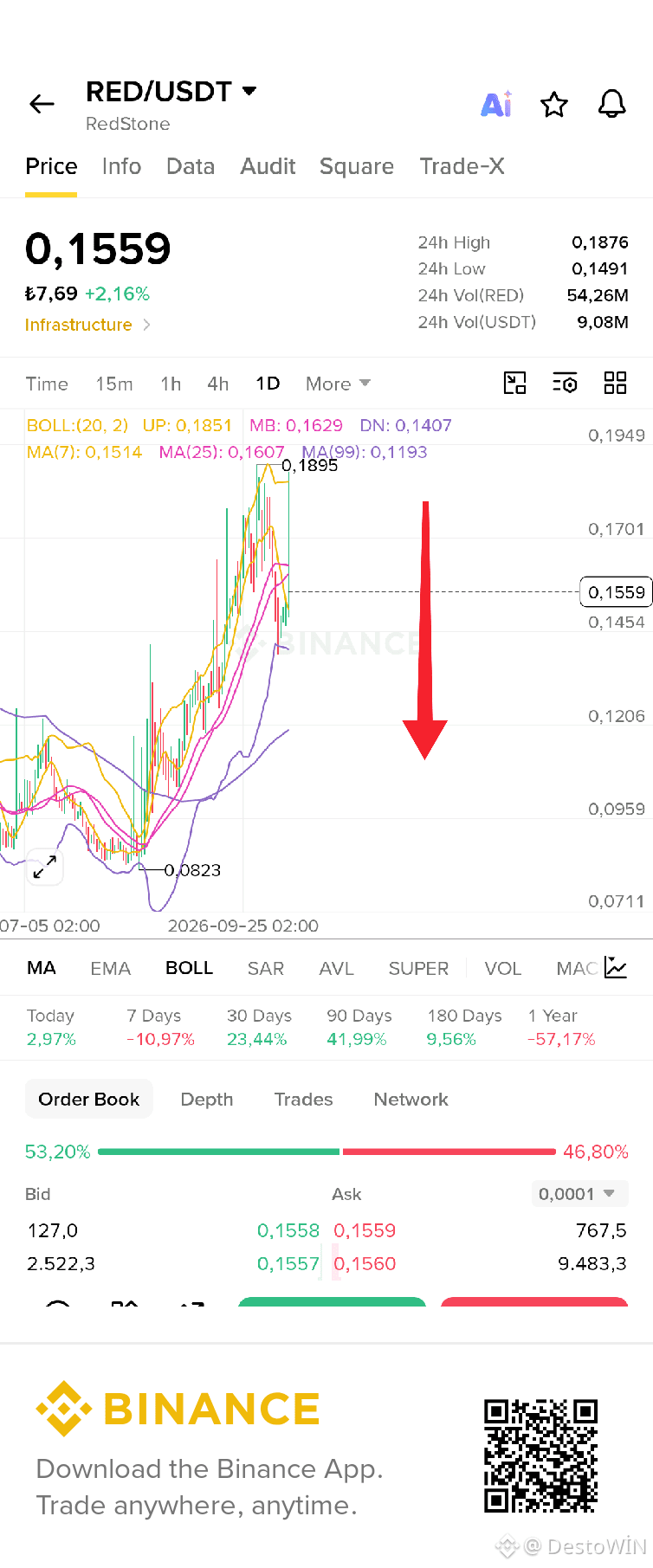
RedStone ($RED D) is looking heavy on Binance right now, and here is why I'm leaning bearish in the short-to-medium term:
Technical Setup: The chart is losing key support levels, indicating a potential head-and-shoulders breakdown on the higher timeframes. Buyers are failing to push past resistance, showing clear signs of exhaustion.
Volume & Liquidity: Volume is steadily drying up on spot while short interest is picking up in futures. Liquidations below current levels could trigger a cascade down to the next major demand zone.
Market Sentiment & Unlocks: Token unlocks and selling pressure from early investors/airdrop holders are weighing down the price action. The broad market momentum isn't providing enough tailwind to keep it afloat.
I'm keeping a close eye on the support zones for a potential short entry, with a strict stop-loss above resistance. Protect your capital and manage your risk! 📉🔴
#RedStone $RED
#binance #Crypto #TechnicalAnalysis #Trading
RedStone ($RED D) is looking heavy on Binance right now, and here is why I'm leaning bearish in the short-to-medium term:
Technical Setup: The chart is losing key support levels, indicating a potential head-and-shoulders breakdown on the higher timeframes. Buyers are failing to push past resistance, showing clear signs of exhaustion.
Volume & Liquidity: Volume is steadily drying up on spot while short interest is picking up in futures. Liquidations below current levels could trigger a cascade down to the next major demand zone.
Market Sentiment & Unlocks: Token unlocks and selling pressure from early investors/airdrop holders are weighing down the price action. The broad market momentum isn't providing enough tailwind to keep it afloat.
I'm keeping a close eye on the support zones for a potential short entry, with a strict stop-loss above resistance. Protect your capital and manage your risk! 📉🔴
#RedStone $RED
#binance #Crypto #TechnicalAnalysis #Trading
Technical Setup: The chart is losing key support levels, indicating a potential head-and-shoulders breakdown on the higher timeframes. Buyers are failing to push past resistance, showing clear signs of exhaustion.
Volume & Liquidity: Volume is steadily drying up on spot while short interest is picking up in futures. Liquidations below current levels could trigger a cascade down to the next major demand zone.
Market Sentiment & Unlocks: Token unlocks and selling pressure from early investors/airdrop holders are weighing down the price action. The broad market momentum isn't providing enough tailwind to keep it afloat.
I'm keeping a close eye on the support zones for a potential short entry, with a strict stop-loss above resistance. Protect your capital and manage your risk! 📉🔴
#RedStone $RED
#binance #Crypto #TechnicalAnalysis #Trading
1
308

·
--
$RED Update 🔎 Can RED hold above the $0.175 area?
💰 Price now: $0.1795 | 24h: +8.21%
📊 Market cap: $95.7M | Rank: #302
📈 24h range: $0.1640 – $0.1848
📰 What's happening:
RED is trading higher with stronger activity after rebounding from the $0.164 area. The latest focus is RedStone’s Sept. 29 report with Kaia examining Korea’s stablecoin and onchain-finance gap.
🔥 Key catalyst:
The report highlights Korea’s large KRW crypto liquidity and the potential impact of future stablecoin regulation.
👀 Next step to watch:
🔴 Bearish case: Lose $0.175 → $0.164 support.
🟢 Bullish case: Clear $0.185 → $0.1895 resistance.
📝 My take: RED has recovered sharply, but confirmation above resistance matters.
Not financial advice, DYOR ⚠️
#RED #RedStone #Crypto #DeFi #Oracle #RWA
$RED Update 🔎 Can RED hold above the $0.175 area?
💰 Price now: $0.1795 | 24h: +8.21%
📊 Market cap: $95.7M | Rank: #302
📈 24h range: $0.1640 – $0.1848
📰 What's happening:
RED is trading higher with stronger activity after rebounding from the $0.164 area. The latest focus is RedStone’s Sept. 29 report with Kaia examining Korea’s stablecoin and onchain-finance gap.
🔥 Key catalyst:
The report highlights Korea’s large KRW crypto liquidity and the potential impact of future stablecoin regulation.
👀 Next step to watch:
🔴 Bearish case: Lose $0.175 → $0.164 support.
🟢 Bullish case: Clear $0.185 → $0.1895 resistance.
📝 My take: RED has recovered sharply, but confirmation above resistance matters.
Not financial advice, DYOR ⚠️
#RED #RedStone #Crypto #DeFi #Oracle #RWA
💰 Price now: $0.1795 | 24h: +8.21%
📊 Market cap: $95.7M | Rank: #302
📈 24h range: $0.1640 – $0.1848
📰 What's happening:
RED is trading higher with stronger activity after rebounding from the $0.164 area. The latest focus is RedStone’s Sept. 29 report with Kaia examining Korea’s stablecoin and onchain-finance gap.
🔥 Key catalyst:
The report highlights Korea’s large KRW crypto liquidity and the potential impact of future stablecoin regulation.
👀 Next step to watch:
🔴 Bearish case: Lose $0.175 → $0.164 support.
🟢 Bullish case: Clear $0.185 → $0.1895 resistance.
📝 My take: RED has recovered sharply, but confirmation above resistance matters.
Not financial advice, DYOR ⚠️
#RED #RedStone #Crypto #DeFi #Oracle #RWA

250

{future}(REDUSDT)
$RED IS UP, BUT THE REAL QUESTION IS: CAN BUYERS PUSH IT TO THE NEXT LEVEL? 🚀
RedStone (RED) is attracting attention after a strong 12.19% daily move, reaching $0.1832.
What makes this price action interesting is that RED has managed to maintain its broader short-term bullish structure despite recent selling pressure.
The $0.1844 zone is the immediate hurdle. A strong breakout with rising volume could bring the previous high of $0.1895 back into focus.
On the downside, $0.1822 is an important level to watch. Holding above it could help buyers rebuild momentum, while losing it may trigger another pullback.
RSI around 50 shows momentum is cooling rather than strongly overbought.
$RED is at an interesting crossroads. Will buyers take control again? 👀
#RED #RedStone #crypto
$RED IS UP, BUT THE REAL QUESTION IS: CAN BUYERS PUSH IT TO THE NEXT LEVEL? 🚀
RedStone (RED) is attracting attention after a strong 12.19% daily move, reaching $0.1832.
What makes this price action interesting is that RED has managed to maintain its broader short-term bullish structure despite recent selling pressure.
The $0.1844 zone is the immediate hurdle. A strong breakout with rising volume could bring the previous high of $0.1895 back into focus.
On the downside, $0.1822 is an important level to watch. Holding above it could help buyers rebuild momentum, while losing it may trigger another pullback.
RSI around 50 shows momentum is cooling rather than strongly overbought.
$RED is at an interesting crossroads. Will buyers take control again? 👀
#RED #RedStone #crypto
RedStone (RED) is attracting attention after a strong 12.19% daily move, reaching $0.1832.
What makes this price action interesting is that RED has managed to maintain its broader short-term bullish structure despite recent selling pressure.
The $0.1844 zone is the immediate hurdle. A strong breakout with rising volume could bring the previous high of $0.1895 back into focus.
On the downside, $0.1822 is an important level to watch. Holding above it could help buyers rebuild momentum, while losing it may trigger another pullback.
RSI around 50 shows momentum is cooling rather than strongly overbought.
$RED is at an interesting crossroads. Will buyers take control again? 👀
#RED #RedStone #crypto
1
91

·
--
Bullish
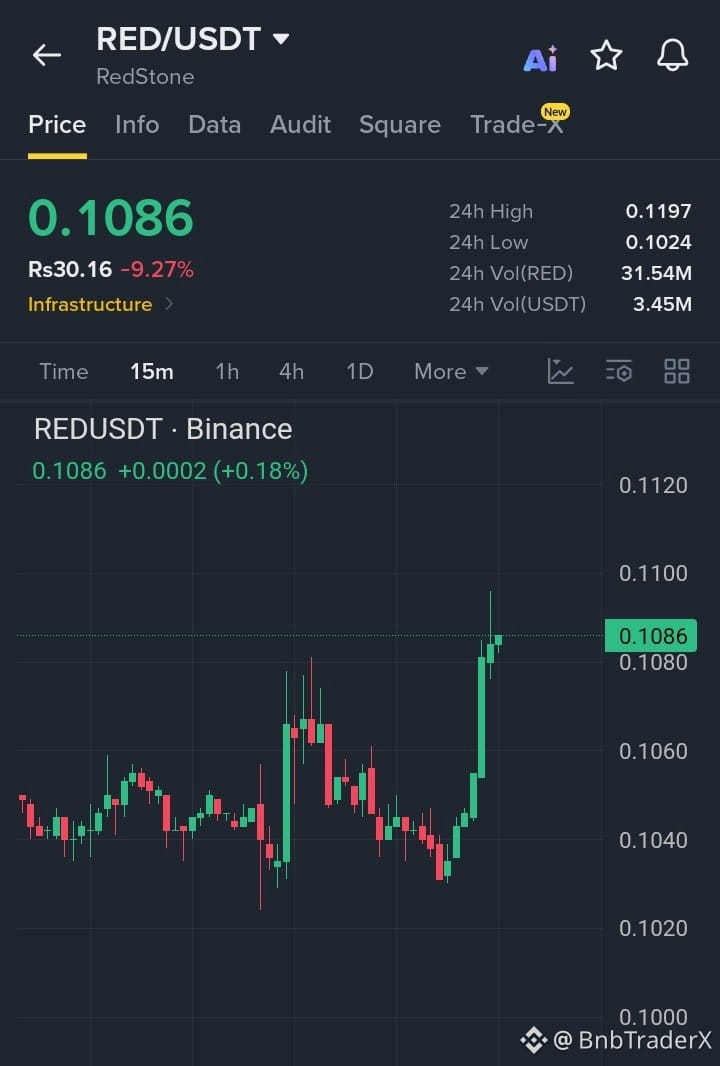
Guys, $RED is showing a possible recovery setup after dropping more than 9%. Price is stabilizing around 0.1086 after holding the 0.1024 low, but buyers need to reclaim 0.1120 with volume to confirm strength. Until then, this remains a cautious reversal setup.
Entry Zone: 0.1060–0.1090
Bullish above: 0.1120
Target 1: 0.1160
Target 2: 0.1200
Target 3: 0.1280
#RED #RedStone #CryptoTrading
{future}(REDUSDT)
$BEAT
{future}(BEATUSDT)
$BTW
{future}(BTWUSDT)
Guys, $RED is showing a possible recovery setup after dropping more than 9%. Price is stabilizing around 0.1086 after holding the 0.1024 low, but buyers need to reclaim 0.1120 with volume to confirm strength. Until then, this remains a cautious reversal setup.
Entry Zone: 0.1060–0.1090
Bullish above: 0.1120
Target 1: 0.1160
Target 2: 0.1200
Target 3: 0.1280
#RED #RedStone #CryptoTrading
$BEAT
$BTW
Entry Zone: 0.1060–0.1090
Bullish above: 0.1120
Target 1: 0.1160
Target 2: 0.1200
Target 3: 0.1280
#RED #RedStone #CryptoTrading
$BEAT
$BTW
3
813

·
--
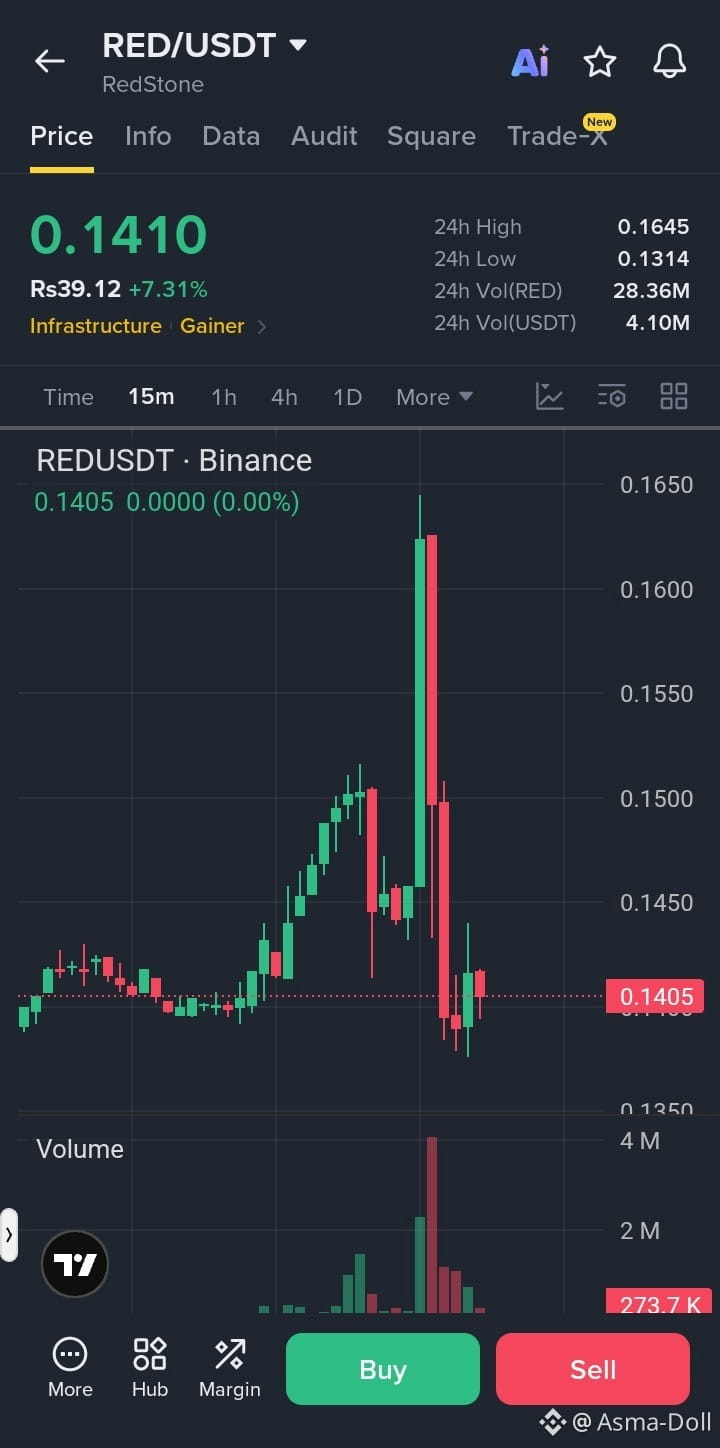
$RED /USDT — LONG 📈
Entry: 0.1380 – 0.1415
Stop Loss: 0.1310
TP1: 0.1480
TP2: 0.1560
TP3: 0.1640
Trade here $RED
{future}(REDUSDT)
Analysis:
RED is showing strong momentum after a +7.31% move, with price holding above the 0.138 area. A clean break of 0.1450 can open the way toward the recent 0.1645 high.
Confirmation:
✅ Hold above 0.1380
✅ Break & close above 0.1450 = stronger bullish continuation
❌ Below 0.1310 = setup invalid
#RED #RedStone #REDUSDT #CryptoTrading #Binance
$RED /USDT — LONG 📈
Entry: 0.1380 – 0.1415
Stop Loss: 0.1310
TP1: 0.1480
TP2: 0.1560
TP3: 0.1640
Trade here $RED
Analysis:
RED is showing strong momentum after a +7.31% move, with price holding above the 0.138 area. A clean break of 0.1450 can open the way toward the recent 0.1645 high.
Confirmation:
✅ Hold above 0.1380
✅ Break & close above 0.1450 = stronger bullish continuation
❌ Below 0.1310 = setup invalid
#RED #RedStone #REDUSDT #CryptoTrading #Binance
Entry: 0.1380 – 0.1415
Stop Loss: 0.1310
TP1: 0.1480
TP2: 0.1560
TP3: 0.1640
Trade here $RED
Analysis:
RED is showing strong momentum after a +7.31% move, with price holding above the 0.138 area. A clean break of 0.1450 can open the way toward the recent 0.1645 high.
Confirmation:
✅ Hold above 0.1380
✅ Break & close above 0.1450 = stronger bullish continuation
❌ Below 0.1310 = setup invalid
#RED #RedStone #REDUSDT #CryptoTrading #Binance
1
1
49

·
--
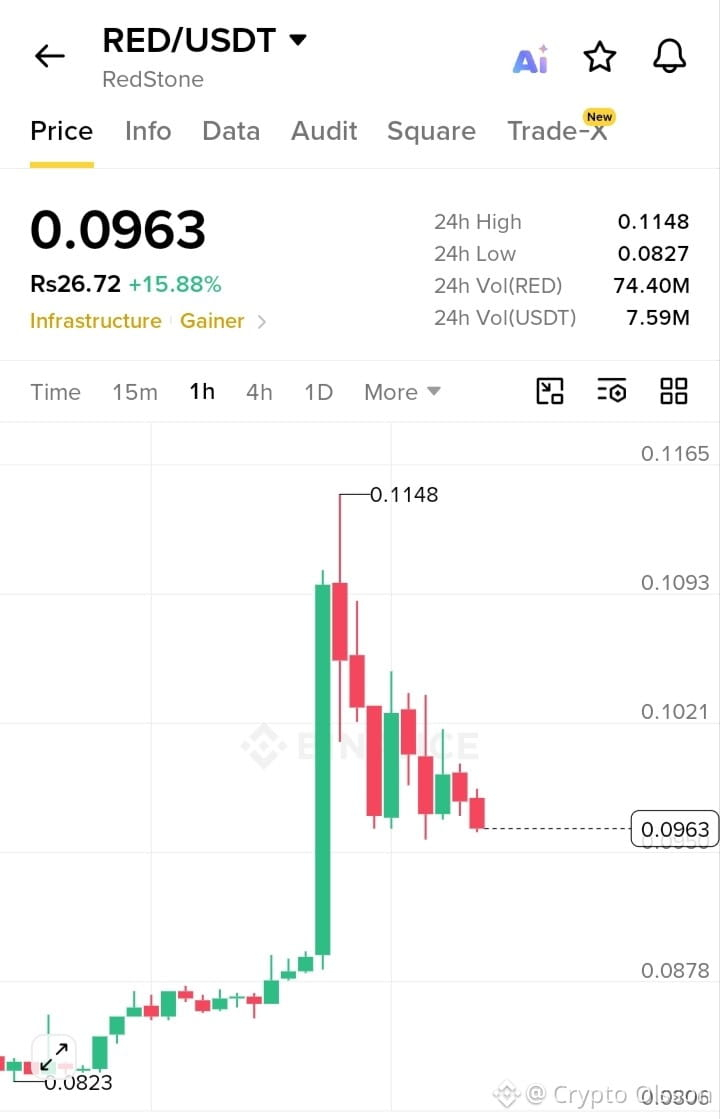
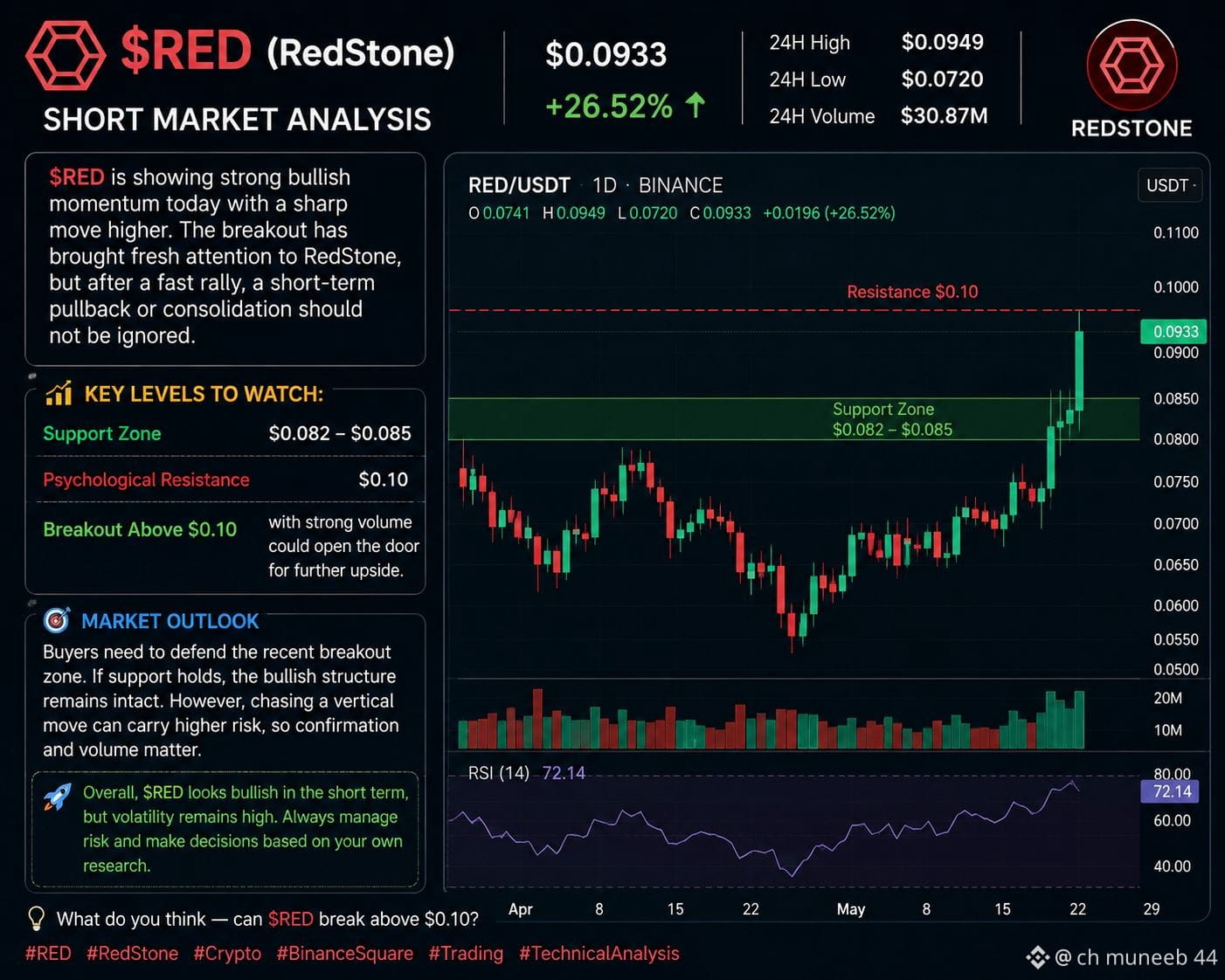
🔴 $RED (RedStone) — Short Market Analysis
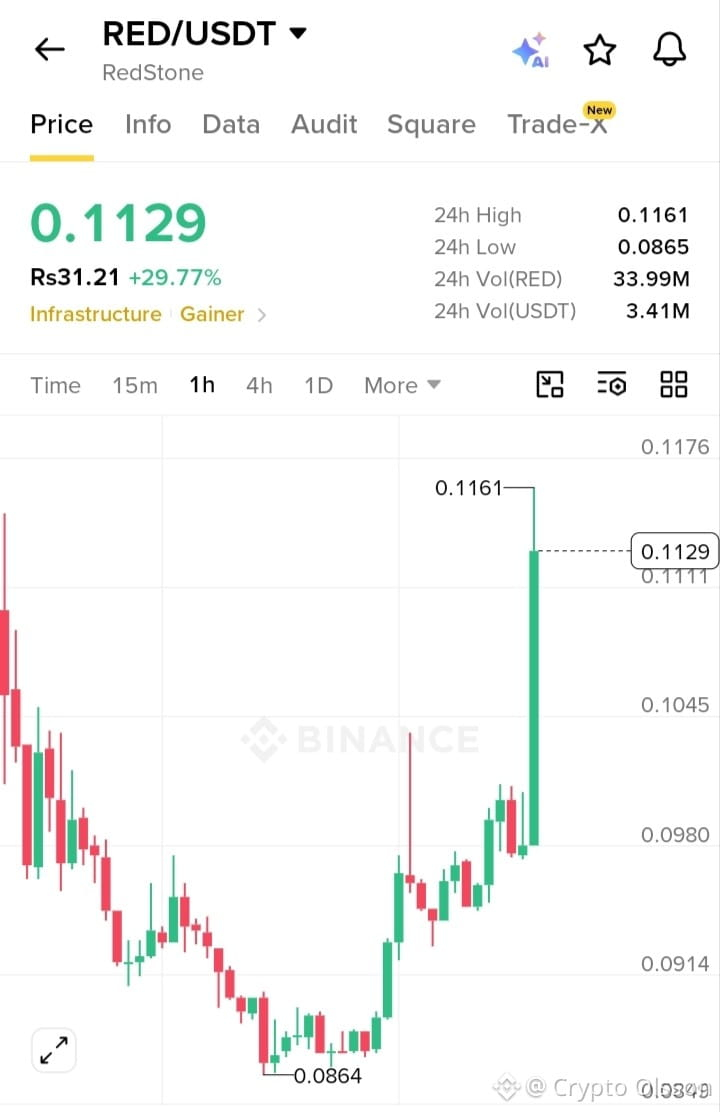
$RED is showing strong bullish momentum today, with price making a sharp move higher. The recent breakout has brought fresh attention to RedStone, but after a fast rally, a short-term pullback or consolidation should not be ignored.
📊 Key levels to watch: • Support: $0.082–$0.085
• Psychological resistance: $0.10
• Breakout above $0.10 with strong volume could open the door for further upside.
The important thing now is whether buyers can defend the recent breakout zone. If support holds, the bullish structure remains interesting. However, chasing a vertical move can carry higher risk, so confirmation and volume matter.
Overall, looks bullish in the short term, but volatility remains high. Always manage risk and make decisions based on your own research.
What do you think — can break above $0.10? 👀
#RED #RedStone #Trading #TechnicalAnalysis $BTC
{spot}(BTCUSDT)
🔴 $RED (RedStone) — Short Market Analysis
$RED is showing strong bullish momentum today, with price making a sharp move higher. The recent breakout has brought fresh attention to RedStone, but after a fast rally, a short-term pullback or consolidation should not be ignored.
📊 Key levels to watch: • Support: $0.082–$0.085
• Psychological resistance: $0.10
• Breakout above $0.10 with strong volume could open the door for further upside.
The important thing now is whether buyers can defend the recent breakout zone. If support holds, the bullish structure remains interesting. However, chasing a vertical move can carry higher risk, so confirmation and volume matter.
Overall, looks bullish in the short term, but volatility remains high. Always manage risk and make decisions based on your own research.
What do you think — can break above $0.10? 👀
#RED #RedStone #Trading #TechnicalAnalysis $BTC
$RED is showing strong bullish momentum today, with price making a sharp move higher. The recent breakout has brought fresh attention to RedStone, but after a fast rally, a short-term pullback or consolidation should not be ignored.
📊 Key levels to watch: • Support: $0.082–$0.085
• Psychological resistance: $0.10
• Breakout above $0.10 with strong volume could open the door for further upside.
The important thing now is whether buyers can defend the recent breakout zone. If support holds, the bullish structure remains interesting. However, chasing a vertical move can carry higher risk, so confirmation and volume matter.
Overall, looks bullish in the short term, but volatility remains high. Always manage risk and make decisions based on your own research.
What do you think — can break above $0.10? 👀
#RED #RedStone #Trading #TechnicalAnalysis $BTC
121
·
--
Bearish
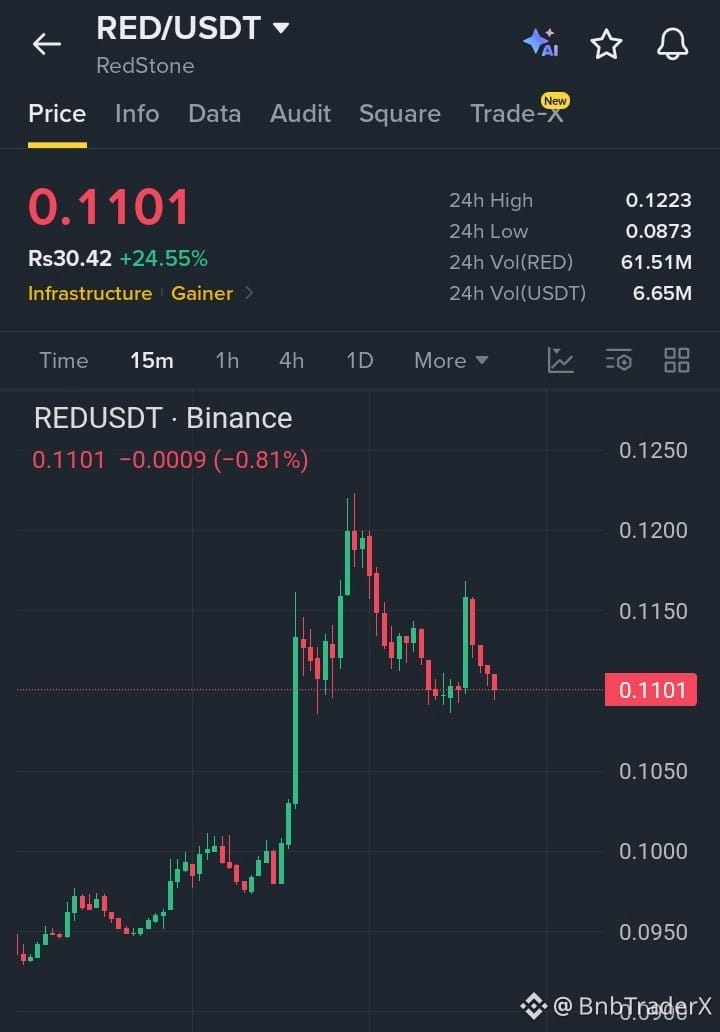
$RED is showing bearish pressure after rejection from the 0.1223 high, with price slipping toward the 0.1100 support zone. A breakdown below 0.1050 could accelerate selling, while recovery above 0.1150 would weaken the bearish setup.
Target 1: 0.1050
Target 2: 0.1000
Target 3: 0.0940
#RED #RedStone #CryptoTrading
{future}(REDUSDT)
$BOME
{future}(BOMEUSDT)
$BIO
{future}(BIOUSDT)
$RED is showing bearish pressure after rejection from the 0.1223 high, with price slipping toward the 0.1100 support zone. A breakdown below 0.1050 could accelerate selling, while recovery above 0.1150 would weaken the bearish setup.
Target 1: 0.1050
Target 2: 0.1000
Target 3: 0.0940
#RED #RedStone #CryptoTrading
$BOME
$BIO
Target 1: 0.1050
Target 2: 0.1000
Target 3: 0.0940
#RED #RedStone #CryptoTrading
$BOME
$BIO
1
220

·
--
Bullish
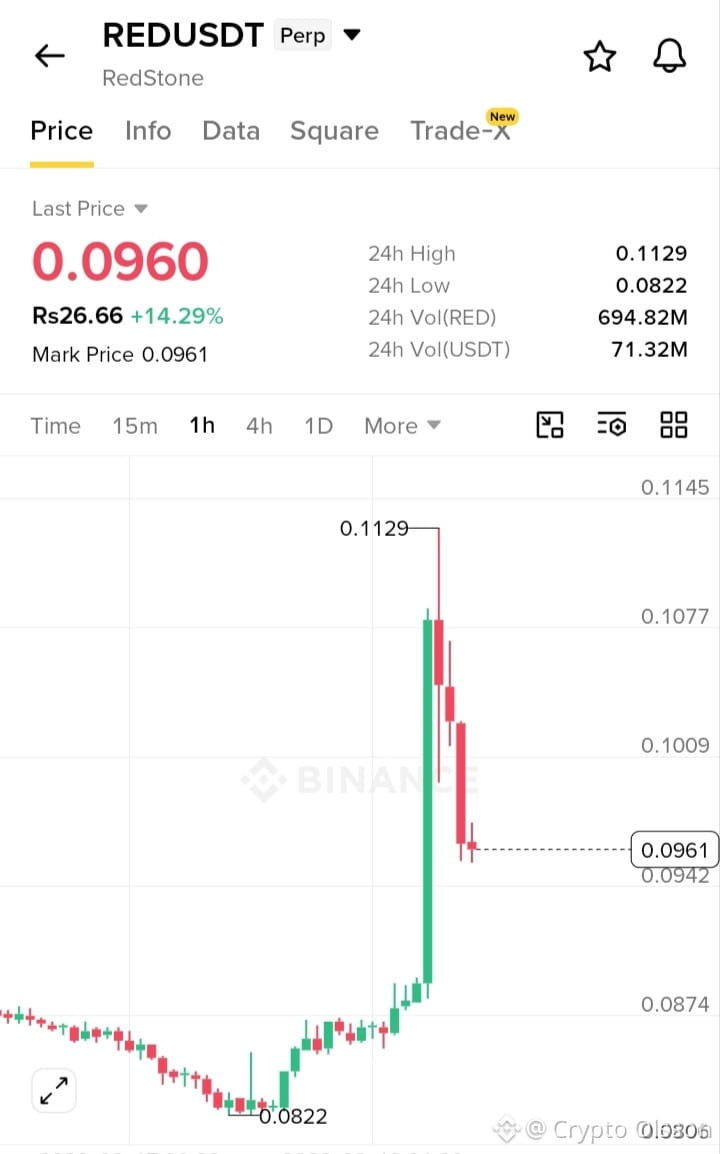
🔻 $RED SHORT SETUP — Rejection Zone in Focus
Entry: 0.1000–0.1010
TP1: 0.0942
TP2: 0.0874
TP3: 0.0822
SL: 0.1078
$RED
{future}(REDUSDT)
is up +14.29%, but rejection around the 0.1009–0.1077 zone could trigger a pullback.
Wait for confirmation before entering. ⚠️
#RED #RedStone #BinanceSquare
🔻 $RED SHORT SETUP — Rejection Zone in Focus
Entry: 0.1000–0.1010
TP1: 0.0942
TP2: 0.0874
TP3: 0.0822
SL: 0.1078
$RED
is up +14.29%, but rejection around the 0.1009–0.1077 zone could trigger a pullback.
Wait for confirmation before entering. ⚠️
#RED #RedStone #BinanceSquare
Entry: 0.1000–0.1010
TP1: 0.0942
TP2: 0.0874
TP3: 0.0822
SL: 0.1078
$RED
is up +14.29%, but rejection around the 0.1009–0.1077 zone could trigger a pullback.
Wait for confirmation before entering. ⚠️
#RED #RedStone #BinanceSquare
1
115

·
--
🚀 #RED USDT Explosive Breakout! +19.81% Surge & Bullish Forecast Inside 📈
Price rockets to 0.1010 after a massive green daily candle, smashing above EMA8/13/21 (0.0903/0.0895/0.0901) and Bollinger upper band (0.0947). RSI(6) hits 79.67 overbought while RSI(14) at 64.7 stays healthy bullish. Stochastic recovering, volume spikes hard (550M RED). Strong momentum continuation ahead after clearing 0.0822 low.
Long $REDUSDT now around 0.1005-0.1020
TP1: 0.1129 | TP2: 0.1200
SL: 0.0945
Trade or buy $REDUSDT / USDT Now! Follow & turn 🔔 on ✅ Ride the wave with me! 💰🔥
#REDUSDT #RedStone #Binance #Crypto #Trading #Long #Bullish #Altcoins #Perp #CryptoTrading
🚀 #RED USDT Explosive Breakout! +19.81% Surge & Bullish Forecast Inside 📈
Price rockets to 0.1010 after a massive green daily candle, smashing above EMA8/13/21 (0.0903/0.0895/0.0901) and Bollinger upper band (0.0947). RSI(6) hits 79.67 overbought while RSI(14) at 64.7 stays healthy bullish. Stochastic recovering, volume spikes hard (550M RED). Strong momentum continuation ahead after clearing 0.0822 low.
Long $REDUSDT now around 0.1005-0.1020
TP1: 0.1129 | TP2: 0.1200
SL: 0.0945
Trade or buy $REDUSDT / USDT Now! Follow & turn 🔔 on ✅ Ride the wave with me! 💰🔥
#REDUSDT #RedStone #Binance #Crypto #Trading #Long #Bullish #Altcoins #Perp #CryptoTrading
Price rockets to 0.1010 after a massive green daily candle, smashing above EMA8/13/21 (0.0903/0.0895/0.0901) and Bollinger upper band (0.0947). RSI(6) hits 79.67 overbought while RSI(14) at 64.7 stays healthy bullish. Stochastic recovering, volume spikes hard (550M RED). Strong momentum continuation ahead after clearing 0.0822 low.
Long $REDUSDT now around 0.1005-0.1020
TP1: 0.1129 | TP2: 0.1200
SL: 0.0945
Trade or buy $REDUSDT / USDT Now! Follow & turn 🔔 on ✅ Ride the wave with me! 💰🔥
#REDUSDT #RedStone #Binance #Crypto #Trading #Long #Bullish #Altcoins #Perp #CryptoTrading

5
237
·
--
Bullish
$RED LONG NOW
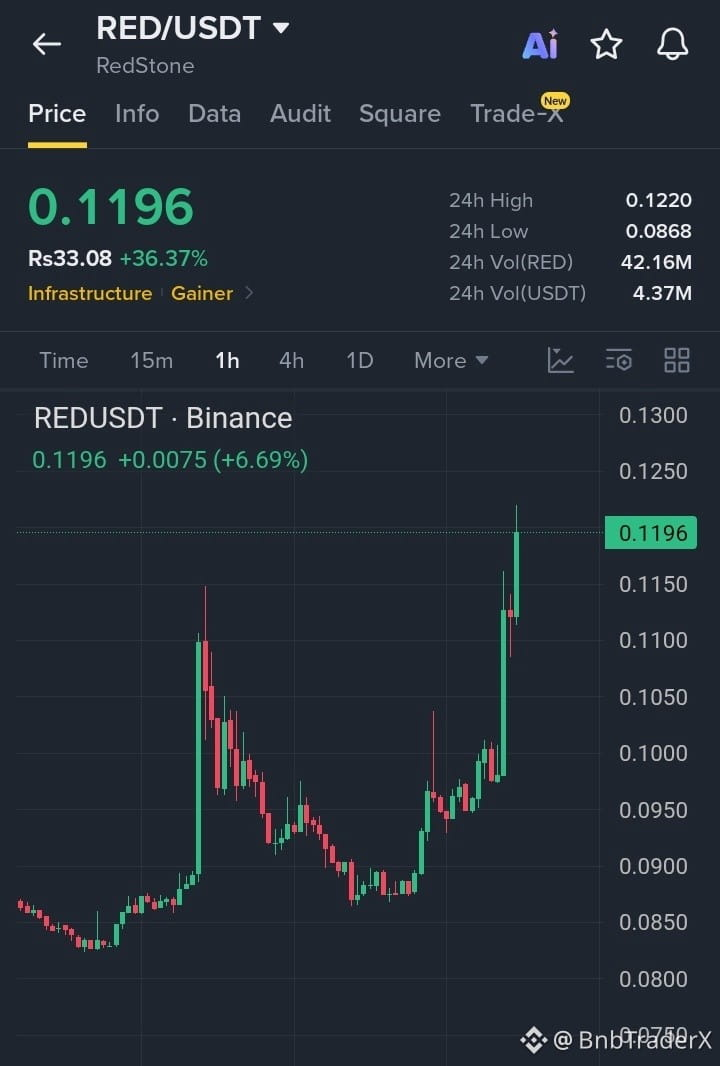
RED is showing powerful bullish momentum at 0.1196, up over 36% on the day. Price is pressing near the 0.1220 resistance; a clean breakout above it could open the next upside move.
Entry: 0.1160–0.1195
TP1: 0.1235
TP2: 0.1280
TP3: 0.1340
SL: 0.1120
#RED #RedStone #CryptoTrading
{spot}(REDUSDT)
$TURBO
{spot}(TURBOUSDT)
$BANK
{spot}(BANKUSDT)
$RED LONG NOW
RED is showing powerful bullish momentum at 0.1196, up over 36% on the day. Price is pressing near the 0.1220 resistance; a clean breakout above it could open the next upside move.
Entry: 0.1160–0.1195
TP1: 0.1235
TP2: 0.1280
TP3: 0.1340
SL: 0.1120
#RED #RedStone #CryptoTrading
$TURBO
$BANK
RED is showing powerful bullish momentum at 0.1196, up over 36% on the day. Price is pressing near the 0.1220 resistance; a clean breakout above it could open the next upside move.
Entry: 0.1160–0.1195
TP1: 0.1235
TP2: 0.1280
TP3: 0.1340
SL: 0.1120
#RED #RedStone #CryptoTrading
$TURBO
$BANK
2
67

·
--
🚨 REDSTONE 🚀($RED ) EN MOVIMIENTO
RED protagonizó un fuerte impulso durante la jornada, llegando a superar momentáneamente la zona de US$0,10 y registrando una subida superior al 20% en Binance.
El movimiento vino acompañado de un aumento importante del volumen, pero después apareció toma de ganancias y el precio retrocedió desde los máximos.
Más allá del movimiento especulativo, RedStone sigue desarrollando una infraestructura cada vez más importante para DeFi y activos tokenizados.
Su RedStone Stack integra datos de mercado, Proof of Reserve, herramientas para liquidaciones y análisis de riesgo, con presencia en más de 70 cadenas y más de 200 protocolos.
Además, su infraestructura está vinculada a importantes proyectos de activos tokenizados, incluyendo productos relacionados con BlackRock BUIDL.
RED está demostrando que detrás de una altcoin también puede existir una infraestructura con utilidad real.
Ahora la clave está en saber si consigue recuperar y sostener la zona de US$0,10 después de la toma de ganancias.
📈 El impulso fue fuerte.
📉 La corrección también llegó.
🧠 Ahora toca observar qué hace el mercado.
Paciencia. No toda subida necesita ser perseguida.
#RED #RedStone #Crypto
🚨 REDSTONE 🚀($RED ) EN MOVIMIENTO
RED protagonizó un fuerte impulso durante la jornada, llegando a superar momentáneamente la zona de US$0,10 y registrando una subida superior al 20% en Binance.
El movimiento vino acompañado de un aumento importante del volumen, pero después apareció toma de ganancias y el precio retrocedió desde los máximos.
Más allá del movimiento especulativo, RedStone sigue desarrollando una infraestructura cada vez más importante para DeFi y activos tokenizados.
Su RedStone Stack integra datos de mercado, Proof of Reserve, herramientas para liquidaciones y análisis de riesgo, con presencia en más de 70 cadenas y más de 200 protocolos.
Además, su infraestructura está vinculada a importantes proyectos de activos tokenizados, incluyendo productos relacionados con BlackRock BUIDL.
RED está demostrando que detrás de una altcoin también puede existir una infraestructura con utilidad real.
Ahora la clave está en saber si consigue recuperar y sostener la zona de US$0,10 después de la toma de ganancias.
📈 El impulso fue fuerte.
📉 La corrección también llegó.
🧠 Ahora toca observar qué hace el mercado.
Paciencia. No toda subida necesita ser perseguida.
#RED #RedStone #Crypto
RED protagonizó un fuerte impulso durante la jornada, llegando a superar momentáneamente la zona de US$0,10 y registrando una subida superior al 20% en Binance.
El movimiento vino acompañado de un aumento importante del volumen, pero después apareció toma de ganancias y el precio retrocedió desde los máximos.
Más allá del movimiento especulativo, RedStone sigue desarrollando una infraestructura cada vez más importante para DeFi y activos tokenizados.
Su RedStone Stack integra datos de mercado, Proof of Reserve, herramientas para liquidaciones y análisis de riesgo, con presencia en más de 70 cadenas y más de 200 protocolos.
Además, su infraestructura está vinculada a importantes proyectos de activos tokenizados, incluyendo productos relacionados con BlackRock BUIDL.
RED está demostrando que detrás de una altcoin también puede existir una infraestructura con utilidad real.
Ahora la clave está en saber si consigue recuperar y sostener la zona de US$0,10 después de la toma de ganancias.
📈 El impulso fue fuerte.
📉 La corrección también llegó.
🧠 Ahora toca observar qué hace el mercado.
Paciencia. No toda subida necesita ser perseguida.
#RED #RedStone #Crypto
2
332

·
--

Article
How RedStone Atom Improves DeFi LiquidationsLending protocols have become one of the most important sectors in DeFi. They allow users to borrow against collateral while providing lenders with opportunities to earn yield. The entire system depends on one thing working reliably: liquidations.
Whenever collateral loses value, protocols need to liquidate positions quickly enough to prevent bad debt. If that process becomes slow or inefficient, the protocol may be forced to operate with more conservative risk parameters, reducing capital efficiency for everyone.
There is another issue that receives far less attention. Every liquidation opportunity creates Oracle Extractable Value (OEV), but under traditional oracle designs, most of that value is captured by MEV bots instead of the protocol itself. RedStone Atom was built to change that.
What Is RedStone?
RedStone is a modular blockchain oracle that provides reliable price feeds for decentralized applications. Its infrastructure supports a wide range of markets, including lending protocols, perpetual exchanges, liquid staking, tokenized real-world assets, and institutional onchain finance.
Rather than using a one-size-fits-all architecture, RedStone offers different oracle models designed for different protocol requirements. This flexibility has helped it become one of the leading oracle providers across the DeFi ecosystem while supporting both crypto-native assets and tokenized real-world assets.
The Problem
Most lending protocols rely on price feeds that update at predefined intervals or after prices move beyond certain deviation thresholds. This approach works under normal conditions, but it also creates inefficiencies during liquidations because protocols must wait for the next oracle update before positions can be liquidated.
Another consequence is Oracle Extractable Value (OEV). When an oracle update reflects a price movement that makes a position eligible for liquidation, MEV bots compete to execute it and capture the liquidation opportunity. In most cases, that value leaves the protocol instead of benefiting the protocol that created it. RedStone Atom was designed to solve both problems at the same time.
How RedStone Atom Works
RedStone Atom is built around a simple idea: Oracle Extractable Value (OEV) created during liquidations should benefit the protocol instead of being captured by MEV bots.
To achieve this, participants bid in an auction for the right to trigger the oracle update when a liquidation opportunity appears. The winning bidder executes the liquidation, while part of the value generated from that opportunity is redirected back to the protocol through OEV capture.
Because the oracle update and liquidation execution happen atomically within the same transaction, liquidations can use the latest available price data without waiting for a separate oracle update.
How RedStone Atom Benefits Protocols
One of the biggest advantages of RedStone Atom is that it helps protocols capture value that would normally leave the ecosystem.
Instead of allowing MEV bots to capture that value from oracle updates, protocols can redirect a portion of that value back into the protocol treasury. This creates an additional source of protocol revenue without changing the lending model itself.
At the same time, faster and more efficient liquidations can help reduce bad debt during periods of market volatility. Borrowers are liquidated using fresh price updates, while protocols can maintain healthier collateral positions and improve overall capital efficiency.
Easy Integration with Existing RedStone Feeds
Protocols that already use RedStone price feeds do not need to replace their oracle infrastructure to use Atom.
RedStone Atom is designed as an extension of the existing RedStone ecosystem, allowing supported protocols to integrate OEV capture without migrating to a completely different oracle provider. This makes adoption considerably simpler compared to rebuilding an entire oracle stack from scratch.
For protocols already relying on RedStone data feeds, Atom provides additional functionality while continuing to use the same trusted price infrastructure.
Comparison with Traditional Oracles
Traditional Oracles
Oracle updates -> Scheduled updatesOVE capture -> OEV captured by MEV botsLiquidation execution -> Separate oracle update and liquidationProtocol revenue -> No additional protocol revenueIntegration -> Legacy push feeds
RedStone Atom
Oracle updates -> Zero-latency updatesOVE capture -> Native OEV captureLiquidation execution -> Atomic liquidationsProtocol revenue -> Additional protocol revenue through OEV captureIntegration -> Built on existing RedStone feeds
My Opinion
The reason I like RedStone Atom is that it addresses a problem that has existed in DeFi lending for quite some time. Liquidations have always been necessary to keep lending markets healthy, but the value created during that process has usually gone to MEV bots rather than the protocols themselves. RedStone Atom changes that by giving protocols a way to capture that value instead.
I don't see RedStone Atom as something that completely changes how DeFi lending works. Instead, it improves a process that already exists. More efficient liquidations and an additional source of protocol revenue are both meaningful improvements, especially for lending protocols that want to become more efficient over time. RedStone Atom provides a solution to a real problem while creating clear benefits for the protocols that adopt it.
#RedStone #DeFi #RWA #Oracle
How RedStone Atom Improves DeFi Liquidations
Lending protocols have become one of the most important sectors in DeFi. They allow users to borrow against collateral while providing lenders with opportunities to earn yield. The entire system depends on one thing working reliably: liquidations.
Whenever collateral loses value, protocols need to liquidate positions quickly enough to prevent bad debt. If that process becomes slow or inefficient, the protocol may be forced to operate with more conservative risk parameters, reducing capital efficiency for everyone.
There is another issue that receives far less attention. Every liquidation opportunity creates Oracle Extractable Value (OEV), but under traditional oracle designs, most of that value is captured by MEV bots instead of the protocol itself. RedStone Atom was built to change that.
What Is RedStone?
RedStone is a modular blockchain oracle that provides reliable price feeds for decentralized applications. Its infrastructure supports a wide range of markets, including lending protocols, perpetual exchanges, liquid staking, tokenized real-world assets, and institutional onchain finance.
Rather than using a one-size-fits-all architecture, RedStone offers different oracle models designed for different protocol requirements. This flexibility has helped it become one of the leading oracle providers across the DeFi ecosystem while supporting both crypto-native assets and tokenized real-world assets.
The Problem
Most lending protocols rely on price feeds that update at predefined intervals or after prices move beyond certain deviation thresholds. This approach works under normal conditions, but it also creates inefficiencies during liquidations because protocols must wait for the next oracle update before positions can be liquidated.
Another consequence is Oracle Extractable Value (OEV). When an oracle update reflects a price movement that makes a position eligible for liquidation, MEV bots compete to execute it and capture the liquidation opportunity. In most cases, that value leaves the protocol instead of benefiting the protocol that created it. RedStone Atom was designed to solve both problems at the same time.
How RedStone Atom Works
RedStone Atom is built around a simple idea: Oracle Extractable Value (OEV) created during liquidations should benefit the protocol instead of being captured by MEV bots.
To achieve this, participants bid in an auction for the right to trigger the oracle update when a liquidation opportunity appears. The winning bidder executes the liquidation, while part of the value generated from that opportunity is redirected back to the protocol through OEV capture.
Because the oracle update and liquidation execution happen atomically within the same transaction, liquidations can use the latest available price data without waiting for a separate oracle update.
How RedStone Atom Benefits Protocols
One of the biggest advantages of RedStone Atom is that it helps protocols capture value that would normally leave the ecosystem.
Instead of allowing MEV bots to capture that value from oracle updates, protocols can redirect a portion of that value back into the protocol treasury. This creates an additional source of protocol revenue without changing the lending model itself.
At the same time, faster and more efficient liquidations can help reduce bad debt during periods of market volatility. Borrowers are liquidated using fresh price updates, while protocols can maintain healthier collateral positions and improve overall capital efficiency.
Easy Integration with Existing RedStone Feeds
Protocols that already use RedStone price feeds do not need to replace their oracle infrastructure to use Atom.
RedStone Atom is designed as an extension of the existing RedStone ecosystem, allowing supported protocols to integrate OEV capture without migrating to a completely different oracle provider. This makes adoption considerably simpler compared to rebuilding an entire oracle stack from scratch.
For protocols already relying on RedStone data feeds, Atom provides additional functionality while continuing to use the same trusted price infrastructure.
Comparison with Traditional Oracles
Traditional Oracles
Oracle updates -> Scheduled updatesOVE capture -> OEV captured by MEV botsLiquidation execution -> Separate oracle update and liquidationProtocol revenue -> No additional protocol revenueIntegration -> Legacy push feeds
RedStone Atom
Oracle updates -> Zero-latency updatesOVE capture -> Native OEV captureLiquidation execution -> Atomic liquidationsProtocol revenue -> Additional protocol revenue through OEV captureIntegration -> Built on existing RedStone feeds
My Opinion
The reason I like RedStone Atom is that it addresses a problem that has existed in DeFi lending for quite some time. Liquidations have always been necessary to keep lending markets healthy, but the value created during that process has usually gone to MEV bots rather than the protocols themselves. RedStone Atom changes that by giving protocols a way to capture that value instead.
I don't see RedStone Atom as something that completely changes how DeFi lending works. Instead, it improves a process that already exists. More efficient liquidations and an additional source of protocol revenue are both meaningful improvements, especially for lending protocols that want to become more efficient over time. RedStone Atom provides a solution to a real problem while creating clear benefits for the protocols that adopt it.
#RedStone #DeFi #RWA #Oracle
Whenever collateral loses value, protocols need to liquidate positions quickly enough to prevent bad debt. If that process becomes slow or inefficient, the protocol may be forced to operate with more conservative risk parameters, reducing capital efficiency for everyone.
There is another issue that receives far less attention. Every liquidation opportunity creates Oracle Extractable Value (OEV), but under traditional oracle designs, most of that value is captured by MEV bots instead of the protocol itself. RedStone Atom was built to change that.
What Is RedStone?
RedStone is a modular blockchain oracle that provides reliable price feeds for decentralized applications. Its infrastructure supports a wide range of markets, including lending protocols, perpetual exchanges, liquid staking, tokenized real-world assets, and institutional onchain finance.
Rather than using a one-size-fits-all architecture, RedStone offers different oracle models designed for different protocol requirements. This flexibility has helped it become one of the leading oracle providers across the DeFi ecosystem while supporting both crypto-native assets and tokenized real-world assets.
The Problem
Most lending protocols rely on price feeds that update at predefined intervals or after prices move beyond certain deviation thresholds. This approach works under normal conditions, but it also creates inefficiencies during liquidations because protocols must wait for the next oracle update before positions can be liquidated.
Another consequence is Oracle Extractable Value (OEV). When an oracle update reflects a price movement that makes a position eligible for liquidation, MEV bots compete to execute it and capture the liquidation opportunity. In most cases, that value leaves the protocol instead of benefiting the protocol that created it. RedStone Atom was designed to solve both problems at the same time.
How RedStone Atom Works
RedStone Atom is built around a simple idea: Oracle Extractable Value (OEV) created during liquidations should benefit the protocol instead of being captured by MEV bots.
To achieve this, participants bid in an auction for the right to trigger the oracle update when a liquidation opportunity appears. The winning bidder executes the liquidation, while part of the value generated from that opportunity is redirected back to the protocol through OEV capture.
Because the oracle update and liquidation execution happen atomically within the same transaction, liquidations can use the latest available price data without waiting for a separate oracle update.
How RedStone Atom Benefits Protocols
One of the biggest advantages of RedStone Atom is that it helps protocols capture value that would normally leave the ecosystem.
Instead of allowing MEV bots to capture that value from oracle updates, protocols can redirect a portion of that value back into the protocol treasury. This creates an additional source of protocol revenue without changing the lending model itself.
At the same time, faster and more efficient liquidations can help reduce bad debt during periods of market volatility. Borrowers are liquidated using fresh price updates, while protocols can maintain healthier collateral positions and improve overall capital efficiency.
Easy Integration with Existing RedStone Feeds
Protocols that already use RedStone price feeds do not need to replace their oracle infrastructure to use Atom.
RedStone Atom is designed as an extension of the existing RedStone ecosystem, allowing supported protocols to integrate OEV capture without migrating to a completely different oracle provider. This makes adoption considerably simpler compared to rebuilding an entire oracle stack from scratch.
For protocols already relying on RedStone data feeds, Atom provides additional functionality while continuing to use the same trusted price infrastructure.
Comparison with Traditional Oracles
Traditional Oracles
Oracle updates -> Scheduled updatesOVE capture -> OEV captured by MEV botsLiquidation execution -> Separate oracle update and liquidationProtocol revenue -> No additional protocol revenueIntegration -> Legacy push feeds
RedStone Atom
Oracle updates -> Zero-latency updatesOVE capture -> Native OEV captureLiquidation execution -> Atomic liquidationsProtocol revenue -> Additional protocol revenue through OEV captureIntegration -> Built on existing RedStone feeds
My Opinion
The reason I like RedStone Atom is that it addresses a problem that has existed in DeFi lending for quite some time. Liquidations have always been necessary to keep lending markets healthy, but the value created during that process has usually gone to MEV bots rather than the protocols themselves. RedStone Atom changes that by giving protocols a way to capture that value instead.
I don't see RedStone Atom as something that completely changes how DeFi lending works. Instead, it improves a process that already exists. More efficient liquidations and an additional source of protocol revenue are both meaningful improvements, especially for lending protocols that want to become more efficient over time. RedStone Atom provides a solution to a real problem while creating clear benefits for the protocols that adopt it.
#RedStone #DeFi #RWA #Oracle
3
3
121

·
--
Bullish
RedStone SETTLE : Unlocking the Next Stage of RWA Adoption in DeFi.
Real-World Assets (RWAs) have become one of the biggest growth areas in DeFi, but they still face a fundamental challenge: settlement speed.
While DeFi operates in real time, many RWAs require weeks or even months to complete redemption. This mismatch makes liquidations less efficient, reduces capital efficiency, and limits the reliability of RWAs as collateral.
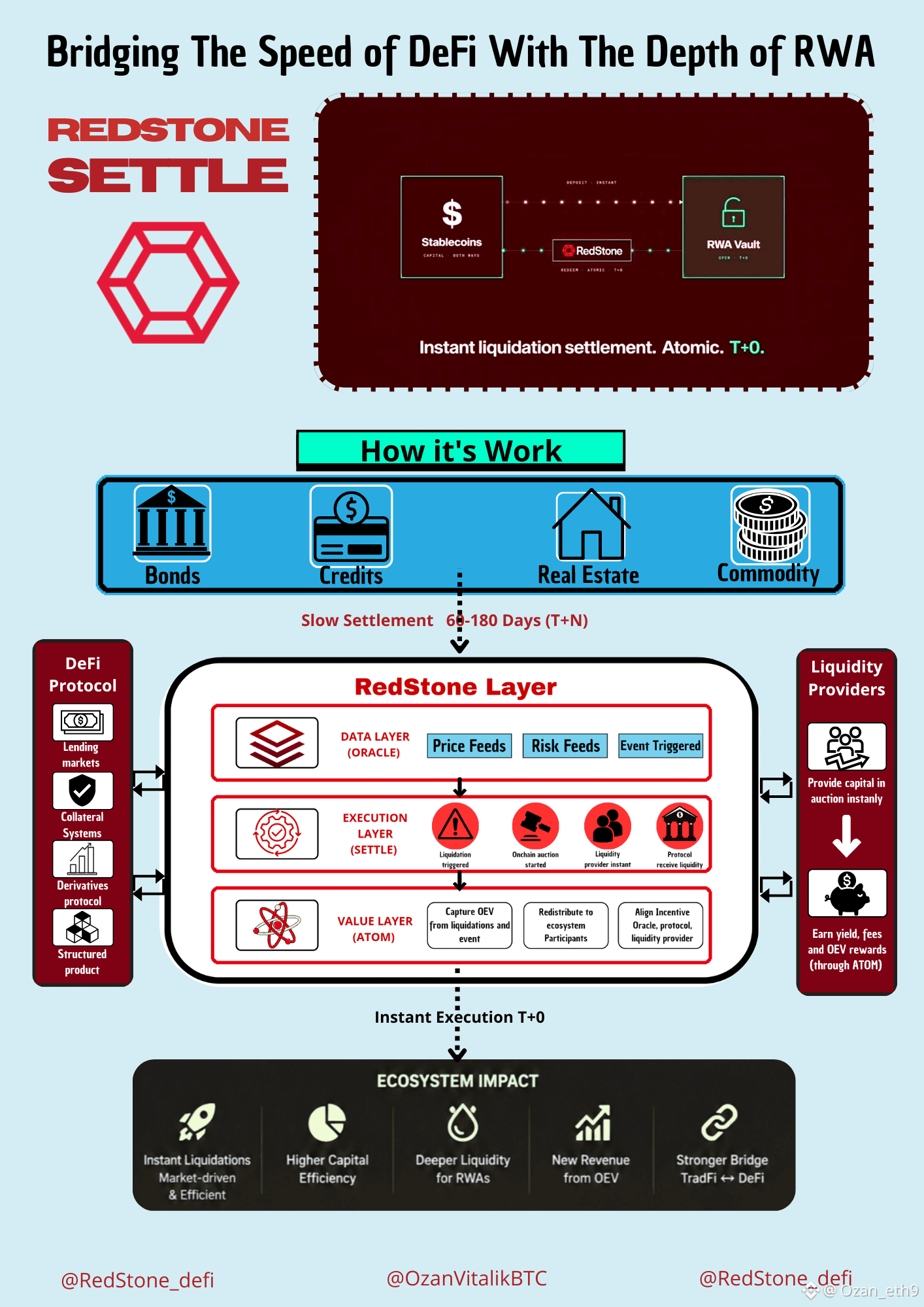
➤ RedStone Settle addresses this problem by separating execution from settlement.
When an RWA-backed position is liquidated, the protocol immediately conducts an on-chain auction where liquidity providers purchase the position. This allows the protocol to receive liquidity instantly (T+0), while the underlying asset continues its off-chain settlement process in the background.
The result is a smoother DeFi experience without waiting for traditional financial timelines.
More importantly, Settle transforms RWAs from passive tokenized assets into usable, crypto-native collateral. Instead of protocols bearing settlement delays, liquidity providers absorb the timing risk, enabling lending markets and other DeFi applications to integrate RWAs more efficiently.
Combined with RedStone's infrastructure and value capture mechanisms such as OEV, Settle also improves capital efficiency by reducing value leakage and strengthening incentive alignment across the ecosystem.
➤ The key takeaway is simple: tokenization puts assets on-chain, but efficient settlement makes them truly functional.
RedStone Settle is more than a settlement solution it provides the infrastructure needed to make RWAs practical, scalable, and ready for the next generation of DeFi.
$RED isn't just bringing RWAs on-chain it’s making them truly liquid, scalable, and DeFi-native through RedStone Settle 🤝
#RedStone #RWA #TradFi
{spot}(REDUSDT)
RedStone SETTLE : Unlocking the Next Stage of RWA Adoption in DeFi.
Real-World Assets (RWAs) have become one of the biggest growth areas in DeFi, but they still face a fundamental challenge: settlement speed.
While DeFi operates in real time, many RWAs require weeks or even months to complete redemption. This mismatch makes liquidations less efficient, reduces capital efficiency, and limits the reliability of RWAs as collateral.
➤ RedStone Settle addresses this problem by separating execution from settlement.
When an RWA-backed position is liquidated, the protocol immediately conducts an on-chain auction where liquidity providers purchase the position. This allows the protocol to receive liquidity instantly (T+0), while the underlying asset continues its off-chain settlement process in the background.
The result is a smoother DeFi experience without waiting for traditional financial timelines.
More importantly, Settle transforms RWAs from passive tokenized assets into usable, crypto-native collateral. Instead of protocols bearing settlement delays, liquidity providers absorb the timing risk, enabling lending markets and other DeFi applications to integrate RWAs more efficiently.
Combined with RedStone's infrastructure and value capture mechanisms such as OEV, Settle also improves capital efficiency by reducing value leakage and strengthening incentive alignment across the ecosystem.
➤ The key takeaway is simple: tokenization puts assets on-chain, but efficient settlement makes them truly functional.
RedStone Settle is more than a settlement solution it provides the infrastructure needed to make RWAs practical, scalable, and ready for the next generation of DeFi.
$RED isn't just bringing RWAs on-chain it’s making them truly liquid, scalable, and DeFi-native through RedStone Settle 🤝
#RedStone #RWA #TradFi
Real-World Assets (RWAs) have become one of the biggest growth areas in DeFi, but they still face a fundamental challenge: settlement speed.
While DeFi operates in real time, many RWAs require weeks or even months to complete redemption. This mismatch makes liquidations less efficient, reduces capital efficiency, and limits the reliability of RWAs as collateral.
➤ RedStone Settle addresses this problem by separating execution from settlement.
When an RWA-backed position is liquidated, the protocol immediately conducts an on-chain auction where liquidity providers purchase the position. This allows the protocol to receive liquidity instantly (T+0), while the underlying asset continues its off-chain settlement process in the background.
The result is a smoother DeFi experience without waiting for traditional financial timelines.
More importantly, Settle transforms RWAs from passive tokenized assets into usable, crypto-native collateral. Instead of protocols bearing settlement delays, liquidity providers absorb the timing risk, enabling lending markets and other DeFi applications to integrate RWAs more efficiently.
Combined with RedStone's infrastructure and value capture mechanisms such as OEV, Settle also improves capital efficiency by reducing value leakage and strengthening incentive alignment across the ecosystem.
➤ The key takeaway is simple: tokenization puts assets on-chain, but efficient settlement makes them truly functional.
RedStone Settle is more than a settlement solution it provides the infrastructure needed to make RWAs practical, scalable, and ready for the next generation of DeFi.
$RED isn't just bringing RWAs on-chain it’s making them truly liquid, scalable, and DeFi-native through RedStone Settle 🤝
#RedStone #RWA #TradFi
1
3
206


·
--
Verified
今天我把 Newton 官方最近两篇文章放在一起看,发现 RedStone 集成真正补上的,不是一条更快的价格数据,而是数据到执行之间那个经常被忽略的环节。
很多链上策略的问题,不是没有规则,也不是没有预言机。问题在于,风险信号出来以后,谁能在钱动之前把动作拦下来。过去,管理人可能在表格里写着资产集中度、流动性下限和稳定币脱锚阈值,程序却只负责执行,事后再靠审计追责。市场顺风时这套流程看不出问题,真金白银开始快速调仓,缺口就会暴露。
Newton 的定位,就是给链上交易补一层授权。每次动作发起后,政策先检查,再决定放行还是拒绝。通过后生成签名的链上凭证,任何人都能在 Newton Explorer 里核验这次决定。它不是替管理人做投资判断,而是把管理人已经写下的边界变成不能绕过的执行条件。
这也是我看 RedStone 这次接入最有意思的地方。RedStone 提供价格和市场数据,Credora 把链上链下信号整理成风险判断,Newton 再把这些判断写进策略。比如某个稳定币开始偏离锚定,或者某个资产的集中度超过上限,VaultKit 可以让下一次再平衡先经过政策检查。条件不满足,动作就停在结算前,而不是等损失发生后才去追责。
对机构来说,真正要的不是又一个漂亮仪表盘,而是规则能不能在关键一秒生效,还能留下可验证的记录。对普通用户来说,收益策略背后多了一道看得见的护栏。对跨链应用来说,一套政策可以复用到不同网络,不必每换一个场景就重新相信一套口头承诺。
我翻完官方资料后的判断很简单:链上金融下一阶段拼的,不只是资金搬得多快,而是谁能让规则跟着资金一起移动。@NewtonProtocol 正在做的,就是把数据、政策和执行接到同一条线上。$NEWT 的 staking、燃料费和治理用途,则对应这套网络长期运行需要的激励和参与方式。
如果你在看 DeFi vault、实物资产或自动化策略,别只问年化有多高,先问一句:风险信号出现时,谁有权限按下暂停键?这才是钱能不能放心上链的分水岭。
#Newt #NewtonProtocol #链上授权 #RedStone
今天我把 Newton 官方最近两篇文章放在一起看,发现 RedStone 集成真正补上的,不是一条更快的价格数据,而是数据到执行之间那个经常被忽略的环节。
很多链上策略的问题,不是没有规则,也不是没有预言机。问题在于,风险信号出来以后,谁能在钱动之前把动作拦下来。过去,管理人可能在表格里写着资产集中度、流动性下限和稳定币脱锚阈值,程序却只负责执行,事后再靠审计追责。市场顺风时这套流程看不出问题,真金白银开始快速调仓,缺口就会暴露。
Newton 的定位,就是给链上交易补一层授权。每次动作发起后,政策先检查,再决定放行还是拒绝。通过后生成签名的链上凭证,任何人都能在 Newton Explorer 里核验这次决定。它不是替管理人做投资判断,而是把管理人已经写下的边界变成不能绕过的执行条件。
这也是我看 RedStone 这次接入最有意思的地方。RedStone 提供价格和市场数据,Credora 把链上链下信号整理成风险判断,Newton 再把这些判断写进策略。比如某个稳定币开始偏离锚定,或者某个资产的集中度超过上限,VaultKit 可以让下一次再平衡先经过政策检查。条件不满足,动作就停在结算前,而不是等损失发生后才去追责。
对机构来说,真正要的不是又一个漂亮仪表盘,而是规则能不能在关键一秒生效,还能留下可验证的记录。对普通用户来说,收益策略背后多了一道看得见的护栏。对跨链应用来说,一套政策可以复用到不同网络,不必每换一个场景就重新相信一套口头承诺。
我翻完官方资料后的判断很简单:链上金融下一阶段拼的,不只是资金搬得多快,而是谁能让规则跟着资金一起移动。@NewtonProtocol 正在做的,就是把数据、政策和执行接到同一条线上。$NEWT 的 staking、燃料费和治理用途,则对应这套网络长期运行需要的激励和参与方式。
如果你在看 DeFi vault、实物资产或自动化策略,别只问年化有多高,先问一句:风险信号出现时,谁有权限按下暂停键?这才是钱能不能放心上链的分水岭。
#Newt #NewtonProtocol #链上授权 #RedStone
很多链上策略的问题,不是没有规则,也不是没有预言机。问题在于,风险信号出来以后,谁能在钱动之前把动作拦下来。过去,管理人可能在表格里写着资产集中度、流动性下限和稳定币脱锚阈值,程序却只负责执行,事后再靠审计追责。市场顺风时这套流程看不出问题,真金白银开始快速调仓,缺口就会暴露。
Newton 的定位,就是给链上交易补一层授权。每次动作发起后,政策先检查,再决定放行还是拒绝。通过后生成签名的链上凭证,任何人都能在 Newton Explorer 里核验这次决定。它不是替管理人做投资判断,而是把管理人已经写下的边界变成不能绕过的执行条件。
这也是我看 RedStone 这次接入最有意思的地方。RedStone 提供价格和市场数据,Credora 把链上链下信号整理成风险判断,Newton 再把这些判断写进策略。比如某个稳定币开始偏离锚定,或者某个资产的集中度超过上限,VaultKit 可以让下一次再平衡先经过政策检查。条件不满足,动作就停在结算前,而不是等损失发生后才去追责。
对机构来说,真正要的不是又一个漂亮仪表盘,而是规则能不能在关键一秒生效,还能留下可验证的记录。对普通用户来说,收益策略背后多了一道看得见的护栏。对跨链应用来说,一套政策可以复用到不同网络,不必每换一个场景就重新相信一套口头承诺。
我翻完官方资料后的判断很简单:链上金融下一阶段拼的,不只是资金搬得多快,而是谁能让规则跟着资金一起移动。@NewtonProtocol 正在做的,就是把数据、政策和执行接到同一条线上。$NEWT 的 staking、燃料费和治理用途,则对应这套网络长期运行需要的激励和参与方式。
如果你在看 DeFi vault、实物资产或自动化策略,别只问年化有多高,先问一句:风险信号出现时,谁有权限按下暂停键?这才是钱能不能放心上链的分水岭。
#Newt #NewtonProtocol #链上授权 #RedStone

2
3.1k

·
--
$RED 逆势走强:合约遭 Coinbase 下架,现货却创日内新高 +5.76%。24H 成交 3771万美金,市值 4252万美金。
驱动因素并非情绪面,而是基本面:
1. Temple 黄金/白银预言机喂价正式落地
2. Franklin Templeton 等机构验证节点加入
3. Daml 架构对机构合规场景适配升级
合约端利空被现货端机构叙事对冲,价量结构开始背离。
#RedStone#预言机#机构叙事
$RED 逆势走强:合约遭 Coinbase 下架,现货却创日内新高 +5.76%。24H 成交 3771万美金,市值 4252万美金。
驱动因素并非情绪面,而是基本面:
1. Temple 黄金/白银预言机喂价正式落地
2. Franklin Templeton 等机构验证节点加入
3. Daml 架构对机构合规场景适配升级
合约端利空被现货端机构叙事对冲,价量结构开始背离。
#RedStone#预言机#机构叙事
驱动因素并非情绪面,而是基本面:
1. Temple 黄金/白银预言机喂价正式落地
2. Franklin Templeton 等机构验证节点加入
3. Daml 架构对机构合规场景适配升级
合约端利空被现货端机构叙事对冲,价量结构开始背离。
#RedStone#预言机#机构叙事
106

No More Blind DeFi
Most people in DeFi still ask one question: “What’s the APY?”
But the better question has always been: “What’s the chance I don’t get my money back?”
That 2nd question has been largely invisible, not because it doesn’t matter, but because it’s been hard to quantify.
That’s where Credora Network by RedStone quietly shift the game.
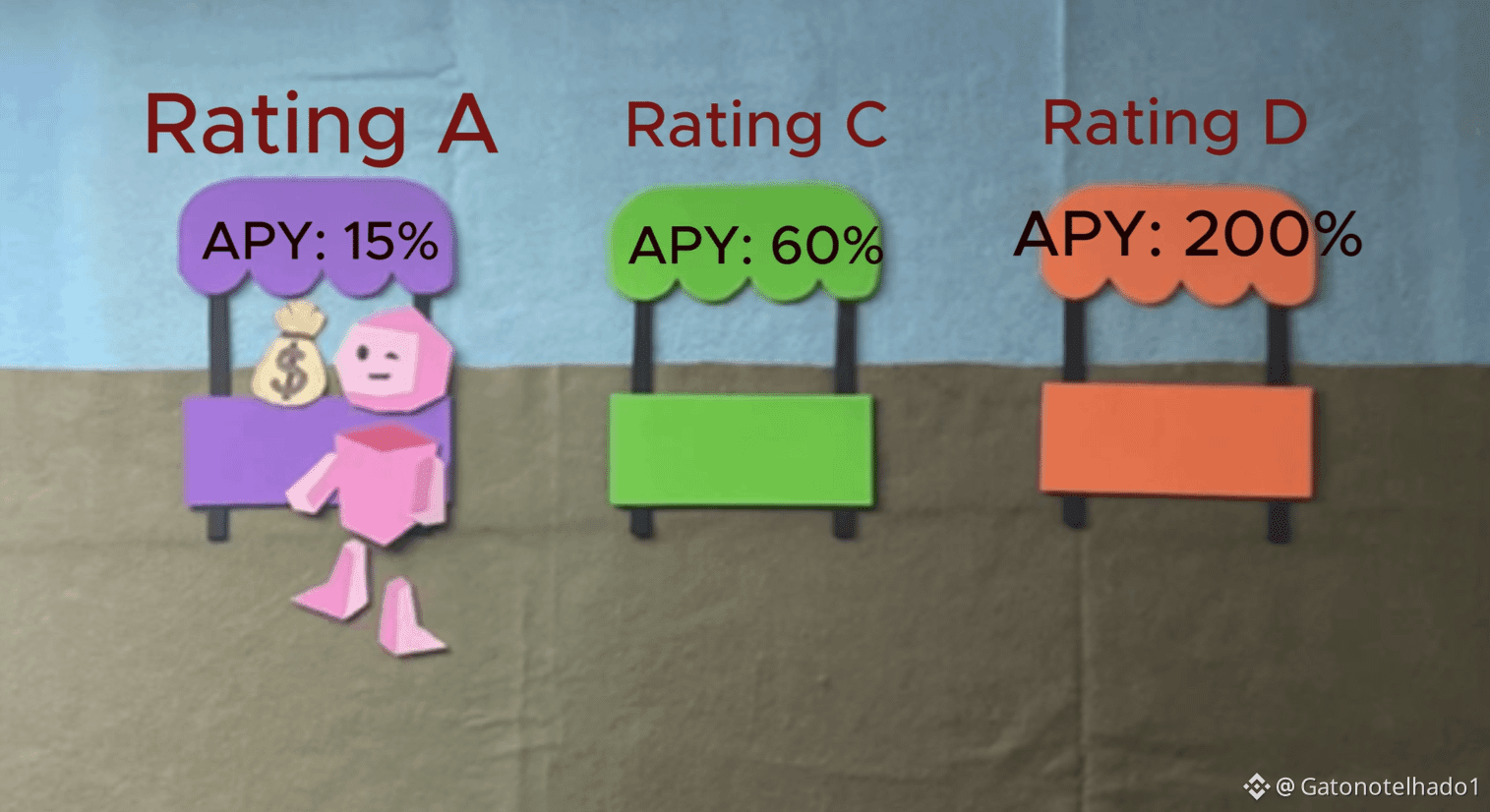
Instead of just showcasing returns, Credora introduces something DeFi has been missing: a standardized way to think about risk as a probability.
Not narratives. Not vibes. Not “this protocol is reputable.” Not "Trust me, bro."
Credora reframes the game by evaluating the probability that you lose meaningful capital over time. That changes behavior.
Because when yield and risk sit side by side, suddenly:
a lower APY might look smarter, diversification becomes rational, not optional and “safe” starts to mean something measurable.
#defi #Credora #RedStone #rating
No More Blind DeFi
Most people in DeFi still ask one question: “What’s the APY?”
But the better question has always been: “What’s the chance I don’t get my money back?”
That 2nd question has been largely invisible, not because it doesn’t matter, but because it’s been hard to quantify.
That’s where Credora Network by RedStone quietly shift the game.
Instead of just showcasing returns, Credora introduces something DeFi has been missing: a standardized way to think about risk as a probability.
Not narratives. Not vibes. Not “this protocol is reputable.” Not "Trust me, bro."
Credora reframes the game by evaluating the probability that you lose meaningful capital over time. That changes behavior.
Because when yield and risk sit side by side, suddenly:
a lower APY might look smarter, diversification becomes rational, not optional and “safe” starts to mean something measurable.
#defi #Credora #RedStone #rating
Most people in DeFi still ask one question: “What’s the APY?”
But the better question has always been: “What’s the chance I don’t get my money back?”
That 2nd question has been largely invisible, not because it doesn’t matter, but because it’s been hard to quantify.
That’s where Credora Network by RedStone quietly shift the game.
Instead of just showcasing returns, Credora introduces something DeFi has been missing: a standardized way to think about risk as a probability.
Not narratives. Not vibes. Not “this protocol is reputable.” Not "Trust me, bro."
Credora reframes the game by evaluating the probability that you lose meaningful capital over time. That changes behavior.
Because when yield and risk sit side by side, suddenly:
a lower APY might look smarter, diversification becomes rational, not optional and “safe” starts to mean something measurable.
#defi #Credora #RedStone #rating
347


·
--
The more I look at RedStone, the less I see it as “just another oracle project.”
Think about what happens when traditional financial assets move onchain.
Issuing a token is the easy part. The harder part begins when someone wants to lend against it, use it as collateral, calculate its risk, or liquidate a position safely. At that point, the market needs reliable and defensible pricing data.
That is where RedStone is becoming increasingly interesting.
According to RedStone, its infrastructure now serves 200+ clients across 110+ blockchain networks. More importantly, the company has been expanding beyond ordinary crypto price feeds into institutional assets such as tokenized funds, private credit, commodities and public equities.
A recent example caught my attention: RedStone’s pricing infrastructure is now being used to make tokenized public equity usable as lending collateral. That is a meaningful step. The asset is no longer simply “represented onchain” — reliable data allows financial applications to actually build around it.
RedStone has also been moving deeper into institutional commodity markets, providing pricing infrastructure for gold and silver trading. This tells me the opportunity is becoming much broader than crypto-native DeFi.
And this is why $RED interests me.
The token has an actual role in RedStone’s security model: staking RED adds economic security to the oracle network. If RedStone keeps securing more valuable data and more financial markets, the economic security behind that infrastructure should matter more, not less.
I’m not buying the idea that tokenization is valuable simply because more assets get put onchain.
I’m much more interested in the infrastructure that makes those assets usable once they get there.
That is the part of the RedStone story I’m bullish on.
$RED #RedStone #RWA
The more I look at RedStone, the less I see it as “just another oracle project.”
Think about what happens when traditional financial assets move onchain.
Issuing a token is the easy part. The harder part begins when someone wants to lend against it, use it as collateral, calculate its risk, or liquidate a position safely. At that point, the market needs reliable and defensible pricing data.
That is where RedStone is becoming increasingly interesting.
According to RedStone, its infrastructure now serves 200+ clients across 110+ blockchain networks. More importantly, the company has been expanding beyond ordinary crypto price feeds into institutional assets such as tokenized funds, private credit, commodities and public equities.
A recent example caught my attention: RedStone’s pricing infrastructure is now being used to make tokenized public equity usable as lending collateral. That is a meaningful step. The asset is no longer simply “represented onchain” — reliable data allows financial applications to actually build around it.
RedStone has also been moving deeper into institutional commodity markets, providing pricing infrastructure for gold and silver trading. This tells me the opportunity is becoming much broader than crypto-native DeFi.
And this is why $RED interests me.
The token has an actual role in RedStone’s security model: staking RED adds economic security to the oracle network. If RedStone keeps securing more valuable data and more financial markets, the economic security behind that infrastructure should matter more, not less.
I’m not buying the idea that tokenization is valuable simply because more assets get put onchain.
I’m much more interested in the infrastructure that makes those assets usable once they get there.
That is the part of the RedStone story I’m bullish on.
$RED #RedStone #RWA
Think about what happens when traditional financial assets move onchain.
Issuing a token is the easy part. The harder part begins when someone wants to lend against it, use it as collateral, calculate its risk, or liquidate a position safely. At that point, the market needs reliable and defensible pricing data.
That is where RedStone is becoming increasingly interesting.
According to RedStone, its infrastructure now serves 200+ clients across 110+ blockchain networks. More importantly, the company has been expanding beyond ordinary crypto price feeds into institutional assets such as tokenized funds, private credit, commodities and public equities.
A recent example caught my attention: RedStone’s pricing infrastructure is now being used to make tokenized public equity usable as lending collateral. That is a meaningful step. The asset is no longer simply “represented onchain” — reliable data allows financial applications to actually build around it.
RedStone has also been moving deeper into institutional commodity markets, providing pricing infrastructure for gold and silver trading. This tells me the opportunity is becoming much broader than crypto-native DeFi.
And this is why $RED interests me.
The token has an actual role in RedStone’s security model: staking RED adds economic security to the oracle network. If RedStone keeps securing more valuable data and more financial markets, the economic security behind that infrastructure should matter more, not less.
I’m not buying the idea that tokenization is valuable simply because more assets get put onchain.
I’m much more interested in the infrastructure that makes those assets usable once they get there.
That is the part of the RedStone story I’m bullish on.
$RED #RedStone #RWA
1
192
Log in to explore more content
Join global crypto users on Binance Square
⚡️ Get latest and useful information about crypto.
💬 Trusted by the world’s largest crypto exchange.
👍 Discover real insights from verified creators.
Email / Phone number
Trending Topics
1
#BinancePick
2.6M views
140,561 Discussing
2
#EarningsSeason
5M views
24,244 Discussing
3
#FranklinTempletonFilesForTwoDividendToBitcoinETFs
427 views
46 Discussing
4
#StrategyMSTRSurpassesNasdaqInMarketCap
607 views
59 Discussing
5
#CanadaProposesStablecoinRedemptionWithin3BusinessDays
63 views
9 Discussing
6
#ElectrumWalletBugLetRogueServersStealFunds
7,034 views
214 Discussing
7
#ArgentineCourtDismissesLIBRACaseAgainstMilei
15,667 views
291 Discussing
8
#SKHynixReportedlyPlansSpecialDividendFromKioxiaStakeSale
2,989 views
48 Discussing
9
#KeystoneWebsiteBreachExposesBuyersShippingAddresses
1,614 views
40 Discussing
10
#USQ3GDPAndSeptemberPCEDueNextWeek
92,514 views
1,109 Discussing