

#learn
learn
911,913 views
1,523 Discussing
Hot
Latest

I noticed something interesting today...
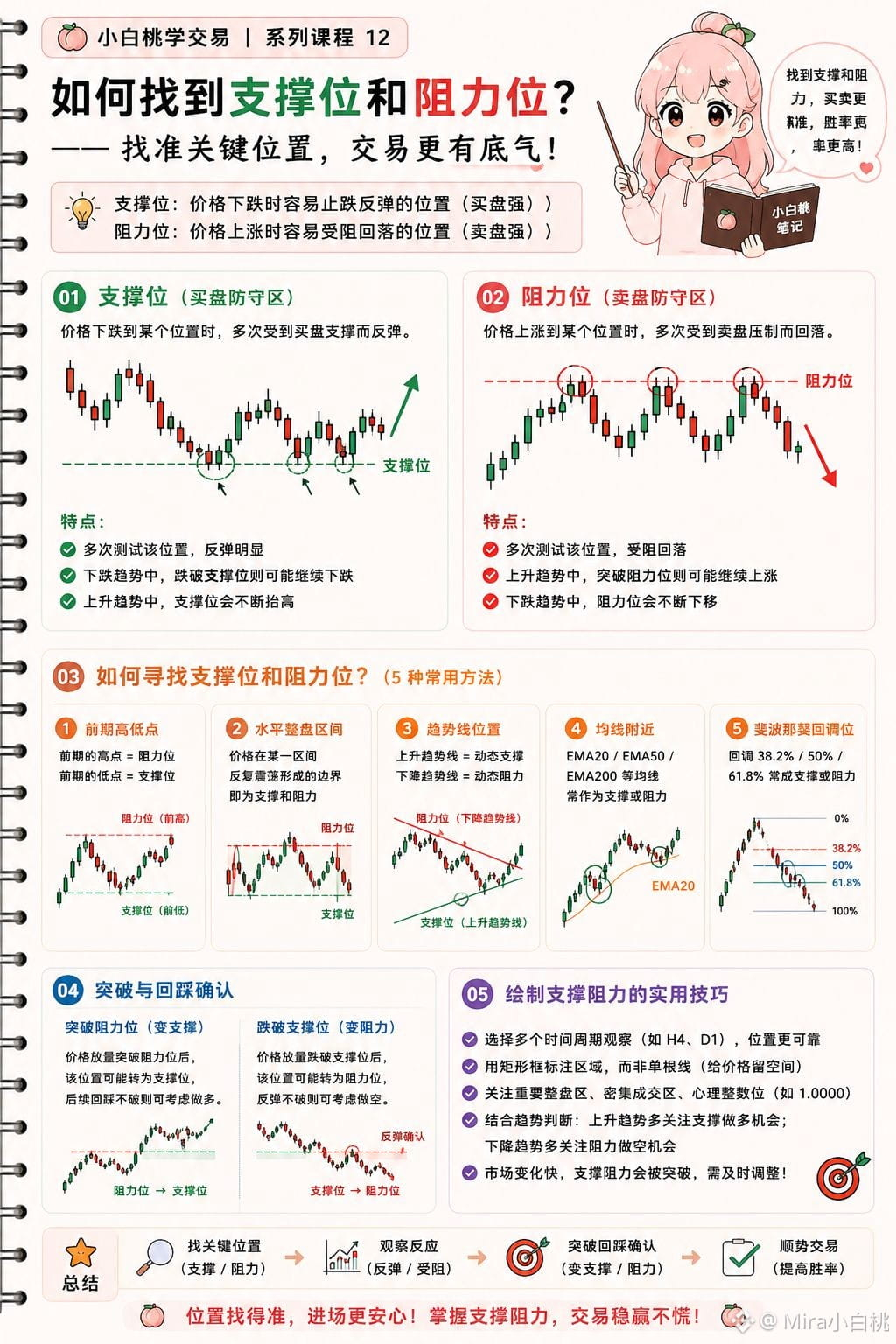
📚 WHALE SCHOOL, Support and Resistance
Support = price level where buying tends to come in. Like a floor.
Resistance = price level where selling tends to appear. Like a ceiling.
These levels form because traders remember. If you bought at $50K before and it bounced, you might buy there again.
When support breaks, it often becomes resistance.
When resistance breaks, it often becomes support.
Trade near key levels for better risk/reward. The closer to support you enter a long, the tighter your stop can be.
nfa. dyor.
#crypto #learn
What's your strategy here?
#Breaking #Trending #CryptoCommunity
📱 Follow @PoorCryptoMan
I noticed something interesting today...
📚 WHALE SCHOOL, Support and Resistance
Support = price level where buying tends to come in. Like a floor.
Resistance = price level where selling tends to appear. Like a ceiling.
These levels form because traders remember. If you bought at $50K before and it bounced, you might buy there again.
When support breaks, it often becomes resistance.
When resistance breaks, it often becomes support.
Trade near key levels for better risk/reward. The closer to support you enter a long, the tighter your stop can be.
nfa. dyor.
#crypto #learn
What's your strategy here?
#Breaking #Trending #CryptoCommunity
📱 Follow @PoorCryptoMan
📚 WHALE SCHOOL, Support and Resistance
Support = price level where buying tends to come in. Like a floor.
Resistance = price level where selling tends to appear. Like a ceiling.
These levels form because traders remember. If you bought at $50K before and it bounced, you might buy there again.
When support breaks, it often becomes resistance.
When resistance breaks, it often becomes support.
Trade near key levels for better risk/reward. The closer to support you enter a long, the tighter your stop can be.
nfa. dyor.
#crypto #learn
What's your strategy here?
#Breaking #Trending #CryptoCommunity
📱 Follow @PoorCryptoMan
6
Let me save you some research...
📚 WHALE SCHOOL, Support and Resistance
Support = price level where buying tends to come in. Like a floor.
Resistance = price level where selling tends to appear. Like a ceiling.
These levels form because traders remember. If you bought at $50K before and it bounced, you might buy there again.
When support breaks, it often becomes resistance.
When resistance breaks, it often becomes support.
Trade near key levels for better risk/reward. The closer to support you enter a long, the tighter your stop can be.
nfa. dyor.
#crypto #learn
Save this for later
#Breaking #Trending #HODL
📱 Follow @PoorCryptoMan
Let me save you some research...
📚 WHALE SCHOOL, Support and Resistance
Support = price level where buying tends to come in. Like a floor.
Resistance = price level where selling tends to appear. Like a ceiling.
These levels form because traders remember. If you bought at $50K before and it bounced, you might buy there again.
When support breaks, it often becomes resistance.
When resistance breaks, it often becomes support.
Trade near key levels for better risk/reward. The closer to support you enter a long, the tighter your stop can be.
nfa. dyor.
#crypto #learn
Save this for later
#Breaking #Trending #HODL
📱 Follow @PoorCryptoMan
📚 WHALE SCHOOL, Support and Resistance
Support = price level where buying tends to come in. Like a floor.
Resistance = price level where selling tends to appear. Like a ceiling.
These levels form because traders remember. If you bought at $50K before and it bounced, you might buy there again.
When support breaks, it often becomes resistance.
When resistance breaks, it often becomes support.
Trade near key levels for better risk/reward. The closer to support you enter a long, the tighter your stop can be.
nfa. dyor.
#crypto #learn
Save this for later
#Breaking #Trending #HODL
📱 Follow @PoorCryptoMan
3

·
--
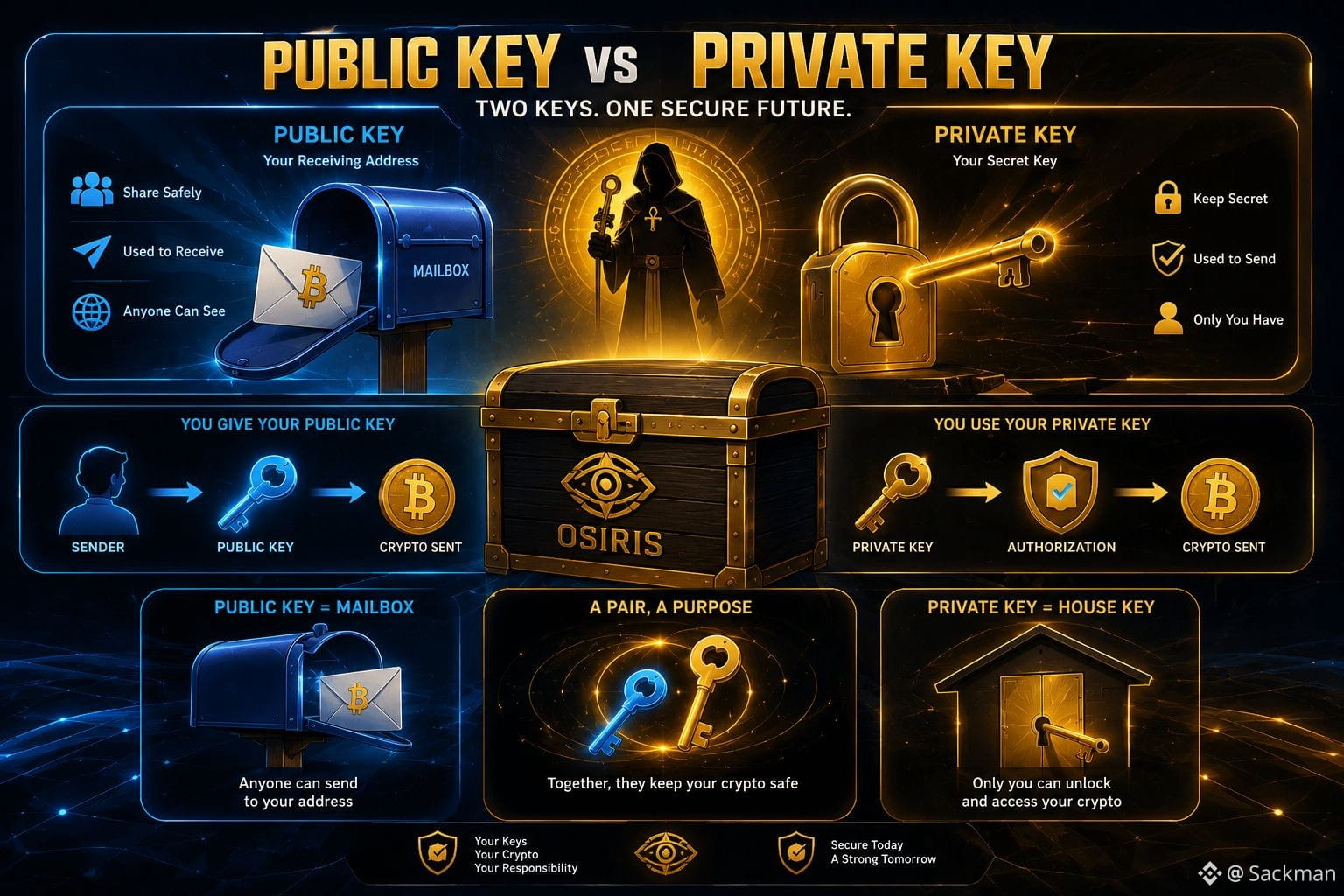
OSIRIS Exchange Academy | Lesson 7
One key is meant to be shared.
One key must never be shared.
Understanding the difference between a public key and a private key is one of the most important lessons in crypto security.
🔑 Key takeaway: Your public key helps others send you cryptocurrency. Your private key gives you control over it. Protect it carefully.
📝 Homework
What is a public key?
What is a private key?
Which one should you never share?
Follow OSIRIS Exchange Academy @Sackmantrails as we continue building your crypto knowledge, one lesson at a time. Get spiritual and crypto wisdom...
ART 🎭 — Thy Beginning. Thy Word. #LearnTogether #Learn $BTC
OSIRIS Exchange Academy | Lesson 7
One key is meant to be shared.
One key must never be shared.
Understanding the difference between a public key and a private key is one of the most important lessons in crypto security.
🔑 Key takeaway: Your public key helps others send you cryptocurrency. Your private key gives you control over it. Protect it carefully.
📝 Homework
What is a public key?
What is a private key?
Which one should you never share?
Follow OSIRIS Exchange Academy @Sackmantrails as we continue building your crypto knowledge, one lesson at a time. Get spiritual and crypto wisdom...
ART 🎭 — Thy Beginning. Thy Word. #LearnTogether #Learn $BTC
One key is meant to be shared.
One key must never be shared.
Understanding the difference between a public key and a private key is one of the most important lessons in crypto security.
🔑 Key takeaway: Your public key helps others send you cryptocurrency. Your private key gives you control over it. Protect it carefully.
📝 Homework
What is a public key?
What is a private key?
Which one should you never share?
Follow OSIRIS Exchange Academy @Sackmantrails as we continue building your crypto knowledge, one lesson at a time. Get spiritual and crypto wisdom...
ART 🎭 — Thy Beginning. Thy Word. #LearnTogether #Learn $BTC
1
164
📚 WHALE SCHOOL, Market Cap vs Price
Price alone means nothing without context.
A $1 coin isn't cheap. A $50K coin isn't expensive.
Market cap = price x circulating supply. That's what matters.
$1 coin with 100 billion supply = $100B market cap (massive).
$50K coin with 21 million supply = $1T market cap (still room to grow).
Always check market cap before saying something is cheap or expensive. Math beats vibes.
nfa. dyor.
#crypto #learn
Share with your crypto friends
#Breaking #News #CryptoTrading
📱 Follow @PoorCryptoMan
📚 WHALE SCHOOL, Market Cap vs Price
Price alone means nothing without context.
A $1 coin isn't cheap. A $50K coin isn't expensive.
Market cap = price x circulating supply. That's what matters.
$1 coin with 100 billion supply = $100B market cap (massive).
$50K coin with 21 million supply = $1T market cap (still room to grow).
Always check market cap before saying something is cheap or expensive. Math beats vibes.
nfa. dyor.
#crypto #learn
Share with your crypto friends
#Breaking #News #CryptoTrading
📱 Follow @PoorCryptoMan
Price alone means nothing without context.
A $1 coin isn't cheap. A $50K coin isn't expensive.
Market cap = price x circulating supply. That's what matters.
$1 coin with 100 billion supply = $100B market cap (massive).
$50K coin with 21 million supply = $1T market cap (still room to grow).
Always check market cap before saying something is cheap or expensive. Math beats vibes.
nfa. dyor.
#crypto #learn
Share with your crypto friends
#Breaking #News #CryptoTrading
📱 Follow @PoorCryptoMan
50
Quick lesson...
📚 WHALE SCHOOL, RSI (Relative Strength Index)
RSI measures how fast price is moving. Scale of 0 to 100.
Above 70 = Overbought. Price moved up fast. Might need to cool off.
Below 30 = Oversold. Price dropped fast. Might be due for a bounce.
RSI doesn't tell you when to buy or sell. It tells you momentum.
Overbought can stay overbought in strong trends. Oversold can stay oversold in crashes.
Best used with other indicators. Not as a standalone signal.
nfa. dyor.
#crypto #learn
Which coin are you watching?
#Breaking #MarketUpdate #BullRun
📱 Follow @PoorCryptoMan
Quick lesson...
📚 WHALE SCHOOL, RSI (Relative Strength Index)
RSI measures how fast price is moving. Scale of 0 to 100.
Above 70 = Overbought. Price moved up fast. Might need to cool off.
Below 30 = Oversold. Price dropped fast. Might be due for a bounce.
RSI doesn't tell you when to buy or sell. It tells you momentum.
Overbought can stay overbought in strong trends. Oversold can stay oversold in crashes.
Best used with other indicators. Not as a standalone signal.
nfa. dyor.
#crypto #learn
Which coin are you watching?
#Breaking #MarketUpdate #BullRun
📱 Follow @PoorCryptoMan
📚 WHALE SCHOOL, RSI (Relative Strength Index)
RSI measures how fast price is moving. Scale of 0 to 100.
Above 70 = Overbought. Price moved up fast. Might need to cool off.
Below 30 = Oversold. Price dropped fast. Might be due for a bounce.
RSI doesn't tell you when to buy or sell. It tells you momentum.
Overbought can stay overbought in strong trends. Oversold can stay oversold in crashes.
Best used with other indicators. Not as a standalone signal.
nfa. dyor.
#crypto #learn
Which coin are you watching?
#Breaking #MarketUpdate #BullRun
📱 Follow @PoorCryptoMan
65
Quick lesson...
📚 WHALE SCHOOL, RSI (Relative Strength Index)
RSI measures how fast price is moving. Scale of 0 to 100.
Above 70 = Overbought. Price moved up fast. Might need to cool off.
Below 30 = Oversold. Price dropped fast. Might be due for a bounce.
RSI doesn't tell you when to buy or sell. It tells you momentum.
Overbought can stay overbought in strong trends. Oversold can stay oversold in crashes.
Best used with other indicators. Not as a standalone signal.
nfa. dyor.
#crypto #learn
What's your view on this?
#Trending #News #BullRun
📱 Follow @PoorCryptoMan
Quick lesson...
📚 WHALE SCHOOL, RSI (Relative Strength Index)
RSI measures how fast price is moving. Scale of 0 to 100.
Above 70 = Overbought. Price moved up fast. Might need to cool off.
Below 30 = Oversold. Price dropped fast. Might be due for a bounce.
RSI doesn't tell you when to buy or sell. It tells you momentum.
Overbought can stay overbought in strong trends. Oversold can stay oversold in crashes.
Best used with other indicators. Not as a standalone signal.
nfa. dyor.
#crypto #learn
What's your view on this?
#Trending #News #BullRun
📱 Follow @PoorCryptoMan
📚 WHALE SCHOOL, RSI (Relative Strength Index)
RSI measures how fast price is moving. Scale of 0 to 100.
Above 70 = Overbought. Price moved up fast. Might need to cool off.
Below 30 = Oversold. Price dropped fast. Might be due for a bounce.
RSI doesn't tell you when to buy or sell. It tells you momentum.
Overbought can stay overbought in strong trends. Oversold can stay oversold in crashes.
Best used with other indicators. Not as a standalone signal.
nfa. dyor.
#crypto #learn
What's your view on this?
#Trending #News #BullRun
📱 Follow @PoorCryptoMan
51
·
--
🟢 اليوم 2/30: كيف تبدأ في بينانس بأمان صفري المخاطر؟ 🛡️💰
يا رفاق، بعد أن حطم منشورنا الأخير حاجز الـ 13K مشاهدة، وتأكدنا أن آلاف العقول هنا تبحث عن بداية حقيقية وصادقة.. ننتقل اليوم للخطوة العمليّة الثانية من سلسلة #30_يوم_كريبتو.
الجميع يسأل: "حسناً، سجلت في المنصة.. كيف أبدأ دون أن أخسر أموالي في البداية؟"
💡 سر اليوم الثاني: لا تتداول فوراً!
أكبر خطأ يقع فيه المبتدئ هو إيداع ماله والشراء العشوائي في أول يوم. بينانس ليست مجرد شاشة تداول؛ إنها منظومة متكاملة تتيح لك الربح والتعلم قبل أن تضع دولاراً واحداً من جيبك.
إليك 3 خطوات ذهبية لتبدأ بأمان مطلق اليوم:
1️⃣ أكاديمية بينانس وحملات التعلم (Learn & Earn): المنصة تمنحك عملات رقمية مجانية مجرد أن تقرأ دروساً بسيطة وتجيب على اختباراتها. هذا هو رأس مالك الأول الذي تبنيه بمعرفتك!
2️⃣ ميزات "اكتب لتربح" (Write to Earn): إذا كنت تمتلك فكرة أو تشارك رحلتك كما أفعل أنا الآن، المنصة تكافئك على تفاعل جمهورك. يمكنك حرفياً أن تصبح صانع محتوى وتربح من صفر دولار.
3️⃣ تأمين الحساب أولاً: قبل أي خطوة مالية، فعّل التحقق الثنائي (2FA) ومفتاح الأمان. الأمان في الكريبتو يأتي قبل الأرباح دائماً.
📌 قاعدة اليوم الثانية: المتداول الذكي يربح المعرفة أولاً، والمعرفة هي التي تجلب الدولارات لاحقاً.
#Binance #Learn
🟢 اليوم 2/30: كيف تبدأ في بينانس بأمان صفري المخاطر؟ 🛡️💰
يا رفاق، بعد أن حطم منشورنا الأخير حاجز الـ 13K مشاهدة، وتأكدنا أن آلاف العقول هنا تبحث عن بداية حقيقية وصادقة.. ننتقل اليوم للخطوة العمليّة الثانية من سلسلة #30_يوم_كريبتو.
الجميع يسأل: "حسناً، سجلت في المنصة.. كيف أبدأ دون أن أخسر أموالي في البداية؟"
💡 سر اليوم الثاني: لا تتداول فوراً!
أكبر خطأ يقع فيه المبتدئ هو إيداع ماله والشراء العشوائي في أول يوم. بينانس ليست مجرد شاشة تداول؛ إنها منظومة متكاملة تتيح لك الربح والتعلم قبل أن تضع دولاراً واحداً من جيبك.
إليك 3 خطوات ذهبية لتبدأ بأمان مطلق اليوم:
1️⃣ أكاديمية بينانس وحملات التعلم (Learn & Earn): المنصة تمنحك عملات رقمية مجانية مجرد أن تقرأ دروساً بسيطة وتجيب على اختباراتها. هذا هو رأس مالك الأول الذي تبنيه بمعرفتك!
2️⃣ ميزات "اكتب لتربح" (Write to Earn): إذا كنت تمتلك فكرة أو تشارك رحلتك كما أفعل أنا الآن، المنصة تكافئك على تفاعل جمهورك. يمكنك حرفياً أن تصبح صانع محتوى وتربح من صفر دولار.
3️⃣ تأمين الحساب أولاً: قبل أي خطوة مالية، فعّل التحقق الثنائي (2FA) ومفتاح الأمان. الأمان في الكريبتو يأتي قبل الأرباح دائماً.
📌 قاعدة اليوم الثانية: المتداول الذكي يربح المعرفة أولاً، والمعرفة هي التي تجلب الدولارات لاحقاً.
#Binance #Learn
يا رفاق، بعد أن حطم منشورنا الأخير حاجز الـ 13K مشاهدة، وتأكدنا أن آلاف العقول هنا تبحث عن بداية حقيقية وصادقة.. ننتقل اليوم للخطوة العمليّة الثانية من سلسلة #30_يوم_كريبتو.
الجميع يسأل: "حسناً، سجلت في المنصة.. كيف أبدأ دون أن أخسر أموالي في البداية؟"
💡 سر اليوم الثاني: لا تتداول فوراً!
أكبر خطأ يقع فيه المبتدئ هو إيداع ماله والشراء العشوائي في أول يوم. بينانس ليست مجرد شاشة تداول؛ إنها منظومة متكاملة تتيح لك الربح والتعلم قبل أن تضع دولاراً واحداً من جيبك.
إليك 3 خطوات ذهبية لتبدأ بأمان مطلق اليوم:
1️⃣ أكاديمية بينانس وحملات التعلم (Learn & Earn): المنصة تمنحك عملات رقمية مجانية مجرد أن تقرأ دروساً بسيطة وتجيب على اختباراتها. هذا هو رأس مالك الأول الذي تبنيه بمعرفتك!
2️⃣ ميزات "اكتب لتربح" (Write to Earn): إذا كنت تمتلك فكرة أو تشارك رحلتك كما أفعل أنا الآن، المنصة تكافئك على تفاعل جمهورك. يمكنك حرفياً أن تصبح صانع محتوى وتربح من صفر دولار.
3️⃣ تأمين الحساب أولاً: قبل أي خطوة مالية، فعّل التحقق الثنائي (2FA) ومفتاح الأمان. الأمان في الكريبتو يأتي قبل الأرباح دائماً.
📌 قاعدة اليوم الثانية: المتداول الذكي يربح المعرفة أولاً، والمعرفة هي التي تجلب الدولارات لاحقاً.
#Binance #Learn
244
·
--
Article
Lesson 3: What Is a Blockchain?Imagine This...
Imagine your teacher has a notebook.
Every time a student gives another student a marble, the teacher writes it down.
John → Mary = 2 marbles
Everyone in the class can see the notebook.
Nobody can erase a page.
Nobody can secretly change what was written.
If someone tries to cheat, the whole class immediately notices.
That notebook is similar to a blockchain.
What Is a Blockchain?
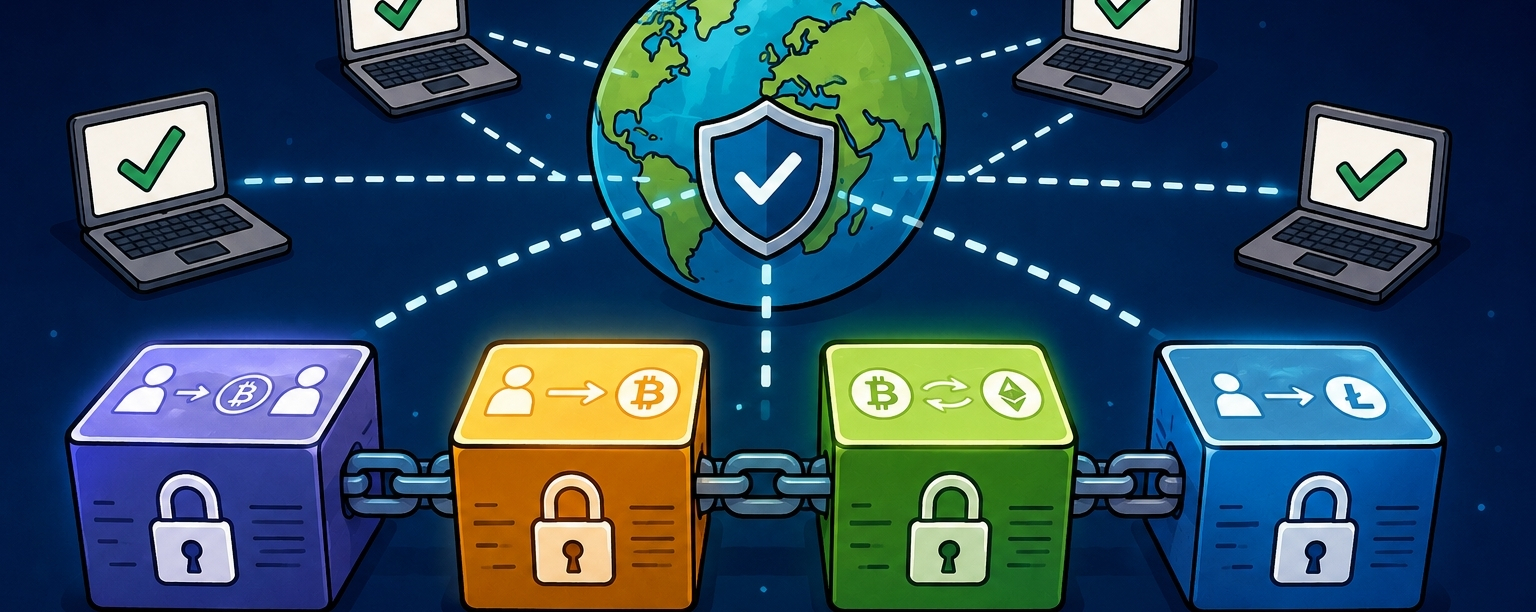
A blockchain is a digital record book that stores every transaction ever made.
Instead of one person keeping the record, thousands of computers around the world keep identical copies.
Every computer checks new transactions before they're added.
That's what makes blockchain secure.
Why Is It Called a Blockchain?
Think of a train.
Each carriage is connected to the next.
Now imagine:
📦 Block 1 → 📦 Block 2 → 📦 Block 3 → 📦 Block 4
Each block contains information.
When a block is full, another block is added.
Together, they form a chain of blocks.
That's why it's called a blockchain.
What's Inside a Block?
Each block contains:
✅ A list of transactions
✅ The time they happened
✅ A unique digital fingerprint (called a hash)
✅ A link to the previous block
Every new block is connected to the one before it.
Why Is Blockchain So Secure?
Imagine changing one page in a book.
Easy.
Now imagine changing the same page in thousands of identical books around the world at the exact same time.
Almost impossible.
That's how blockchain protects information.
Real-Life Example
Sarah sends 1 Bitcoin to David.
Thousands of computers verify the transaction.
Once they agree it's valid, it's added to a new block.
That block is permanently linked to the blockchain.
Everyone can verify it happened, but nobody can secretly change it.
Important Words
Block
A digital page containing transaction records.
Chain
Blocks connected in order from oldest to newest.
Hash
A unique digital fingerprint that identifies each block.
Decentralized
No single person, company, or government controls the blockchain.
Important Note
Blockchain is the technology.
Bitcoin is one cryptocurrency built on blockchain technology.
Just as:
The Internet is the technology.
Websites are built on the Internet.
Likewise:
Blockchain is the technology.
Cryptocurrencies are built using blockchain.
Common Beginner Mistake
Many people think Bitcoin and Blockchain are the same thing.
They are not.
Bitcoin is digital money.
Blockchain is the technology that records and secures Bitcoin transactions.
Homework
Answer these questions:
What is a blockchain?
Why is it called a blockchain?
What is inside a block?
Why is blockchain difficult to change?
Is Bitcoin the same as blockchain?
If you can answer these, you're ready for
Lesson 4: Understanding Bitcoin.
Lesson Summary
A blockchain is a shared digital record book where transactions are grouped into blocks and permanently linked together. It is secured by thousands of computers instead of one central authority.
$SOL
{future}(SOLUSDT)
#BitcoinReclaims$65K #learn #OsirisE #Follow #Share_or_Quote_This_Post
Lesson 3: What Is a Blockchain?
Imagine This...
Imagine your teacher has a notebook.
Every time a student gives another student a marble, the teacher writes it down.
John → Mary = 2 marbles
Everyone in the class can see the notebook.
Nobody can erase a page.
Nobody can secretly change what was written.
If someone tries to cheat, the whole class immediately notices.
That notebook is similar to a blockchain.
What Is a Blockchain?
A blockchain is a digital record book that stores every transaction ever made.
Instead of one person keeping the record, thousands of computers around the world keep identical copies.
Every computer checks new transactions before they're added.
That's what makes blockchain secure.
Why Is It Called a Blockchain?
Think of a train.
Each carriage is connected to the next.
Now imagine:
📦 Block 1 → 📦 Block 2 → 📦 Block 3 → 📦 Block 4
Each block contains information.
When a block is full, another block is added.
Together, they form a chain of blocks.
That's why it's called a blockchain.
What's Inside a Block?
Each block contains:
✅ A list of transactions
✅ The time they happened
✅ A unique digital fingerprint (called a hash)
✅ A link to the previous block
Every new block is connected to the one before it.
Why Is Blockchain So Secure?
Imagine changing one page in a book.
Easy.
Now imagine changing the same page in thousands of identical books around the world at the exact same time.
Almost impossible.
That's how blockchain protects information.
Real-Life Example
Sarah sends 1 Bitcoin to David.
Thousands of computers verify the transaction.
Once they agree it's valid, it's added to a new block.
That block is permanently linked to the blockchain.
Everyone can verify it happened, but nobody can secretly change it.
Important Words
Block
A digital page containing transaction records.
Chain
Blocks connected in order from oldest to newest.
Hash
A unique digital fingerprint that identifies each block.
Decentralized
No single person, company, or government controls the blockchain.
Important Note
Blockchain is the technology.
Bitcoin is one cryptocurrency built on blockchain technology.
Just as:
The Internet is the technology.
Websites are built on the Internet.
Likewise:
Blockchain is the technology.
Cryptocurrencies are built using blockchain.
Common Beginner Mistake
Many people think Bitcoin and Blockchain are the same thing.
They are not.
Bitcoin is digital money.
Blockchain is the technology that records and secures Bitcoin transactions.
Homework
Answer these questions:
What is a blockchain?
Why is it called a blockchain?
What is inside a block?
Why is blockchain difficult to change?
Is Bitcoin the same as blockchain?
If you can answer these, you're ready for
Lesson 4: Understanding Bitcoin.
Lesson Summary
A blockchain is a shared digital record book where transactions are grouped into blocks and permanently linked together. It is secured by thousands of computers instead of one central authority.
$SOL
#BitcoinReclaims$65K #learn #OsirisE #Follow #Share_or_Quote_This_Post
Imagine your teacher has a notebook.
Every time a student gives another student a marble, the teacher writes it down.
John → Mary = 2 marbles
Everyone in the class can see the notebook.
Nobody can erase a page.
Nobody can secretly change what was written.
If someone tries to cheat, the whole class immediately notices.
That notebook is similar to a blockchain.
What Is a Blockchain?
A blockchain is a digital record book that stores every transaction ever made.
Instead of one person keeping the record, thousands of computers around the world keep identical copies.
Every computer checks new transactions before they're added.
That's what makes blockchain secure.
Why Is It Called a Blockchain?
Think of a train.
Each carriage is connected to the next.
Now imagine:
📦 Block 1 → 📦 Block 2 → 📦 Block 3 → 📦 Block 4
Each block contains information.
When a block is full, another block is added.
Together, they form a chain of blocks.
That's why it's called a blockchain.
What's Inside a Block?
Each block contains:
✅ A list of transactions
✅ The time they happened
✅ A unique digital fingerprint (called a hash)
✅ A link to the previous block
Every new block is connected to the one before it.
Why Is Blockchain So Secure?
Imagine changing one page in a book.
Easy.
Now imagine changing the same page in thousands of identical books around the world at the exact same time.
Almost impossible.
That's how blockchain protects information.
Real-Life Example
Sarah sends 1 Bitcoin to David.
Thousands of computers verify the transaction.
Once they agree it's valid, it's added to a new block.
That block is permanently linked to the blockchain.
Everyone can verify it happened, but nobody can secretly change it.
Important Words
Block
A digital page containing transaction records.
Chain
Blocks connected in order from oldest to newest.
Hash
A unique digital fingerprint that identifies each block.
Decentralized
No single person, company, or government controls the blockchain.
Important Note
Blockchain is the technology.
Bitcoin is one cryptocurrency built on blockchain technology.
Just as:
The Internet is the technology.
Websites are built on the Internet.
Likewise:
Blockchain is the technology.
Cryptocurrencies are built using blockchain.
Common Beginner Mistake
Many people think Bitcoin and Blockchain are the same thing.
They are not.
Bitcoin is digital money.
Blockchain is the technology that records and secures Bitcoin transactions.
Homework
Answer these questions:
What is a blockchain?
Why is it called a blockchain?
What is inside a block?
Why is blockchain difficult to change?
Is Bitcoin the same as blockchain?
If you can answer these, you're ready for
Lesson 4: Understanding Bitcoin.
Lesson Summary
A blockchain is a shared digital record book where transactions are grouped into blocks and permanently linked together. It is secured by thousands of computers instead of one central authority.
$SOL
#BitcoinReclaims$65K #learn #OsirisE #Follow #Share_or_Quote_This_Post
148
·
--
OSIRIS Exchange Academy | Lesson 3
Have you ever wondered why people say blockchain is secure?
Imagine a notebook that thousands of people own together. Every new transaction is written in every copy, and no one can secretly erase or change it without everyone noticing.
That's the power of blockchain.
💡 Key takeaway: Blockchain isn't cryptocurrency it's the technology that makes cryptocurrencies like Bitcoin secure and trustworthy.
📝 Homework
1️⃣ What is a blockchain? 2️⃣ Why is it called a blockchain? 3️⃣ What makes it secure? 4️⃣ Is Bitcoin the same as blockchain?
Follow OSIRIS Exchange Academy as we continue building your crypto knowledge from the ground up. Check out the full Article and Video for deep understanding ... BitcoinReclaims$65K
ART 🎭 Thy Beginning. Thy Word. #Learn
OSIRIS Exchange Academy | Lesson 3
Have you ever wondered why people say blockchain is secure?
Imagine a notebook that thousands of people own together. Every new transaction is written in every copy, and no one can secretly erase or change it without everyone noticing.
That's the power of blockchain.
💡 Key takeaway: Blockchain isn't cryptocurrency it's the technology that makes cryptocurrencies like Bitcoin secure and trustworthy.
📝 Homework
1️⃣ What is a blockchain? 2️⃣ Why is it called a blockchain? 3️⃣ What makes it secure? 4️⃣ Is Bitcoin the same as blockchain?
Follow OSIRIS Exchange Academy as we continue building your crypto knowledge from the ground up. Check out the full Article and Video for deep understanding ... BitcoinReclaims$65K
ART 🎭 Thy Beginning. Thy Word. #Learn
Have you ever wondered why people say blockchain is secure?
Imagine a notebook that thousands of people own together. Every new transaction is written in every copy, and no one can secretly erase or change it without everyone noticing.
That's the power of blockchain.
💡 Key takeaway: Blockchain isn't cryptocurrency it's the technology that makes cryptocurrencies like Bitcoin secure and trustworthy.
📝 Homework
1️⃣ What is a blockchain? 2️⃣ Why is it called a blockchain? 3️⃣ What makes it secure? 4️⃣ Is Bitcoin the same as blockchain?
Follow OSIRIS Exchange Academy as we continue building your crypto knowledge from the ground up. Check out the full Article and Video for deep understanding ... BitcoinReclaims$65K
ART 🎭 Thy Beginning. Thy Word. #Learn

166

·
--

Article
Optimización de la interfaz de Binance: Configurar tu página de inicio para que sea más "limpia"La solución para que nuestra pantalla de inicio de Binance sea más ordenada pasa por aprovechar la funcionalidad de los widgets. Podemos añadir hasta 8 elementos personalizados. De este modo podemos mostrar en la primera pantalla los datos que queramos y eliminar los que nos distraigan.
Para ello sólo hay que seguir estos tres pasos: Para entrar en modo edición hay que pulsar sobre cualquier widget de la pantalla de inicio (más de 1 segundo). A continuación tendremos que pulsar sobre el signo "+", aparecerá la biblioteca de widgets. Elegiremos entre Lista de monedas, Tasas de Simple Earn o "Flujo neto de ETF" (dependiendo de nuestras necesidades). Arrastraremos el widget a la posición deseada. Por último pulsaremos sobre la marca de verificación para guardar los cambios. Los widgets sólo se pueden situar debajo de la zona de accesos rápidos y arriba del feed de descubrimiento.
Importante para evitar errores: Si pulsamos de forma rápida (unos 0.5 segundos) sólo abriremos el menú rápido. Para entrar en modo edición hay que pulsar y mantener. En caso de salir sin confirmar no se guardarán los cambios. Es recomendable añadir primero los elementos Resumen de rendimiento de activos y Lista de monedas. El primero nos ayudará a controlar nuestras posiciones y el segundo es ideal para tener un vistazo rápido al mercado. Los otros los dejaremos sólo si los necesitamos. #LearnTogether #learn $BNB $BTC $USDC
Optimización de la interfaz de Binance: Configurar tu página de inicio para que sea más "limpia"
La solución para que nuestra pantalla de inicio de Binance sea más ordenada pasa por aprovechar la funcionalidad de los widgets. Podemos añadir hasta 8 elementos personalizados. De este modo podemos mostrar en la primera pantalla los datos que queramos y eliminar los que nos distraigan.
Para ello sólo hay que seguir estos tres pasos: Para entrar en modo edición hay que pulsar sobre cualquier widget de la pantalla de inicio (más de 1 segundo). A continuación tendremos que pulsar sobre el signo "+", aparecerá la biblioteca de widgets. Elegiremos entre Lista de monedas, Tasas de Simple Earn o "Flujo neto de ETF" (dependiendo de nuestras necesidades). Arrastraremos el widget a la posición deseada. Por último pulsaremos sobre la marca de verificación para guardar los cambios. Los widgets sólo se pueden situar debajo de la zona de accesos rápidos y arriba del feed de descubrimiento.
Importante para evitar errores: Si pulsamos de forma rápida (unos 0.5 segundos) sólo abriremos el menú rápido. Para entrar en modo edición hay que pulsar y mantener. En caso de salir sin confirmar no se guardarán los cambios. Es recomendable añadir primero los elementos Resumen de rendimiento de activos y Lista de monedas. El primero nos ayudará a controlar nuestras posiciones y el segundo es ideal para tener un vistazo rápido al mercado. Los otros los dejaremos sólo si los necesitamos. #LearnTogether #learn $BNB $BTC $USDC
Para ello sólo hay que seguir estos tres pasos: Para entrar en modo edición hay que pulsar sobre cualquier widget de la pantalla de inicio (más de 1 segundo). A continuación tendremos que pulsar sobre el signo "+", aparecerá la biblioteca de widgets. Elegiremos entre Lista de monedas, Tasas de Simple Earn o "Flujo neto de ETF" (dependiendo de nuestras necesidades). Arrastraremos el widget a la posición deseada. Por último pulsaremos sobre la marca de verificación para guardar los cambios. Los widgets sólo se pueden situar debajo de la zona de accesos rápidos y arriba del feed de descubrimiento.
Importante para evitar errores: Si pulsamos de forma rápida (unos 0.5 segundos) sólo abriremos el menú rápido. Para entrar en modo edición hay que pulsar y mantener. En caso de salir sin confirmar no se guardarán los cambios. Es recomendable añadir primero los elementos Resumen de rendimiento de activos y Lista de monedas. El primero nos ayudará a controlar nuestras posiciones y el segundo es ideal para tener un vistazo rápido al mercado. Los otros los dejaremos sólo si los necesitamos. #LearnTogether #learn $BNB $BTC $USDC
105
📚 WHALE SCHOOL, Market Cap vs Price
Price alone means nothing without context.
A $1 coin isn't cheap. A $50K coin isn't expensive.
Market cap = price x circulating supply. That's what matters.
$1 coin with 100 billion supply = $100B market cap (massive).
$50K coin with 21 million supply = $1T market cap (still room to grow).
Always check market cap before saying something is cheap or expensive. Math beats vibes.
nfa. dyor.
#crypto #learn
Share your experience
#Trending #News
📱 Follow @PoorCryptoMan
📚 WHALE SCHOOL, Market Cap vs Price
Price alone means nothing without context.
A $1 coin isn't cheap. A $50K coin isn't expensive.
Market cap = price x circulating supply. That's what matters.
$1 coin with 100 billion supply = $100B market cap (massive).
$50K coin with 21 million supply = $1T market cap (still room to grow).
Always check market cap before saying something is cheap or expensive. Math beats vibes.
nfa. dyor.
#crypto #learn
Share your experience
#Trending #News
📱 Follow @PoorCryptoMan
Price alone means nothing without context.
A $1 coin isn't cheap. A $50K coin isn't expensive.
Market cap = price x circulating supply. That's what matters.
$1 coin with 100 billion supply = $100B market cap (massive).
$50K coin with 21 million supply = $1T market cap (still room to grow).
Always check market cap before saying something is cheap or expensive. Math beats vibes.
nfa. dyor.
#crypto #learn
Share your experience
#Trending #News
📱 Follow @PoorCryptoMan
📚 WHALE SCHOOL, RSI (Relative Strength Index)
RSI measures how fast price is moving. Scale of 0 to 100.
Above 70 = Overbought. Price moved up fast. Might need to cool off.
Below 30 = Oversold. Price dropped fast. Might be due for a bounce.
RSI doesn't tell you when to buy or sell. It tells you momentum.
Overbought can stay overbought in strong trends. Oversold can stay oversold in crashes.
Best used with other indicators. Not as a standalone signal.
nfa. dyor.
#crypto #learn
Share your experience
#News #Trending #CryptoTrading
📱 Follow @PoorCryptoMan
📚 WHALE SCHOOL, RSI (Relative Strength Index)
RSI measures how fast price is moving. Scale of 0 to 100.
Above 70 = Overbought. Price moved up fast. Might need to cool off.
Below 30 = Oversold. Price dropped fast. Might be due for a bounce.
RSI doesn't tell you when to buy or sell. It tells you momentum.
Overbought can stay overbought in strong trends. Oversold can stay oversold in crashes.
Best used with other indicators. Not as a standalone signal.
nfa. dyor.
#crypto #learn
Share your experience
#News #Trending #CryptoTrading
📱 Follow @PoorCryptoMan
RSI measures how fast price is moving. Scale of 0 to 100.
Above 70 = Overbought. Price moved up fast. Might need to cool off.
Below 30 = Oversold. Price dropped fast. Might be due for a bounce.
RSI doesn't tell you when to buy or sell. It tells you momentum.
Overbought can stay overbought in strong trends. Oversold can stay oversold in crashes.
Best used with other indicators. Not as a standalone signal.
nfa. dyor.
#crypto #learn
Share your experience
#News #Trending #CryptoTrading
📱 Follow @PoorCryptoMan
2
📚 WHALE SCHOOL, Market Cap vs Price
Price alone means nothing without context.
A $1 coin isn't cheap. A $50K coin isn't expensive.
Market cap = price x circulating supply. That's what matters.
$1 coin with 100 billion supply = $100B market cap (massive).
$50K coin with 21 million supply = $1T market cap (still room to grow).
Always check market cap before saying something is cheap or expensive. Math beats vibes.
nfa. dyor.
#crypto #learn
Tag someone who needs to see this
#Breaking #News
📱 Follow @PoorCryptoMan
📚 WHALE SCHOOL, Market Cap vs Price
Price alone means nothing without context.
A $1 coin isn't cheap. A $50K coin isn't expensive.
Market cap = price x circulating supply. That's what matters.
$1 coin with 100 billion supply = $100B market cap (massive).
$50K coin with 21 million supply = $1T market cap (still room to grow).
Always check market cap before saying something is cheap or expensive. Math beats vibes.
nfa. dyor.
#crypto #learn
Tag someone who needs to see this
#Breaking #News
📱 Follow @PoorCryptoMan
Price alone means nothing without context.
A $1 coin isn't cheap. A $50K coin isn't expensive.
Market cap = price x circulating supply. That's what matters.
$1 coin with 100 billion supply = $100B market cap (massive).
$50K coin with 21 million supply = $1T market cap (still room to grow).
Always check market cap before saying something is cheap or expensive. Math beats vibes.
nfa. dyor.
#crypto #learn
Tag someone who needs to see this
#Breaking #News
📱 Follow @PoorCryptoMan
6
This changed my trading...
📚 WHALE SCHOOL, Support and Resistance
Support = price level where buying tends to come in. Like a floor.
Resistance = price level where selling tends to appear. Like a ceiling.
These levels form because traders remember. If you bought at $50K before and it bounced, you might buy there again.
When support breaks, it often becomes resistance.
When resistance breaks, it often becomes support.
Trade near key levels for better risk/reward. The closer to support you enter a long, the tighter your stop can be.
nfa. dyor.
#crypto #learn
What would you add to this list?
#Trending #News #Bitcoin
📱 Follow @PoorCryptoMan
This changed my trading...
📚 WHALE SCHOOL, Support and Resistance
Support = price level where buying tends to come in. Like a floor.
Resistance = price level where selling tends to appear. Like a ceiling.
These levels form because traders remember. If you bought at $50K before and it bounced, you might buy there again.
When support breaks, it often becomes resistance.
When resistance breaks, it often becomes support.
Trade near key levels for better risk/reward. The closer to support you enter a long, the tighter your stop can be.
nfa. dyor.
#crypto #learn
What would you add to this list?
#Trending #News #Bitcoin
📱 Follow @PoorCryptoMan
📚 WHALE SCHOOL, Support and Resistance
Support = price level where buying tends to come in. Like a floor.
Resistance = price level where selling tends to appear. Like a ceiling.
These levels form because traders remember. If you bought at $50K before and it bounced, you might buy there again.
When support breaks, it often becomes resistance.
When resistance breaks, it often becomes support.
Trade near key levels for better risk/reward. The closer to support you enter a long, the tighter your stop can be.
nfa. dyor.
#crypto #learn
What would you add to this list?
#Trending #News #Bitcoin
📱 Follow @PoorCryptoMan
1
22


DAY 1 — TRADING PSYCHOLOGY: FOMO
FOMO = Fear Of Missing Out.
Every trader experiences it.
You see 2–3 bullish candles moving without you and suddenly think:
“I'm missing the trade!”
So you enter late without proper confirmation.
Then the market reverses… and your profit turns into a loss.
The same thing happens on sell trades.
FOMO can also come from watching other traders on Instagram showing their profits. You start thinking:
“He made this much. I should make it too.”
That mindset can destroy your account.
You cannot completely eliminate FOMO, but you can control it with rules.
My 3 important rules:
1️⃣ DAILY TRADE LIMIT
Set a maximum number of trades per day.
For example: 5 trades.
If you're a part-time trader, even 5 trades may be too much. Set a limit that fits your strategy.
2️⃣ DAILY PROFIT TARGET
Set a daily profit target.
Example: $100/day.
If you make your $100 on the first trade, STOP.
Don't take the next 4 trades just because you can.
3️⃣ DAILY MAX LOSS
Set a maximum loss for the day.
Example: -$50.
If you hit -$50, STOP TRADING.
No revenge trading. No trying to recover the loss.
Remember:
Daily TP ✅
Daily SL ✅
Daily Trade Limit ✅
If ANY ONE of these is reached → STOP TRADING FOR THE DAY.
You don't need to catch every move.
You need to protect your capital and your psychology.
FOMO may never completely disappear, but with discipline, you can make it much weaker.
Day 1 lesson:
DON'T CHASE THE MARKET.
LET THE MARKET COME TO YOUR SETUP.
$BTC $XAU $ZEC
@CZ is I'm right
#Binance #Learn
DAY 1 — TRADING PSYCHOLOGY: FOMO
FOMO = Fear Of Missing Out.
Every trader experiences it.
You see 2–3 bullish candles moving without you and suddenly think:
“I'm missing the trade!”
So you enter late without proper confirmation.
Then the market reverses… and your profit turns into a loss.
The same thing happens on sell trades.
FOMO can also come from watching other traders on Instagram showing their profits. You start thinking:
“He made this much. I should make it too.”
That mindset can destroy your account.
You cannot completely eliminate FOMO, but you can control it with rules.
My 3 important rules:
1️⃣ DAILY TRADE LIMIT
Set a maximum number of trades per day.
For example: 5 trades.
If you're a part-time trader, even 5 trades may be too much. Set a limit that fits your strategy.
2️⃣ DAILY PROFIT TARGET
Set a daily profit target.
Example: $100/day.
If you make your $100 on the first trade, STOP.
Don't take the next 4 trades just because you can.
3️⃣ DAILY MAX LOSS
Set a maximum loss for the day.
Example: -$50.
If you hit -$50, STOP TRADING.
No revenge trading. No trying to recover the loss.
Remember:
Daily TP ✅
Daily SL ✅
Daily Trade Limit ✅
If ANY ONE of these is reached → STOP TRADING FOR THE DAY.
You don't need to catch every move.
You need to protect your capital and your psychology.
FOMO may never completely disappear, but with discipline, you can make it much weaker.
Day 1 lesson:
DON'T CHASE THE MARKET.
LET THE MARKET COME TO YOUR SETUP.
$BTC $XAU $ZEC
@CZ is I'm right
#Binance #Learn
FOMO = Fear Of Missing Out.
Every trader experiences it.
You see 2–3 bullish candles moving without you and suddenly think:
“I'm missing the trade!”
So you enter late without proper confirmation.
Then the market reverses… and your profit turns into a loss.
The same thing happens on sell trades.
FOMO can also come from watching other traders on Instagram showing their profits. You start thinking:
“He made this much. I should make it too.”
That mindset can destroy your account.
You cannot completely eliminate FOMO, but you can control it with rules.
My 3 important rules:
1️⃣ DAILY TRADE LIMIT
Set a maximum number of trades per day.
For example: 5 trades.
If you're a part-time trader, even 5 trades may be too much. Set a limit that fits your strategy.
2️⃣ DAILY PROFIT TARGET
Set a daily profit target.
Example: $100/day.
If you make your $100 on the first trade, STOP.
Don't take the next 4 trades just because you can.
3️⃣ DAILY MAX LOSS
Set a maximum loss for the day.
Example: -$50.
If you hit -$50, STOP TRADING.
No revenge trading. No trying to recover the loss.
Remember:
Daily TP ✅
Daily SL ✅
Daily Trade Limit ✅
If ANY ONE of these is reached → STOP TRADING FOR THE DAY.
You don't need to catch every move.
You need to protect your capital and your psychology.
FOMO may never completely disappear, but with discipline, you can make it much weaker.
Day 1 lesson:
DON'T CHASE THE MARKET.
LET THE MARKET COME TO YOUR SETUP.
$BTC $XAU $ZEC
@CZ is I'm right
#Binance #Learn

Aasim Majeed AMC
·
--
DAY 1 — TRADING PSYCHOLOGY: FOMO
FOMO = Fear Of Missing Out.
$BTC $ZEC $QNT
FOMO = Fear Of Missing Out.
$BTC $ZEC $QNT
2
1
3
634
·
--

Article
" Mets un peu d'argent là-dedans, c'est impossible de perdre. " La pire phrase que j'aie jamais diteAprès quelques mois de marché haussier, je me sentais invincible. Mes prédictions fonctionnaient, mes tokens montaient en flèche, et j’avais cette conviction toxique d’avoir craqué le système.
Un soir, lors d'un dîner, un proche m'a demandé timidement comment marchait la crypto.
Au lieu de rester humble, d'expliquer les risques ou de recommander la prudence, j'ai agi en prédicateur. Je lui ai vendu le rêve de l'indépendance financière. Je lui ai assuré que la dynamique ne s'arrêterait pas.
Il m'a fait confiance. Il a investi une somme importante pour lui.
Quelques semaines plus tard, le marché a plongé de 60 %.
La perte sur mon portefeuille m'a fait mal, mais ce n'était rien comparé au sentiment d'avoir entraîné quelqu'un d'autre dans la tempête. Chaque appel de cet ami me serrait la gorge. La honte d'avoir joué les experts avec l'argent durement gagné d'autrui m'a poursuivi pendant des mois.
Cette épreuve m'a enseigné des leçons qui valent bien plus que n'importe quelle plus-value :
Le silence est une vertu : Parler de ses gains relève souvent de l'ego. Quand on gagne, on reste discret ; quand on perd, on assume seul.Ne jamais donner de conseils financiers aux proches : Même avec les meilleures intentions du monde, vous ne gérerez pas leur tolérance à la douleur ni leur panique quand les cours chutent.La conviction ne se transmet pas : Vous pouvez supporter un drawdown de 50 % parce que vous comprenez la thèse du projet. Un débutant, lui, n'y verra que ses économies qui s'envolent.L'éducation avant la spéculation : Si un ami s'intéresse au secteur, offrez-lui un livre ou recommandez-lui d'apprendre les bases du Bitcoin et de la blockchain, mais ne lui dites jamais quel bouton presser.
Aujourd'hui, quand on me demande « dans quoi investir ? », je réponds toujours la même chose : forme-toi, commence petit, et n'investis que ce que tu es capable de voir baisser de 80 % sans perdre le sommeil.
Avez-vous déjà commis l'erreur de convaincre un proche d'investir dans la crypto ? Comment la relation a-t-elle survécu à la correction ?
$BTC $AAPL.US $NVDAB
#Learn #crypto #StrategicTrading #Risk
" Mets un peu d'argent là-dedans, c'est impossible de perdre. " La pire phrase que j'aie jamais dite
Après quelques mois de marché haussier, je me sentais invincible. Mes prédictions fonctionnaient, mes tokens montaient en flèche, et j’avais cette conviction toxique d’avoir craqué le système.
Un soir, lors d'un dîner, un proche m'a demandé timidement comment marchait la crypto.
Au lieu de rester humble, d'expliquer les risques ou de recommander la prudence, j'ai agi en prédicateur. Je lui ai vendu le rêve de l'indépendance financière. Je lui ai assuré que la dynamique ne s'arrêterait pas.
Il m'a fait confiance. Il a investi une somme importante pour lui.
Quelques semaines plus tard, le marché a plongé de 60 %.
La perte sur mon portefeuille m'a fait mal, mais ce n'était rien comparé au sentiment d'avoir entraîné quelqu'un d'autre dans la tempête. Chaque appel de cet ami me serrait la gorge. La honte d'avoir joué les experts avec l'argent durement gagné d'autrui m'a poursuivi pendant des mois.
Cette épreuve m'a enseigné des leçons qui valent bien plus que n'importe quelle plus-value :
Le silence est une vertu : Parler de ses gains relève souvent de l'ego. Quand on gagne, on reste discret ; quand on perd, on assume seul.Ne jamais donner de conseils financiers aux proches : Même avec les meilleures intentions du monde, vous ne gérerez pas leur tolérance à la douleur ni leur panique quand les cours chutent.La conviction ne se transmet pas : Vous pouvez supporter un drawdown de 50 % parce que vous comprenez la thèse du projet. Un débutant, lui, n'y verra que ses économies qui s'envolent.L'éducation avant la spéculation : Si un ami s'intéresse au secteur, offrez-lui un livre ou recommandez-lui d'apprendre les bases du Bitcoin et de la blockchain, mais ne lui dites jamais quel bouton presser.
Aujourd'hui, quand on me demande « dans quoi investir ? », je réponds toujours la même chose : forme-toi, commence petit, et n'investis que ce que tu es capable de voir baisser de 80 % sans perdre le sommeil.
Avez-vous déjà commis l'erreur de convaincre un proche d'investir dans la crypto ? Comment la relation a-t-elle survécu à la correction ?
$BTC $AAPL.US $NVDAB
#Learn #crypto #StrategicTrading #Risk
Un soir, lors d'un dîner, un proche m'a demandé timidement comment marchait la crypto.
Au lieu de rester humble, d'expliquer les risques ou de recommander la prudence, j'ai agi en prédicateur. Je lui ai vendu le rêve de l'indépendance financière. Je lui ai assuré que la dynamique ne s'arrêterait pas.
Il m'a fait confiance. Il a investi une somme importante pour lui.
Quelques semaines plus tard, le marché a plongé de 60 %.
La perte sur mon portefeuille m'a fait mal, mais ce n'était rien comparé au sentiment d'avoir entraîné quelqu'un d'autre dans la tempête. Chaque appel de cet ami me serrait la gorge. La honte d'avoir joué les experts avec l'argent durement gagné d'autrui m'a poursuivi pendant des mois.
Cette épreuve m'a enseigné des leçons qui valent bien plus que n'importe quelle plus-value :
Le silence est une vertu : Parler de ses gains relève souvent de l'ego. Quand on gagne, on reste discret ; quand on perd, on assume seul.Ne jamais donner de conseils financiers aux proches : Même avec les meilleures intentions du monde, vous ne gérerez pas leur tolérance à la douleur ni leur panique quand les cours chutent.La conviction ne se transmet pas : Vous pouvez supporter un drawdown de 50 % parce que vous comprenez la thèse du projet. Un débutant, lui, n'y verra que ses économies qui s'envolent.L'éducation avant la spéculation : Si un ami s'intéresse au secteur, offrez-lui un livre ou recommandez-lui d'apprendre les bases du Bitcoin et de la blockchain, mais ne lui dites jamais quel bouton presser.
Aujourd'hui, quand on me demande « dans quoi investir ? », je réponds toujours la même chose : forme-toi, commence petit, et n'investis que ce que tu es capable de voir baisser de 80 % sans perdre le sommeil.
Avez-vous déjà commis l'erreur de convaincre un proche d'investir dans la crypto ? Comment la relation a-t-elle survécu à la correction ?
$BTC $AAPL.US $NVDAB
#Learn #crypto #StrategicTrading #Risk
2
4
5.3k

·
--
Just wrapped up an incredible 10-day journey at the Binance Summer Camp! ⛺🔥
What I enjoyed most about this gamified experience was the immense focus on awareness, knowledge, and web3 & crypto security, learning how to navigate the space safely while keeping it fun and interactive is truly invaluable 🔐💡
A massive thank you to Binance and the entire team for putting together such an amazing educational initiative 🙏💛
Proud to officially graduate! 🎓🚀
#BinanceSummerCamp #Learn
@Binance_Angels @Binancearabic @Binance_Academy
Just wrapped up an incredible 10-day journey at the Binance Summer Camp! ⛺🔥
What I enjoyed most about this gamified experience was the immense focus on awareness, knowledge, and web3 & crypto security, learning how to navigate the space safely while keeping it fun and interactive is truly invaluable 🔐💡
A massive thank you to Binance and the entire team for putting together such an amazing educational initiative 🙏💛
Proud to officially graduate! 🎓🚀
#BinanceSummerCamp #Learn
@Binance Angels @Binance MENA @Binance Academy
What I enjoyed most about this gamified experience was the immense focus on awareness, knowledge, and web3 & crypto security, learning how to navigate the space safely while keeping it fun and interactive is truly invaluable 🔐💡
A massive thank you to Binance and the entire team for putting together such an amazing educational initiative 🙏💛
Proud to officially graduate! 🎓🚀
#BinanceSummerCamp #Learn
@Binance Angels @Binance MENA @Binance Academy

4
334
·
--

Article
J’avais planifié ma démission. La crypto devait me libérer.C’était le point culminant du dernier bull run. Mon portefeuille avait explosé. Des chiffres que je n'aurais jamais imaginé atteindre sur mon compte bancaire s'affichaient sur mon écran. Je passais mes journées à faire des calculs, à planifier mon avenir, à m'imaginer libre financièrement, loin des contraintes du salariat.
J'ai commencé à en parler à mes proches, avec cette fierté un peu naïve de celui qui croit avoir tout compris avant les autres. J'étais convaincu(e) que la hausse allait durer éternellement, que j'allais pouvoir quitter mon job dans quelques semaines.
Puis, le marché s'est retourné. D'abord une petite correction, que j'ai ignorée, persuadé(e) que c'était le moment de « buy the dip ». Puis une chute brutale, suivie d'une autre, et encore une autre.
Le rêve s’est effondré sous mes yeux. Les profits se sont évaporés, et une partie de mon capital initial avec. La honte a remplacé la fierté. La peur a remplacé l'excitation. Je me suis retrouvé(e) face à une réalité difficile : je n'étais pas libre, et j'allais devoir retourner travailler, avec cette sensation d'avoir laissé passer la chance de ma vie.
De cette chute brutale, j’ai tiré la leçon la plus importante de mon parcours d'investisseur :
Prendre ses profits n'est pas une option. Un gain n'est réel que lorsqu'il est sécurisé. Voir son portefeuille monter, c'est de l'ego ; encaisser ses gains, c'est de la stratégie.L’humilité est la clé. Le marché est plus grand que toi, plus fort que toi, et il n'a aucune émotion. Il peut te briser si tu te crois invincible.La liberté financière est un marathon, pas une loterie. Elle se construit sur des années, avec discipline, diversification et gestion des risques, pas sur un seul trade chanceux.
Aujourd'hui, je suis toujours là, plus prudent(e), plus éduqué(e), et surtout, avec un plan concret. Je sais que le prochain train passera, et cette fois, je saurai quand descendre.
💼 Avez-vous déjà cru tenir votre "ticket de sortie" avant que le marché ne vous ramène à la réalité ? Partagez votre expérience en commentaire.
#market #Learn #Stategie
J’avais planifié ma démission. La crypto devait me libérer.
C’était le point culminant du dernier bull run. Mon portefeuille avait explosé. Des chiffres que je n'aurais jamais imaginé atteindre sur mon compte bancaire s'affichaient sur mon écran. Je passais mes journées à faire des calculs, à planifier mon avenir, à m'imaginer libre financièrement, loin des contraintes du salariat.
J'ai commencé à en parler à mes proches, avec cette fierté un peu naïve de celui qui croit avoir tout compris avant les autres. J'étais convaincu(e) que la hausse allait durer éternellement, que j'allais pouvoir quitter mon job dans quelques semaines.
Puis, le marché s'est retourné. D'abord une petite correction, que j'ai ignorée, persuadé(e) que c'était le moment de « buy the dip ». Puis une chute brutale, suivie d'une autre, et encore une autre.
Le rêve s’est effondré sous mes yeux. Les profits se sont évaporés, et une partie de mon capital initial avec. La honte a remplacé la fierté. La peur a remplacé l'excitation. Je me suis retrouvé(e) face à une réalité difficile : je n'étais pas libre, et j'allais devoir retourner travailler, avec cette sensation d'avoir laissé passer la chance de ma vie.
De cette chute brutale, j’ai tiré la leçon la plus importante de mon parcours d'investisseur :
Prendre ses profits n'est pas une option. Un gain n'est réel que lorsqu'il est sécurisé. Voir son portefeuille monter, c'est de l'ego ; encaisser ses gains, c'est de la stratégie.L’humilité est la clé. Le marché est plus grand que toi, plus fort que toi, et il n'a aucune émotion. Il peut te briser si tu te crois invincible.La liberté financière est un marathon, pas une loterie. Elle se construit sur des années, avec discipline, diversification et gestion des risques, pas sur un seul trade chanceux.
Aujourd'hui, je suis toujours là, plus prudent(e), plus éduqué(e), et surtout, avec un plan concret. Je sais que le prochain train passera, et cette fois, je saurai quand descendre.
💼 Avez-vous déjà cru tenir votre "ticket de sortie" avant que le marché ne vous ramène à la réalité ? Partagez votre expérience en commentaire.
#market #Learn #Stategie
J'ai commencé à en parler à mes proches, avec cette fierté un peu naïve de celui qui croit avoir tout compris avant les autres. J'étais convaincu(e) que la hausse allait durer éternellement, que j'allais pouvoir quitter mon job dans quelques semaines.
Puis, le marché s'est retourné. D'abord une petite correction, que j'ai ignorée, persuadé(e) que c'était le moment de « buy the dip ». Puis une chute brutale, suivie d'une autre, et encore une autre.
Le rêve s’est effondré sous mes yeux. Les profits se sont évaporés, et une partie de mon capital initial avec. La honte a remplacé la fierté. La peur a remplacé l'excitation. Je me suis retrouvé(e) face à une réalité difficile : je n'étais pas libre, et j'allais devoir retourner travailler, avec cette sensation d'avoir laissé passer la chance de ma vie.
De cette chute brutale, j’ai tiré la leçon la plus importante de mon parcours d'investisseur :
Prendre ses profits n'est pas une option. Un gain n'est réel que lorsqu'il est sécurisé. Voir son portefeuille monter, c'est de l'ego ; encaisser ses gains, c'est de la stratégie.L’humilité est la clé. Le marché est plus grand que toi, plus fort que toi, et il n'a aucune émotion. Il peut te briser si tu te crois invincible.La liberté financière est un marathon, pas une loterie. Elle se construit sur des années, avec discipline, diversification et gestion des risques, pas sur un seul trade chanceux.
Aujourd'hui, je suis toujours là, plus prudent(e), plus éduqué(e), et surtout, avec un plan concret. Je sais que le prochain train passera, et cette fois, je saurai quand descendre.
💼 Avez-vous déjà cru tenir votre "ticket de sortie" avant que le marché ne vous ramène à la réalité ? Partagez votre expérience en commentaire.
#market #Learn #Stategie
11
1
20
16.2k
This changed my trading...
📚 WHALE SCHOOL, Funding Rates
In futures trading, funding rates are fees that traders pay each other.
Positive funding = longs pay shorts. Too many people betting on up.
Negative funding = shorts pay longs. Too many people betting on down.
When funding gets extreme, the opposite move often follows.
Think of it like a crowded trade. When everyone is on one side, who's left to push it further?
Watch funding rates before entering d positions. Extreme readings = caution.
nfa. dyor.
#crypto #learn
Tag someone who needs to see this
#Trending #News #CryptoNews
📱 Follow @PoorCryptoMan
This changed my trading...
📚 WHALE SCHOOL, Funding Rates
In futures trading, funding rates are fees that traders pay each other.
Positive funding = longs pay shorts. Too many people betting on up.
Negative funding = shorts pay longs. Too many people betting on down.
When funding gets extreme, the opposite move often follows.
Think of it like a crowded trade. When everyone is on one side, who's left to push it further?
Watch funding rates before entering d positions. Extreme readings = caution.
nfa. dyor.
#crypto #learn
Tag someone who needs to see this
#Trending #News #CryptoNews
📱 Follow @PoorCryptoMan
📚 WHALE SCHOOL, Funding Rates
In futures trading, funding rates are fees that traders pay each other.
Positive funding = longs pay shorts. Too many people betting on up.
Negative funding = shorts pay longs. Too many people betting on down.
When funding gets extreme, the opposite move often follows.
Think of it like a crowded trade. When everyone is on one side, who's left to push it further?
Watch funding rates before entering d positions. Extreme readings = caution.
nfa. dyor.
#crypto #learn
Tag someone who needs to see this
#Trending #News #CryptoNews
📱 Follow @PoorCryptoMan
19

Log in to explore more content
Join global crypto users on Binance Square
⚡️ Get latest and useful information about crypto.
💬 Trusted by the world’s largest crypto exchange.
👍 Discover real insights from verified creators.
Email / Phone number
Trending Topics
1
#BinancePick
2.7M views
144,120 Discussing
2
#EarningsSeason
5M views
24,720 Discussing
3
#SouthKoreaReportedlyWeighsFourthCryptoTaxDelay
3,523 views
140 Discussing
4
#FranklinTempletonFilesForTwoDividendToBitcoinETFs
8,801 views
261 Discussing
5
#StrategyMSTRSurpassesNasdaqInMarketCap
7,920 views
214 Discussing
6
#CanadaProposesStablecoinRedemptionWithin3BusinessDays
263 views
19 Discussing
7
#ElectrumWalletBugLetRogueServersStealFunds
13,298 views
335 Discussing
8
#ArgentineCourtDismissesLIBRACaseAgainstMilei
23,603 views
400 Discussing
9
#SKHynixReportedlyPlansSpecialDividendFromKioxiaStakeSale
3,583 views
49 Discussing
10
#KeystoneWebsiteBreachExposesBuyersShippingAddresses
1,850 views
41 Discussing