

#ethcryptohub
ethcryptohub
184,274 views
430 Discussing
Hot
Latest


·
--
Hello ETHcryptohub Community
I have applied for Nomination under Rising Star Category. I want everyone please Fill the below form and support me for Nomination 👇👇👇👇
[Click Here and Submit Details](https://app.binance.com/uni-qr/cart/376794581745773?r=ZWG4VOBD&l=en&uco=Oq3P-j7rIkdN31Df3u22bg&uc=app_square_share_link&us=copylink)
All details are under My BIO ✅✅✅✅
Love you ETHcryptohub Community
#Ethcryptohub
Hello ETHcryptohub Community
I have applied for Nomination under Rising Star Category. I want everyone please Fill the below form and support me for Nomination 👇👇👇👇
Click Here and Submit Details
All details are under My BIO ✅✅✅✅
Love you ETHcryptohub Community
#Ethcryptohub
I have applied for Nomination under Rising Star Category. I want everyone please Fill the below form and support me for Nomination 👇👇👇👇
Click Here and Submit Details
All details are under My BIO ✅✅✅✅
Love you ETHcryptohub Community
#Ethcryptohub
9
27
1.2k

·
--
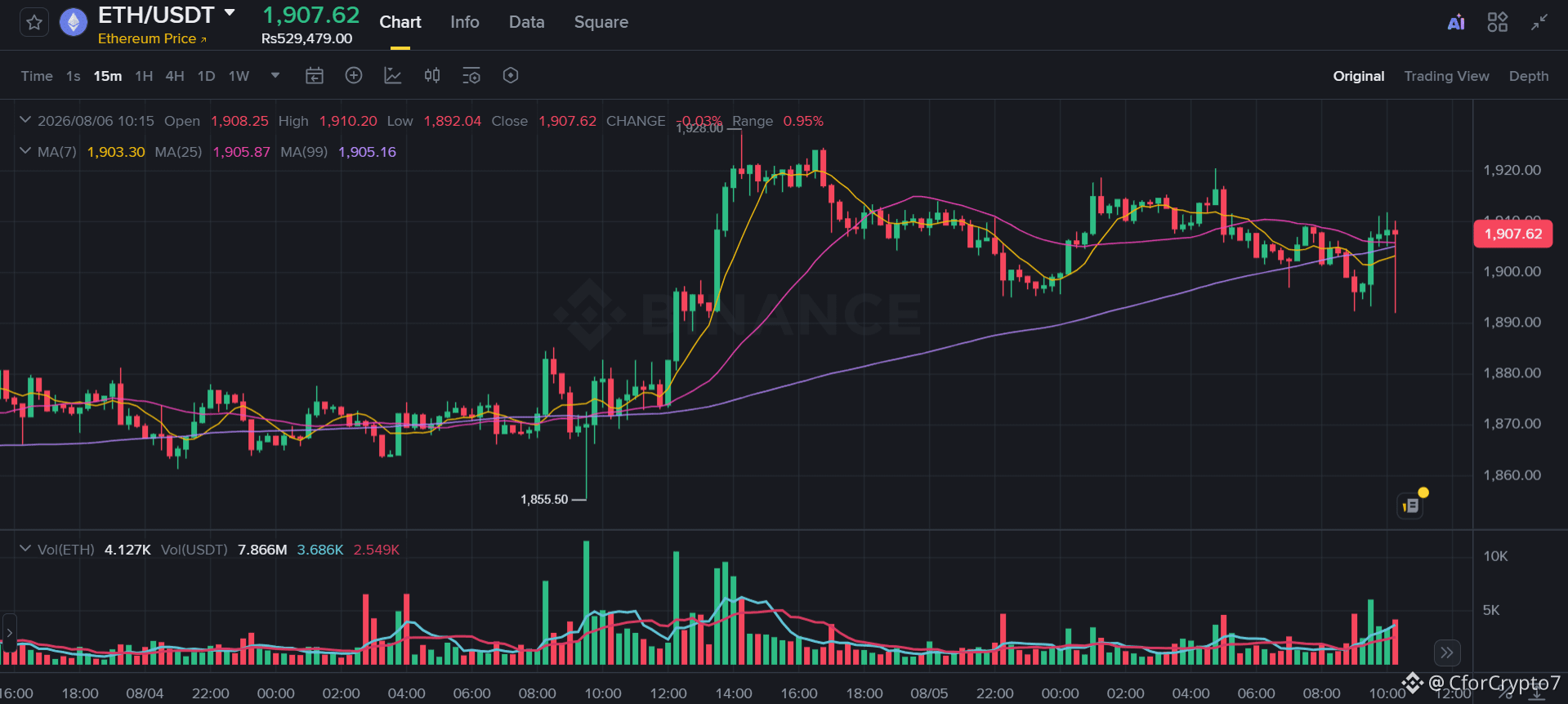
Guys $ETH bounced off 1,892 and reclaimed the short term MAs....
Trading above the 7, 25 AND 99 MA now....
momentum improving.
Still stuck in the bigger range tho.
LONG SCALP
Entry: 1,906 – 1,909
SL: 1,899
TP1: 1,915 TP2: 1,920 TP3: 1,928
click here to trade
$eth
what do u think, breaks the range or fades back?
manage ur risk. $ETH DYOR NFA
#ETH #Ethereum #Ethcryptohub
1
225
·
--
vote and claim everyone #Ethcryptohub
vote and claim everyone #Ethcryptohub
Quoted content has been removed
1
526

·
--
#Ethcryptohub
Community Influencer Category
@Pushpendra_Singh_Digital
Vote : [✨✨ Vote here✨✨](https://app.binance.com/uni-qr/cpro/Pushpendra_Singh_Digital?l=en&r=LWDBW35X&uc=app_square_share_link&us=copylink)
Share comments below 👇
#Ethcryptohub
Community Influencer Category
@Pushpendra Singh Digital
Vote : ✨✨ Vote here✨✨
Share comments below 👇
Community Influencer Category
@Pushpendra Singh Digital
Vote : ✨✨ Vote here✨✨
Share comments below 👇

4
4
796

·
--
Support #Ethcryptohub to select Rising Star and pray for my brother 💞💞
Support #Ethcryptohub to select Rising Star and pray for my brother 💞💞
ETHcryptohub
·
--
Content Creator of the Year - Rising Star Category (ETHcryptohub )
589
·
--
#Ethcryptohub Next Rising Star keep suport and take love 💞
#Ethcryptohub Next Rising Star keep suport and take love 💞
ETHcryptohub
·
--
Content Creator of the Year - Rising Star Category (ETHcryptohub )
277
·
--
Expecting your support submit the nomination as a Rising Star Be loving cheerful and energetic also always helpful person the one and only #Ethcryptohub Pray and support guyz 💞💞💞💞
@CoinKing007
@Aslam72karbalayi
@Square-Creator-8e8cf5ad7e664
@Maya2001
@Shroud70lx
@BullRun_Signals
@jenni_aura
@RahulBhati
Expecting your support submit the nomination as a Rising Star Be loving cheerful and energetic also always helpful person the one and only #Ethcryptohub Pray and support guyz 💞💞💞💞
@Coin--King
@AloNe72
@Badshah_YG
@MAYA_
@T H I N G
@BullRun_Signals
@Jia Crypto
@ProTrendBoss
@Coin--King
@AloNe72
@Badshah_YG
@MAYA_
@T H I N G
@BullRun_Signals
@Jia Crypto
@ProTrendBoss

1.2k
28
120
1.2k
·
--
We are Supporting #Ethcryptohub
We are Supporting #Ethcryptohub

Coin--King
·
--
My pick for Rising Star of the Year is @ETH CryptoHub 🏆
He’s a crypto trader and live streamer who deserves more recognition. If you’re part of our community and want to support him, please nominate ETH CryptoHub. ❤️
$BAT $TRUTH $BTC
#CPIWatch #BTCDominanceBackAt60% #RBNZPausesDigitalCashDevelopment #EvernorthNasdaqDebutClosesDown1.05%
@Dream Spicer 梦想家 @Mr_Badshah77 @x mee @ETHcryptohub

143
·
--

KAN_ 加密 143
·
--
Happiness is a gentle ray of sunshine warming the heart. It blooms in simple moments, like a quiet breath or a kind smile. Unseen yet deeply felt, it makes every small day feel full. When we are grateful for now, true joy stays with us.
Follow 💞
Repost 💞
Like 💞
Follow 💞
Repost 💞
Like 💞


1
186
·
--
Please support #Ethcryptohub and submit your nomination form for #ETHcruptohub
We are katora team $BTC
Please support #Ethcryptohub and submit your nomination form for #ETHcruptohub
We are katora team $BTC
We are katora team $BTC

999
8
45
999

·
--
Por favor, apoya a #Ethcryptohub y presenta tu formulario de nominación para #Write2Earn #BinanceSquare #BinanceIntelligenceMakesFinanceSmarter #OptimismOPRises19.98%
Somos el equipo Katora $BTC
{spot}(BTCUSDT)
Por favor, apoya a #Ethcryptohub y presenta tu formulario de nominación para #Write2Earn #BinanceSquare #BinanceIntelligenceMakesFinanceSmarter #OptimismOPRises19.98%
Somos el equipo Katora $BTC
Somos el equipo Katora $BTC
S A A D -
·
--
Please support #Ethcryptohub and submit your nomination form for #ETHcruptohub
We are katora team $BTC
We are katora team $BTC
104
·
--
Come and support #Ethcryptohub
Come and support #Ethcryptohub

AloNe72
·
--
[Replay] 🎙️ what's up friends
02 h 46 m 33 s · 394 listens
168
·
--
$ZAMA I think this can make me profitable if yes comment below 👇 and if no hit like button ✅😔#trading #Ethcryptohub
$ZAMA I think this can make me profitable if yes comment below 👇 and if no hit like button ✅😔#trading #Ethcryptohub
4
3
685
·
--
$GTC I unfortunately picked up Top Gainers Coin and it's going against my Trade 😭 what's your point of view Suggest 😞#trading #Ethcryptohub
$GTC I unfortunately picked up Top Gainers Coin and it's going against my Trade 😭 what's your point of view Suggest 😞#trading #Ethcryptohub
1
361
·
--
$DEXE will it give me profit or only loss, suggest me your point of view 😞 will it reach $40 😂#trading #Ethcryptohub
$DEXE will it give me profit or only loss, suggest me your point of view 😞 will it reach $40 😂#trading #Ethcryptohub
2
753
·
--
$MARSCOIN Still I am confused 🤔 what is happening in Mars, Suggest me still I should hold the position or exit 😭#trading #Ethcryptohub
$MARSCOIN Still I am confused 🤔 what is happening in Mars, Suggest me still I should hold the position or exit 😭#trading #Ethcryptohub
1
757
·
--
Article
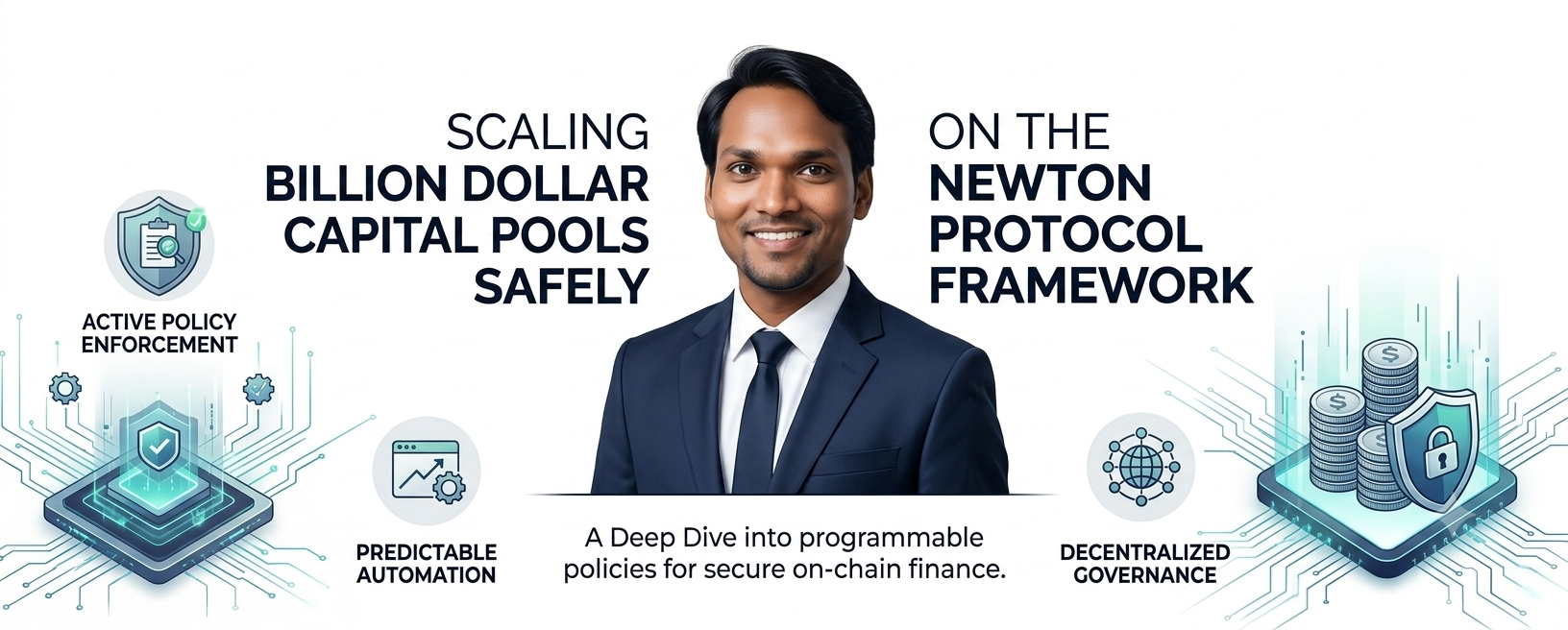
Scaling Billion Dollar Capital Pools Safely on the Newton Protocol FrameworkToday I have explored something useful information from White paper. Do you know I was literally shocked by seeing. Let's explore every information.
Money moves quickly in crypto. Trust does not.
That is something I keep noticing back to, whenever I think about what the next stage of blockchain adoption will look like. We already have fast blockchains, liquid markets, and too much increasingly sophisticated financial products. Yet when the conversation turns to managing billions of dollars onchain, the mood changes. Speed is no longer the priority. Safety becomes the first question everyone asks.
I think that is exactly where Newton Protocol starts to stand out.
Managing a few thousand dollars and managing a billion-dollar treasury are completely different challenges. A retail user might recover from a mistaken transaction or a poor investment decision. Large organizations rarely have that luxury. A single unauthorized transfer, or a compromised wallet, also an automated system behaving unexpectedly can also put enormous amounts of capital at risk within minutes.
That reality explains me, why many institutions still hesitate to move significant assets fully onchain. The technology itself has been matured but operational risk remains difficult to be ignored.
One thing I have noticed is that the blockchain discussions often focus on the decentralization and scalability while giving less attention to execution control. Everyone wants faster settlement and lower fees, but those improvements mean very little if there is no reliable way to ensure transactions follow predefined rules before they are executed.
The bigger the capital pool, the more important those rules become.
Imagine an investment fund that manages billions across multiple DeFi strategies. Different teams may oversee different allocations. Risk limits may change depending on market conditions. Some assets may only be moved during certain time windows. Other transactions might require multiple approvals before execution.
Trying to coordinate all of that manually creates friction. Leaving everything fully automated introduces another kind of risk.
That is the balance Newton Protocol is trying to solve.
Instead of treating every valid transaction as something that should automatically execute, Newton introduces programmable policy checks before settlement. In simple terms, every action can be evaluated against predefined conditions before assets actually move.
I find that approach much more practical than assuming every transaction signed by an authorized wallet is automatically safe.
A wallet can be compromised.
An AI agent can make an unexpected decision.
A trading algorithm can behave differently during the period of extreme volatility.
Even experienced operators can make costly mistakes.
None of those situations necessarily involve flaws in the blockchain itself. They are operational problems, and operational problems become more expensive as the amount of capital increases.
This is why active policy enforcement feels increasingly relevant.
Rather than relying entirely on people to monitor every transaction, policies become part of the infrastructure itself. Spending limits, approval requirements, asset restrictions, counterparty verification, and many other conditions can all become part of the decision-making process before execution happens.
That changes the way I think about blockchain security.
Traditionally, security has often meant protecting private keys or auditing smart contracts. Those remain essential, but they do not address every source of risk. Many losses happen because authorized systems perform actions that technically follow the rules of the blockchain while violating the intentions of the organization behind them.
That distinction matters.
The blockchain may consider a transaction perfectly valid.
The organization may consider it completely unacceptable.
Newton attempts to close that gap by allowing intent to become enforceable through programmable policies.
As I have followed the evolution of crypto infrastructure, one trend has become increasingly clear. Automation has been expanding much faster than governance. As AI agents are beginning to execute trades, rebalance portfolios, manage liquidity, and coordinate increasingly complex workflows. Those capabilities are very much exciting, but they also introduce new questions about accountability and control.
Automation without boundaries scales risk just as efficiently as it scales opportunity.
That is why I think policy layers will become more valuable over time.
Large capital pools do not simply need automation. They need predictable automation.
There is an important difference between those two ideas.
Predictable automation means stakeholders understand exactly what conditions must be satisfied before funds can move. It creates confidence that automated systems will remain within clearly defined limits even when markets become volatile or unexpected situations arise.
That confidence is difficult to build through manual oversight alone.
Infrastructure has to participate.
Another aspect I appreciate about Newton's framework is that it aims to achieve stronger security without depending on a single centralized decision maker. Crypto has always struggled to balance protection with decentralization. Lean too far toward control and the system begins to resemble traditional finance. Remove every layer of oversight and operational risk increases dramatically.
Finding a middle ground has never been easy.
Newton appears to approach that challenge by allowing policies themselves to become decentralized, and creating safeguards that can operate without introducing unnecessary central points of failure.
Whether this model becomes an industry standard remains to be seen. Crypto has an history of experimenting with a new infrastructure before the market eventually that decides what works best. Still, I also thinking that the direction is worth paying attention to because it reflects a broader shift in priorities.
For years the industry focused on making blockchains faster.
Now the conversation is slowly expanding toward making them safer for increasingly complex financial activity.
Those are not competing goals.
In fact, I would argue they depend on one another.
The next wave of institutional participation is unlikely to be driven by speed alone. Large organizations already know blockchain technology can settle transactions efficiently. What they continue to evaluate is whether they can trust automated systems to protect massive pools of capital under real market conditions.
That is a much harder question to answer.
Projects like Newton Protocol are interesting because they are trying to answer it at the infrastructure level rather than leaving every organization to build its own security framework from scratch.
Personally, I think that is one of the more important conversations happening in blockchain today. As digital assets continue growing, the industry will eventually need systems capable of protecting not just millions of dollars, but billions. The protocols that make that possible may end up shaping the future of onchain finance far more than the ones that simply make transactions a little faster.
For me, that is the bigger story behind Newton Protocol. It is not just about processing transactions. It is about creating an environment where large amounts of capital can move with greater confidence, clearer rules, and stronger safeguards. If blockchain is going to support the world's largest financial participants, that foundation will matter just as much as scalability itself.
@NewtonProtocol #Newt $NEWT #Ethcryptohub
Scaling Billion Dollar Capital Pools Safely on the Newton Protocol Framework
Today I have explored something useful information from White paper. Do you know I was literally shocked by seeing. Let's explore every information.
Money moves quickly in crypto. Trust does not.
That is something I keep noticing back to, whenever I think about what the next stage of blockchain adoption will look like. We already have fast blockchains, liquid markets, and too much increasingly sophisticated financial products. Yet when the conversation turns to managing billions of dollars onchain, the mood changes. Speed is no longer the priority. Safety becomes the first question everyone asks.
I think that is exactly where Newton Protocol starts to stand out.
Managing a few thousand dollars and managing a billion-dollar treasury are completely different challenges. A retail user might recover from a mistaken transaction or a poor investment decision. Large organizations rarely have that luxury. A single unauthorized transfer, or a compromised wallet, also an automated system behaving unexpectedly can also put enormous amounts of capital at risk within minutes.
That reality explains me, why many institutions still hesitate to move significant assets fully onchain. The technology itself has been matured but operational risk remains difficult to be ignored.
One thing I have noticed is that the blockchain discussions often focus on the decentralization and scalability while giving less attention to execution control. Everyone wants faster settlement and lower fees, but those improvements mean very little if there is no reliable way to ensure transactions follow predefined rules before they are executed.
The bigger the capital pool, the more important those rules become.
Imagine an investment fund that manages billions across multiple DeFi strategies. Different teams may oversee different allocations. Risk limits may change depending on market conditions. Some assets may only be moved during certain time windows. Other transactions might require multiple approvals before execution.
Trying to coordinate all of that manually creates friction. Leaving everything fully automated introduces another kind of risk.
That is the balance Newton Protocol is trying to solve.
Instead of treating every valid transaction as something that should automatically execute, Newton introduces programmable policy checks before settlement. In simple terms, every action can be evaluated against predefined conditions before assets actually move.
I find that approach much more practical than assuming every transaction signed by an authorized wallet is automatically safe.
A wallet can be compromised.
An AI agent can make an unexpected decision.
A trading algorithm can behave differently during the period of extreme volatility.
Even experienced operators can make costly mistakes.
None of those situations necessarily involve flaws in the blockchain itself. They are operational problems, and operational problems become more expensive as the amount of capital increases.
This is why active policy enforcement feels increasingly relevant.
Rather than relying entirely on people to monitor every transaction, policies become part of the infrastructure itself. Spending limits, approval requirements, asset restrictions, counterparty verification, and many other conditions can all become part of the decision-making process before execution happens.
That changes the way I think about blockchain security.
Traditionally, security has often meant protecting private keys or auditing smart contracts. Those remain essential, but they do not address every source of risk. Many losses happen because authorized systems perform actions that technically follow the rules of the blockchain while violating the intentions of the organization behind them.
That distinction matters.
The blockchain may consider a transaction perfectly valid.
The organization may consider it completely unacceptable.
Newton attempts to close that gap by allowing intent to become enforceable through programmable policies.
As I have followed the evolution of crypto infrastructure, one trend has become increasingly clear. Automation has been expanding much faster than governance. As AI agents are beginning to execute trades, rebalance portfolios, manage liquidity, and coordinate increasingly complex workflows. Those capabilities are very much exciting, but they also introduce new questions about accountability and control.
Automation without boundaries scales risk just as efficiently as it scales opportunity.
That is why I think policy layers will become more valuable over time.
Large capital pools do not simply need automation. They need predictable automation.
There is an important difference between those two ideas.
Predictable automation means stakeholders understand exactly what conditions must be satisfied before funds can move. It creates confidence that automated systems will remain within clearly defined limits even when markets become volatile or unexpected situations arise.
That confidence is difficult to build through manual oversight alone.
Infrastructure has to participate.
Another aspect I appreciate about Newton's framework is that it aims to achieve stronger security without depending on a single centralized decision maker. Crypto has always struggled to balance protection with decentralization. Lean too far toward control and the system begins to resemble traditional finance. Remove every layer of oversight and operational risk increases dramatically.
Finding a middle ground has never been easy.
Newton appears to approach that challenge by allowing policies themselves to become decentralized, and creating safeguards that can operate without introducing unnecessary central points of failure.
Whether this model becomes an industry standard remains to be seen. Crypto has an history of experimenting with a new infrastructure before the market eventually that decides what works best. Still, I also thinking that the direction is worth paying attention to because it reflects a broader shift in priorities.
For years the industry focused on making blockchains faster.
Now the conversation is slowly expanding toward making them safer for increasingly complex financial activity.
Those are not competing goals.
In fact, I would argue they depend on one another.
The next wave of institutional participation is unlikely to be driven by speed alone. Large organizations already know blockchain technology can settle transactions efficiently. What they continue to evaluate is whether they can trust automated systems to protect massive pools of capital under real market conditions.
That is a much harder question to answer.
Projects like Newton Protocol are interesting because they are trying to answer it at the infrastructure level rather than leaving every organization to build its own security framework from scratch.
Personally, I think that is one of the more important conversations happening in blockchain today. As digital assets continue growing, the industry will eventually need systems capable of protecting not just millions of dollars, but billions. The protocols that make that possible may end up shaping the future of onchain finance far more than the ones that simply make transactions a little faster.
For me, that is the bigger story behind Newton Protocol. It is not just about processing transactions. It is about creating an environment where large amounts of capital can move with greater confidence, clearer rules, and stronger safeguards. If blockchain is going to support the world's largest financial participants, that foundation will matter just as much as scalability itself.
@NewtonProtocol #Newt $NEWT #Ethcryptohub
58
1
47
925
·
--
@Bedrock
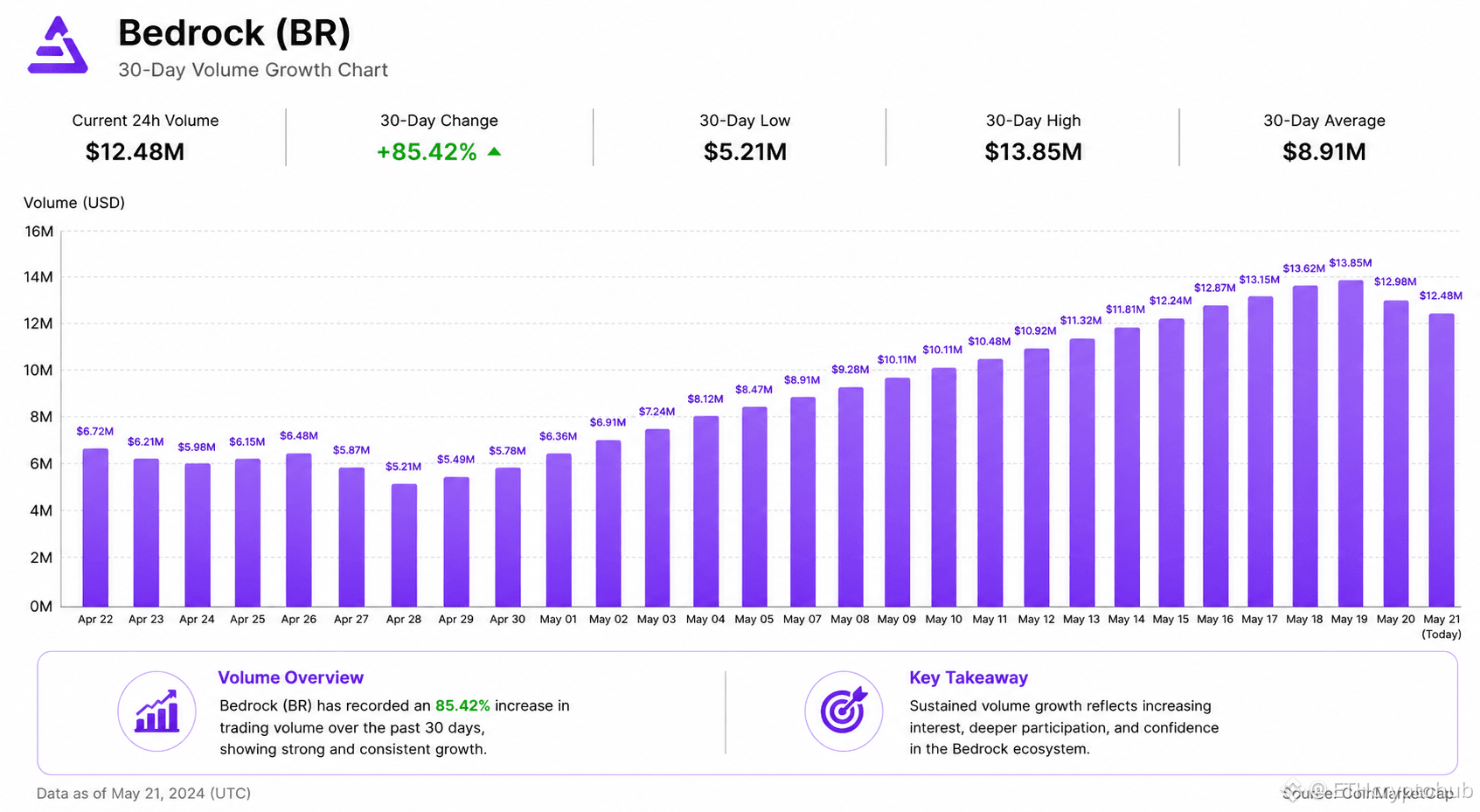
The more time I spend watching Bedrock, the more I feel that veBR is doing a lot of work behind the scenes that many people barely notice. Most discussions focus on rewards, yields, or token movements, but veBR seems to play a different role. It quietly influences how people behave inside the ecosystem.
What I find interesting is that veBR gives users a reason to think beyond the next reward cycle. Instead of treating Bedrock like a place to collect incentives and move on, participants have a reason to stay involved and pay attention to how the ecosystem develops. In a way, it reminds me of owning a small stake in a local business. Once you have some skin in the game, you naturally care more about where things are heading.
That doesn't mean the model is perfect. Long-term commitment only works when users continue seeing value in participating. If activity slows down or influence becomes concentrated among a small group, engagement can fade over time.
Still, when I look at Bedrock as a whole, veBR feels like one of those quiet pieces that helps connect incentives, participation, and long-term alignment. It may not get the most attention, but it often seems to shape the behavior that keeps the ecosystem moving.
Do you see veBR as a real source of long-term alignment in Bedrock, or just another incentive layer that works while rewards remain attractive?
#bedrock $BR
#Ethcryptohub #Bedrock
156
1
89
3.9k
·
--
Article
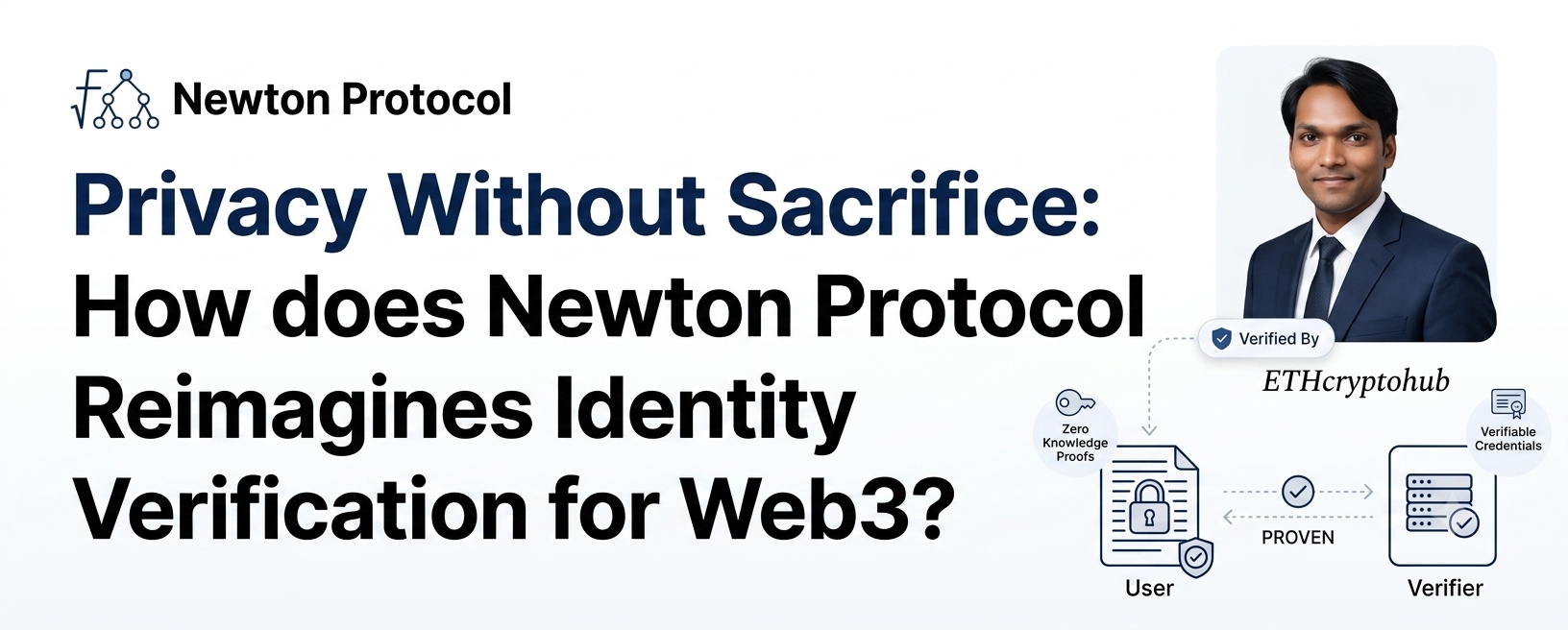
Privacy Without Sacrifice: How does Newton Protocol Reimagines Identity Verification for Web3?One of the biggest contradictions in Web3 is that we talk endlessly about the privacy, while asking users to reveal more information than they often need.
It only happens more than most people realize.
You connect your wallet to an application. You verify your identity through a third party. You submit documents for compliance. Over time, pieces of your digital identity end up scattered across different platforms. Each service stores a little more information than the last, and eventually your "private" Web3 identity starts looking surprisingly public.
I have always thought this was one of the industry's biggest design flaws.
Blockchain was supposed to give people greater ownership over their digital lives. Instead, many applications recreated the same data collection model that already exists on the traditional internet.
That is why projects exploring privacy-first identity infrastructure have started attracting much more attention, and Newton Protocol is one of the more interesting examples.
Rather than forcing users to continuously expose personal information, Newton is built around the idea that people should only prove what is necessary and nothing more.
That sounds simple.
In practice, it changes the entire experience of identity verification.
Most identity systems today work on an all or nothing basis. If an applications needs to confirm a single fact about you, it often receives far more information than it is required. A platform may only need to know is, that you are eligible to use a service, yet you end up sharing documents containing your full name, date of birth, address, and other sensitive details.
That approach creates unnecessary risk.
The more personal information that gets copied across different services, the larger the attack surface becomes. Every additional database becomes another potential target for hackers. Every additional verification process increases the chance of data leaks.
The problem is not identity verification itself.
The problem is how much information gets exchanged during the process.
This is where Newton Protocol takes a noticeably different approach.
Instead of focusing on identity disclosure, it focuses on identity proofs.
That distinction matters.
Using an cryptographic techniques and zero knowledge proofs, users can demonstrate that they satisfy certain conditions without revealing the underlying information itself.
To me, this is one of the most practical uses of zero knowledge technology.
People often describes zero knowledge proofs as a complicated mathematical breakthrough, and technically they are. But their real value becomes obvious when you stop thinking about the mathematics and start thinking about everyday situations.
Imagine joining a decentralized financial platform.
The protocol may need confirmation that you have completed identity verification.
It does not necessarily need your passport.
A DAO treasury may want proof that a signer belongs to an approved governance group.
It does not need access to every personal detail connected to that individual.
A regulated application may simply need confirmation that a user satisfies compliance requirements.
It does not always require full disclosure of every identity document.
That is exactly where verifiable credentials become powerful.
Instead of repeatedly proving your identity from scratch, trusted credentials can confirm specific facts about you. Those credentials can then be combined with zero knowledge proofs, allowing users to verify eligibility while keeping unrelated personal information private.
I think this represents a much healthier model for Web3.
The internet has spent decades building systems that collect as much user data as possible.
Blockchain has an opportunity to move in the opposite direction.
Share less.
Prove more.
Trust mathematics instead of massive databases.
Another reason I find Newton's approach compelling is because privacy and compliance are often presented as opposing goals.
I do not believe they have to be.
Most organizations are not actually interested in collecting personal information for its own sake. They simply need confidence that users satisfy certain rules before accessing services or moving assets.
Those are two very different objectives.
If cryptographic proofs can provide that confidence without exposing unnecessary data, everyone benefits.
Users retain greater control over their identities.
Organizations reduce the amount of sensitive information they are responsible for protecting.
Developers build applications that are easier to trust.
That feels like a better balance than the systems many platforms rely on today.
As I have watched Web3 evolve, I have noticed another important trend.
Identity is becoming infrastructure.
In the early days of crypto, wallets mainly stored assets.
Now they increasingly represent reputations, governance participation, professional credentials, financial history, and access permissions across multiple ecosystems.
That makes protecting identity just as important as protecting tokens.
The rise of AI makes this conversation even more relevant.
Autonomous agents will be increasingly interact with decentralized applications on behalf of users. Those agents will often need permission to perform certain actions.
They should not need unrestricted access to complete identity records just to prove they are authorized.
Verifiable credentials combined with privacy preserving cryptography offer a much cleaner solution.
The agent proves it has permission.
Nothing more.
Personally, I think this is where blockchain identity should have been heading from the beginning.
Transparency should apply to protocols, governance and execution.
It should not require individuals to expose more personal information than necessary every time they interact with a decentralized application.
Newton Protocol appears to recognize that difference.
Rather than asking the users to trade privacy for participation, it explores that how privacy itself can become part of the infrastructure through cryptographic proofs, verifiable credentials, and zero knowledge technology.
That approach feels much closer to the original spirit of Web3.
As decentralized applications continue expanding into finance, gaming, social platforms, and enterprise services, identity verification will only become more important. The challenge will not simply be verifying users.
It will be doing so without recreating the surveillance model that much of the internet already relies on.
For me, that is the bigger story behind Newton Protocol.
It is not just building another identity solution.
It is asking a more fundamental question.
What if trust no longer required exposure?
If Web3 is serious about giving the users ownership over their digital lives, that question deserves far more attention, than it has received so far.
@NewtonProtocol #Newt $NEWT $T $BILL #Ethcryptohub
Privacy Without Sacrifice: How does Newton Protocol Reimagines Identity Verification for Web3?
One of the biggest contradictions in Web3 is that we talk endlessly about the privacy, while asking users to reveal more information than they often need.
It only happens more than most people realize.
You connect your wallet to an application. You verify your identity through a third party. You submit documents for compliance. Over time, pieces of your digital identity end up scattered across different platforms. Each service stores a little more information than the last, and eventually your "private" Web3 identity starts looking surprisingly public.
I have always thought this was one of the industry's biggest design flaws.
Blockchain was supposed to give people greater ownership over their digital lives. Instead, many applications recreated the same data collection model that already exists on the traditional internet.
That is why projects exploring privacy-first identity infrastructure have started attracting much more attention, and Newton Protocol is one of the more interesting examples.
Rather than forcing users to continuously expose personal information, Newton is built around the idea that people should only prove what is necessary and nothing more.
That sounds simple.
In practice, it changes the entire experience of identity verification.
Most identity systems today work on an all or nothing basis. If an applications needs to confirm a single fact about you, it often receives far more information than it is required. A platform may only need to know is, that you are eligible to use a service, yet you end up sharing documents containing your full name, date of birth, address, and other sensitive details.
That approach creates unnecessary risk.
The more personal information that gets copied across different services, the larger the attack surface becomes. Every additional database becomes another potential target for hackers. Every additional verification process increases the chance of data leaks.
The problem is not identity verification itself.
The problem is how much information gets exchanged during the process.
This is where Newton Protocol takes a noticeably different approach.
Instead of focusing on identity disclosure, it focuses on identity proofs.
That distinction matters.
Using an cryptographic techniques and zero knowledge proofs, users can demonstrate that they satisfy certain conditions without revealing the underlying information itself.
To me, this is one of the most practical uses of zero knowledge technology.
People often describes zero knowledge proofs as a complicated mathematical breakthrough, and technically they are. But their real value becomes obvious when you stop thinking about the mathematics and start thinking about everyday situations.
Imagine joining a decentralized financial platform.
The protocol may need confirmation that you have completed identity verification.
It does not necessarily need your passport.
A DAO treasury may want proof that a signer belongs to an approved governance group.
It does not need access to every personal detail connected to that individual.
A regulated application may simply need confirmation that a user satisfies compliance requirements.
It does not always require full disclosure of every identity document.
That is exactly where verifiable credentials become powerful.
Instead of repeatedly proving your identity from scratch, trusted credentials can confirm specific facts about you. Those credentials can then be combined with zero knowledge proofs, allowing users to verify eligibility while keeping unrelated personal information private.
I think this represents a much healthier model for Web3.
The internet has spent decades building systems that collect as much user data as possible.
Blockchain has an opportunity to move in the opposite direction.
Share less.
Prove more.
Trust mathematics instead of massive databases.
Another reason I find Newton's approach compelling is because privacy and compliance are often presented as opposing goals.
I do not believe they have to be.
Most organizations are not actually interested in collecting personal information for its own sake. They simply need confidence that users satisfy certain rules before accessing services or moving assets.
Those are two very different objectives.
If cryptographic proofs can provide that confidence without exposing unnecessary data, everyone benefits.
Users retain greater control over their identities.
Organizations reduce the amount of sensitive information they are responsible for protecting.
Developers build applications that are easier to trust.
That feels like a better balance than the systems many platforms rely on today.
As I have watched Web3 evolve, I have noticed another important trend.
Identity is becoming infrastructure.
In the early days of crypto, wallets mainly stored assets.
Now they increasingly represent reputations, governance participation, professional credentials, financial history, and access permissions across multiple ecosystems.
That makes protecting identity just as important as protecting tokens.
The rise of AI makes this conversation even more relevant.
Autonomous agents will be increasingly interact with decentralized applications on behalf of users. Those agents will often need permission to perform certain actions.
They should not need unrestricted access to complete identity records just to prove they are authorized.
Verifiable credentials combined with privacy preserving cryptography offer a much cleaner solution.
The agent proves it has permission.
Nothing more.
Personally, I think this is where blockchain identity should have been heading from the beginning.
Transparency should apply to protocols, governance and execution.
It should not require individuals to expose more personal information than necessary every time they interact with a decentralized application.
Newton Protocol appears to recognize that difference.
Rather than asking the users to trade privacy for participation, it explores that how privacy itself can become part of the infrastructure through cryptographic proofs, verifiable credentials, and zero knowledge technology.
That approach feels much closer to the original spirit of Web3.
As decentralized applications continue expanding into finance, gaming, social platforms, and enterprise services, identity verification will only become more important. The challenge will not simply be verifying users.
It will be doing so without recreating the surveillance model that much of the internet already relies on.
For me, that is the bigger story behind Newton Protocol.
It is not just building another identity solution.
It is asking a more fundamental question.
What if trust no longer required exposure?
If Web3 is serious about giving the users ownership over their digital lives, that question deserves far more attention, than it has received so far.
@NewtonProtocol #Newt $NEWT $T $BILL #Ethcryptohub
66
34
915
Log in to explore more content
Join global crypto users on Binance Square
⚡️ Get latest and useful information about crypto.
💬 Trusted by the world’s largest crypto exchange.
👍 Discover real insights from verified creators.
Email / Phone number
Trending Topics
1
#OpenAICutsFundraisingTargetBy$10B
3 views
21 Discussing
2
#ASICHasReceivedNoPredictionMarketApplications
830 views
64 Discussing
3
#RecallAnnouncesLiquidationPlansToBurn35.86%OfSupply
123 views
3 Discussing
4
#TetherReports$191.5BInQ3Reserves
58 views
4 Discussing
5
#UniswapA16zSeekDeFiExemptionFromIllinoisCryptoTax
49,803 views
1,033 Discussing
6
#HKDollarStablecoinHKDAPToLaunchOnSolana
35,829 views
665 Discussing
7
#$1.5BInLeveragedCryptoBetsLiquidated
69,579 views
283 Discussing
8
#TrezorSaysCryptoBilisSoldWalletMayContainMaliciousComponents
5,963 views
94 Discussing
9
#KOSPIFalls3.53%BackBelow6000
83,368 views
1,254 Discussing
10
#AmazonSharesFallAbout7%InPremarketTrading
43,460 views
707 Discussing