
#election
election
198,479 views
185 Discussing
Hot
Latest

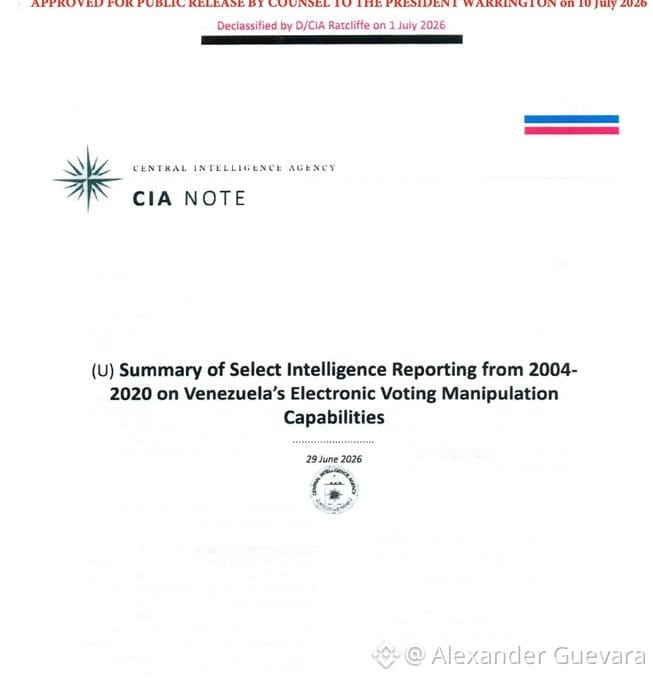
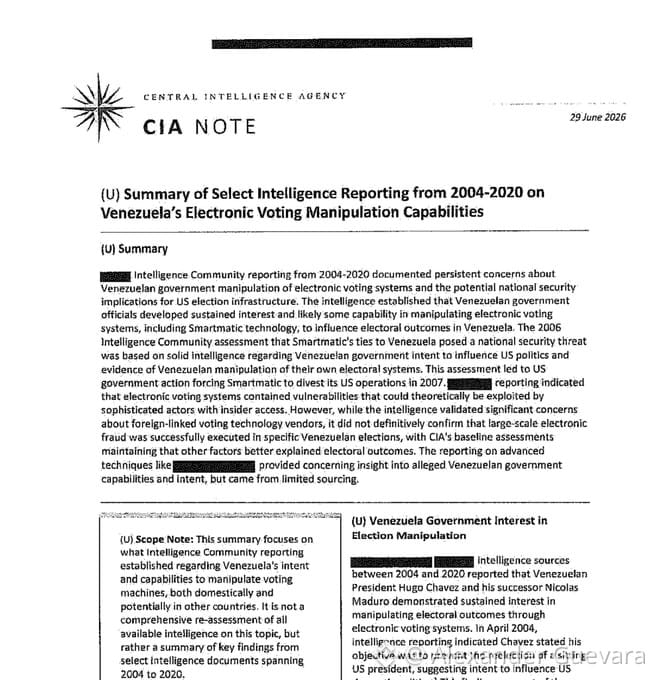
▶️🇻🇪🗳Trump acaba de revelar que la CIA llevaba años documentando la capacidad del régimen chavista para manipular elecciones mediante sistemas electrónicos.
El informe desclasificado recoge planes atribuidos al aparato de Chávez y Maduro para alterar resultados, sustituir datos reales por cifras manipuladas y hacerlo sin dejar rastros detectables en una auditoría convencional. También señala la implicación directa de organismos de inteligencia venezolanos y sus vínculos con la tecnología electoral.
La conclusión política es demoledora: el régimen del que hoy forma parte Delcy Rodríguez no solo persiguió a la oposición y controló las instituciones, sino que desarrolló herramientas para condicionar el voto y perpetuarse en el poder
En algunos comicios, el chavismo pudo imponerse mediante el control institucional, el boicot opositor y la cooptación, sin necesidad de alterar masivamente los votos.
noticia ridícula pero para la oposición y chavista puede pelear con este post de ridicule de ello ..
noticia estúpida
#election #EEUU #TRUMP #CIA #ciberseguridad $BTC
▶️🇻🇪🗳Trump acaba de revelar que la CIA llevaba años documentando la capacidad del régimen chavista para manipular elecciones mediante sistemas electrónicos.
El informe desclasificado recoge planes atribuidos al aparato de Chávez y Maduro para alterar resultados, sustituir datos reales por cifras manipuladas y hacerlo sin dejar rastros detectables en una auditoría convencional. También señala la implicación directa de organismos de inteligencia venezolanos y sus vínculos con la tecnología electoral.
La conclusión política es demoledora: el régimen del que hoy forma parte Delcy Rodríguez no solo persiguió a la oposición y controló las instituciones, sino que desarrolló herramientas para condicionar el voto y perpetuarse en el poder
En algunos comicios, el chavismo pudo imponerse mediante el control institucional, el boicot opositor y la cooptación, sin necesidad de alterar masivamente los votos.
noticia ridícula pero para la oposición y chavista puede pelear con este post de ridicule de ello ..
noticia estúpida
#election #EEUU #TRUMP #CIA #ciberseguridad $BTC
El informe desclasificado recoge planes atribuidos al aparato de Chávez y Maduro para alterar resultados, sustituir datos reales por cifras manipuladas y hacerlo sin dejar rastros detectables en una auditoría convencional. También señala la implicación directa de organismos de inteligencia venezolanos y sus vínculos con la tecnología electoral.
La conclusión política es demoledora: el régimen del que hoy forma parte Delcy Rodríguez no solo persiguió a la oposición y controló las instituciones, sino que desarrolló herramientas para condicionar el voto y perpetuarse en el poder
En algunos comicios, el chavismo pudo imponerse mediante el control institucional, el boicot opositor y la cooptación, sin necesidad de alterar masivamente los votos.
noticia ridícula pero para la oposición y chavista puede pelear con este post de ridicule de ello ..
noticia estúpida
#election #EEUU #TRUMP #CIA #ciberseguridad $BTC
4
1
15
3.4k

·
--
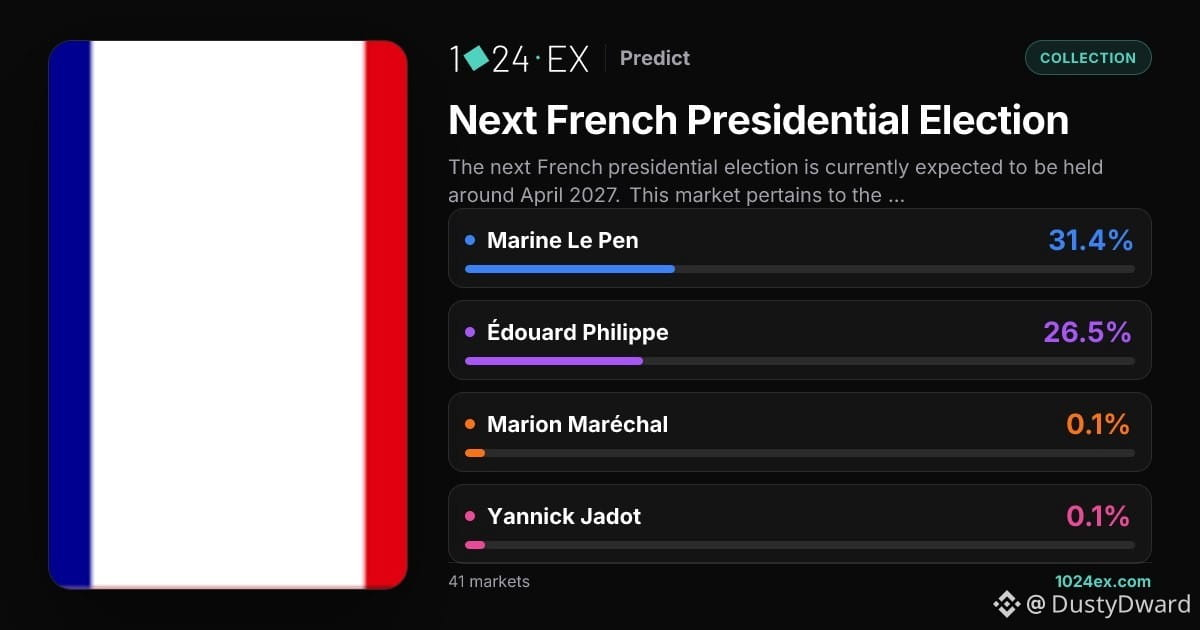
31.6% ODDS.
That’s the current probability of Marine Le Pen taking the French Presidency on 1024EX Predict.
Agree or disagree with the market consensus? Take your position live on-chain
https://www.1024ex.com/prediction/collection/pm-next-french-presidential-election-79987
source tweet: (X)
https://x.com/1024EX/status/2079396377952727144
#1024EX #election #predictons
31.6% ODDS.
That’s the current probability of Marine Le Pen taking the French Presidency on 1024EX Predict.
Agree or disagree with the market consensus? Take your position live on-chain
https://www.1024ex.com/prediction/collection/pm-next-french-presidential-election-79987
source tweet: (X)
https://x.com/1024EX/status/2079396377952727144
#1024EX #election #predictons
That’s the current probability of Marine Le Pen taking the French Presidency on 1024EX Predict.
Agree or disagree with the market consensus? Take your position live on-chain
https://www.1024ex.com/prediction/collection/pm-next-french-presidential-election-79987
source tweet: (X)
https://x.com/1024EX/status/2079396377952727144
#1024EX #election #predictons
1
113

·
--

Article
加密行业为 2026 美国中期选举砸下超 3.2 亿美元,真正买的不是选票很多人把这条新闻理解成“crypto 又在砸钱游说”。
但如果只看到游说,你会低估这件事的含义。
加密行业这几年最大的估值折价,很多时候并不是来自技术、用户或收入模型,而是来自制度不确定性。政策一句话,可能决定 ETF 能不能放量、稳定币能不能进入传统支付、交易所能不能把核心产品放回美国本土、机构能不能放心扩仓。
所以这 3.2 亿美元真正买的,不是某个候选人的站台照,也不只是法案表决时多几张支持票,而是在提前购买“制度波动率对冲权”。
换句话说,crypto 正在把政治影响力,当成和流动性、托管、做市、合规牌照同等级别的基础设施投入。
这背后至少有三层变化。
第一,行业已经接受一个现实:如果不能稳定影响规则,就很难稳定放大商业模式。过去大家习惯把监管看成外部变量,现在头部公司和资本更像是在把它内生化。谁更能参与规则形成,谁就更有机会把产品、资产和流量留在自己的轨道里。
第二,这会加速行业分层。不是所有项目都买得起政策影响力,也不是所有团队都能承受长期合规博弈的成本。最后能持续受益的,往往是交易所、稳定币发行方、托管、支付、清算和大型基础设施平台。市场以后给它们估值时,看的不只是增长速度,还会看谁更能穿越政策周期。
第三,这说明美国市场的战略价值还在上升。如果行业真的认为美国边际重要性下降,就不会在中期选举周期前投入这么大的资源。反过来看,这笔钱本身已经是一种判断:下一轮主流资金、产品创新和制度红利,仍然值得围绕美国去布局。
这也是为什么我觉得,市场不该只把这条新闻解读成“利好监管”或“利空去中心化叙事”。更准确的理解是:crypto 正在从被动适应规则,走向主动塑造规则。
当一个行业开始大规模购买制度确定性,它通常不是在防守,而是在为更大规模的资本进入铺路。
对普通投资者来说,更值得跟踪的不是谁又喊了支持 crypto 的口号,而是谁会因此拿到更稳定的产品通道、分发资格和资金入口。后面真正会被重估的,未必是情绪最热的代币,而是最接近制度红利兑现位置的基础设施公司和资产。
Mlion.ai 更适合做的,不是追着新闻跑,而是把这类事件拆成“叙事、规则、资金路径”三层去看。因为很多大机会,往往不是出在 headline 本身,而是出在 headline 之后谁的进入门槛被抬高、谁的增长约束被放松。
#Crypto #Regulation #Election
加密行业为 2026 美国中期选举砸下超 3.2 亿美元,真正买的不是选票
很多人把这条新闻理解成“crypto 又在砸钱游说”。
但如果只看到游说,你会低估这件事的含义。
加密行业这几年最大的估值折价,很多时候并不是来自技术、用户或收入模型,而是来自制度不确定性。政策一句话,可能决定 ETF 能不能放量、稳定币能不能进入传统支付、交易所能不能把核心产品放回美国本土、机构能不能放心扩仓。
所以这 3.2 亿美元真正买的,不是某个候选人的站台照,也不只是法案表决时多几张支持票,而是在提前购买“制度波动率对冲权”。
换句话说,crypto 正在把政治影响力,当成和流动性、托管、做市、合规牌照同等级别的基础设施投入。
这背后至少有三层变化。
第一,行业已经接受一个现实:如果不能稳定影响规则,就很难稳定放大商业模式。过去大家习惯把监管看成外部变量,现在头部公司和资本更像是在把它内生化。谁更能参与规则形成,谁就更有机会把产品、资产和流量留在自己的轨道里。
第二,这会加速行业分层。不是所有项目都买得起政策影响力,也不是所有团队都能承受长期合规博弈的成本。最后能持续受益的,往往是交易所、稳定币发行方、托管、支付、清算和大型基础设施平台。市场以后给它们估值时,看的不只是增长速度,还会看谁更能穿越政策周期。
第三,这说明美国市场的战略价值还在上升。如果行业真的认为美国边际重要性下降,就不会在中期选举周期前投入这么大的资源。反过来看,这笔钱本身已经是一种判断:下一轮主流资金、产品创新和制度红利,仍然值得围绕美国去布局。
这也是为什么我觉得,市场不该只把这条新闻解读成“利好监管”或“利空去中心化叙事”。更准确的理解是:crypto 正在从被动适应规则,走向主动塑造规则。
当一个行业开始大规模购买制度确定性,它通常不是在防守,而是在为更大规模的资本进入铺路。
对普通投资者来说,更值得跟踪的不是谁又喊了支持 crypto 的口号,而是谁会因此拿到更稳定的产品通道、分发资格和资金入口。后面真正会被重估的,未必是情绪最热的代币,而是最接近制度红利兑现位置的基础设施公司和资产。
Mlion.ai 更适合做的,不是追着新闻跑,而是把这类事件拆成“叙事、规则、资金路径”三层去看。因为很多大机会,往往不是出在 headline 本身,而是出在 headline 之后谁的进入门槛被抬高、谁的增长约束被放松。
#Crypto #Regulation #Election
但如果只看到游说,你会低估这件事的含义。
加密行业这几年最大的估值折价,很多时候并不是来自技术、用户或收入模型,而是来自制度不确定性。政策一句话,可能决定 ETF 能不能放量、稳定币能不能进入传统支付、交易所能不能把核心产品放回美国本土、机构能不能放心扩仓。
所以这 3.2 亿美元真正买的,不是某个候选人的站台照,也不只是法案表决时多几张支持票,而是在提前购买“制度波动率对冲权”。
换句话说,crypto 正在把政治影响力,当成和流动性、托管、做市、合规牌照同等级别的基础设施投入。
这背后至少有三层变化。
第一,行业已经接受一个现实:如果不能稳定影响规则,就很难稳定放大商业模式。过去大家习惯把监管看成外部变量,现在头部公司和资本更像是在把它内生化。谁更能参与规则形成,谁就更有机会把产品、资产和流量留在自己的轨道里。
第二,这会加速行业分层。不是所有项目都买得起政策影响力,也不是所有团队都能承受长期合规博弈的成本。最后能持续受益的,往往是交易所、稳定币发行方、托管、支付、清算和大型基础设施平台。市场以后给它们估值时,看的不只是增长速度,还会看谁更能穿越政策周期。
第三,这说明美国市场的战略价值还在上升。如果行业真的认为美国边际重要性下降,就不会在中期选举周期前投入这么大的资源。反过来看,这笔钱本身已经是一种判断:下一轮主流资金、产品创新和制度红利,仍然值得围绕美国去布局。
这也是为什么我觉得,市场不该只把这条新闻解读成“利好监管”或“利空去中心化叙事”。更准确的理解是:crypto 正在从被动适应规则,走向主动塑造规则。
当一个行业开始大规模购买制度确定性,它通常不是在防守,而是在为更大规模的资本进入铺路。
对普通投资者来说,更值得跟踪的不是谁又喊了支持 crypto 的口号,而是谁会因此拿到更稳定的产品通道、分发资格和资金入口。后面真正会被重估的,未必是情绪最热的代币,而是最接近制度红利兑现位置的基础设施公司和资产。
Mlion.ai 更适合做的,不是追着新闻跑,而是把这类事件拆成“叙事、规则、资金路径”三层去看。因为很多大机会,往往不是出在 headline 本身,而是出在 headline 之后谁的进入门槛被抬高、谁的增长约束被放松。
#Crypto #Regulation #Election
44

🗳️ منظمة تدعم الكريبتو تضخ أموالاً إضافية في سباق انتخابي بولاية أمريكية
تستعد العديد من الولايات الأمريكية لإجراء انتخابات تمهيدية، وتقوم لجنة عمل سياسي (PAC) مرتبطة بصناعة العملات الرقمية بجهود لتعزيز نفوذها في سباقات انتخابية رئيسية من خلال الإنفاق على الإعلام. ويشير التقرير إلى ضخ مليون دولار إضافية في سباق انتخابي في ميشيغان.
━━━━━━━━━━━━━━
📊 التأثير: 📈 مرتفع
🏷️ REGULATION
#CryptoRegulation #USPolitics #Election #Lobbying #DigitalAssets
📰 المصدر: cointelegraph.com
🗳️ منظمة تدعم الكريبتو تضخ أموالاً إضافية في سباق انتخابي بولاية أمريكية
تستعد العديد من الولايات الأمريكية لإجراء انتخابات تمهيدية، وتقوم لجنة عمل سياسي (PAC) مرتبطة بصناعة العملات الرقمية بجهود لتعزيز نفوذها في سباقات انتخابية رئيسية من خلال الإنفاق على الإعلام. ويشير التقرير إلى ضخ مليون دولار إضافية في سباق انتخابي في ميشيغان.
━━━━━━━━━━━━━━
📊 التأثير: 📈 مرتفع
🏷️ REGULATION
#CryptoRegulation #USPolitics #Election #Lobbying #DigitalAssets
📰 المصدر: cointelegraph.com
تستعد العديد من الولايات الأمريكية لإجراء انتخابات تمهيدية، وتقوم لجنة عمل سياسي (PAC) مرتبطة بصناعة العملات الرقمية بجهود لتعزيز نفوذها في سباقات انتخابية رئيسية من خلال الإنفاق على الإعلام. ويشير التقرير إلى ضخ مليون دولار إضافية في سباق انتخابي في ميشيغان.
━━━━━━━━━━━━━━
📊 التأثير: 📈 مرتفع
🏷️ REGULATION
#CryptoRegulation #USPolitics #Election #Lobbying #DigitalAssets
📰 المصدر: cointelegraph.com
1
4
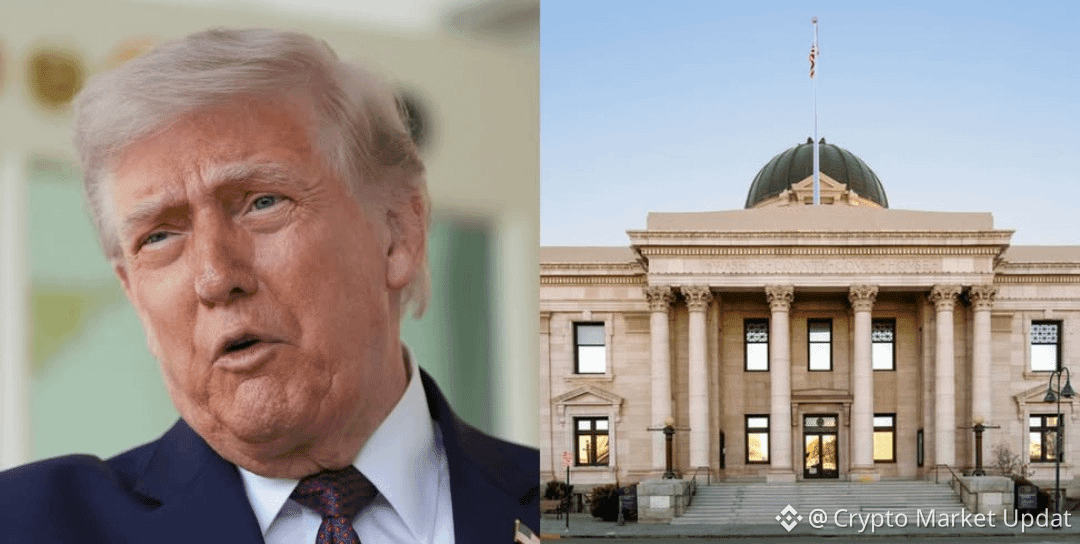
🚨 BREAKING: Nevada Voter-List Fight Heads to Court 🇺🇸
The Trump administration’s push to obtain sensitive statewide voter-registration data is facing serious legal challenges.
📌 Nevada is among the states fighting federal demands for voter information.
⚖️ Courts are now being asked to decide how far federal authority can go when it comes to state election records and voter privacy.
🔥 The battle could have major implications for election administration ahead.
This isn’t just about Nevada — it’s about who controls America’s voter data and how much federal power should be allowed.
What do you think — will the courts side with the states or the federal government? 👇
ACE $ALICE $DOLO
#USA #Trump #Nevada #Election #VoterRights #Politics #BreakingNews
🚨 BREAKING: Nevada Voter-List Fight Heads to Court 🇺🇸
The Trump administration’s push to obtain sensitive statewide voter-registration data is facing serious legal challenges.
📌 Nevada is among the states fighting federal demands for voter information.
⚖️ Courts are now being asked to decide how far federal authority can go when it comes to state election records and voter privacy.
🔥 The battle could have major implications for election administration ahead.
This isn’t just about Nevada — it’s about who controls America’s voter data and how much federal power should be allowed.
What do you think — will the courts side with the states or the federal government? 👇
ACE $ALICE $DOLO
#USA #Trump #Nevada #Election #VoterRights #Politics #BreakingNews
The Trump administration’s push to obtain sensitive statewide voter-registration data is facing serious legal challenges.
📌 Nevada is among the states fighting federal demands for voter information.
⚖️ Courts are now being asked to decide how far federal authority can go when it comes to state election records and voter privacy.
🔥 The battle could have major implications for election administration ahead.
This isn’t just about Nevada — it’s about who controls America’s voter data and how much federal power should be allowed.
What do you think — will the courts side with the states or the federal government? 👇
ACE $ALICE $DOLO
#USA #Trump #Nevada #Election #VoterRights #Politics #BreakingNews
12

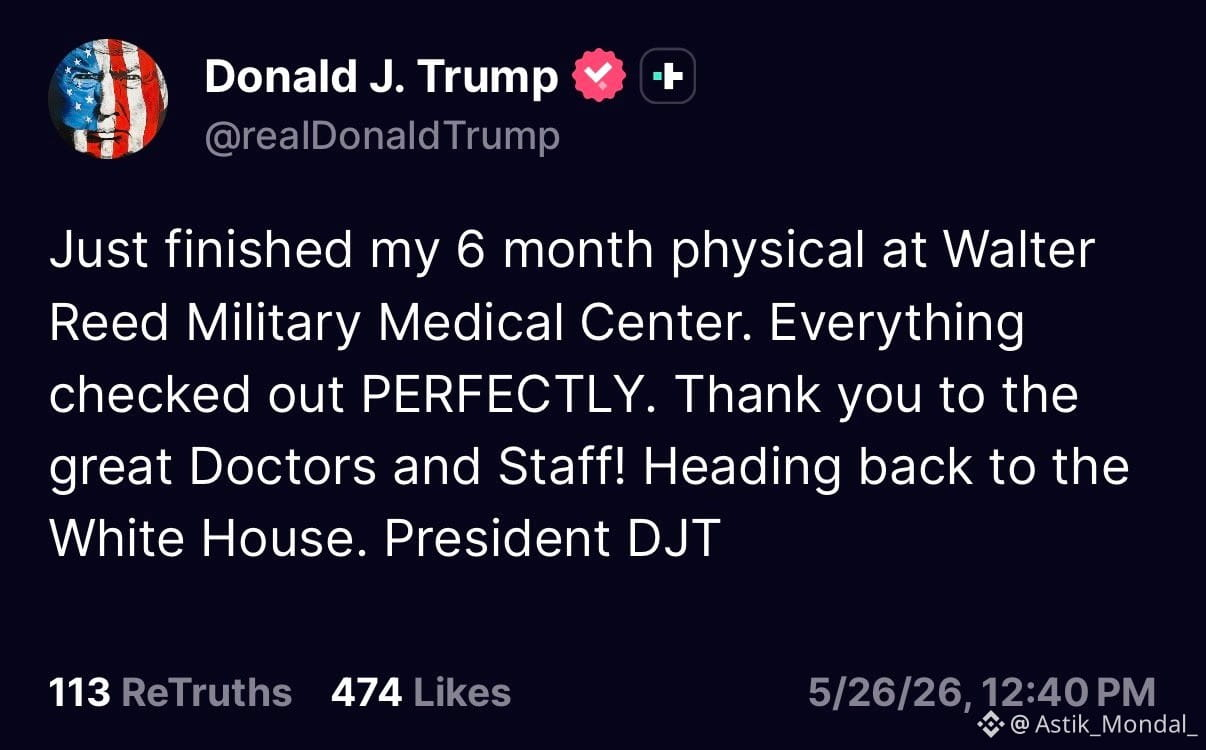
🚨 BREAKING: President Trump says he has completed his latest physical examination and that “everything checked out perfectly.”
The update comes as questions surrounding the health and fitness of political leaders remain a major topic ahead of key policy battles and the next election cycle.
Health disclosures from presidents have always attracted intense scrutiny from both supporters and critics.
Why?
Because the physical condition of the commander-in-chief can influence everything from market confidence and diplomatic negotiations to voter perceptions.
Trump's message was simple:
No concerns.
No complications.
A clean bill of health.
As always, markets and political observers will be watching for any additional details released by physicians in official medical reports.
For now, Trump's statement sends a clear signal:
He intends to project strength, stamina, and readiness for the battles ahead. 🇺🇸
#Trump #Politics #USA #BreakingNews #Election
🚨 BREAKING: President Trump says he has completed his latest physical examination and that “everything checked out perfectly.”
The update comes as questions surrounding the health and fitness of political leaders remain a major topic ahead of key policy battles and the next election cycle.
Health disclosures from presidents have always attracted intense scrutiny from both supporters and critics.
Why?
Because the physical condition of the commander-in-chief can influence everything from market confidence and diplomatic negotiations to voter perceptions.
Trump's message was simple:
No concerns.
No complications.
A clean bill of health.
As always, markets and political observers will be watching for any additional details released by physicians in official medical reports.
For now, Trump's statement sends a clear signal:
He intends to project strength, stamina, and readiness for the battles ahead. 🇺🇸
#Trump #Politics #USA #BreakingNews #Election
The update comes as questions surrounding the health and fitness of political leaders remain a major topic ahead of key policy battles and the next election cycle.
Health disclosures from presidents have always attracted intense scrutiny from both supporters and critics.
Why?
Because the physical condition of the commander-in-chief can influence everything from market confidence and diplomatic negotiations to voter perceptions.
Trump's message was simple:
No concerns.
No complications.
A clean bill of health.
As always, markets and political observers will be watching for any additional details released by physicians in official medical reports.
For now, Trump's statement sends a clear signal:
He intends to project strength, stamina, and readiness for the battles ahead. 🇺🇸
#Trump #Politics #USA #BreakingNews #Election
1
350

·
--
Crypto PAC's $12 million Senate candidate, Barry Moore, wins Alabama GOP primary
The Trump loyalist drew more crypto dollars than any candidate so far in this year's midterms, and the result marks a big win for the industry's political arm.
#Policy #Election 2026 #Regulation #News
Crypto PAC's $12 million Senate candidate, Barry Moore, wins Alabama GOP primary
The Trump loyalist drew more crypto dollars than any candidate so far in this year's midterms, and the result marks a big win for the industry's political arm.
#Policy #Election 2026 #Regulation #News
The Trump loyalist drew more crypto dollars than any candidate so far in this year's midterms, and the result marks a big win for the industry's political arm.
#Policy #Election 2026 #Regulation #News
65

·
--
US Voters Put Crypto Last for 2026 Midterms 🗞️🆕
CoinDesk poll by Public Opinion Strategies of 1,000 registered voters shows crypto ranks last among election priorities.
Poll Results
> Priority: Only 1% called crypto top concern. 3% said it’s single most important 2026 issue
> Sentiment: Unfavorable among independents 48% vs 27%, Dem-leaning 54% vs 26%. GOP leaners slight positive 41% to 39%
> Trust: 62% don’t trust Trump admin to oversee crypto sector
> Adoption: 27% have used/traded crypto. 27% haven’t but might one day
Still Matters Politically
^ 22% say crypto is important issue. 40% would vote for candidate aligned on digital assets
^ TD Cowen: Voter indifference could delay CLARITY Act to 2027
^ Digital Chamber CEO: “Sticking points shouldn’t slow process” on CLARITY Act
^ Crypto groups spent $120M-$130M in 2024 elections. 2026 spending may top that
AI vs Crypto
* AI viewed more favorably: 46% positive vs 45% negative. Crypto hasn’t hit net positive
* Binance Research: Midterms historically see ∼56% avg BTC declines, recovery after results cut uncertainty
#Midterms2026 #VoterPoll #Election
US Voters Put Crypto Last for 2026 Midterms 🗞️🆕
CoinDesk poll by Public Opinion Strategies of 1,000 registered voters shows crypto ranks last among election priorities.
Poll Results
> Priority: Only 1% called crypto top concern. 3% said it’s single most important 2026 issue
> Sentiment: Unfavorable among independents 48% vs 27%, Dem-leaning 54% vs 26%. GOP leaners slight positive 41% to 39%
> Trust: 62% don’t trust Trump admin to oversee crypto sector
> Adoption: 27% have used/traded crypto. 27% haven’t but might one day
Still Matters Politically
^ 22% say crypto is important issue. 40% would vote for candidate aligned on digital assets
^ TD Cowen: Voter indifference could delay CLARITY Act to 2027
^ Digital Chamber CEO: “Sticking points shouldn’t slow process” on CLARITY Act
^ Crypto groups spent $120M-$130M in 2024 elections. 2026 spending may top that
AI vs Crypto
* AI viewed more favorably: 46% positive vs 45% negative. Crypto hasn’t hit net positive
* Binance Research: Midterms historically see ∼56% avg BTC declines, recovery after results cut uncertainty
#Midterms2026 #VoterPoll #Election
CoinDesk poll by Public Opinion Strategies of 1,000 registered voters shows crypto ranks last among election priorities.
Poll Results
> Priority: Only 1% called crypto top concern. 3% said it’s single most important 2026 issue
> Sentiment: Unfavorable among independents 48% vs 27%, Dem-leaning 54% vs 26%. GOP leaners slight positive 41% to 39%
> Trust: 62% don’t trust Trump admin to oversee crypto sector
> Adoption: 27% have used/traded crypto. 27% haven’t but might one day
Still Matters Politically
^ 22% say crypto is important issue. 40% would vote for candidate aligned on digital assets
^ TD Cowen: Voter indifference could delay CLARITY Act to 2027
^ Digital Chamber CEO: “Sticking points shouldn’t slow process” on CLARITY Act
^ Crypto groups spent $120M-$130M in 2024 elections. 2026 spending may top that
AI vs Crypto
* AI viewed more favorably: 46% positive vs 45% negative. Crypto hasn’t hit net positive
* Binance Research: Midterms historically see ∼56% avg BTC declines, recovery after results cut uncertainty
#Midterms2026 #VoterPoll #Election
2
299

·
--
🦈 $AI CAPTURES $140M — INSTITUTIONAL MONEY REWIRES WASHINGTON ⚡
Capital flows always precede policy. The pro-AI 'Leading the Future' PAC has stacked $140M from OpenAI, Palantir, and a16z insiders — closing in on the $200M crypto deployed last cycle. 🦈 This is institutional footprint positioning, and history shows these war chests move regulatory liquidity.
The counter-flow is aggressive. Anthropic-linked groups have poured ~$80M into AI risk mitigation, creating a genuine political battleground. 💰 For crypto traders, the structural read-through is direct: where lobbying capital floods, policy clarity and institutional allocation follow. 📊
Will Washington's AI money war redirect regulatory attention away from digital assets — or drag crypto along for the ride? 💬 👇
⚠️ Not financial advice. Always manage your risk. 🛡️
🏷️ #AI #InstitutionalCapital #Crypto #Election #SmartMoney
🔥 🦈
🦈 $AI CAPTURES $140M — INSTITUTIONAL MONEY REWIRES WASHINGTON ⚡
Capital flows always precede policy. The pro-AI 'Leading the Future' PAC has stacked $140M from OpenAI, Palantir, and a16z insiders — closing in on the $200M crypto deployed last cycle. 🦈 This is institutional footprint positioning, and history shows these war chests move regulatory liquidity.
The counter-flow is aggressive. Anthropic-linked groups have poured ~$80M into AI risk mitigation, creating a genuine political battleground. 💰 For crypto traders, the structural read-through is direct: where lobbying capital floods, policy clarity and institutional allocation follow. 📊
Will Washington's AI money war redirect regulatory attention away from digital assets — or drag crypto along for the ride? 💬 👇
⚠️ Not financial advice. Always manage your risk. 🛡️
🏷️ #AI #InstitutionalCapital #Crypto #Election #SmartMoney
🔥 🦈
Capital flows always precede policy. The pro-AI 'Leading the Future' PAC has stacked $140M from OpenAI, Palantir, and a16z insiders — closing in on the $200M crypto deployed last cycle. 🦈 This is institutional footprint positioning, and history shows these war chests move regulatory liquidity.
The counter-flow is aggressive. Anthropic-linked groups have poured ~$80M into AI risk mitigation, creating a genuine political battleground. 💰 For crypto traders, the structural read-through is direct: where lobbying capital floods, policy clarity and institutional allocation follow. 📊
Will Washington's AI money war redirect regulatory attention away from digital assets — or drag crypto along for the ride? 💬 👇
⚠️ Not financial advice. Always manage your risk. 🛡️
🏷️ #AI #InstitutionalCapital #Crypto #Election #SmartMoney
🔥 🦈
63


·
--
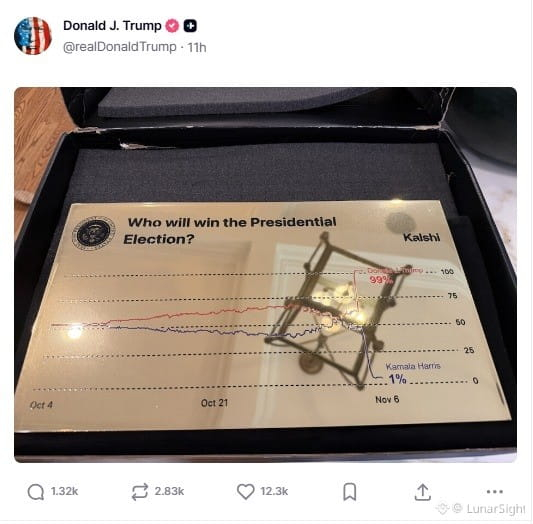
🚨 Trump just posted a prediction market chart showing a 99% election probability. 👀
Politics is no longer just campaigns and debates.
Now it’s becoming a full-blown trading market. 📈🇺🇸
The line between elections, betting, and social media influence is disappearing fast.
#TRUMP #Election #Polymarket #Politics #markets
🚨 Trump just posted a prediction market chart showing a 99% election probability. 👀
Politics is no longer just campaigns and debates.
Now it’s becoming a full-blown trading market. 📈🇺🇸
The line between elections, betting, and social media influence is disappearing fast.
#TRUMP #Election #Polymarket #Politics #markets
Politics is no longer just campaigns and debates.
Now it’s becoming a full-blown trading market. 📈🇺🇸
The line between elections, betting, and social media influence is disappearing fast.
#TRUMP #Election #Polymarket #Politics #markets
1
296

🚨 DEMOCRATIC POLL SURGE – $BTC EYES ELECTION VOLATILITY! 📊
New Emerson data shows Dems leading by 11% — the largest gap in this series. Trump approval sinks to 39%, disapproval at 57%. 📉 The female vote advantage of 27 points signals a potential House flip of 36 seats. Markets hate political uncertainty, and crypto is no exception.
⚡ Historical fractals show sharp volatility in risk assets during midterm shifts. 💡 This isn't a prediction — it's an alert: liquidity could sweep both directions as the narrative hardens. Keep your stops tight and your bias flexible. 💬 How is this shift shaping your macro read on crypto? 👇
⚠️ Not financial advice. Always manage your risk. 🛡️
🏷️ #BTC #Election #Macro #MarketSentiment #Crypto
🔥 💎
🚨 DEMOCRATIC POLL SURGE – $BTC EYES ELECTION VOLATILITY! 📊
New Emerson data shows Dems leading by 11% — the largest gap in this series. Trump approval sinks to 39%, disapproval at 57%. 📉 The female vote advantage of 27 points signals a potential House flip of 36 seats. Markets hate political uncertainty, and crypto is no exception.
⚡ Historical fractals show sharp volatility in risk assets during midterm shifts. 💡 This isn't a prediction — it's an alert: liquidity could sweep both directions as the narrative hardens. Keep your stops tight and your bias flexible. 💬 How is this shift shaping your macro read on crypto? 👇
⚠️ Not financial advice. Always manage your risk. 🛡️
🏷️ #BTC #Election #Macro #MarketSentiment #Crypto
🔥 💎
New Emerson data shows Dems leading by 11% — the largest gap in this series. Trump approval sinks to 39%, disapproval at 57%. 📉 The female vote advantage of 27 points signals a potential House flip of 36 seats. Markets hate political uncertainty, and crypto is no exception.
⚡ Historical fractals show sharp volatility in risk assets during midterm shifts. 💡 This isn't a prediction — it's an alert: liquidity could sweep both directions as the narrative hardens. Keep your stops tight and your bias flexible. 💬 How is this shift shaping your macro read on crypto? 👇
⚠️ Not financial advice. Always manage your risk. 🛡️
🏷️ #BTC #Election #Macro #MarketSentiment #Crypto
🔥 💎
21
Log in to explore more content
Join global crypto users on Binance Square
⚡️ Get latest and useful information about crypto.
💬 Trusted by the world’s largest crypto exchange.
👍 Discover real insights from verified creators.
Email / Phone number
Trending Topics
1
#AppleDebutsFoldablePhone
52,173 views
1,014 Discussing
2
#TSMCAugustRevenueUp53.3%YoY
12,887 views
372 Discussing
3
#IranSaysReadyToEscalateWarWithUS
16,693 views
370 Discussing
4
#EUExtendsCentralContactPointToCASPs
15,853 views
403 Discussing
5
#US10YTreasuryYieldHitsHighestSinceNov2023
40,125 views
620 Discussing
6
#USTreasuryToBuyBackUpTo$6BLongDatedDebt
22,649 views
187 Discussing
7
#BitcoinSurpasses$79K
77,533 views
297 Discussing
8
#BrentCrudeTops$100
137,060 views
426 Discussing
9
#USADPWeeklyEmploymentRises12000
131,173 views
1,558 Discussing
10
#BankOfAmericaGroupPilotsUSBDCStablecoin
95,448 views
1,218 Discussing