

#dca
dca
3.6M views
6,319 Discussing
Hot
Latest

·
--
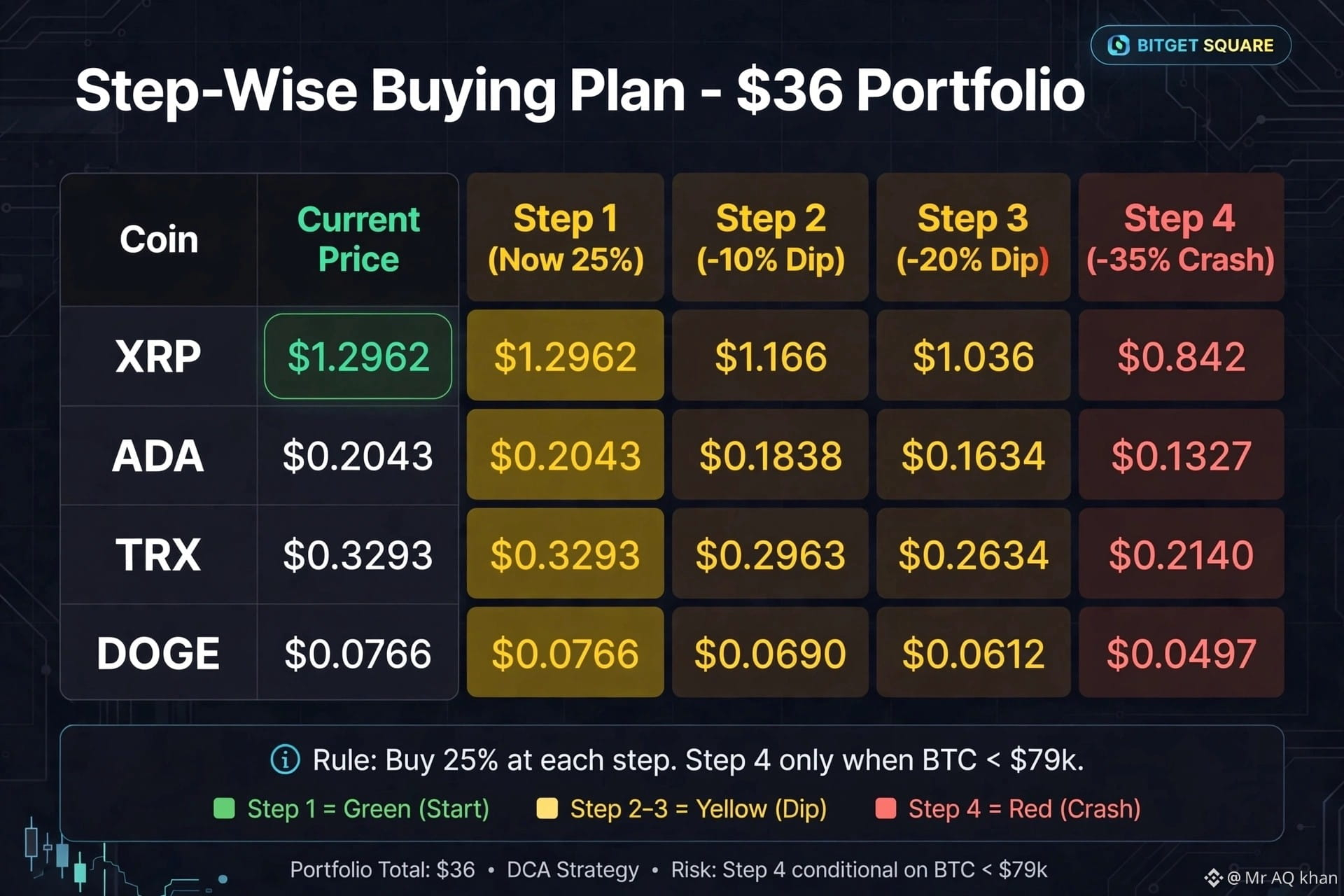
🚨 $36 Step-Wise Buying Plan - LIVE NOW
Portfolio: $XRP | $ADA | $TRX | $DOGE
My Strategy: $36 Total ($9 per coin)
25% buy at each step = $2.25 per coin
STEP 1 - BUY NOW (Green - 25%):
$XRP $1.2962 | $ADA $0.2043 | $TRX $0.3293 | $DOGE $0.0766
Next Levels:
Step 2: -10% Dip (Yellow)
Step 3: -20% Dip (Yellow)
Step 4: -35% Crash (Red) - ONLY if $BTC < $79k
$BTC is $80.4k now, so Step 4 is on HOLD.
No FOMO, Just DCA. Accumulate step by step.
NFA DYOR
#Crypto #DCA o #BitgetSquare #TradingStrategy
🚨 $36 Step-Wise Buying Plan - LIVE NOW
Portfolio: $XRP | $ADA | $TRX | $DOGE
My Strategy: $36 Total ($9 per coin)
25% buy at each step = $2.25 per coin
STEP 1 - BUY NOW (Green - 25%):
$XRP $1.2962 | $ADA $0.2043 | $TRX $0.3293 | $DOGE $0.0766
Next Levels:
Step 2: -10% Dip (Yellow)
Step 3: -20% Dip (Yellow)
Step 4: -35% Crash (Red) - ONLY if $BTC < $79k
$BTC is $80.4k now, so Step 4 is on HOLD.
No FOMO, Just DCA. Accumulate step by step.
NFA DYOR
#Crypto #DCA o #BitgetSquare #TradingStrategy
Portfolio: $XRP | $ADA | $TRX | $DOGE
My Strategy: $36 Total ($9 per coin)
25% buy at each step = $2.25 per coin
STEP 1 - BUY NOW (Green - 25%):
$XRP $1.2962 | $ADA $0.2043 | $TRX $0.3293 | $DOGE $0.0766
Next Levels:
Step 2: -10% Dip (Yellow)
Step 3: -20% Dip (Yellow)
Step 4: -35% Crash (Red) - ONLY if $BTC < $79k
$BTC is $80.4k now, so Step 4 is on HOLD.
No FOMO, Just DCA. Accumulate step by step.
NFA DYOR
#Crypto #DCA o #BitgetSquare #TradingStrategy
25

·
--
🟢 $XRP DIPS TURNING INTO LOW‑COST BULL RUN SEEDS 🚀
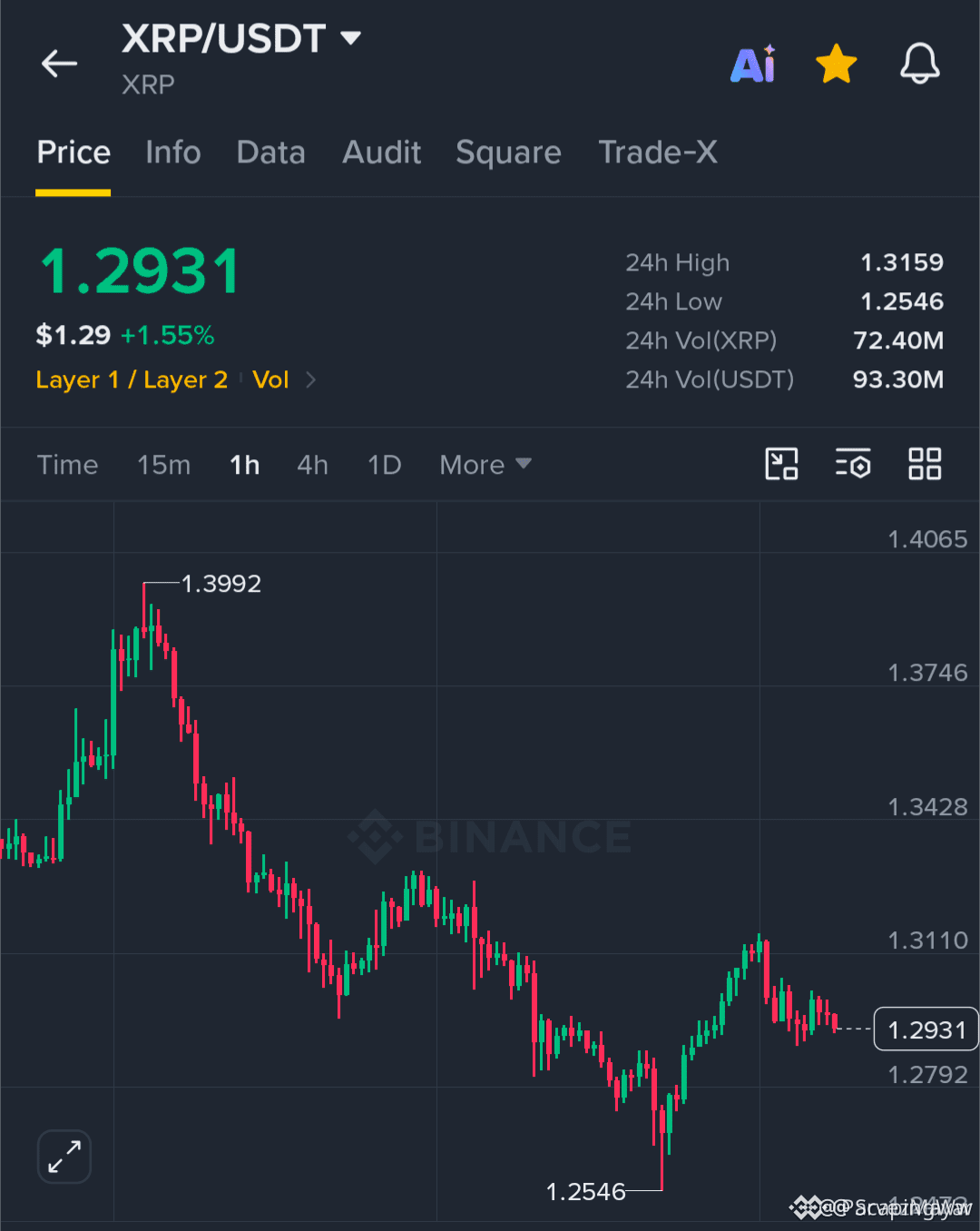
📊 The market’s recent pullbacks are carving out fresh buying windows. I’m loading small, disciplined chunks of $XRP , $SUI and $ZEC as the price slides, keeping the average cost tight. 🦈 Smart money is quietly stacking under the radar, letting the sell‑off bleed out before the next upward thrust. ⚡ Each dip is a chance to reinforce the position without overexposing the account.
💡 With my $XRP base at $1.25, $SUI at $1.20 and $ZEC around $950, the risk‑reward matrix feels ripe for a long‑term rally. 📈 What’s your DCA strategy when the market throws another dip your way? 💬
⚠️ Not financial advice. Always manage your risk. 🛡️
🏷️ #XRP #DCA #BullRun #Crypto
🔥 💎
🟢 $XRP DIPS TURNING INTO LOW‑COST BULL RUN SEEDS 🚀
📊 The market’s recent pullbacks are carving out fresh buying windows. I’m loading small, disciplined chunks of $XRP , $SUI and $ZEC as the price slides, keeping the average cost tight. 🦈 Smart money is quietly stacking under the radar, letting the sell‑off bleed out before the next upward thrust. ⚡ Each dip is a chance to reinforce the position without overexposing the account.
💡 With my $XRP base at $1.25, $SUI at $1.20 and $ZEC around $950, the risk‑reward matrix feels ripe for a long‑term rally. 📈 What’s your DCA strategy when the market throws another dip your way? 💬
⚠️ Not financial advice. Always manage your risk. 🛡️
🏷️ #XRP #DCA #BullRun #Crypto
🔥 💎
📊 The market’s recent pullbacks are carving out fresh buying windows. I’m loading small, disciplined chunks of $XRP , $SUI and $ZEC as the price slides, keeping the average cost tight. 🦈 Smart money is quietly stacking under the radar, letting the sell‑off bleed out before the next upward thrust. ⚡ Each dip is a chance to reinforce the position without overexposing the account.
💡 With my $XRP base at $1.25, $SUI at $1.20 and $ZEC around $950, the risk‑reward matrix feels ripe for a long‑term rally. 📈 What’s your DCA strategy when the market throws another dip your way? 💬
⚠️ Not financial advice. Always manage your risk. 🛡️
🏷️ #XRP #DCA #BullRun #Crypto
🔥 💎
9
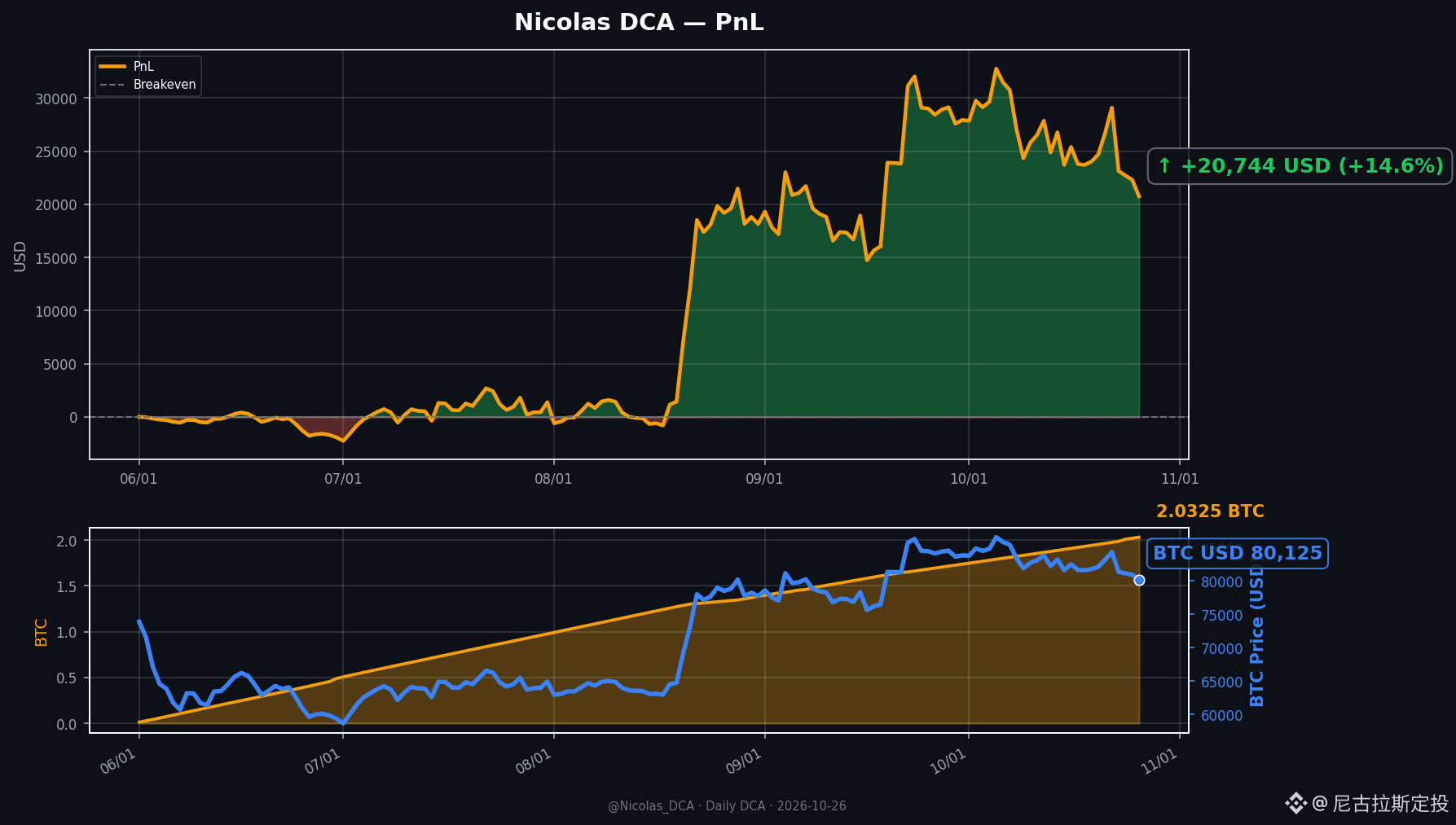
🚀 $BTC DCA LEGEND: $10 MONTHLY SINCE 2011 UNLEASHES EPIC GAINS! 📈
📊 From the early days when Bitcoin lingered under $1, a $10 monthly DCA silently stacked a vault of power, letting each bite‑sized bid ride the volatility.
⚡ Now, with BTC cruising above $30k, that disciplined drip translates into a six‑figure nest egg—a textbook case of compounding and smart‑money liquidity sweeps. The chart’s upward staircase shows no signs of flattening, and the next breakout could turbo‑charge the upside.
💬 Are you ready to let the next surge write your own legacy? 👇
⚠️ Not financial advice. Always manage your risk. 🛡️
🏷️ #BTC #DCA #LongTerm #Crypto
🚀 💎
🚀 $BTC DCA LEGEND: $10 MONTHLY SINCE 2011 UNLEASHES EPIC GAINS! 📈
📊 From the early days when Bitcoin lingered under $1, a $10 monthly DCA silently stacked a vault of power, letting each bite‑sized bid ride the volatility.
⚡ Now, with BTC cruising above $30k, that disciplined drip translates into a six‑figure nest egg—a textbook case of compounding and smart‑money liquidity sweeps. The chart’s upward staircase shows no signs of flattening, and the next breakout could turbo‑charge the upside.
💬 Are you ready to let the next surge write your own legacy? 👇
⚠️ Not financial advice. Always manage your risk. 🛡️
🏷️ #BTC #DCA #LongTerm #Crypto
🚀 💎
📊 From the early days when Bitcoin lingered under $1, a $10 monthly DCA silently stacked a vault of power, letting each bite‑sized bid ride the volatility.
⚡ Now, with BTC cruising above $30k, that disciplined drip translates into a six‑figure nest egg—a textbook case of compounding and smart‑money liquidity sweeps. The chart’s upward staircase shows no signs of flattening, and the next breakout could turbo‑charge the upside.
💬 Are you ready to let the next surge write your own legacy? 👇
⚠️ Not financial advice. Always manage your risk. 🛡️
🏷️ #BTC #DCA #LongTerm #Crypto
🚀 💎
1

·
--
Beginner tip 💡 Stop trying to time the bottom.
Dollar-cost averaging (DCA) means buying a fixed amount on a fixed schedule, no matter the price.
Example: $50 every Monday. When price dips, your $50 buys more. When it pumps, it buys less. Your average entry smooths out over time.
Why it helps:
✅ Removes the "is now the right time?" stress
✅ Stops FOMO buys at local tops
✅ Builds a habit instead of a gamble
What it doesn't do: guarantee profit. If an asset trends down for years, DCA just averages you into a loser. Pick what you believe in long term and size it so you could hold through a -50% drawdown.
Binance has Recurring Buy built in, so you can automate it.
Do you DCA or buy dips manually? 👇
$BTC #DCA #CryptoTips #Binance #crypto
Beginner tip 💡 Stop trying to time the bottom.
Dollar-cost averaging (DCA) means buying a fixed amount on a fixed schedule, no matter the price.
Example: $50 every Monday. When price dips, your $50 buys more. When it pumps, it buys less. Your average entry smooths out over time.
Why it helps:
✅ Removes the "is now the right time?" stress
✅ Stops FOMO buys at local tops
✅ Builds a habit instead of a gamble
What it doesn't do: guarantee profit. If an asset trends down for years, DCA just averages you into a loser. Pick what you believe in long term and size it so you could hold through a -50% drawdown.
Binance has Recurring Buy built in, so you can automate it.
Do you DCA or buy dips manually? 👇
$BTC #DCA #CryptoTips #Binance #crypto
Dollar-cost averaging (DCA) means buying a fixed amount on a fixed schedule, no matter the price.
Example: $50 every Monday. When price dips, your $50 buys more. When it pumps, it buys less. Your average entry smooths out over time.
Why it helps:
✅ Removes the "is now the right time?" stress
✅ Stops FOMO buys at local tops
✅ Builds a habit instead of a gamble
What it doesn't do: guarantee profit. If an asset trends down for years, DCA just averages you into a loser. Pick what you believe in long term and size it so you could hold through a -50% drawdown.
Binance has Recurring Buy built in, so you can automate it.
Do you DCA or buy dips manually? 👇
$BTC #DCA #CryptoTips #Binance #crypto
13

·
--
#EarningsSeason Timing the market is hard, even for experienced traders. Two simple approaches can take some of the guesswork out.
Lump sum
You invest your full amount at once.
Pro: If the price rises afterward, all your money was working from day one.
Con: If you buy right before a drop, the whole position takes the hit.
Dollar-cost averaging (DCA)
You split your amount into smaller buys, such as weekly or monthly.
Pro: You average out your entry price and reduce the stress of picking the "perfect" moment.
Con: In a steadily rising market, you may end up paying more on average.
Which one fits you?
Choose DCA if you're a beginner, earn income regularly, or get anxious watching charts.
Consider lump sum if you have a clear plan and can handle short-term swings.
Many people combine both: a portion now, the rest spread over time.
Quick rules for either approach
Only invest what you can afford to lose.
Set your schedule or entry plan in advance.
Don't change the plan because of one scary candle.
Neither method guarantees profit. The best one is the one you can stick to.
Educational content only, not financial advice. Crypto is volatile, so do your own research.
#Ethereum #ETH #DCA #CryptoBasics
#EarningsSeason Timing the market is hard, even for experienced traders. Two simple approaches can take some of the guesswork out.
Lump sum
You invest your full amount at once.
Pro: If the price rises afterward, all your money was working from day one.
Con: If you buy right before a drop, the whole position takes the hit.
Dollar-cost averaging (DCA)
You split your amount into smaller buys, such as weekly or monthly.
Pro: You average out your entry price and reduce the stress of picking the "perfect" moment.
Con: In a steadily rising market, you may end up paying more on average.
Which one fits you?
Choose DCA if you're a beginner, earn income regularly, or get anxious watching charts.
Consider lump sum if you have a clear plan and can handle short-term swings.
Many people combine both: a portion now, the rest spread over time.
Quick rules for either approach
Only invest what you can afford to lose.
Set your schedule or entry plan in advance.
Don't change the plan because of one scary candle.
Neither method guarantees profit. The best one is the one you can stick to.
Educational content only, not financial advice. Crypto is volatile, so do your own research.
#Ethereum #ETH #DCA #CryptoBasics
Lump sum
You invest your full amount at once.
Pro: If the price rises afterward, all your money was working from day one.
Con: If you buy right before a drop, the whole position takes the hit.
Dollar-cost averaging (DCA)
You split your amount into smaller buys, such as weekly or monthly.
Pro: You average out your entry price and reduce the stress of picking the "perfect" moment.
Con: In a steadily rising market, you may end up paying more on average.
Which one fits you?
Choose DCA if you're a beginner, earn income regularly, or get anxious watching charts.
Consider lump sum if you have a clear plan and can handle short-term swings.
Many people combine both: a portion now, the rest spread over time.
Quick rules for either approach
Only invest what you can afford to lose.
Set your schedule or entry plan in advance.
Don't change the plan because of one scary candle.
Neither method guarantees profit. The best one is the one you can stick to.
Educational content only, not financial advice. Crypto is volatile, so do your own research.
#Ethereum #ETH #DCA #CryptoBasics
1
77


·
--
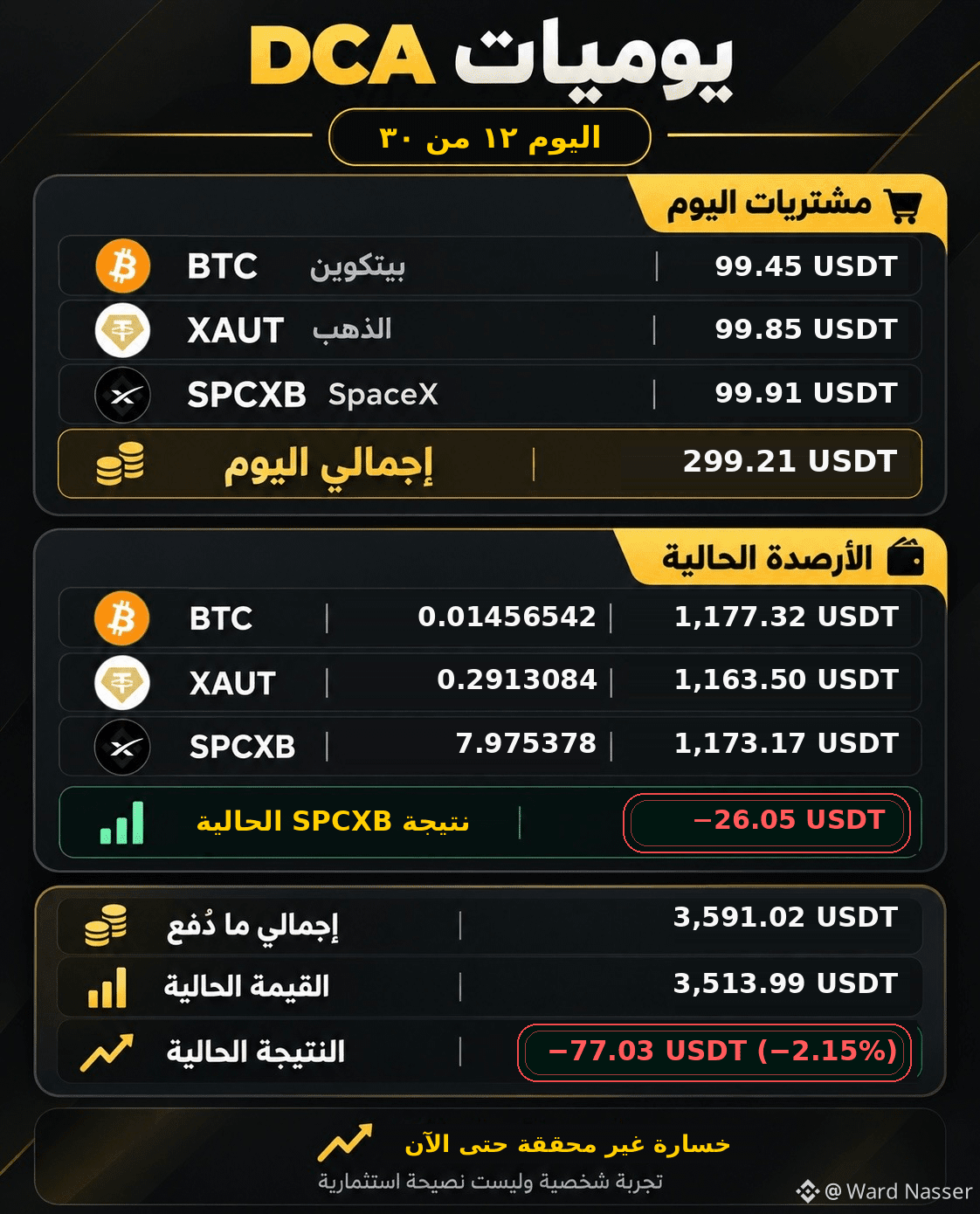
يوميات DCA | اليوم ١٢ من ٣٠
مشتريات اليوم:
₿ بيتكوين: 99.45 USDT
🥇 الذهب XAUT: 99.85 USDT
SpaceX عبر bStocks: 99.91 USDT
إجمالي مشتريات اليوم: 299.21 USDT
إجمالي ما دفعته حتى الآن: 3,591.02 USDT
القيمة الحالية: 3,513.99 USDT
النتيجة الحالية: −77.03 USDT (−2.15%)
النتيجة غير محققة، وما زلت مستمر بالتجربة من دون بيع.
تجربة شخصية وليست نصيحة استثمارية.
#يوميات_DCA #DCA #bitcoin
يوميات DCA | اليوم ١٢ من ٣٠
مشتريات اليوم:
₿ بيتكوين: 99.45 USDT
🥇 الذهب XAUT: 99.85 USDT
SpaceX عبر bStocks: 99.91 USDT
إجمالي مشتريات اليوم: 299.21 USDT
إجمالي ما دفعته حتى الآن: 3,591.02 USDT
القيمة الحالية: 3,513.99 USDT
النتيجة الحالية: −77.03 USDT (−2.15%)
النتيجة غير محققة، وما زلت مستمر بالتجربة من دون بيع.
تجربة شخصية وليست نصيحة استثمارية.
#يوميات_DCA #DCA #bitcoin
مشتريات اليوم:
₿ بيتكوين: 99.45 USDT
🥇 الذهب XAUT: 99.85 USDT
SpaceX عبر bStocks: 99.91 USDT
إجمالي مشتريات اليوم: 299.21 USDT
إجمالي ما دفعته حتى الآن: 3,591.02 USDT
القيمة الحالية: 3,513.99 USDT
النتيجة الحالية: −77.03 USDT (−2.15%)
النتيجة غير محققة، وما زلت مستمر بالتجربة من دون بيع.
تجربة شخصية وليست نصيحة استثمارية.
#يوميات_DCA #DCA #bitcoin
ABO3ZAM:
استمر يا ورد، الـ DCA يحتاج نفس طويل خصوصاً في التذبذب الحالي. لا تشغل بالك بالخسارة الورقية، المهم الحفاظ على مناطق الدعم وعدم كسرها. 🤝
1
122

·
--
📈 什么是加密货币定投(DCA)?
定投就是按照固定周期投入固定金额,不必每次都试图猜测市场的最高点和最低点。
但请记住:
🔹 定投可以帮助建立投资纪律。
🔹 价格下跌时,同样的资金可以买到更多数量。
🔹 长期下跌的资产,定投也可能持续亏损。
🔹 手续费、资产质量和风险管理同样重要。
定投不是稳赚的方法,而是一套需要结合资产研究与风险控制的投资规则。
#ONEANetwork #CryptoEducation #DCA
📈 什么是加密货币定投(DCA)?
定投就是按照固定周期投入固定金额,不必每次都试图猜测市场的最高点和最低点。
但请记住:
🔹 定投可以帮助建立投资纪律。
🔹 价格下跌时,同样的资金可以买到更多数量。
🔹 长期下跌的资产,定投也可能持续亏损。
🔹 手续费、资产质量和风险管理同样重要。
定投不是稳赚的方法,而是一套需要结合资产研究与风险控制的投资规则。
#ONEANetwork #CryptoEducation #DCA
定投就是按照固定周期投入固定金额,不必每次都试图猜测市场的最高点和最低点。
但请记住:
🔹 定投可以帮助建立投资纪律。
🔹 价格下跌时,同样的资金可以买到更多数量。
🔹 长期下跌的资产,定投也可能持续亏损。
🔹 手续费、资产质量和风险管理同样重要。
定投不是稳赚的方法,而是一套需要结合资产研究与风险控制的投资规则。
#ONEANetwork #CryptoEducation #DCA
2
3
·
--
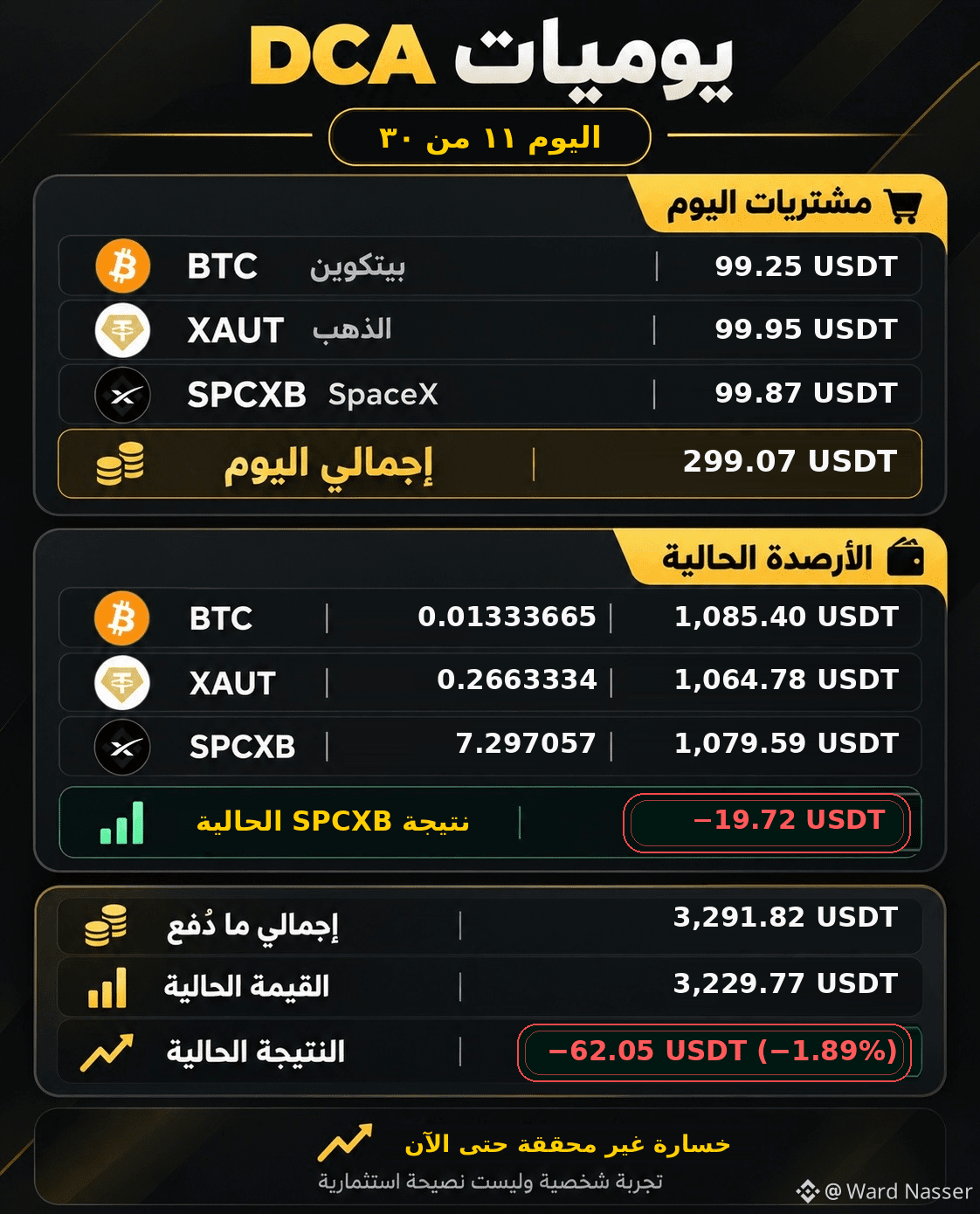
يوميات DCA | اليوم ١١ من ٣٠ 🧪
كملت الشراء اليوم، وما زلت مستمر بالتجربة بدون بيع أي أصل.
🛒 مشتريات اليوم:
₿ بيتكوين: 99.25 USDT
🥇 الذهب XAUT: 99.95 USDT
🚀 SpaceX عبر bStocks: 99.87 USDT
إجمالي مشتريات اليوم: 299.07 USDT
📊 بعد ١١ يومًا:
إجمالي ما دفعته: 3,291.82 USDT
القيمة الحالية: 3,229.77 USDT
النتيجة: −62.05 USDT (−1.89%)
هذه خسارة غير محققة حتى الآن، وما زلت مكمل التجربة. نتابع كيف تتغير الأرقام مع الشراء المنتظم يومًا بعد يوم.
⚠️ تجربة شخصية وليست نصيحة استثمارية.
#يوميات_DCA #DCA #bitcoin
يوميات DCA | اليوم ١١ من ٣٠ 🧪
كملت الشراء اليوم، وما زلت مستمر بالتجربة بدون بيع أي أصل.
🛒 مشتريات اليوم:
₿ بيتكوين: 99.25 USDT
🥇 الذهب XAUT: 99.95 USDT
🚀 SpaceX عبر bStocks: 99.87 USDT
إجمالي مشتريات اليوم: 299.07 USDT
📊 بعد ١١ يومًا:
إجمالي ما دفعته: 3,291.82 USDT
القيمة الحالية: 3,229.77 USDT
النتيجة: −62.05 USDT (−1.89%)
هذه خسارة غير محققة حتى الآن، وما زلت مكمل التجربة. نتابع كيف تتغير الأرقام مع الشراء المنتظم يومًا بعد يوم.
⚠️ تجربة شخصية وليست نصيحة استثمارية.
#يوميات_DCA #DCA #bitcoin
كملت الشراء اليوم، وما زلت مستمر بالتجربة بدون بيع أي أصل.
🛒 مشتريات اليوم:
₿ بيتكوين: 99.25 USDT
🥇 الذهب XAUT: 99.95 USDT
🚀 SpaceX عبر bStocks: 99.87 USDT
إجمالي مشتريات اليوم: 299.07 USDT
📊 بعد ١١ يومًا:
إجمالي ما دفعته: 3,291.82 USDT
القيمة الحالية: 3,229.77 USDT
النتيجة: −62.05 USDT (−1.89%)
هذه خسارة غير محققة حتى الآن، وما زلت مكمل التجربة. نتابع كيف تتغير الأرقام مع الشراء المنتظم يومًا بعد يوم.
⚠️ تجربة شخصية وليست نصيحة استثمارية.
#يوميات_DCA #DCA #bitcoin
ABO3ZAM:
استمر يا بطل، الـ DCA مدرسة ممتازة للمدى البعيد، بس لا تنسى تحط نقاط لجني الأرباح إذا السوق كسر دعومه القوية، السوق ما يرحم والمحفظة تحتاج حماية 🤝
1
4
1.9k

·
--
When the market dips unexpectedly, committing all your capital to a single entry point feels like gambling on perfect timing. 📉
WolfBot helps you systematically build a position over time using Dollar-Cost Averaging (DCA). This means buying into an asset with several smaller purchases spread across different price levels, instead of one large transaction.
Here is how you can structure a DCA entry using WolfBot while maintaining rigorous risk control:
1. First, always set your total exposure limit, as the system will cap the combined size of all DCA slices. 🛡️
2. Next, remember you must still apply a stop-loss to the entire position, just as you would any other trade.
3. When setting up the sequence, WolfBot treats the entry as a series of smaller sub-orders; each slice is tracked individually with a unique dca_index (starting at 1).
4. The system automatically manages the sequence, ensuring the entire series of buys remains subject to your established risk limits, including the total position size cap, the drawdown guard, and overall Take Profit/Stop Loss settings. ✅
5. Use this strategy when you are confident in the long-term direction of an asset but are uncertain about the precise short-term entry timing, or when entering a highly volatile market.
For a deep dive into how this sequence works within our platform, check out this documentation:
https://community.wolfbot.io/docs/dca-strategy
#DCA #AutomatedTrading #RiskManagement #CryptoStrategy #WolfBot
When the market dips unexpectedly, committing all your capital to a single entry point feels like gambling on perfect timing. 📉
WolfBot helps you systematically build a position over time using Dollar-Cost Averaging (DCA). This means buying into an asset with several smaller purchases spread across different price levels, instead of one large transaction.
Here is how you can structure a DCA entry using WolfBot while maintaining rigorous risk control:
1. First, always set your total exposure limit, as the system will cap the combined size of all DCA slices. 🛡️
2. Next, remember you must still apply a stop-loss to the entire position, just as you would any other trade.
3. When setting up the sequence, WolfBot treats the entry as a series of smaller sub-orders; each slice is tracked individually with a unique dca_index (starting at 1).
4. The system automatically manages the sequence, ensuring the entire series of buys remains subject to your established risk limits, including the total position size cap, the drawdown guard, and overall Take Profit/Stop Loss settings. ✅
5. Use this strategy when you are confident in the long-term direction of an asset but are uncertain about the precise short-term entry timing, or when entering a highly volatile market.
For a deep dive into how this sequence works within our platform, check out this documentation:
https://community.wolfbot.io/docs/dca-strategy
#DCA #AutomatedTrading #RiskManagement #CryptoStrategy #WolfBot
WolfBot helps you systematically build a position over time using Dollar-Cost Averaging (DCA). This means buying into an asset with several smaller purchases spread across different price levels, instead of one large transaction.
Here is how you can structure a DCA entry using WolfBot while maintaining rigorous risk control:
1. First, always set your total exposure limit, as the system will cap the combined size of all DCA slices. 🛡️
2. Next, remember you must still apply a stop-loss to the entire position, just as you would any other trade.
3. When setting up the sequence, WolfBot treats the entry as a series of smaller sub-orders; each slice is tracked individually with a unique dca_index (starting at 1).
4. The system automatically manages the sequence, ensuring the entire series of buys remains subject to your established risk limits, including the total position size cap, the drawdown guard, and overall Take Profit/Stop Loss settings. ✅
5. Use this strategy when you are confident in the long-term direction of an asset but are uncertain about the precise short-term entry timing, or when entering a highly volatile market.
For a deep dive into how this sequence works within our platform, check out this documentation:
https://community.wolfbot.io/docs/dca-strategy
#DCA #AutomatedTrading #RiskManagement #CryptoStrategy #WolfBot

1
57

·
--
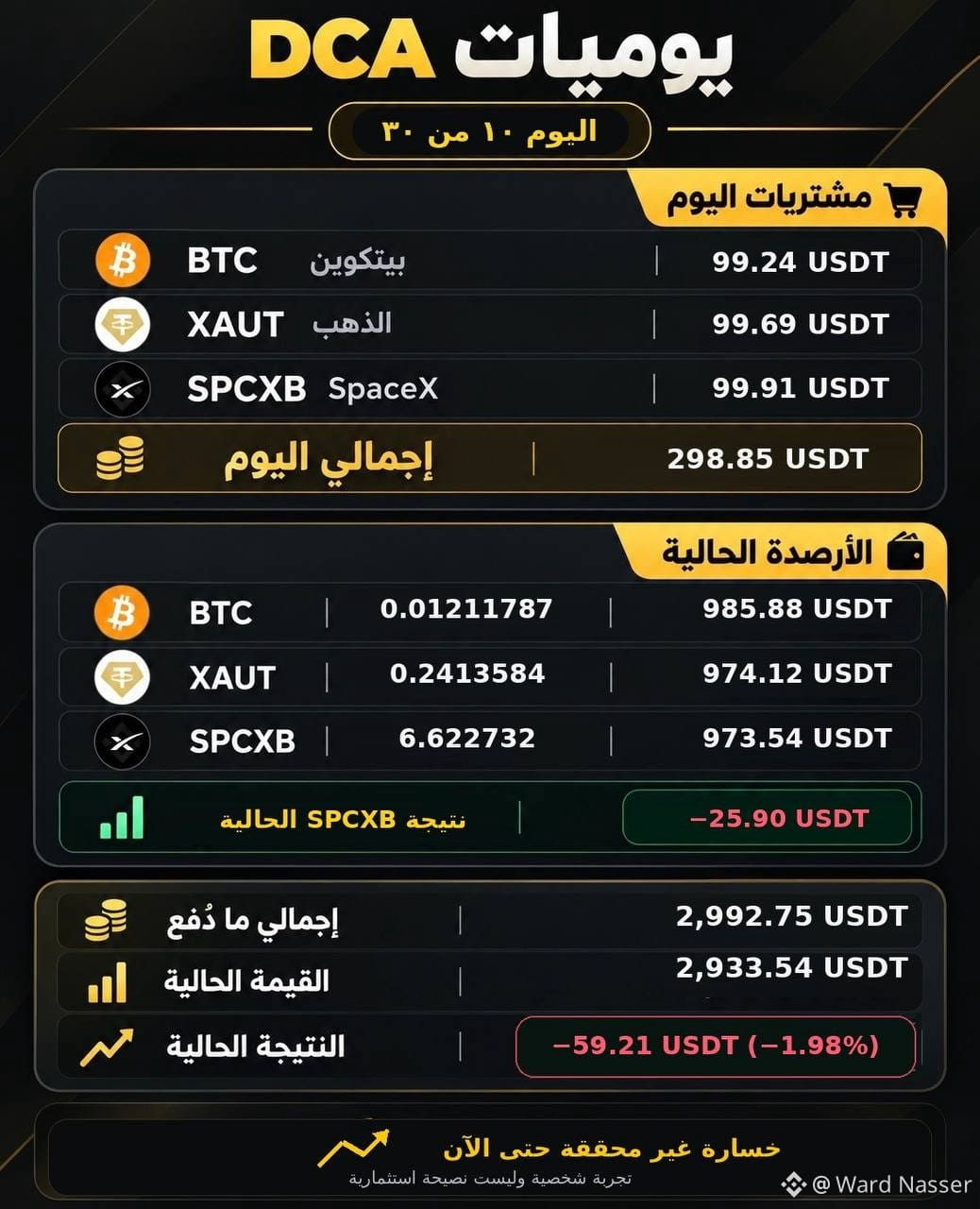
يوميات DCA | اليوم ١٠ من ٣٠ 🧪
عشرة أيام من الشراء المنتظم… واليوم المحفظة نزلت تحت المبلغ اللي دفعته. هل هذا يعني إن التجربة فشلت؟ لسه بدري نحكم.
اشتريت اليوم كالمعتاد، بحوالي ١٠٠ USDT من كل أصل:
₿ بيتكوين: 99.24 USDT
🥇 الذهب XAUT: 99.69 USDT
🚀 SpaceX عبر SPCXB: 99.91 USDT
إجمالي شراء اليوم: 298.85 USDT
📊 حصيلة الأيام العشرة حتى الآن:
إجمالي ما دفعته: 2,992.75 USDT
القيمة الحالية للمحفظة: 2,933.54 USDT
النتيجة غير المحققة: خسارة 59.21 USDT، أي حوالي 1.98%
توزيع القيمة الحالية:
₿ بيتكوين: 985.88 USDT
🥇 الذهب: 974.12 USDT
🚀 SpaceX: 973.54 USDT
ما بعت من SpaceX، وكملت الخطة مثل ما هي. التجربة مستمرة، والنتيجة بتتغير مع الأسعار. بنشوف وين نوصل بعد ٣٠ يوم.
⚠️ تجربة شخصية، وليست نصيحة استثمارية.
#يوميات_DCA #DCA #bitcoin
يوميات DCA | اليوم ١٠ من ٣٠ 🧪
عشرة أيام من الشراء المنتظم… واليوم المحفظة نزلت تحت المبلغ اللي دفعته. هل هذا يعني إن التجربة فشلت؟ لسه بدري نحكم.
اشتريت اليوم كالمعتاد، بحوالي ١٠٠ USDT من كل أصل:
₿ بيتكوين: 99.24 USDT
🥇 الذهب XAUT: 99.69 USDT
🚀 SpaceX عبر SPCXB: 99.91 USDT
إجمالي شراء اليوم: 298.85 USDT
📊 حصيلة الأيام العشرة حتى الآن:
إجمالي ما دفعته: 2,992.75 USDT
القيمة الحالية للمحفظة: 2,933.54 USDT
النتيجة غير المحققة: خسارة 59.21 USDT، أي حوالي 1.98%
توزيع القيمة الحالية:
₿ بيتكوين: 985.88 USDT
🥇 الذهب: 974.12 USDT
🚀 SpaceX: 973.54 USDT
ما بعت من SpaceX، وكملت الخطة مثل ما هي. التجربة مستمرة، والنتيجة بتتغير مع الأسعار. بنشوف وين نوصل بعد ٣٠ يوم.
⚠️ تجربة شخصية، وليست نصيحة استثمارية.
#يوميات_DCA #DCA #bitcoin
عشرة أيام من الشراء المنتظم… واليوم المحفظة نزلت تحت المبلغ اللي دفعته. هل هذا يعني إن التجربة فشلت؟ لسه بدري نحكم.
اشتريت اليوم كالمعتاد، بحوالي ١٠٠ USDT من كل أصل:
₿ بيتكوين: 99.24 USDT
🥇 الذهب XAUT: 99.69 USDT
🚀 SpaceX عبر SPCXB: 99.91 USDT
إجمالي شراء اليوم: 298.85 USDT
📊 حصيلة الأيام العشرة حتى الآن:
إجمالي ما دفعته: 2,992.75 USDT
القيمة الحالية للمحفظة: 2,933.54 USDT
النتيجة غير المحققة: خسارة 59.21 USDT، أي حوالي 1.98%
توزيع القيمة الحالية:
₿ بيتكوين: 985.88 USDT
🥇 الذهب: 974.12 USDT
🚀 SpaceX: 973.54 USDT
ما بعت من SpaceX، وكملت الخطة مثل ما هي. التجربة مستمرة، والنتيجة بتتغير مع الأسعار. بنشوف وين نوصل بعد ٣٠ يوم.
⚠️ تجربة شخصية، وليست نصيحة استثمارية.
#يوميات_DCA #DCA #bitcoin
ABO3ZAM:
استمر يا بطل، الـ DCA يحتاج نفس طويل. السوق يمر بضغط عند مناطق الدعم، لا تنسَ تأمين أرباحك وجنيها إذا ارتد السعر بقوة، إدارة المخاطر هي الأساس 🤝
1
2
111

Article
CENÁRIO GLOBAL…👇CENÁRIO GLOBAL
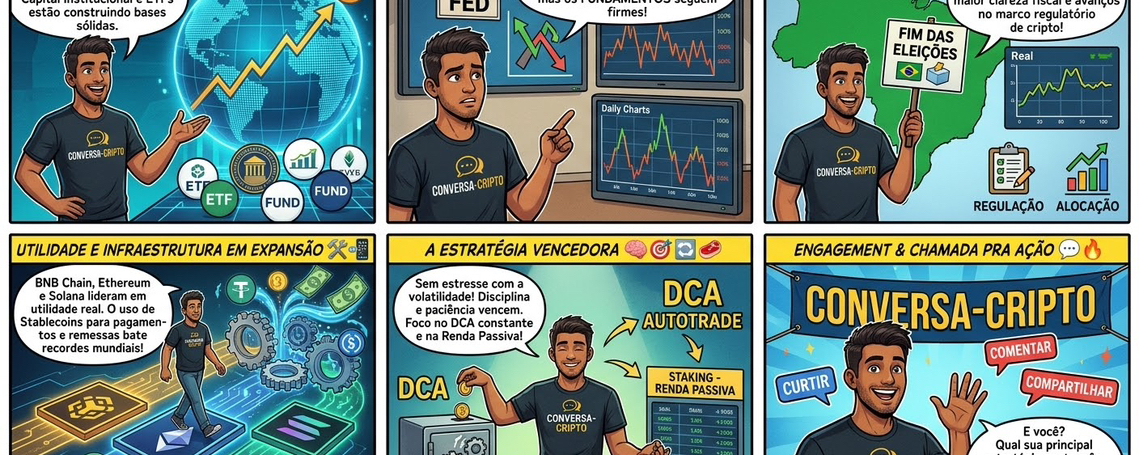
🟢 1. Bitcoin ($BTC) & A Força Institucional 🏛️⚡
O Bitcoin segue trabalhando em faixas de consolidação sólidas, impulsionado por um fluxo constante e gigante de capital:
📥 Os ETFs à vista (Spot ETFs) globais continuam atraindo volumes expressivos de capital líquido! 💵🚀
🏢 Grandes empresas e fundos mantêm o acúmulo estratégico de BTC em suas reservas, demonstrando visão de longo prazo e confiança na tese da escassez digital! 🛡️⚡
🌐 2. O Cenário Macroeconômico & Local 📌🏦
1. Juros e Bancos Centrais Globais 🏛️: Os mercados de risco ao redor do mundo acompanham atentos as decisões de juros do Fed (EUA) e BCE (Europa) 📉📈. A expectativa sobre os dados de inflação gera volatilidade no curto prazo, mas não abala a tese de longo prazo! 🔍
2. Adoção de Stablecoins como Reserva 💳: O uso de USDT e USDC em remessas e transações transfronteiriças segue atingindo recordes globais, provando que a infraestrutura financeira digital já é realidade prática no dia a dia! 📲🌍
3. Cenário Nacional & Eleições no Brasil 🇧🇷🗳️: No ambiente doméstico, o mercado financeiro e os investidores acompanham com atenção a definição e o desfecho do período eleitoral. A expectativa é que o fim do ciclo eleitoral traga maior clareza para as diretrizes econômicas, políticas fiscais e para a consolidação do marco regulatório dos criptoativos pelo Banco Central, reduzindo a volatilidade e abrindo espaço para novas alocações no país! 📈💼
🛠️ 3. Altcoins e Ecossistemas em Expansão 🌐⚙️
O capital no mercado alternativo está cada vez mais seletivo, priorizando redes com uso real e ecossistemas ativos:
⚡ BNB Chain, Ethereum e Solana lideram em volume de desenvolvimento, expansão de infraestrutura e soluções de escalabilidade! 🛠️🔗
🎯 Projetos focados em utilidade real e integração institucional continuam atraindo a preferência em relação a ativos puramente especulativos! 🚀🔥
💡 Como se posicionar com inteligência neste cenário? 🧠🎯
Com o mercado consolidando e testando a paciência dos investidores 🧘♂️, tentar acertar o topo ou o fundo exato costuma gerar estresse desnecessário. A receita da consistência continua sendo:
1. 🔄 Estratégia DCA (Dollar-Cost Averaging): Compras fracionadas e constantes para diluir o custo médio e tirar a emoção do processo! 🎯
2. 🥩 Renda Passiva (Staking e Auto-Subscribe): Colocar os ativos para trabalhar, gerando novos rendimentos enquanto o mercado define a próxima pernada! 📊💰
3. ⏳ Visão de Longo Prazo: Acumular satoshis e frações com disciplina diária! 💎🙌
💬 E no seu planejamento para este mês, qual tem sido o foco principal?
Você está focando mais em acúmulo via DCA 🛒, buscando rendimentos em staking 🥩 ou ajustando a carteira diante das incertezas do mercado? 🤔💡
Comente aqui abaixo e vamos trocar essa idera! 👇🔥💬
#CriptoMarket $BinanceSquare #Starking #DCA #CriptoNews
$BTC $SOL $BNB $ETH
CENÁRIO GLOBAL…
👇CENÁRIO GLOBAL
🟢 1. Bitcoin ($BTC ) & A Força Institucional 🏛️⚡
O Bitcoin segue trabalhando em faixas de consolidação sólidas, impulsionado por um fluxo constante e gigante de capital:
📥 Os ETFs à vista (Spot ETFs) globais continuam atraindo volumes expressivos de capital líquido! 💵🚀
🏢 Grandes empresas e fundos mantêm o acúmulo estratégico de BTC em suas reservas, demonstrando visão de longo prazo e confiança na tese da escassez digital! 🛡️⚡
🌐 2. O Cenário Macroeconômico & Local 📌🏦
1. Juros e Bancos Centrais Globais 🏛️: Os mercados de risco ao redor do mundo acompanham atentos as decisões de juros do Fed (EUA) e BCE (Europa) 📉📈. A expectativa sobre os dados de inflação gera volatilidade no curto prazo, mas não abala a tese de longo prazo! 🔍
2. Adoção de Stablecoins como Reserva 💳: O uso de USDT e USDC em remessas e transações transfronteiriças segue atingindo recordes globais, provando que a infraestrutura financeira digital já é realidade prática no dia a dia! 📲🌍
3. Cenário Nacional & Eleições no Brasil 🇧🇷🗳️: No ambiente doméstico, o mercado financeiro e os investidores acompanham com atenção a definição e o desfecho do período eleitoral. A expectativa é que o fim do ciclo eleitoral traga maior clareza para as diretrizes econômicas, políticas fiscais e para a consolidação do marco regulatório dos criptoativos pelo Banco Central, reduzindo a volatilidade e abrindo espaço para novas alocações no país! 📈💼
🛠️ 3. Altcoins e Ecossistemas em Expansão 🌐⚙️
O capital no mercado alternativo está cada vez mais seletivo, priorizando redes com uso real e ecossistemas ativos:
⚡ BNB Chain, Ethereum e Solana lideram em volume de desenvolvimento, expansão de infraestrutura e soluções de escalabilidade! 🛠️🔗
🎯 Projetos focados em utilidade real e integração institucional continuam atraindo a preferência em relação a ativos puramente especulativos! 🚀🔥
💡 Como se posicionar com inteligência neste cenário? 🧠🎯
Com o mercado consolidando e testando a paciência dos investidores 🧘♂️, tentar acertar o topo ou o fundo exato costuma gerar estresse desnecessário. A receita da consistência continua sendo:
1. 🔄 Estratégia DCA (Dollar-Cost Averaging): Compras fracionadas e constantes para diluir o custo médio e tirar a emoção do processo! 🎯
2. 🥩 Renda Passiva (Staking e Auto-Subscribe): Colocar os ativos para trabalhar, gerando novos rendimentos enquanto o mercado define a próxima pernada! 📊💰
3. ⏳ Visão de Longo Prazo: Acumular satoshis e frações com disciplina diária! 💎🙌
💬 E no seu planejamento para este mês, qual tem sido o foco principal?
Você está focando mais em acúmulo via DCA 🛒, buscando rendimentos em staking 🥩 ou ajustando a carteira diante das incertezas do mercado? 🤔💡
Comente aqui abaixo e vamos trocar essa idera! 👇🔥💬
#CriptoMarket $BinanceSquare #Starking #DCA #CriptoNews
$BTC $SOL $BNB $ETH
🟢 1. Bitcoin ($BTC ) & A Força Institucional 🏛️⚡
O Bitcoin segue trabalhando em faixas de consolidação sólidas, impulsionado por um fluxo constante e gigante de capital:
📥 Os ETFs à vista (Spot ETFs) globais continuam atraindo volumes expressivos de capital líquido! 💵🚀
🏢 Grandes empresas e fundos mantêm o acúmulo estratégico de BTC em suas reservas, demonstrando visão de longo prazo e confiança na tese da escassez digital! 🛡️⚡
🌐 2. O Cenário Macroeconômico & Local 📌🏦
1. Juros e Bancos Centrais Globais 🏛️: Os mercados de risco ao redor do mundo acompanham atentos as decisões de juros do Fed (EUA) e BCE (Europa) 📉📈. A expectativa sobre os dados de inflação gera volatilidade no curto prazo, mas não abala a tese de longo prazo! 🔍
2. Adoção de Stablecoins como Reserva 💳: O uso de USDT e USDC em remessas e transações transfronteiriças segue atingindo recordes globais, provando que a infraestrutura financeira digital já é realidade prática no dia a dia! 📲🌍
3. Cenário Nacional & Eleições no Brasil 🇧🇷🗳️: No ambiente doméstico, o mercado financeiro e os investidores acompanham com atenção a definição e o desfecho do período eleitoral. A expectativa é que o fim do ciclo eleitoral traga maior clareza para as diretrizes econômicas, políticas fiscais e para a consolidação do marco regulatório dos criptoativos pelo Banco Central, reduzindo a volatilidade e abrindo espaço para novas alocações no país! 📈💼
🛠️ 3. Altcoins e Ecossistemas em Expansão 🌐⚙️
O capital no mercado alternativo está cada vez mais seletivo, priorizando redes com uso real e ecossistemas ativos:
⚡ BNB Chain, Ethereum e Solana lideram em volume de desenvolvimento, expansão de infraestrutura e soluções de escalabilidade! 🛠️🔗
🎯 Projetos focados em utilidade real e integração institucional continuam atraindo a preferência em relação a ativos puramente especulativos! 🚀🔥
💡 Como se posicionar com inteligência neste cenário? 🧠🎯
Com o mercado consolidando e testando a paciência dos investidores 🧘♂️, tentar acertar o topo ou o fundo exato costuma gerar estresse desnecessário. A receita da consistência continua sendo:
1. 🔄 Estratégia DCA (Dollar-Cost Averaging): Compras fracionadas e constantes para diluir o custo médio e tirar a emoção do processo! 🎯
2. 🥩 Renda Passiva (Staking e Auto-Subscribe): Colocar os ativos para trabalhar, gerando novos rendimentos enquanto o mercado define a próxima pernada! 📊💰
3. ⏳ Visão de Longo Prazo: Acumular satoshis e frações com disciplina diária! 💎🙌
💬 E no seu planejamento para este mês, qual tem sido o foco principal?
Você está focando mais em acúmulo via DCA 🛒, buscando rendimentos em staking 🥩 ou ajustando a carteira diante das incertezas do mercado? 🤔💡
Comente aqui abaixo e vamos trocar essa idera! 👇🔥💬
#CriptoMarket $BinanceSquare #Starking #DCA #CriptoNews
$BTC $SOL $BNB $ETH
83
·
--
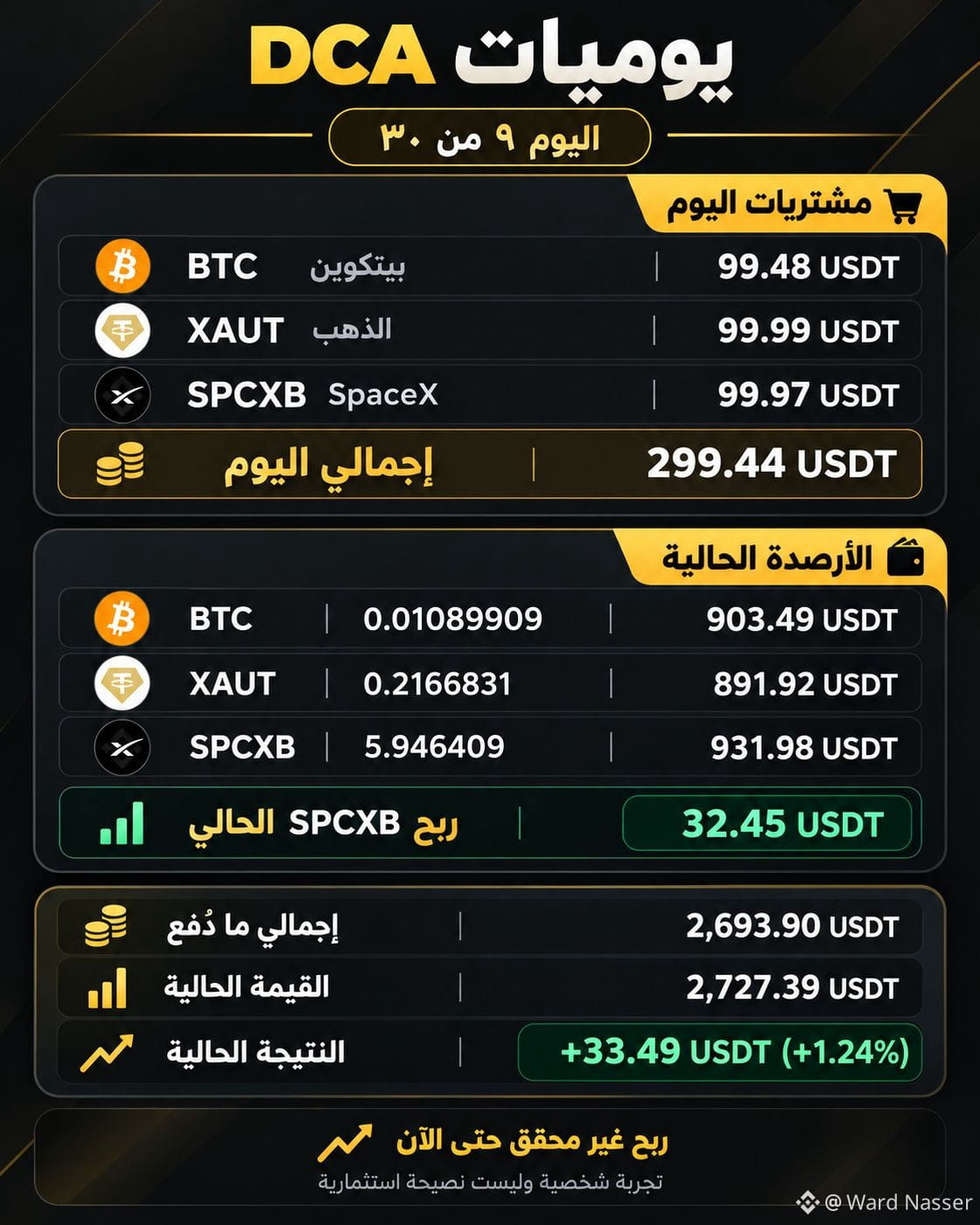
يوميات DCA | اليوم ٩ من ٣٠
أمس سألتكم إذا أبيع SpaceX بعد ما وصل ربحها الظاهر إلى حوالي ٤٣ دولار، أو أكمل خطة الـDCA.
قررت أكمل التجربة وما أبيع. ربح SpaceX الحالي صار حوالي 32.45 USDT، والرقم يتغير مع السعر. اليوم اشتريت من الأصول الثلاثة كالمعتاد.
مشتريات اليوم:
BTC: 99.48 USDT
XAUT: 99.99 USDT
SPCXB: 99.97 USDT
إجمالي مشتريات اليوم: 299.44 USDT.
بعد ٩ أيام، إجمالي ما دفعته 2,693.90 USDT، والقيمة الحالية للأصول 2,727.39 USDT. النتيجة الحالية: ربح غير محقق 33.49 USDT، حوالي 1.24%.
نكمل للـيوم ٣٠ ونشوف وين توصل التجربة.
الأرقام حسب لقطة الرصيد، والربح غير محقق وقد يتغير مع الأسعار. تجربة شخصية وليست نصيحة استثمارية.
#يوميات_DCA #DCA #bitcoin
يوميات DCA | اليوم ٩ من ٣٠
أمس سألتكم إذا أبيع SpaceX بعد ما وصل ربحها الظاهر إلى حوالي ٤٣ دولار، أو أكمل خطة الـDCA.
قررت أكمل التجربة وما أبيع. ربح SpaceX الحالي صار حوالي 32.45 USDT، والرقم يتغير مع السعر. اليوم اشتريت من الأصول الثلاثة كالمعتاد.
مشتريات اليوم:
BTC: 99.48 USDT
XAUT: 99.99 USDT
SPCXB: 99.97 USDT
إجمالي مشتريات اليوم: 299.44 USDT.
بعد ٩ أيام، إجمالي ما دفعته 2,693.90 USDT، والقيمة الحالية للأصول 2,727.39 USDT. النتيجة الحالية: ربح غير محقق 33.49 USDT، حوالي 1.24%.
نكمل للـيوم ٣٠ ونشوف وين توصل التجربة.
الأرقام حسب لقطة الرصيد، والربح غير محقق وقد يتغير مع الأسعار. تجربة شخصية وليست نصيحة استثمارية.
#يوميات_DCA #DCA #bitcoin
أمس سألتكم إذا أبيع SpaceX بعد ما وصل ربحها الظاهر إلى حوالي ٤٣ دولار، أو أكمل خطة الـDCA.
قررت أكمل التجربة وما أبيع. ربح SpaceX الحالي صار حوالي 32.45 USDT، والرقم يتغير مع السعر. اليوم اشتريت من الأصول الثلاثة كالمعتاد.
مشتريات اليوم:
BTC: 99.48 USDT
XAUT: 99.99 USDT
SPCXB: 99.97 USDT
إجمالي مشتريات اليوم: 299.44 USDT.
بعد ٩ أيام، إجمالي ما دفعته 2,693.90 USDT، والقيمة الحالية للأصول 2,727.39 USDT. النتيجة الحالية: ربح غير محقق 33.49 USDT، حوالي 1.24%.
نكمل للـيوم ٣٠ ونشوف وين توصل التجربة.
الأرقام حسب لقطة الرصيد، والربح غير محقق وقد يتغير مع الأسعار. تجربة شخصية وليست نصيحة استثمارية.
#يوميات_DCA #DCA #bitcoin
2
202

·
--
🚨 $BTC AT $80K: STOP OVERTHINKING THE PHILOSOPHY AND FOLLOW THE CAPITAL FLOW! 💥
Entry: 80,000 ⚡
Spot DCA discipline around $80K continues without emotion. While scrollers waste time debating abstract utility, disciplined capital quietly bids hard assets that deliver real purchasing power. 📊
Whether it is real estate, gold, or $BTC , every conviction buyer enters the market for one reason: pure wealth expansion. Know what you hold, respect your risk boundaries, and let systematic execution do the heavy lifting. 💡
💬 Are you sticking to your DCA schedule at these levels, or sitting on cash waiting for a pull-back? 👇
⚠️ Not financial advice. Always manage your risk. 🛡️
🏷️ #BTC #DCA #Bitcoin #CryptoStrategy
🔥 💎
🚨 $BTC AT $80K: STOP OVERTHINKING THE PHILOSOPHY AND FOLLOW THE CAPITAL FLOW! 💥
Entry: 80,000 ⚡
Spot DCA discipline around $80K continues without emotion. While scrollers waste time debating abstract utility, disciplined capital quietly bids hard assets that deliver real purchasing power. 📊
Whether it is real estate, gold, or $BTC , every conviction buyer enters the market for one reason: pure wealth expansion. Know what you hold, respect your risk boundaries, and let systematic execution do the heavy lifting. 💡
💬 Are you sticking to your DCA schedule at these levels, or sitting on cash waiting for a pull-back? 👇
⚠️ Not financial advice. Always manage your risk. 🛡️
🏷️ #BTC #DCA #Bitcoin #CryptoStrategy
🔥 💎
Entry: 80,000 ⚡
Spot DCA discipline around $80K continues without emotion. While scrollers waste time debating abstract utility, disciplined capital quietly bids hard assets that deliver real purchasing power. 📊
Whether it is real estate, gold, or $BTC , every conviction buyer enters the market for one reason: pure wealth expansion. Know what you hold, respect your risk boundaries, and let systematic execution do the heavy lifting. 💡
💬 Are you sticking to your DCA schedule at these levels, or sitting on cash waiting for a pull-back? 👇
⚠️ Not financial advice. Always manage your risk. 🛡️
🏷️ #BTC #DCA #Bitcoin #CryptoStrategy
🔥 💎
9

·
--
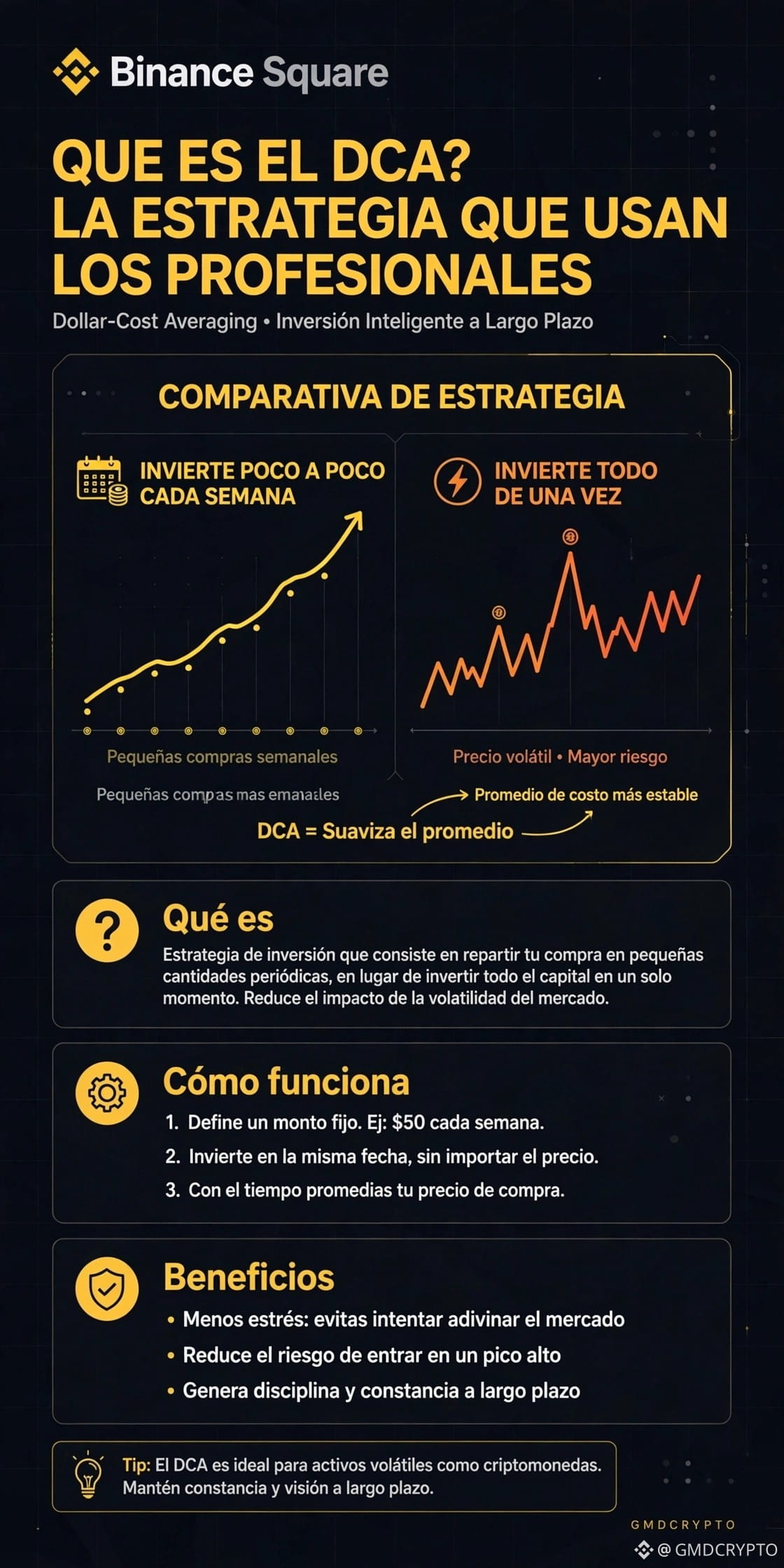
¿QUÉ ES EL DCA? La estrategia que usan los profesionales 💰
Muchos pierden por querer comprar todo en el momento perfecto. Los que ganan hacen esto:
*DCA = Dollar Cost Averaging*
Invertir $50 cada semana, no $1000 de golpe.
✅ *Cómo funciona:*
1. Monto fijo (ej: $50)
2. Misma fecha cada semana/mes
3. Sin mirar el precio
✅ *Beneficios:*
- Menos estrés, no intentas adivinar el mercado
- No entras todo arriba en FOMO
- Creas disciplina a largo plazo
Yo uso DCA para BTC y ETH. ¿Vos lo usas? 👇
#DCA #ETH #Inversion #GMDCRYPTO #BinanceSquare
¿QUÉ ES EL DCA? La estrategia que usan los profesionales 💰
Muchos pierden por querer comprar todo en el momento perfecto. Los que ganan hacen esto:
*DCA = Dollar Cost Averaging*
Invertir $50 cada semana, no $1000 de golpe.
✅ *Cómo funciona:*
1. Monto fijo (ej: $50)
2. Misma fecha cada semana/mes
3. Sin mirar el precio
✅ *Beneficios:*
- Menos estrés, no intentas adivinar el mercado
- No entras todo arriba en FOMO
- Creas disciplina a largo plazo
Yo uso DCA para BTC y ETH. ¿Vos lo usas? 👇
#DCA #ETH #Inversion #GMDCRYPTO #BinanceSquare
Muchos pierden por querer comprar todo en el momento perfecto. Los que ganan hacen esto:
*DCA = Dollar Cost Averaging*
Invertir $50 cada semana, no $1000 de golpe.
✅ *Cómo funciona:*
1. Monto fijo (ej: $50)
2. Misma fecha cada semana/mes
3. Sin mirar el precio
✅ *Beneficios:*
- Menos estrés, no intentas adivinar el mercado
- No entras todo arriba en FOMO
- Creas disciplina a largo plazo
Yo uso DCA para BTC y ETH. ¿Vos lo usas? 👇
#DCA #ETH #Inversion #GMDCRYPTO #BinanceSquare
102
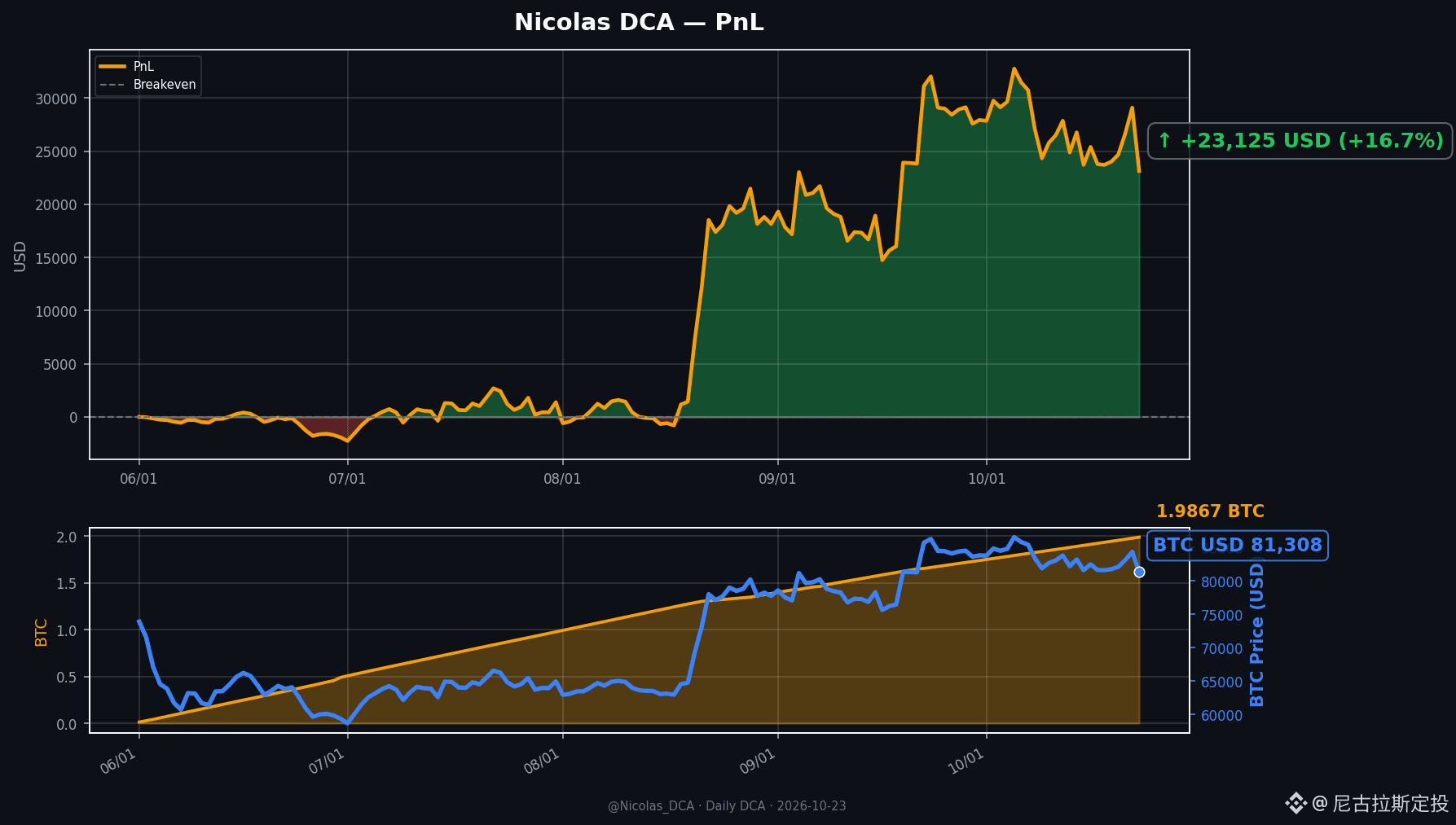

Why DCA Beats Timing the Market 📈
Most beginners lose money not because they pick bad coins, but because they try to time the market perfectly.
Dollar-Cost Averaging (DCA) is a simpler approach: invest a fixed amount at regular intervals, no matter the price.
Why it works:
✅ Removes emotion from your decisions
✅ Reduces the impact of volatility
✅ Builds discipline over time
✅ No need to watch charts 24/7
Example: Instead of putting $600 into $BTC at once, buy $50 every week. You'll catch both dips and rallies and end up with a smoother average entry price.
Pairing DCA with strong projects like $BTC and $ETH , plus only investing what you can afford to lose, is a solid foundation for any portfolio.
What's your strategy: DCA or lump sum? Let me know in the comments 👇
Not financial advice. Always DYOR.
#DCA #Bitcoin #BinanceSquare
#CryptoEducationCZ #Write2Earn
{spot}(BTCUSDT)
{spot}(ETHUSDT)
Why DCA Beats Timing the Market 📈
Most beginners lose money not because they pick bad coins, but because they try to time the market perfectly.
Dollar-Cost Averaging (DCA) is a simpler approach: invest a fixed amount at regular intervals, no matter the price.
Why it works:
✅ Removes emotion from your decisions
✅ Reduces the impact of volatility
✅ Builds discipline over time
✅ No need to watch charts 24/7
Example: Instead of putting $600 into $BTC at once, buy $50 every week. You'll catch both dips and rallies and end up with a smoother average entry price.
Pairing DCA with strong projects like $BTC and $ETH , plus only investing what you can afford to lose, is a solid foundation for any portfolio.
What's your strategy: DCA or lump sum? Let me know in the comments 👇
Not financial advice. Always DYOR.
#DCA #Bitcoin #BinanceSquare
#CryptoEducationCZ #Write2Earn
Most beginners lose money not because they pick bad coins, but because they try to time the market perfectly.
Dollar-Cost Averaging (DCA) is a simpler approach: invest a fixed amount at regular intervals, no matter the price.
Why it works:
✅ Removes emotion from your decisions
✅ Reduces the impact of volatility
✅ Builds discipline over time
✅ No need to watch charts 24/7
Example: Instead of putting $600 into $BTC at once, buy $50 every week. You'll catch both dips and rallies and end up with a smoother average entry price.
Pairing DCA with strong projects like $BTC and $ETH , plus only investing what you can afford to lose, is a solid foundation for any portfolio.
What's your strategy: DCA or lump sum? Let me know in the comments 👇
Not financial advice. Always DYOR.
#DCA #Bitcoin #BinanceSquare
#CryptoEducationCZ #Write2Earn
94

·
--
Focus on quality, utility, and structure over hype.
A practical long-term approach often centers on:
• Core holdings with clear use cases and deep liquidity (BTC as digital scarcity, $ETH for programmable settlement & DeFi, SOL for high-throughput activity, BNB for ecosystem utility).
• Dollar-cost averaging (DCA) to smooth volatility.
• Diversification by role (store-of-value, smart-contract platforms, infrastructure) rather than chasing every narrative.
• Position sizing matched to personal risk tolerance and time horizon.
Markets remain highly volatile. Past performance is not indicative of future results. Always do your own research (DYOR) and consider consulting a qualified advisor. Not financial advice.
#Binance #CryptoStrategy #DCA
Focus on quality, utility, and structure over hype.
A practical long-term approach often centers on:
• Core holdings with clear use cases and deep liquidity (BTC as digital scarcity, $ETH for programmable settlement & DeFi, SOL for high-throughput activity, BNB for ecosystem utility).
• Dollar-cost averaging (DCA) to smooth volatility.
• Diversification by role (store-of-value, smart-contract platforms, infrastructure) rather than chasing every narrative.
• Position sizing matched to personal risk tolerance and time horizon.
Markets remain highly volatile. Past performance is not indicative of future results. Always do your own research (DYOR) and consider consulting a qualified advisor. Not financial advice.
#Binance #CryptoStrategy #DCA
A practical long-term approach often centers on:
• Core holdings with clear use cases and deep liquidity (BTC as digital scarcity, $ETH for programmable settlement & DeFi, SOL for high-throughput activity, BNB for ecosystem utility).
• Dollar-cost averaging (DCA) to smooth volatility.
• Diversification by role (store-of-value, smart-contract platforms, infrastructure) rather than chasing every narrative.
• Position sizing matched to personal risk tolerance and time horizon.
Markets remain highly volatile. Past performance is not indicative of future results. Always do your own research (DYOR) and consider consulting a qualified advisor. Not financial advice.
#Binance #CryptoStrategy #DCA
42

·
--
Bullish
ПОЗДНО ЛИ ПОКУПАТЬ Bitcoin ?
«Чтобы заработать на $BTC нужно десятки тысяч долларов и бла бла бла» кучу раз слышал эти слова и я считаю их ОШИБКОЙ
1️⃣Минимальный порог входа. Начать инвестировать можно буквально с $10
2️⃣Смена привычек. Отказ от пагубных вещей в жизни, учет расходов и доход и т.д. дают первоначальную базу для портфеля
3️⃣Сила дистанции. Даже $50 каждый месяц через 5, 10, а то и 15+ лет дают хороший капитал.
4️⃣Все в ваших руках. Только от вас зависит сколько вы заработаете, отложите и преумножите
А что вы думаете? Стоит шанс на финансовую свободу отказом от удовольствий сейчас?
#HODL #DCA #bitcoin
ПОЗДНО ЛИ ПОКУПАТЬ Bitcoin ?
«Чтобы заработать на $BTC нужно десятки тысяч долларов и бла бла бла» кучу раз слышал эти слова и я считаю их ОШИБКОЙ
1️⃣Минимальный порог входа. Начать инвестировать можно буквально с $10
2️⃣Смена привычек. Отказ от пагубных вещей в жизни, учет расходов и доход и т.д. дают первоначальную базу для портфеля
3️⃣Сила дистанции. Даже $50 каждый месяц через 5, 10, а то и 15+ лет дают хороший капитал.
4️⃣Все в ваших руках. Только от вас зависит сколько вы заработаете, отложите и преумножите
А что вы думаете? Стоит шанс на финансовую свободу отказом от удовольствий сейчас?
#HODL #DCA #bitcoin
«Чтобы заработать на $BTC нужно десятки тысяч долларов и бла бла бла» кучу раз слышал эти слова и я считаю их ОШИБКОЙ
1️⃣Минимальный порог входа. Начать инвестировать можно буквально с $10
2️⃣Смена привычек. Отказ от пагубных вещей в жизни, учет расходов и доход и т.д. дают первоначальную базу для портфеля
3️⃣Сила дистанции. Даже $50 каждый месяц через 5, 10, а то и 15+ лет дают хороший капитал.
4️⃣Все в ваших руках. Только от вас зависит сколько вы заработаете, отложите и преумножите
А что вы думаете? Стоит шанс на финансовую свободу отказом от удовольствий сейчас?
#HODL #DCA #bitcoin
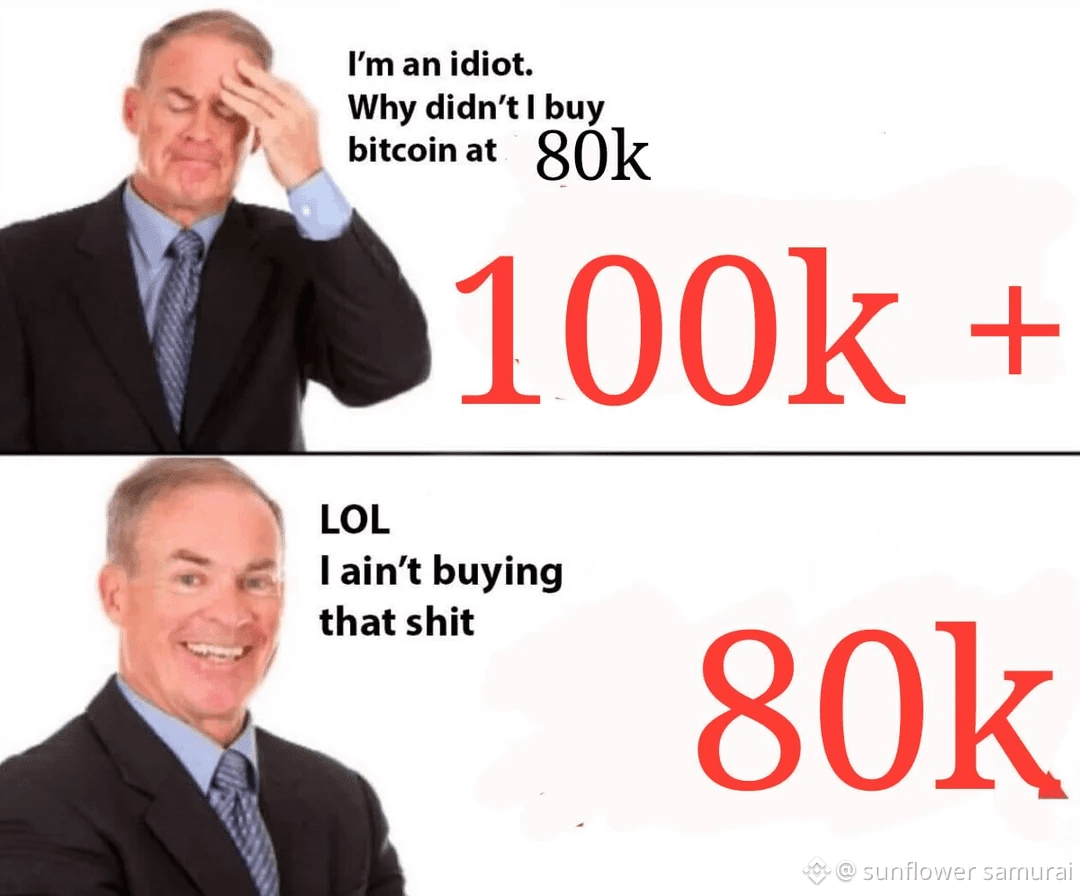
ABSTRAX:
😁😁
1
2
449
Log in to explore more content
Join global crypto users on Binance Square
⚡️ Get latest and useful information about crypto.
💬 Trusted by the world’s largest crypto exchange.
👍 Discover real insights from verified creators.
Email / Phone number
Trending Topics
1
#BinancePick
2.6M views
141,866 Discussing
2
#EarningsSeason
5M views
24,364 Discussing
3
#FranklinTempletonFilesForTwoDividendToBitcoinETFs
2,034 views
111 Discussing
4
#StrategyMSTRSurpassesNasdaqInMarketCap
2,387 views
102 Discussing
5
#CanadaProposesStablecoinRedemptionWithin3BusinessDays
103 views
13 Discussing
6
#ElectrumWalletBugLetRogueServersStealFunds
8,951 views
236 Discussing
7
#ArgentineCourtDismissesLIBRACaseAgainstMilei
19,084 views
317 Discussing
8
#SKHynixReportedlyPlansSpecialDividendFromKioxiaStakeSale
3,158 views
48 Discussing
9
#KeystoneWebsiteBreachExposesBuyersShippingAddresses
1,688 views
41 Discussing
10
#USQ3GDPAndSeptemberPCEDueNextWeek
96,688 views
1,135 Discussing