
#cryptotrends2027
cryptotrends2027
11 views
2 Discussing
Hot
Latest

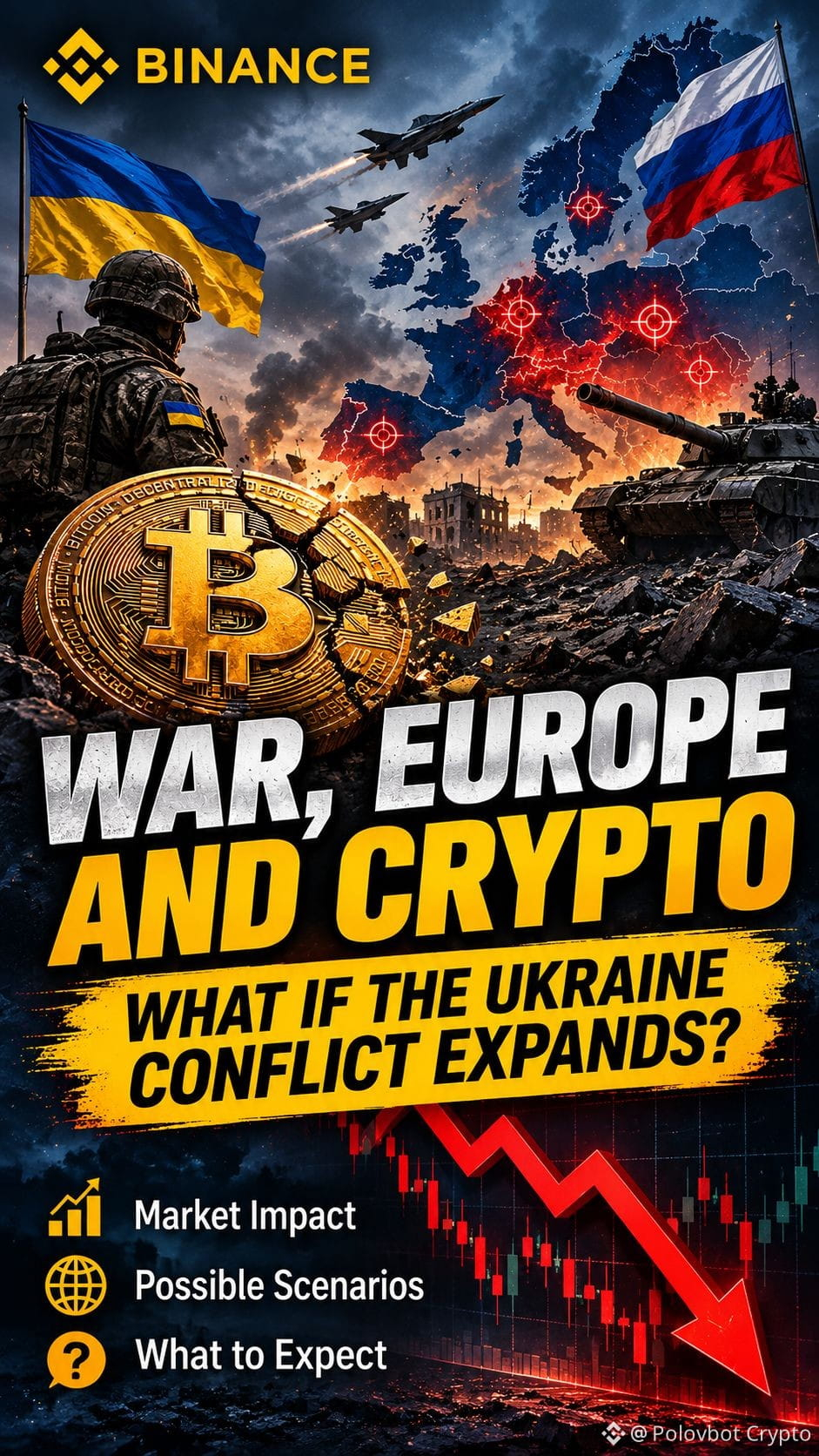
War, Europe & Crypto: What If the Conflict Expands?
Wars create uncertainty across global financial markets. Crypto is no exception. Despite Bitcoin's “digital gold” narrative, during major crises it often behaves like a risk asset.
How War Affects Crypto
• Risk aversion: Investors sell risky assets and seek cash or safe havens.
• Liquidity shocks: Panic can trigger sell-offs and mass liquidations.
• Inflation: Rising energy prices may affect interest rates and liquidity.
• Alternative demand: Bitcoin and stablecoins may become more attractive amid banking disruptions or currency instability.
What If the War Spreads Across Europe?
A wider conflict could trigger a major market shock. Bitcoin and altcoins might initially fall as investors reduce risk. European markets, energy prices, inflation, and global economic confidence could face serious pressure.
Possible Scenarios
Short-term: Panic, volatility, sell-offs, and potential crypto market decline.
Medium-term: Growing demand for Bitcoin and stablecoins as alternative financial tools.
Long-term: Increased interest in decentralized assets if trust in traditional systems weakens.
My Outlook
Bitcoin is not guaranteed to be a safe haven during war. A wider conflict could cause a significant initial decline. However, prolonged instability could strengthen the long-term case for decentralized assets.
In such conditions, risk management and patience may be more important than trying to predict the bottom.
War is a human tragedy first, not a financial opportunity.
This is not financial advice.
#Geopolitics #BTC #CryptoTrends2027 #Bitcoin2027
1
58
Log in to explore more content
Join global crypto users on Binance Square
⚡️ Get latest and useful information about crypto.
💬 Trusted by the world’s largest crypto exchange.
👍 Discover real insights from verified creators.
Email / Phone number
Trending Topics
1
#EvolveAtBinanceBlockchainWeek
1.8M views
17,929 Discussing
2
#BitcoinETFsExtendOutflowStreakToEightDays
8,160 views
98 Discussing
3
#ColdcardFlawLeadsToTheftOfAtLeast1789BTC
55,279 views
545 Discussing
4
#SECIssuesNoActionLetterOnMoleculeModel
11,789 views
180 Discussing
5
#MalaysiaFirstBitcoinETFToListOnDecember2
24,606 views
242 Discussing
6
#VitalikWantsWalletChipDesignsOpened
60,821 views
593 Discussing
7
#ChainflipVaultTheftHaltsProtocol
37,606 views
466 Discussing
8
#EthereumGlamsterdamKeepsStorageFeeChange
69,309 views
646 Discussing
9
#FranklinTempletonPlansToAddHYPEToCryptoIndexETF
2 views
1 Discussing
10
#EnishPlansToSell5932SOL
3,121 views
9 Discussing