

#cryptopolicy
cryptopolicy
412,884 views
1,829 Discussing
Hot
Latest

California just drew a hard line between public service and digital speculation. Governor Newsom signing a law banning politicians from minting meme coins and stopping exchanges from listing them is a fascinating step. While it might kill the comedy potential of political tokens, it injects some much-needed ethical clarity into a wild market. Expect other states to watch this experiment closely as crypto regulation evolves. #Regulation #Newsom #CryptoPolicy
California just drew a hard line between public service and digital speculation. Governor Newsom signing a law banning politicians from minting meme coins and stopping exchanges from listing them is a fascinating step. While it might kill the comedy potential of political tokens, it injects some much-needed ethical clarity into a wild market. Expect other states to watch this experiment closely as crypto regulation evolves. #Regulation #Newsom #CryptoPolicy
1
The recent collapse of the Clarity Act reveals just how fragile crypto legislation can be when stakeholders cannot align. Months of intense negotiations crumbled due to deep-seated disagreements across nearly every drafting phase. For the digital asset industry, this setback is a stark reminder that regulatory clarity will remain an uphill battle. Lawmakers and crypto leaders must bridge major divides before any meaningful framework can realistically cross the finish line on Capitol Hill. #CryptoRegulation #ClarityAct #CryptoPolicy
The recent collapse of the Clarity Act reveals just how fragile crypto legislation can be when stakeholders cannot align. Months of intense negotiations crumbled due to deep-seated disagreements across nearly every drafting phase. For the digital asset industry, this setback is a stark reminder that regulatory clarity will remain an uphill battle. Lawmakers and crypto leaders must bridge major divides before any meaningful framework can realistically cross the finish line on Capitol Hill. #CryptoRegulation #ClarityAct #CryptoPolicy
26

·
--
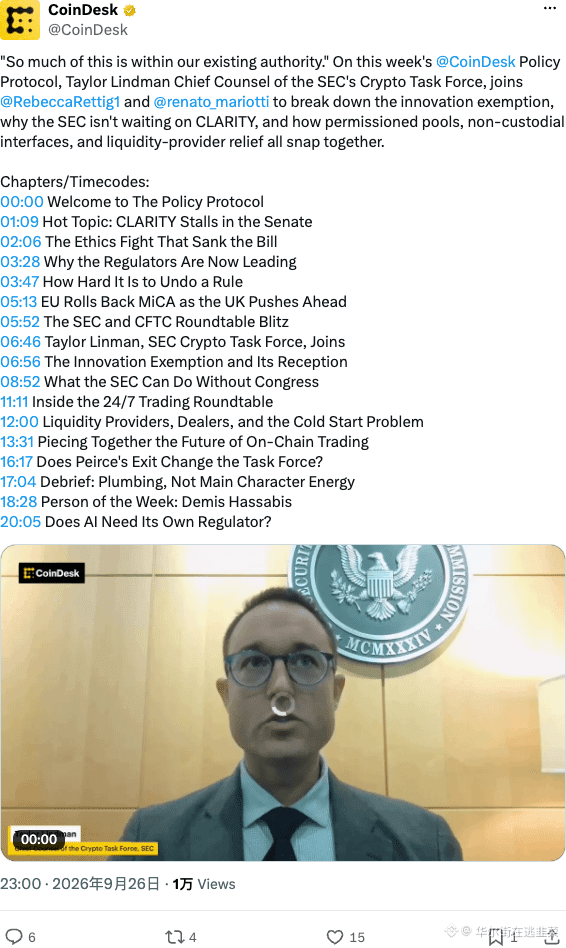
SEC加密任务组首席律师直接放话:很多事现在就能干,不用等CLARITY法案。
意思是这帮人要用现有权限放手干了,豁免创新、permissioned pools、非托管接口、LP救助全往一块拼。国会扯皮,监管自己先下场,对行业来说确定性来得比预期快。
但别高兴太早,监管主动了,接下来就是规矩密集落地,合规成本才刚开始算。
$BTC $ETH #CryptoPolicy
SEC加密任务组首席律师直接放话:很多事现在就能干,不用等CLARITY法案。
意思是这帮人要用现有权限放手干了,豁免创新、permissioned pools、非托管接口、LP救助全往一块拼。国会扯皮,监管自己先下场,对行业来说确定性来得比预期快。
但别高兴太早,监管主动了,接下来就是规矩密集落地,合规成本才刚开始算。
$BTC $ETH #CryptoPolicy
意思是这帮人要用现有权限放手干了,豁免创新、permissioned pools、非托管接口、LP救助全往一块拼。国会扯皮,监管自己先下场,对行业来说确定性来得比预期快。
但别高兴太早,监管主动了,接下来就是规矩密集落地,合规成本才刚开始算。
$BTC $ETH #CryptoPolicy
261


Flash update. Big leadership shift hits the crypto policy front. 🚨 Summer Mersinger is stepping down as Blockchain Association CEO next month. Kristin Smith returns as interim chief to steer the $BTC and $ETH advocacy fight. 📉 Key takeaways: 1. Mersinger departs after a notable tenure. 2. Smith resumes the helm during critical regulatory battles. 3. Policy strategy faces a crucial transition period. Stay sharp and track the updates here. #Write2Earn #CryptoPolicy #BlockchainAssociation #Regulation
Flash update. Big leadership shift hits the crypto policy front. 🚨 Summer Mersinger is stepping down as Blockchain Association CEO next month. Kristin Smith returns as interim chief to steer the $BTC and $ETH advocacy fight. 📉 Key takeaways: 1. Mersinger departs after a notable tenure. 2. Smith resumes the helm during critical regulatory battles. 3. Policy strategy faces a crucial transition period. Stay sharp and track the updates here. #Write2Earn #CryptoPolicy #BlockchainAssociation #Regulation
113
Regulatory headwinds just reshaped the lobbying battlefield. The Blockchain Association announced a leadership shift right on the heels of the Crypto Clarity Act stalling out in Washington. Policy battles are grinding gears, and Capitol Hill pressure is mounting fast for digital assets. Watch how institutional advocacy pivots next. #Write2Earn $BTC #CryptoPolicy #Regulation #Blockchain
Regulatory headwinds just reshaped the lobbying battlefield. The Blockchain Association announced a leadership shift right on the heels of the Crypto Clarity Act stalling out in Washington. Policy battles are grinding gears, and Capitol Hill pressure is mounting fast for digital assets. Watch how institutional advocacy pivots next. #Write2Earn $BTC #CryptoPolicy #Regulation #Blockchain

100

The hunt for a crypto czar intensifies
Trump is reportedly looking to appoint a US Treasury secretary candidate to the critical AI and crypto czar role. This shift could signal major changes for US digital asset regulation.
#CryptoPolicy #USRegulation
The hunt for a crypto czar intensifies
Trump is reportedly looking to appoint a US Treasury secretary candidate to the critical AI and crypto czar role. This shift could signal major changes for US digital asset regulation.
#CryptoPolicy #USRegulation
Trump is reportedly looking to appoint a US Treasury secretary candidate to the critical AI and crypto czar role. This shift could signal major changes for US digital asset regulation.
#CryptoPolicy #USRegulation


·
--
🔴 Bearish
🚨 CLARITY Act Fails in Senate - Regulatory Uncertainty Continues
The CLARITY Act, aiming to provide a clear regulatory framework for crypto, failed to pass the Senate with a 49-50 vote. This marks a significant setback for comprehensive crypto legislation in the US for 2026.
📊 Market Impact: While not an immediate crash, this creates continued regulatory uncertainty, which can deter institutional investment and slow down innovation. Expect some cautious sentiment in the short term, especially for projects seeking clear US compliance. The SEC and CFTC are now expected to continue their own rulemaking.
#RegulatoryNews #CryptoPolicy
🔴 Bearish
🚨 CLARITY Act Fails in Senate - Regulatory Uncertainty Continues
The CLARITY Act, aiming to provide a clear regulatory framework for crypto, failed to pass the Senate with a 49-50 vote. This marks a significant setback for comprehensive crypto legislation in the US for 2026.
📊 Market Impact: While not an immediate crash, this creates continued regulatory uncertainty, which can deter institutional investment and slow down innovation. Expect some cautious sentiment in the short term, especially for projects seeking clear US compliance. The SEC and CFTC are now expected to continue their own rulemaking.
#RegulatoryNews #CryptoPolicy
🚨 CLARITY Act Fails in Senate - Regulatory Uncertainty Continues
The CLARITY Act, aiming to provide a clear regulatory framework for crypto, failed to pass the Senate with a 49-50 vote. This marks a significant setback for comprehensive crypto legislation in the US for 2026.
📊 Market Impact: While not an immediate crash, this creates continued regulatory uncertainty, which can deter institutional investment and slow down innovation. Expect some cautious sentiment in the short term, especially for projects seeking clear US compliance. The SEC and CFTC are now expected to continue their own rulemaking.
#RegulatoryNews #CryptoPolicy
24

·
--
李运当选深圳新市长!作为中国科技创新之都,深圳的每一步政策变化都可能影响整个加密货币行业。这位新领导会有什么新动向?若延续科技友好政策,深圳的区块链企业或将迎来新机遇。别忘了,深圳可是数字货币试点的重要城市,密切关注后续政策变化!$BTC #深圳 #区块链政策
New mayor Li elected in Shenzhen! As China's tech innovation hub, Shenzhen's policy shifts can impact the crypto landscape. Will this leadership bring fresh perspectives? If tech-friendly policies continue, blockchain firms in Shenzhen could see new opportunities. Remember, Shenzhen is key to China's digital currency pilot program. Stay tuned for policy updates! $BTC #Shenzhen #CryptoPolicy
李运当选深圳新市长!作为中国科技创新之都,深圳的每一步政策变化都可能影响整个加密货币行业。这位新领导会有什么新动向?若延续科技友好政策,深圳的区块链企业或将迎来新机遇。别忘了,深圳可是数字货币试点的重要城市,密切关注后续政策变化!$BTC #深圳 #区块链政策
New mayor Li elected in Shenzhen! As China's tech innovation hub, Shenzhen's policy shifts can impact the crypto landscape. Will this leadership bring fresh perspectives? If tech-friendly policies continue, blockchain firms in Shenzhen could see new opportunities. Remember, Shenzhen is key to China's digital currency pilot program. Stay tuned for policy updates! $BTC #Shenzhen #CryptoPolicy
New mayor Li elected in Shenzhen! As China's tech innovation hub, Shenzhen's policy shifts can impact the crypto landscape. Will this leadership bring fresh perspectives? If tech-friendly policies continue, blockchain firms in Shenzhen could see new opportunities. Remember, Shenzhen is key to China's digital currency pilot program. Stay tuned for policy updates! $BTC #Shenzhen #CryptoPolicy
116
The US commodity regulator is stepping up with a fresh crypto oversight plan submitted directly for White House review. This strategic move follows the Senate stumbling on the CLARITY Act, signaling that federal agencies are eager to fill the legislative void. While regulatory clarity is often welcomed by institutions, we should watch closely to see how aggressive this framework becomes and whether it creates hurdles for decentralized innovation or provides the green light for broader capital inflow. #Regulation #CFTC #CryptoPolicy
The US commodity regulator is stepping up with a fresh crypto oversight plan submitted directly for White House review. This strategic move follows the Senate stumbling on the CLARITY Act, signaling that federal agencies are eager to fill the legislative void. While regulatory clarity is often welcomed by institutions, we should watch closely to see how aggressive this framework becomes and whether it creates hurdles for decentralized innovation or provides the green light for broader capital inflow. #Regulation #CFTC #CryptoPolicy
3

🚨 U.S. HOUSE PUSHES STRATEGIC $BTC RESERVE BILL AS CAPITOL HILL HEATS UP! ⚡
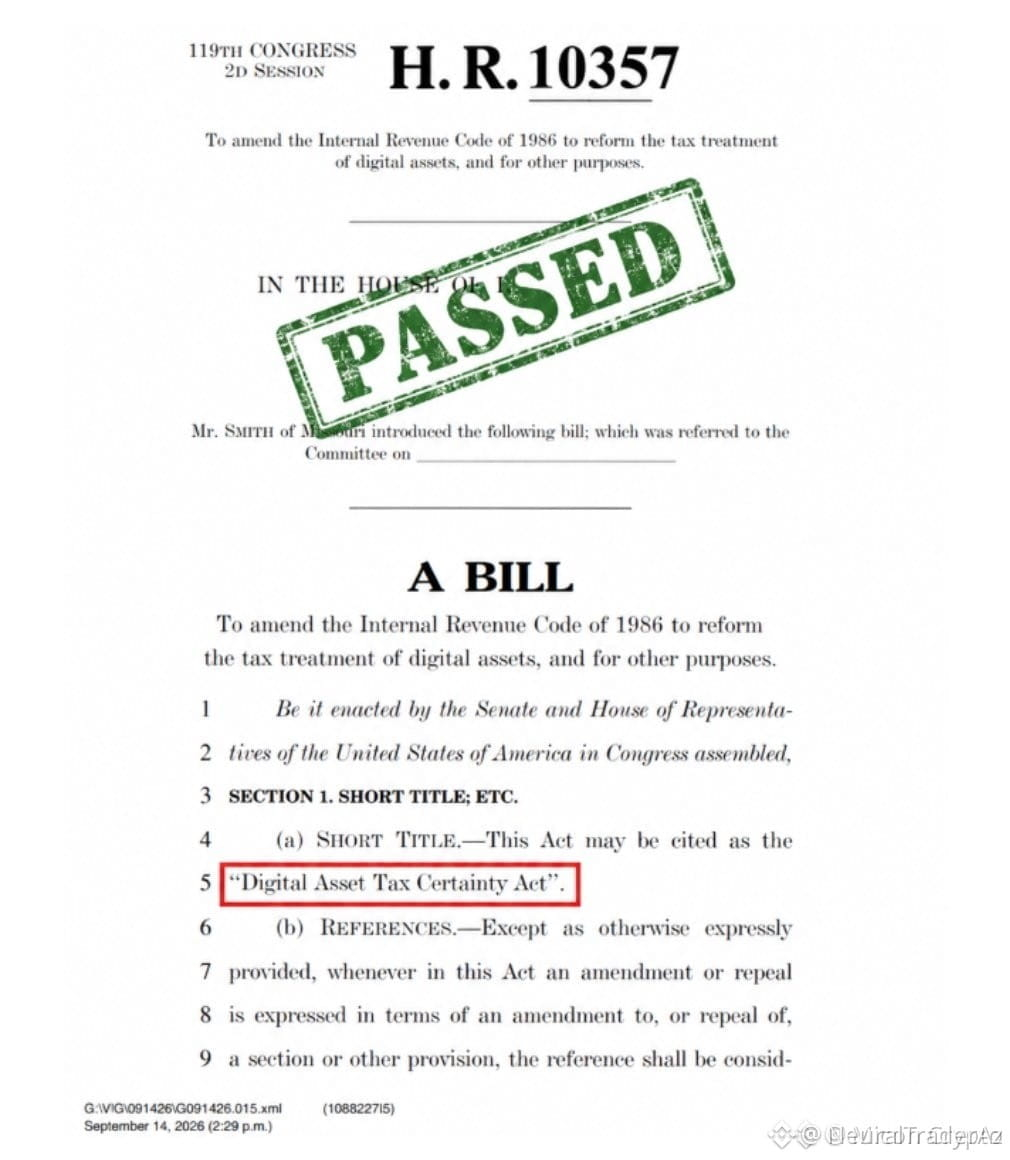
While the Senate drags its feet on the CLARITY Act, Capitol Hill is witnessing real institutional momentum today. 📌 The House Financial Services Committee is reviewing key crypto legislation, including the landmark U.S. strategic $BTC reserve bill alongside critical tax updates.
💡 When lawmakers start treating digital assets as strategic treasury reserves, smart money order flow quietly repositions long before headlines hit mainstream feeds. 📊 Regulatory clarity often acts as the silent catalyst for macro trend reversals.
🤔 Will an official strategic reserve bill ignite the next multi-month bull expansion, or are markets pricing this in too early? 👇
⚠️ Not financial advice. Always manage your risk. 🛡️
🏷️ #BTC #Bitcoin #CryptoPolicy #MacroTrend
⚡ 🐂
🚨 U.S. HOUSE PUSHES STRATEGIC $BTC RESERVE BILL AS CAPITOL HILL HEATS UP! ⚡
While the Senate drags its feet on the CLARITY Act, Capitol Hill is witnessing real institutional momentum today. 📌 The House Financial Services Committee is reviewing key crypto legislation, including the landmark U.S. strategic $BTC reserve bill alongside critical tax updates.
💡 When lawmakers start treating digital assets as strategic treasury reserves, smart money order flow quietly repositions long before headlines hit mainstream feeds. 📊 Regulatory clarity often acts as the silent catalyst for macro trend reversals.
🤔 Will an official strategic reserve bill ignite the next multi-month bull expansion, or are markets pricing this in too early? 👇
⚠️ Not financial advice. Always manage your risk. 🛡️
🏷️ #BTC #Bitcoin #CryptoPolicy #MacroTrend
⚡ 🐂
While the Senate drags its feet on the CLARITY Act, Capitol Hill is witnessing real institutional momentum today. 📌 The House Financial Services Committee is reviewing key crypto legislation, including the landmark U.S. strategic $BTC reserve bill alongside critical tax updates.
💡 When lawmakers start treating digital assets as strategic treasury reserves, smart money order flow quietly repositions long before headlines hit mainstream feeds. 📊 Regulatory clarity often acts as the silent catalyst for macro trend reversals.
🤔 Will an official strategic reserve bill ignite the next multi-month bull expansion, or are markets pricing this in too early? 👇
⚠️ Not financial advice. Always manage your risk. 🛡️
🏷️ #BTC #Bitcoin #CryptoPolicy #MacroTrend
⚡ 🐂
14

US LEGISLATION PROPOSES MICRO-TRANSACTION TAX EXEMPTION AS CAPITAL EFFICIENCY EXPANDS $SYN 🏛️ 📈
Regulatory clarity is structurally altering on-chain order flow dynamics. The legislative proposal exempting gas fees under $10 systematically removes micro-transaction friction, establishing a baseline for sustained retail velocity. 📊 This structural relief effectively eliminates tax overhead on micro-transfers, opening up fresh liquidity channels across decentralized networks.
Institutional positioning reflects this shifting regulatory landscape as smart money eyes key utility infrastructure like $SYN and $LSK . 🔍 Systemic friction reduction typically precedes prolonged structural accumulation before market expansion. 💬 Do you expect this tax carve-out to trigger an immediate surge in daily active user metrics? 👇
⚠️ Not financial advice. Always manage your risk. 🛡️
🏷️ #SYN #CryptoPolicy #MarketStructure #CryptoNews
🦈 ⚡
US LEGISLATION PROPOSES MICRO-TRANSACTION TAX EXEMPTION AS CAPITAL EFFICIENCY EXPANDS $SYN 🏛️ 📈
Regulatory clarity is structurally altering on-chain order flow dynamics. The legislative proposal exempting gas fees under $10 systematically removes micro-transaction friction, establishing a baseline for sustained retail velocity. 📊 This structural relief effectively eliminates tax overhead on micro-transfers, opening up fresh liquidity channels across decentralized networks.
Institutional positioning reflects this shifting regulatory landscape as smart money eyes key utility infrastructure like $SYN and $LSK . 🔍 Systemic friction reduction typically precedes prolonged structural accumulation before market expansion. 💬 Do you expect this tax carve-out to trigger an immediate surge in daily active user metrics? 👇
⚠️ Not financial advice. Always manage your risk. 🛡️
🏷️ #SYN #CryptoPolicy #MarketStructure #CryptoNews
🦈 ⚡
Regulatory clarity is structurally altering on-chain order flow dynamics. The legislative proposal exempting gas fees under $10 systematically removes micro-transaction friction, establishing a baseline for sustained retail velocity. 📊 This structural relief effectively eliminates tax overhead on micro-transfers, opening up fresh liquidity channels across decentralized networks.
Institutional positioning reflects this shifting regulatory landscape as smart money eyes key utility infrastructure like $SYN and $LSK . 🔍 Systemic friction reduction typically precedes prolonged structural accumulation before market expansion. 💬 Do you expect this tax carve-out to trigger an immediate surge in daily active user metrics? 👇
⚠️ Not financial advice. Always manage your risk. 🛡️
🏷️ #SYN #CryptoPolicy #MarketStructure #CryptoNews
🦈 ⚡
376

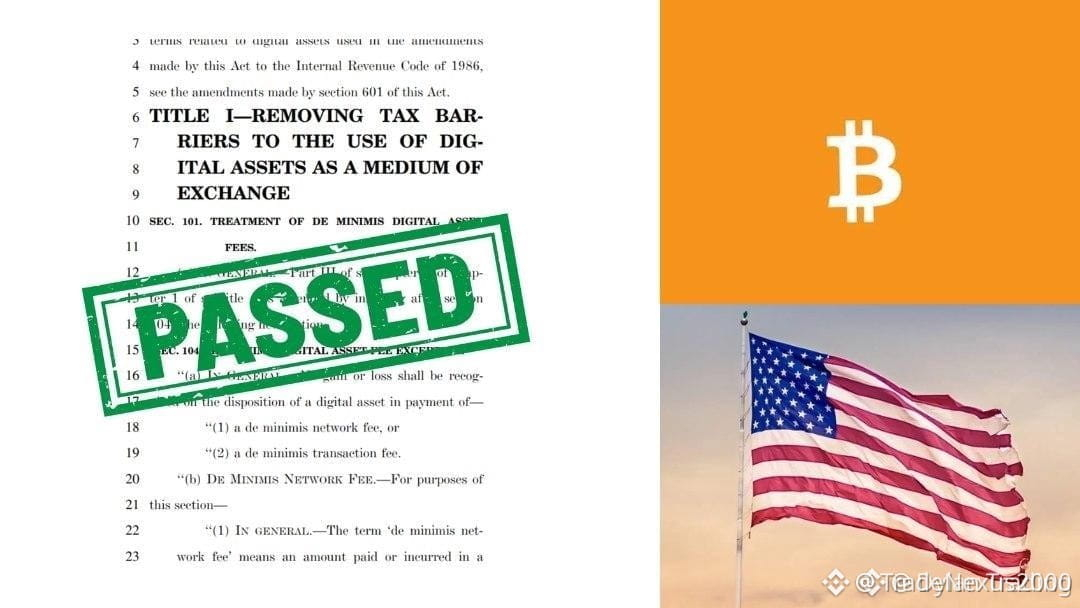
🚨 US HOUSE COMMITTEE ADVANCES TAX BILL EXEMPTING SMALL TRANSACTIONS FOR $SOL AND $BNB ⚡
Institutional adoption requires friction-free transactional velocity. 📊 The US House committee advancing legislation to exempt crypto transaction fees under $10 from capital gains represents a massive structural shift for high-throughput networks like $SOL , $BNB , and $ZEC . ⚡
Eliminating tax reporting overhead on micro-transfers removes regulatory compliance drag and unlocks seamless ecosystem liquidity flow. 🔍 Institutional players track policy catalysts like this because long-term adoption demands zero friction at the settlement layer. 💡
💬 Will this tax exemption trigger a massive wave of micro-transaction velocity across major chains? 👇
⚠️ Not financial advice. Always manage your risk. 🛡️
🏷️ #SOL #BNB #ZEC #CryptoPolicy #MarketStructure
⚡ 🎯
🚨 US HOUSE COMMITTEE ADVANCES TAX BILL EXEMPTING SMALL TRANSACTIONS FOR $SOL AND $BNB ⚡
Institutional adoption requires friction-free transactional velocity. 📊 The US House committee advancing legislation to exempt crypto transaction fees under $10 from capital gains represents a massive structural shift for high-throughput networks like $SOL , $BNB , and $ZEC . ⚡
Eliminating tax reporting overhead on micro-transfers removes regulatory compliance drag and unlocks seamless ecosystem liquidity flow. 🔍 Institutional players track policy catalysts like this because long-term adoption demands zero friction at the settlement layer. 💡
💬 Will this tax exemption trigger a massive wave of micro-transaction velocity across major chains? 👇
⚠️ Not financial advice. Always manage your risk. 🛡️
🏷️ #SOL #BNB #ZEC #CryptoPolicy #MarketStructure
⚡ 🎯
Institutional adoption requires friction-free transactional velocity. 📊 The US House committee advancing legislation to exempt crypto transaction fees under $10 from capital gains represents a massive structural shift for high-throughput networks like $SOL , $BNB , and $ZEC . ⚡
Eliminating tax reporting overhead on micro-transfers removes regulatory compliance drag and unlocks seamless ecosystem liquidity flow. 🔍 Institutional players track policy catalysts like this because long-term adoption demands zero friction at the settlement layer. 💡
💬 Will this tax exemption trigger a massive wave of micro-transaction velocity across major chains? 👇
⚠️ Not financial advice. Always manage your risk. 🛡️
🏷️ #SOL #BNB #ZEC #CryptoPolicy #MarketStructure
⚡ 🎯
315

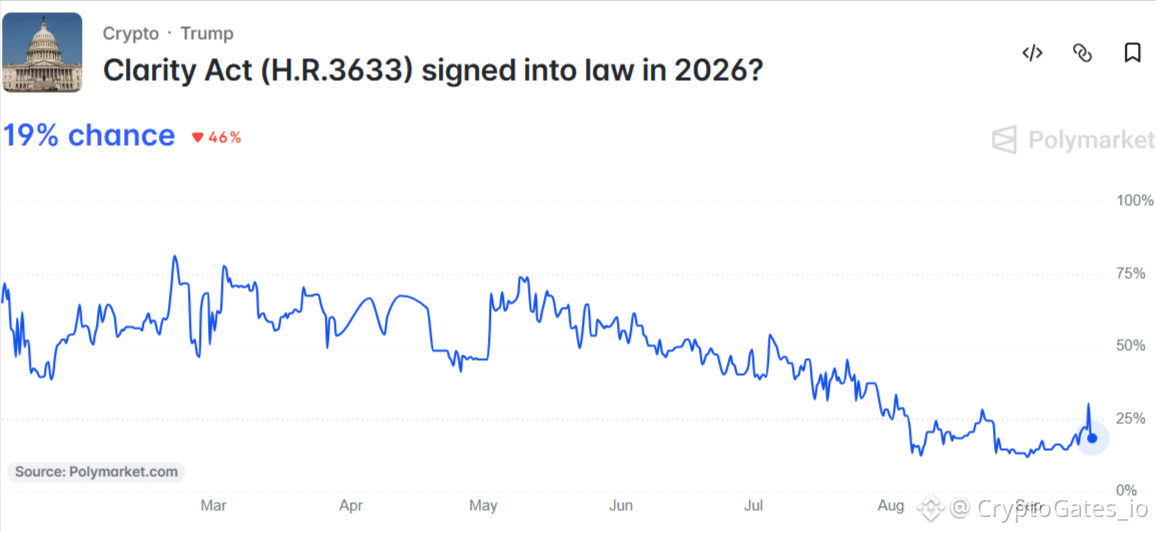
Polymarket update: "Clarity Act (H.R.3633) signed into law in 2026" market is pricing a 19% chance, a 46% drop from prior levels.
Context: the Senate holds a cloture vote today at 2:15pm ET. This is a procedural vote requiring 60 votes to proceed to floor debate, not a final passage vote. The market has already repriced from a February high near 82% down to current levels well ahead of the result.
Two outcomes worth mapping rather than predicting:
If cloture fails: the bill is effectively closed out for 2026, with any revival pushed into the next Congress.
If cloture clears 60: the current pricing leaves significant room for repositioning given how low sentiment already sits.
Legislative outcomes are binary and headline-driven, which makes them poor candidates for conviction-based positioning.
Scenario mapping and price-based confirmation remain the more disciplined approach here.
#ClarityAct #CryptoPolicy
Polymarket update: "Clarity Act (H.R.3633) signed into law in 2026" market is pricing a 19% chance, a 46% drop from prior levels.
Context: the Senate holds a cloture vote today at 2:15pm ET. This is a procedural vote requiring 60 votes to proceed to floor debate, not a final passage vote. The market has already repriced from a February high near 82% down to current levels well ahead of the result.
Two outcomes worth mapping rather than predicting:
If cloture fails: the bill is effectively closed out for 2026, with any revival pushed into the next Congress.
If cloture clears 60: the current pricing leaves significant room for repositioning given how low sentiment already sits.
Legislative outcomes are binary and headline-driven, which makes them poor candidates for conviction-based positioning.
Scenario mapping and price-based confirmation remain the more disciplined approach here.
#ClarityAct #CryptoPolicy
Context: the Senate holds a cloture vote today at 2:15pm ET. This is a procedural vote requiring 60 votes to proceed to floor debate, not a final passage vote. The market has already repriced from a February high near 82% down to current levels well ahead of the result.
Two outcomes worth mapping rather than predicting:
If cloture fails: the bill is effectively closed out for 2026, with any revival pushed into the next Congress.
If cloture clears 60: the current pricing leaves significant room for repositioning given how low sentiment already sits.
Legislative outcomes are binary and headline-driven, which makes them poor candidates for conviction-based positioning.
Scenario mapping and price-based confirmation remain the more disciplined approach here.
#ClarityAct #CryptoPolicy
352

🚨 $ASTR FACES REGULATORY BATTLE AS CONGRESS MULLS CRYPTO CLARITY ACT 🦈
📊 The New York Attorney General’s coalition is slamming the door on the Crypto Clarity Act, a move that could lock in institutional confidence and steady the order flow. ⚡ Smart money sees this as a potential liquidity shield – a barrier that might prevent a sudden sell‑off and keep the whales from being forced to unwind positions. 🦈 Yet the flip side is a possible choke on transparency, which could ignite volatility once the dust settles. 💡 How will the market pulse react to this regulatory tug‑of‑war?
⚠️ Not financial advice. Always manage your risk. 🛡️
🏷️ #ASTR #Regulation #CryptoPolicy #MarketRisk
🦈 🚀
🚨 $ASTR FACES REGULATORY BATTLE AS CONGRESS MULLS CRYPTO CLARITY ACT 🦈
📊 The New York Attorney General’s coalition is slamming the door on the Crypto Clarity Act, a move that could lock in institutional confidence and steady the order flow. ⚡ Smart money sees this as a potential liquidity shield – a barrier that might prevent a sudden sell‑off and keep the whales from being forced to unwind positions. 🦈 Yet the flip side is a possible choke on transparency, which could ignite volatility once the dust settles. 💡 How will the market pulse react to this regulatory tug‑of‑war?
⚠️ Not financial advice. Always manage your risk. 🛡️
🏷️ #ASTR #Regulation #CryptoPolicy #MarketRisk
🦈 🚀
📊 The New York Attorney General’s coalition is slamming the door on the Crypto Clarity Act, a move that could lock in institutional confidence and steady the order flow. ⚡ Smart money sees this as a potential liquidity shield – a barrier that might prevent a sudden sell‑off and keep the whales from being forced to unwind positions. 🦈 Yet the flip side is a possible choke on transparency, which could ignite volatility once the dust settles. 💡 How will the market pulse react to this regulatory tug‑of‑war?
⚠️ Not financial advice. Always manage your risk. 🛡️
🏷️ #ASTR #Regulation #CryptoPolicy #MarketRisk
🦈 🚀

66
🚨 $BTC & $XRP ON THE BRINK OF LEGAL TURNING POINT! 🦈
The Senate’s CLARITY Act vote tomorrow could rewrite the rulebook for $BTC and $XRP , forcing top‑tier exchanges into a tighter SEC/CFTC framework. 🦈 Institutional liquidity pools are already re‑positioning, eyeing the new custody and segregation mandates as a catalyst for renewed capital inflow. 📊
Republicans have already swallowed 126 Democrat‑driven edits, including ethics safeguards that lock down insider exposure. With only seven cross‑aisle votes needed, the window to lock in a regulatory tailwind is razor‑thin. ⚡
💬 Do you see this legislative push as the spark that will rekindle institutional appetite for crypto? 👇
⚠️ Not financial advice. Always manage your risk. 🛡️
🏷️ #BTC #Regulation #ClarityAct #CryptoPolicy
🔥 🦈
🚨 $BTC & $XRP ON THE BRINK OF LEGAL TURNING POINT! 🦈
The Senate’s CLARITY Act vote tomorrow could rewrite the rulebook for $BTC and $XRP , forcing top‑tier exchanges into a tighter SEC/CFTC framework. 🦈 Institutional liquidity pools are already re‑positioning, eyeing the new custody and segregation mandates as a catalyst for renewed capital inflow. 📊
Republicans have already swallowed 126 Democrat‑driven edits, including ethics safeguards that lock down insider exposure. With only seven cross‑aisle votes needed, the window to lock in a regulatory tailwind is razor‑thin. ⚡
💬 Do you see this legislative push as the spark that will rekindle institutional appetite for crypto? 👇
⚠️ Not financial advice. Always manage your risk. 🛡️
🏷️ #BTC #Regulation #ClarityAct #CryptoPolicy
🔥 🦈
The Senate’s CLARITY Act vote tomorrow could rewrite the rulebook for $BTC and $XRP , forcing top‑tier exchanges into a tighter SEC/CFTC framework. 🦈 Institutional liquidity pools are already re‑positioning, eyeing the new custody and segregation mandates as a catalyst for renewed capital inflow. 📊
Republicans have already swallowed 126 Democrat‑driven edits, including ethics safeguards that lock down insider exposure. With only seven cross‑aisle votes needed, the window to lock in a regulatory tailwind is razor‑thin. ⚡
💬 Do you see this legislative push as the spark that will rekindle institutional appetite for crypto? 👇
⚠️ Not financial advice. Always manage your risk. 🛡️
🏷️ #BTC #Regulation #ClarityAct #CryptoPolicy
🔥 🦈
26

·
--
🚨 $BTC REGULATORY STORM: SENATE CLARITY ACT UNDER FIRE 🦈
📊 The Senate’s CLARITY Act is hitting a wall as ranking Democrat Elizabeth Warren prepares to denounce it as a “weak fig leaf.” 🦈 The revised bill now bans the president and senior officials from issuing digital assets and hands enforcement to state attorneys general, yet loopholes linger for entrenched interests.
Smart‑money flows are already reacting; on‑chain metrics show a subtle dip in inflows to top‑tier exchanges, while futures markets price in a modest risk premium. 📈 Institutional players may tighten liquidity windows, awaiting a clearer regulatory horizon before reallocating capital. 💡
💬 How will this regulatory turbulence reshape the next week’s market structure? 👇
⚠️ Not financial advice. Always manage your risk. 🛡️
🏷️ #BTC #Regulation #CryptoPolicy #MarketStructure
🔥 🦈
🚨 $BTC REGULATORY STORM: SENATE CLARITY ACT UNDER FIRE 🦈
📊 The Senate’s CLARITY Act is hitting a wall as ranking Democrat Elizabeth Warren prepares to denounce it as a “weak fig leaf.” 🦈 The revised bill now bans the president and senior officials from issuing digital assets and hands enforcement to state attorneys general, yet loopholes linger for entrenched interests.
Smart‑money flows are already reacting; on‑chain metrics show a subtle dip in inflows to top‑tier exchanges, while futures markets price in a modest risk premium. 📈 Institutional players may tighten liquidity windows, awaiting a clearer regulatory horizon before reallocating capital. 💡
💬 How will this regulatory turbulence reshape the next week’s market structure? 👇
⚠️ Not financial advice. Always manage your risk. 🛡️
🏷️ #BTC #Regulation #CryptoPolicy #MarketStructure
🔥 🦈
📊 The Senate’s CLARITY Act is hitting a wall as ranking Democrat Elizabeth Warren prepares to denounce it as a “weak fig leaf.” 🦈 The revised bill now bans the president and senior officials from issuing digital assets and hands enforcement to state attorneys general, yet loopholes linger for entrenched interests.
Smart‑money flows are already reacting; on‑chain metrics show a subtle dip in inflows to top‑tier exchanges, while futures markets price in a modest risk premium. 📈 Institutional players may tighten liquidity windows, awaiting a clearer regulatory horizon before reallocating capital. 💡
💬 How will this regulatory turbulence reshape the next week’s market structure? 👇
⚠️ Not financial advice. Always manage your risk. 🛡️
🏷️ #BTC #Regulation #CryptoPolicy #MarketStructure
🔥 🦈
10

·
--
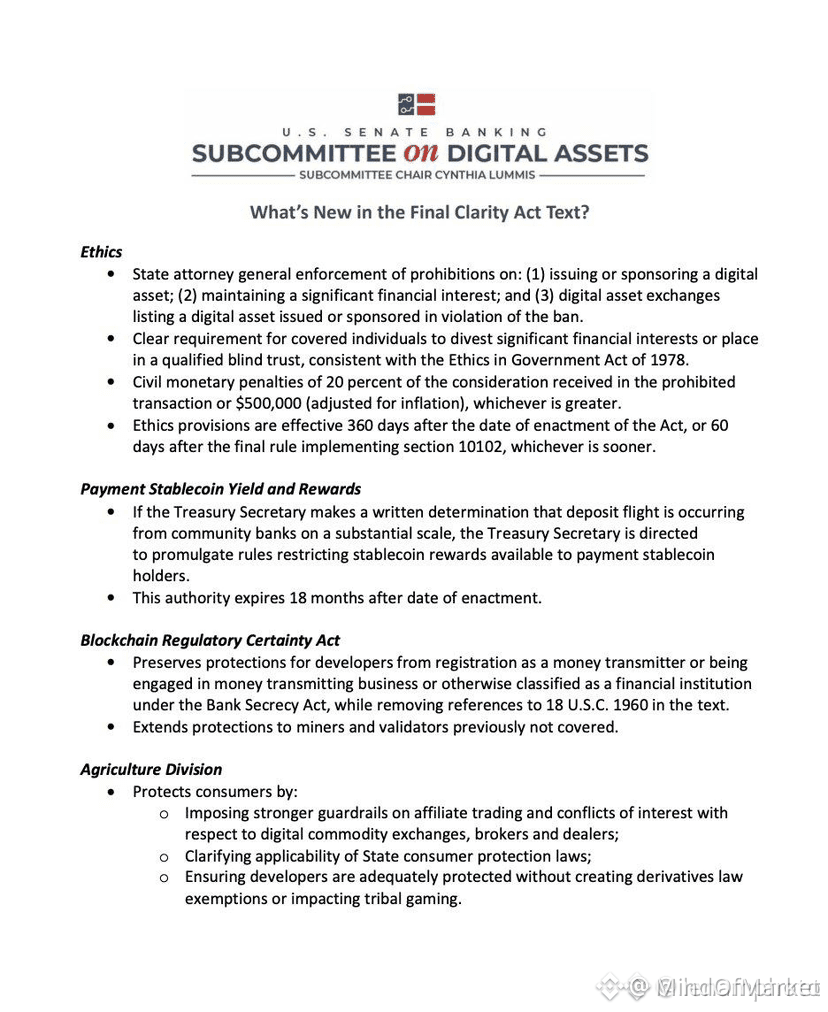
🚨 SENATE UNVEILS REVISED CLARITY ACT DRAFT WITH 126 AMENDMENTS BEFORE CRITICAL VOTE $BTC ⚡
Institutional market structure hinges on regulatory clarity, and the latest CLARITY Act revision introduces 126 structural adjustments ahead of the Senate vote. 🏛️ Key revisions mandate strict divestment rules for federal officials while establishing temporary Treasury oversight on stablecoin yield mechanisms to protect traditional bank deposits.
🔍 While shielding noncustodial developers remains intact, the removal of explicit criminal exemptions highlights shifting policy boundaries that institutional allocators are watching closely. 💡 As liquidity re-evaluates the regulatory landscape across major assets like $BTC , market structure will quickly reveal where smart capital decides to position. 💬 How will this legislative pivot reshape institutional capital flows across the market? 👇
⚠️ Not financial advice. Always manage your risk. 🛡️
🏷️ #BTC #CLARITYAct #CryptoPolicy #MarketStructure
🎯 🦈
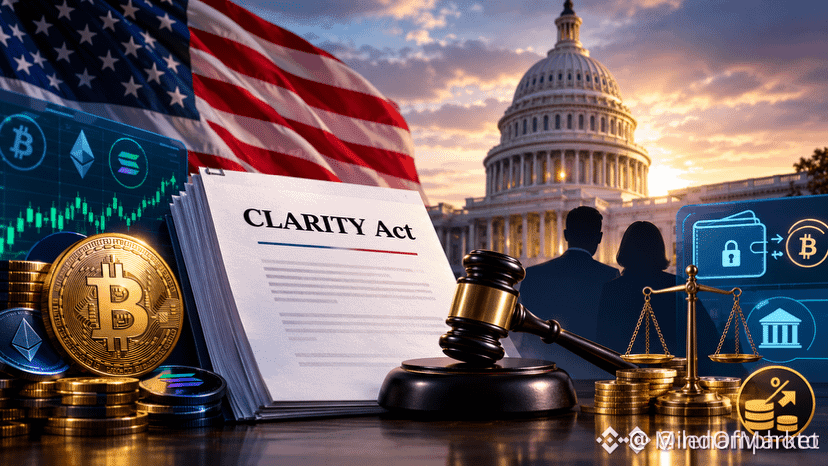
🚨 SENATE UNVEILS REVISED CLARITY ACT DRAFT WITH 126 AMENDMENTS BEFORE CRITICAL VOTE $BTC ⚡
Institutional market structure hinges on regulatory clarity, and the latest CLARITY Act revision introduces 126 structural adjustments ahead of the Senate vote. 🏛️ Key revisions mandate strict divestment rules for federal officials while establishing temporary Treasury oversight on stablecoin yield mechanisms to protect traditional bank deposits.
🔍 While shielding noncustodial developers remains intact, the removal of explicit criminal exemptions highlights shifting policy boundaries that institutional allocators are watching closely. 💡 As liquidity re-evaluates the regulatory landscape across major assets like $BTC , market structure will quickly reveal where smart capital decides to position. 💬 How will this legislative pivot reshape institutional capital flows across the market? 👇
⚠️ Not financial advice. Always manage your risk. 🛡️
🏷️ #BTC #CLARITYAct #CryptoPolicy #MarketStructure
🎯 🦈
Institutional market structure hinges on regulatory clarity, and the latest CLARITY Act revision introduces 126 structural adjustments ahead of the Senate vote. 🏛️ Key revisions mandate strict divestment rules for federal officials while establishing temporary Treasury oversight on stablecoin yield mechanisms to protect traditional bank deposits.
🔍 While shielding noncustodial developers remains intact, the removal of explicit criminal exemptions highlights shifting policy boundaries that institutional allocators are watching closely. 💡 As liquidity re-evaluates the regulatory landscape across major assets like $BTC , market structure will quickly reveal where smart capital decides to position. 💬 How will this legislative pivot reshape institutional capital flows across the market? 👇
⚠️ Not financial advice. Always manage your risk. 🛡️
🏷️ #BTC #CLARITYAct #CryptoPolicy #MarketStructure
🎯 🦈
13
·
--
美最高法院暂不限制邮寄投票,中期选举保持原程序!特朗普想堵路,最高法院先说不!近1/3选民靠邮寄投票,这可是左右选举的胜负手。从加密角度看,选举结果将直接决定监管严松。$BTC和$ETH在政策明朗前或有波动,但长期看,监管缓和绝对是大利好。政治不确定性时期,资金往往会寻找新出路。记住:选举风向,币圈晴雨表!
US Supreme Court blocks mail-in voting restrictions, midterms stay as is! Trump tried to restrict, SCOTUS said no! Nearly 1/3 voters mail ballots - game changer for election results. Crypto-wise, election outcomes will shape regulatory landscape. $BTC and $ETH might see short-term volatility before policy clarity, but regulatory relief = long-term bullish. Political uncertainty = capital seeking alternatives. Remember: Election winds, crypto trends!
#美国中期选举 #加密监管
#USMidterms #CryptoPolicy
$BTC $ETH
美最高法院暂不限制邮寄投票,中期选举保持原程序!特朗普想堵路,最高法院先说不!近1/3选民靠邮寄投票,这可是左右选举的胜负手。从加密角度看,选举结果将直接决定监管严松。$BTC 和$ETH 在政策明朗前或有波动,但长期看,监管缓和绝对是大利好。政治不确定性时期,资金往往会寻找新出路。记住:选举风向,币圈晴雨表!
US Supreme Court blocks mail-in voting restrictions, midterms stay as is! Trump tried to restrict, SCOTUS said no! Nearly 1/3 voters mail ballots - game changer for election results. Crypto-wise, election outcomes will shape regulatory landscape. $BTC and $ETH might see short-term volatility before policy clarity, but regulatory relief = long-term bullish. Political uncertainty = capital seeking alternatives. Remember: Election winds, crypto trends!
#美国中期选举 #加密监管
#USMidterms #CryptoPolicy
$BTC $ETH
US Supreme Court blocks mail-in voting restrictions, midterms stay as is! Trump tried to restrict, SCOTUS said no! Nearly 1/3 voters mail ballots - game changer for election results. Crypto-wise, election outcomes will shape regulatory landscape. $BTC and $ETH might see short-term volatility before policy clarity, but regulatory relief = long-term bullish. Political uncertainty = capital seeking alternatives. Remember: Election winds, crypto trends!
#美国中期选举 #加密监管
#USMidterms #CryptoPolicy
$BTC $ETH
196
Have you guys been keeping an eye on Capitol Hill lately? I have been watching the chatter around the U.S. Clarity Act, and honestly, it feels like we are playing a high-stakes game of regulatory waiting. The crypto industry is keeping its eyes on that potential September 15 target date, but nobody seems to know if the Senate will actually vote or just push it down the road again. 🔮
It is wild to see how much market sentiment is riding on these political moves right now. Clear rules of the road in the United States could finally give institutional capital the green light we have all been waiting for, especially for major assets like $BTC and $ETH. But until that bill gets out of legislative limbo, we are left guessing. 📈
Either way, volatility around these key legislative dates is almost guaranteed. Stay sharp out there and keep your risk management tight while the politicians figure things out! 🏛️
#Bitcoin #CryptoPolicy #CryptoNews #Write2Earn
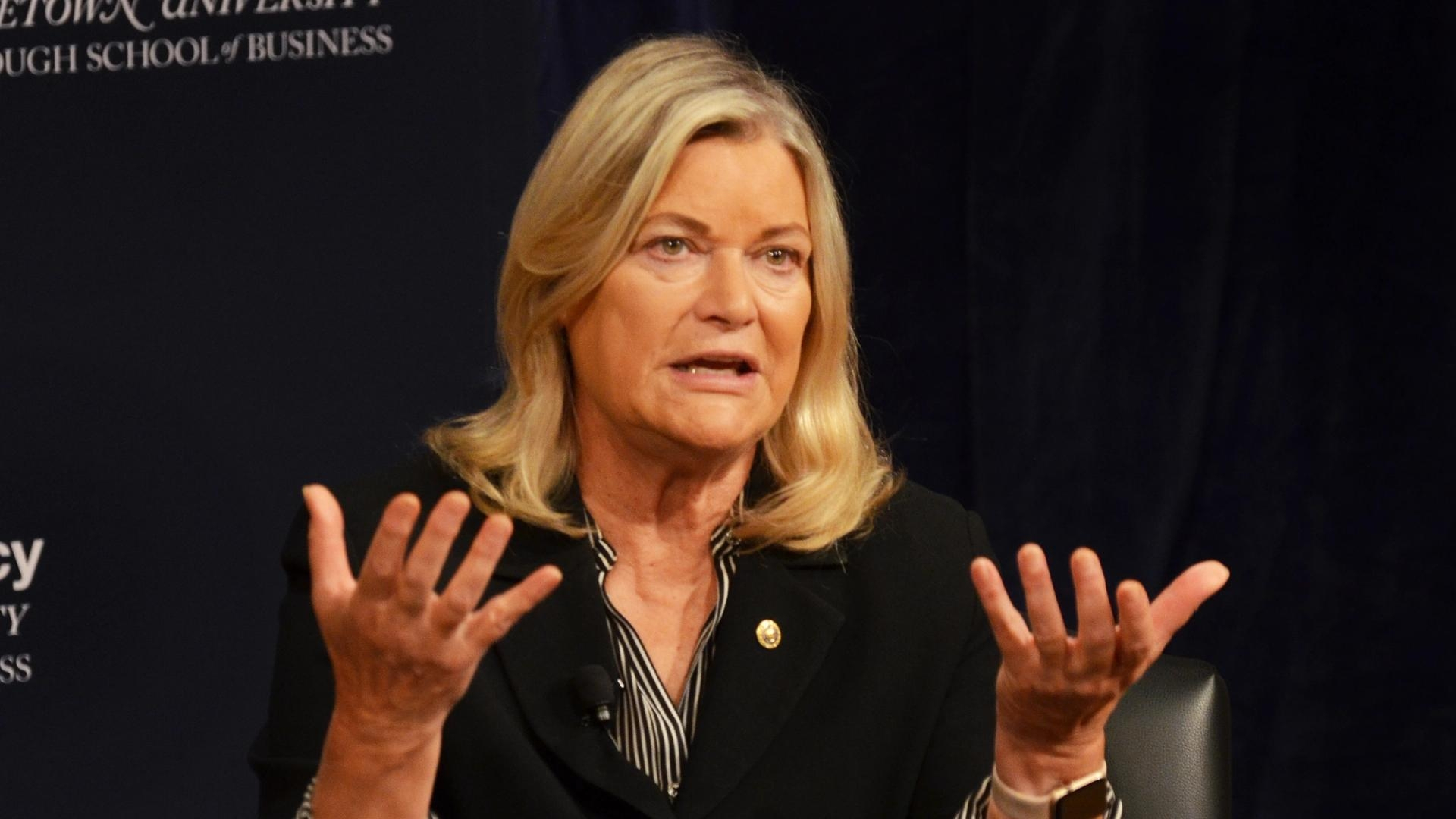
Have you guys been keeping an eye on Capitol Hill lately? I have been watching the chatter around the U.S. Clarity Act, and honestly, it feels like we are playing a high-stakes game of regulatory waiting. The crypto industry is keeping its eyes on that potential September 15 target date, but nobody seems to know if the Senate will actually vote or just push it down the road again. 🔮
It is wild to see how much market sentiment is riding on these political moves right now. Clear rules of the road in the United States could finally give institutional capital the green light we have all been waiting for, especially for major assets like $BTC and $ETH . But until that bill gets out of legislative limbo, we are left guessing. 📈
Either way, volatility around these key legislative dates is almost guaranteed. Stay sharp out there and keep your risk management tight while the politicians figure things out! 🏛️
#Bitcoin #CryptoPolicy #CryptoNews #Write2Earn
It is wild to see how much market sentiment is riding on these political moves right now. Clear rules of the road in the United States could finally give institutional capital the green light we have all been waiting for, especially for major assets like $BTC and $ETH . But until that bill gets out of legislative limbo, we are left guessing. 📈
Either way, volatility around these key legislative dates is almost guaranteed. Stay sharp out there and keep your risk management tight while the politicians figure things out! 🏛️
#Bitcoin #CryptoPolicy #CryptoNews #Write2Earn
162

·
--
Crypto's Clarity Act sits in Schrödinger's cat limbo as the U.S. Senate returns. The industry eyes a September 15 vote, though timing remains uncertain—pass, delay, or reappear in another form. Stay tuned. $BTC #CryptoPolicy #USRegulation
Crypto's Clarity Act sits in Schrödinger's cat limbo as the U.S. Senate returns. The industry eyes a September 15 vote, though timing remains uncertain—pass, delay, or reappear in another form. Stay tuned. $BTC #CryptoPolicy #USRegulation
42
Log in to explore more content
Join global crypto users on Binance Square
⚡️ Get latest and useful information about crypto.
💬 Trusted by the world’s largest crypto exchange.
👍 Discover real insights from verified creators.
Email / Phone number
Trending Topics
1
#UKFCAWinsCourtOrderToRecover851400Pounds
34,704 views
783 Discussing
2
#ChainlinkLaunchesCCIP2WithEnterpriseVerification
47,789 views
953 Discussing
3
#GoldFallsTo$4144
16,437 views
165 Discussing
4
#QNTFallsOver40%FromMorningHigh
94,713 views
1,365 Discussing
5
#USDTAdds845900HoldersInPast7Days
18,766 views
425 Discussing
6
#KospiFalls2.7%SamsungSKHynixDropOver5%
32,452 views
604 Discussing
7
#BitgetCEOConfirms$388MStolenInHack
5,514 views
43 Discussing
8
#BTCFallsBelow$83000
33,833 views
168 Discussing
9
#BitgetDetailsSecurityIncidentTimeline
53,799 views
750 Discussing
10
#BitcoinSpotETFs$2.39BWeeklyNetInflow
15,834 views
49 Discussing