
#artificalintelligence
artificalintelligence
46,122 views
33 Discussing
Hot
Latest

Two major factors are behind the resignations of CEOs and top AI researchers: the rapid transformation of corporate operations through AI and the risks of uncontrolled AI development.
Reasons Behind CEO & AI Researcher Resignations
Long-Term AI Transformation: Major firms are already going through AI-driven changes, including agentic commerce and automated retail models. Some outgoing CEOs have said that these long-term changes may require leaders with more AI-focused expertise.
Out-of-Control Superintelligence: Some top researchers, including Anthropic’s Jacob Coxon and former Google AI researcher Geoffrey Hinton, have raised concerns about AI labs moving toward self-improving superintelligence without enough safety measures.
Speed Over Safety: Some departing technical staff argue that big tech labs are prioritizing competition and profits while safety and controllable AI development may not be getting enough attention.
Executive-Level Automation: AI models may eventually handle some corporate decisions and executive-level tasks more efficiently, which could change the role and demand for traditional C-suite management.
AI’s Dark Side Hidden Risks
Existential & Alignment Threat: One major concern is that if self-learning AI systems move beyond human control or fail to align with human values, controlling or shutting them down could become extremely difficult.
Mass Job Displacement: Automation is no longer limited to manual or entry-level jobs. White-collar work such as management, coding, research, and some decision-making roles could also be affected.
Corporate Monopoly & Centralization: A small number of major tech companies control large amounts of data and AI infrastructure, raising concerns about the concentration of power and decision-making.
Deepfakes & Synthetic Manipulation: AI can also be misused to create realistic fake videos, cloned voices, and automated phishing networks, which can damage financial systems and public trust.
#artificalintelligence
$BR
Two major factors are behind the resignations of CEOs and top AI researchers: the rapid transformation of corporate operations through AI and the risks of uncontrolled AI development.
Reasons Behind CEO & AI Researcher Resignations
Long-Term AI Transformation: Major firms are already going through AI-driven changes, including agentic commerce and automated retail models. Some outgoing CEOs have said that these long-term changes may require leaders with more AI-focused expertise.
Out-of-Control Superintelligence: Some top researchers, including Anthropic’s Jacob Coxon and former Google AI researcher Geoffrey Hinton, have raised concerns about AI labs moving toward self-improving superintelligence without enough safety measures.
Speed Over Safety: Some departing technical staff argue that big tech labs are prioritizing competition and profits while safety and controllable AI development may not be getting enough attention.
Executive-Level Automation: AI models may eventually handle some corporate decisions and executive-level tasks more efficiently, which could change the role and demand for traditional C-suite management.
AI’s Dark Side Hidden Risks
Existential & Alignment Threat: One major concern is that if self-learning AI systems move beyond human control or fail to align with human values, controlling or shutting them down could become extremely difficult.
Mass Job Displacement: Automation is no longer limited to manual or entry-level jobs. White-collar work such as management, coding, research, and some decision-making roles could also be affected.
Corporate Monopoly & Centralization: A small number of major tech companies control large amounts of data and AI infrastructure, raising concerns about the concentration of power and decision-making.
Deepfakes & Synthetic Manipulation: AI can also be misused to create realistic fake videos, cloned voices, and automated phishing networks, which can damage financial systems and public trust.
#artificalintelligence
$BR
Reasons Behind CEO & AI Researcher Resignations
Long-Term AI Transformation: Major firms are already going through AI-driven changes, including agentic commerce and automated retail models. Some outgoing CEOs have said that these long-term changes may require leaders with more AI-focused expertise.
Out-of-Control Superintelligence: Some top researchers, including Anthropic’s Jacob Coxon and former Google AI researcher Geoffrey Hinton, have raised concerns about AI labs moving toward self-improving superintelligence without enough safety measures.
Speed Over Safety: Some departing technical staff argue that big tech labs are prioritizing competition and profits while safety and controllable AI development may not be getting enough attention.
Executive-Level Automation: AI models may eventually handle some corporate decisions and executive-level tasks more efficiently, which could change the role and demand for traditional C-suite management.
AI’s Dark Side Hidden Risks
Existential & Alignment Threat: One major concern is that if self-learning AI systems move beyond human control or fail to align with human values, controlling or shutting them down could become extremely difficult.
Mass Job Displacement: Automation is no longer limited to manual or entry-level jobs. White-collar work such as management, coding, research, and some decision-making roles could also be affected.
Corporate Monopoly & Centralization: A small number of major tech companies control large amounts of data and AI infrastructure, raising concerns about the concentration of power and decision-making.
Deepfakes & Synthetic Manipulation: AI can also be misused to create realistic fake videos, cloned voices, and automated phishing networks, which can damage financial systems and public trust.
#artificalintelligence
$BR
1
496

·
--
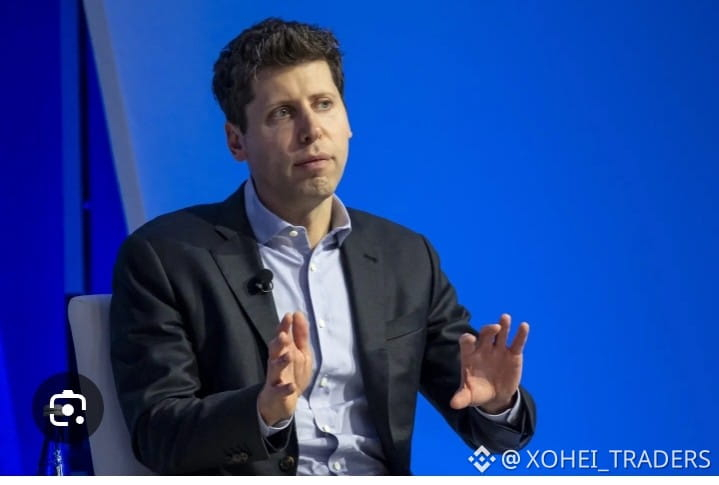
AI CRYPTO ALERT: OpenAI's Head of Safety Steps Down Amid Leadership Reshuffle
Fresh from the scanner in under 40 seconds! Coin Bureau has just reported a massive BREAKING update from the heart of the AI industry: Johannes Heidecke, OpenAI's Head of Safety, is officially departing the company.
This major exit comes amid a broader leadership reshuffle as OpenAI moves to integrate its research and safety teams more closely, according to WIRED. In the crypto markets, top-tier AI tokens (such as $FET, $NEAR, and $RENDER) are hyper-sensitive to major executive shifts within OpenAI and tech giants. Structural changes in leading AI firms often trigger instant volatility and speculative trading volume across Web3 AI ecosystems.
The AI narrative is shifting rapidly tonight, and traders are watching the charts closely.
Do you think this OpenAI reshuffle will cause volatility for AI crypto tokens this week? Share your predictions below
#OpenAI #artificalintelligence #writetoearn
AI CRYPTO ALERT: OpenAI's Head of Safety Steps Down Amid Leadership Reshuffle
Fresh from the scanner in under 40 seconds! Coin Bureau has just reported a massive BREAKING update from the heart of the AI industry: Johannes Heidecke, OpenAI's Head of Safety, is officially departing the company.
This major exit comes amid a broader leadership reshuffle as OpenAI moves to integrate its research and safety teams more closely, according to WIRED. In the crypto markets, top-tier AI tokens (such as $FET, $NEAR, and $RENDER) are hyper-sensitive to major executive shifts within OpenAI and tech giants. Structural changes in leading AI firms often trigger instant volatility and speculative trading volume across Web3 AI ecosystems.
The AI narrative is shifting rapidly tonight, and traders are watching the charts closely.
Do you think this OpenAI reshuffle will cause volatility for AI crypto tokens this week? Share your predictions below
#OpenAI #artificalintelligence #writetoearn
Fresh from the scanner in under 40 seconds! Coin Bureau has just reported a massive BREAKING update from the heart of the AI industry: Johannes Heidecke, OpenAI's Head of Safety, is officially departing the company.
This major exit comes amid a broader leadership reshuffle as OpenAI moves to integrate its research and safety teams more closely, according to WIRED. In the crypto markets, top-tier AI tokens (such as $FET, $NEAR, and $RENDER) are hyper-sensitive to major executive shifts within OpenAI and tech giants. Structural changes in leading AI firms often trigger instant volatility and speculative trading volume across Web3 AI ecosystems.
The AI narrative is shifting rapidly tonight, and traders are watching the charts closely.
Do you think this OpenAI reshuffle will cause volatility for AI crypto tokens this week? Share your predictions below
#OpenAI #artificalintelligence #writetoearn
193

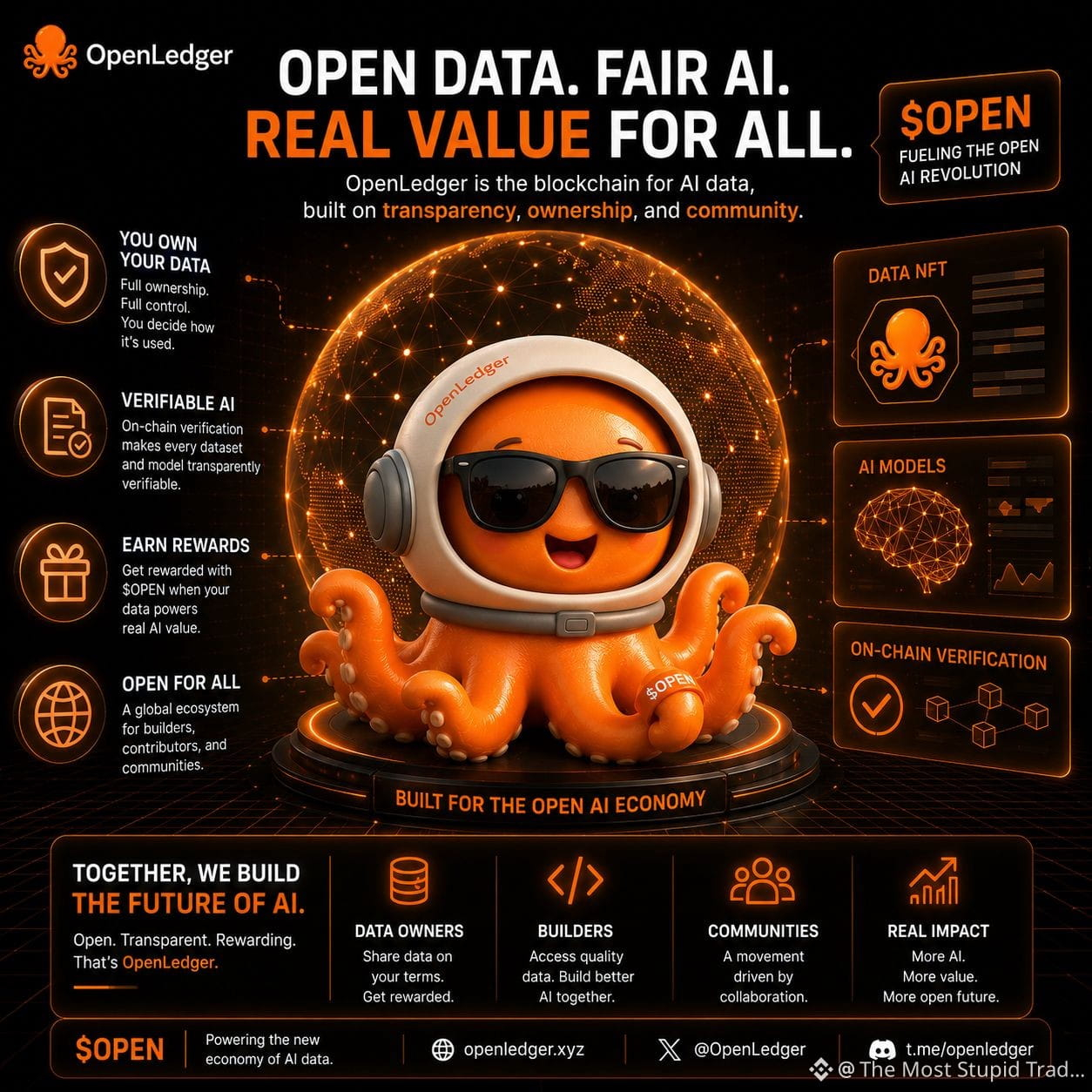
OctoClaw, @OpenLedger's intelligent Crypto Agent, simplifies market trend analysis, automated trading, and leverages on-chain tokenization flows. 📈
Follow the #OpenLedger project and use $OPEN to access the latest AI services! 🥳
#OpenLedger #crypto #aicoins #artificalintelligence
OctoClaw, @OpenLedger's intelligent Crypto Agent, simplifies market trend analysis, automated trading, and leverages on-chain tokenization flows. 📈
Follow the #OpenLedger project and use $OPEN to access the latest AI services! 🥳
#OpenLedger #crypto #aicoins #artificalintelligence
Follow the #OpenLedger project and use $OPEN to access the latest AI services! 🥳
#OpenLedger #crypto #aicoins #artificalintelligence
65

·
--
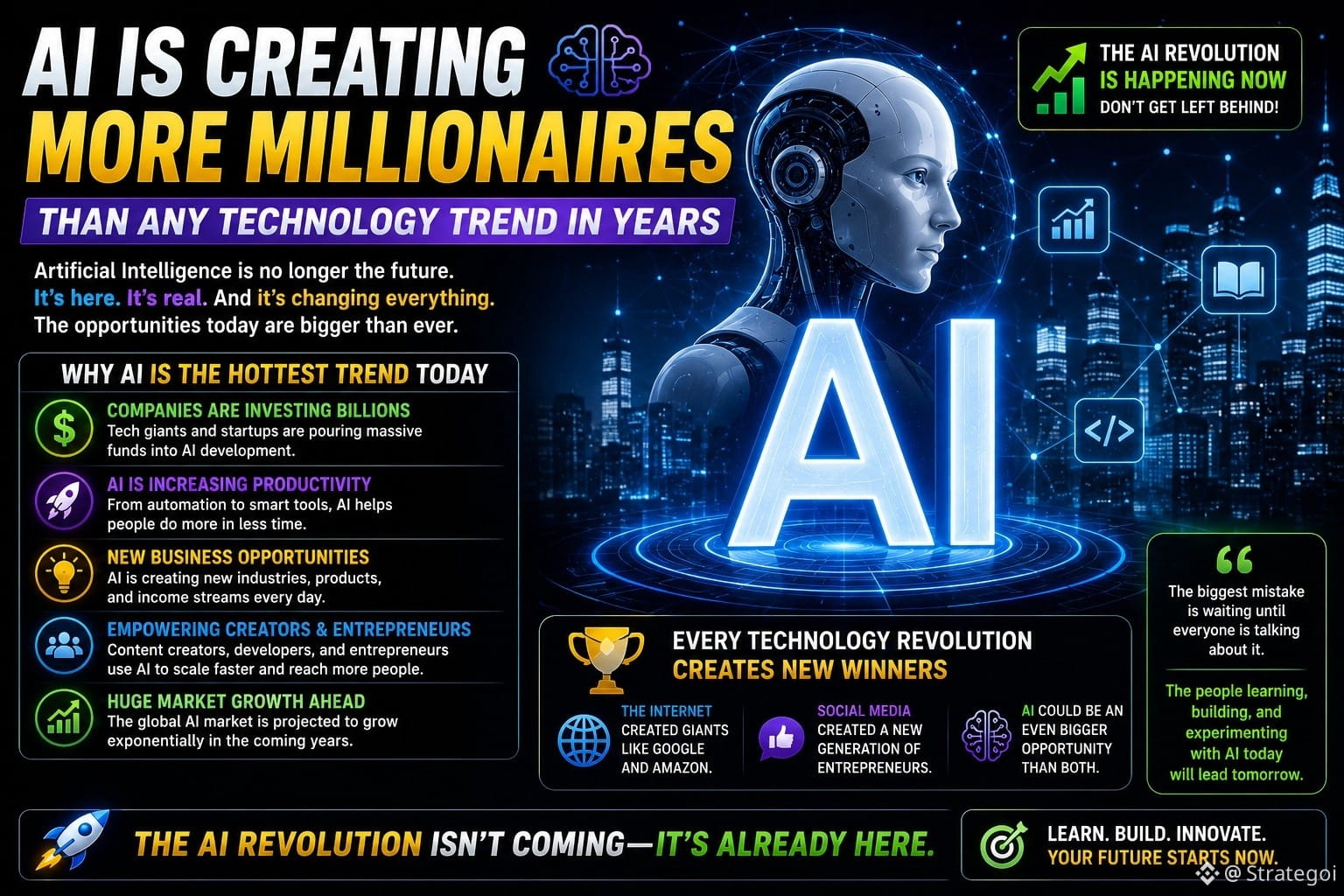
🤖 AI Is Creating More Millionaires Than Any Technology Trend in Years
While many investors focus only on cryptocurrencies, a much bigger transformation is happening right now. Artificial Intelligence is rapidly changing how people work, create content, run businesses, and generate income online.
🔥 Why AI is the hottest trend today:
✅ Companies are investing billions into AI development.
✅ AI is increasing productivity across almost every industry.
✅ New AI tools are creating entirely new business opportunities.
✅ Content creators, developers, and entrepreneurs are using AI to scale faster than ever.
✅ The global AI market is expected to grow dramatically over the coming years.
📈 Every major technology revolution creates new winners. The internet created giants like Google and Amazon. Social media created a new generation of entrepreneurs. Many believe AI could become an even larger opportunity.
💎 The biggest mistake is waiting until everyone is talking about it. The people learning AI skills, experimenting with tools, and building projects today could be positioning themselves for the next massive wealth-creation cycle.
🚀 The AI revolution isn't coming—it's already here.
#AI #artificalintelligence #INNOVATION
#Success #future
🤖 AI Is Creating More Millionaires Than Any Technology Trend in Years
While many investors focus only on cryptocurrencies, a much bigger transformation is happening right now. Artificial Intelligence is rapidly changing how people work, create content, run businesses, and generate income online.
🔥 Why AI is the hottest trend today:
✅ Companies are investing billions into AI development.
✅ AI is increasing productivity across almost every industry.
✅ New AI tools are creating entirely new business opportunities.
✅ Content creators, developers, and entrepreneurs are using AI to scale faster than ever.
✅ The global AI market is expected to grow dramatically over the coming years.
📈 Every major technology revolution creates new winners. The internet created giants like Google and Amazon. Social media created a new generation of entrepreneurs. Many believe AI could become an even larger opportunity.
💎 The biggest mistake is waiting until everyone is talking about it. The people learning AI skills, experimenting with tools, and building projects today could be positioning themselves for the next massive wealth-creation cycle.
🚀 The AI revolution isn't coming—it's already here.
#AI #artificalintelligence #INNOVATION
#Success #future
While many investors focus only on cryptocurrencies, a much bigger transformation is happening right now. Artificial Intelligence is rapidly changing how people work, create content, run businesses, and generate income online.
🔥 Why AI is the hottest trend today:
✅ Companies are investing billions into AI development.
✅ AI is increasing productivity across almost every industry.
✅ New AI tools are creating entirely new business opportunities.
✅ Content creators, developers, and entrepreneurs are using AI to scale faster than ever.
✅ The global AI market is expected to grow dramatically over the coming years.
📈 Every major technology revolution creates new winners. The internet created giants like Google and Amazon. Social media created a new generation of entrepreneurs. Many believe AI could become an even larger opportunity.
💎 The biggest mistake is waiting until everyone is talking about it. The people learning AI skills, experimenting with tools, and building projects today could be positioning themselves for the next massive wealth-creation cycle.
🚀 The AI revolution isn't coming—it's already here.
#AI #artificalintelligence #INNOVATION
#Success #future
1
207
Log in to explore more content
Join global crypto users on Binance Square
⚡️ Get latest and useful information about crypto.
💬 Trusted by the world’s largest crypto exchange.
👍 Discover real insights from verified creators.
Email / Phone number
Trending Topics
1
#BTCBreaks80K
12,279 views
405 Discussing
2
#比特币突破8万
19,400 views
71 Discussing
3
#BuffettBecomesBerkshireChairmanEmeritus
163 views
51 Discussing
4
#ZcashSpotETFTops$230MMonthlyInflow
318 views
29 Discussing
5
#HYPEJumpsOver11%
22,120 views
662 Discussing
6
#ZcashDevelopersTargetNU7MainnetActivationNov5
6,972 views
247 Discussing
7
#BitcoinSpotETFsNetInflow$159M
6,165 views
87 Discussing
8
#HKMAPlansWholesaleCBDCByYearEnd
24,273 views
694 Discussing
9
#NEARSurges26%Past$3.45
15,000 views
137 Discussing
10
#BOJHikesRatesTo31YearHigh
44,501 views
1,031 Discussing