
#ainft
ainft
13,932 views
264 Discussing
Hot
Latest

Verified
🔥 $AEON x $NFT AI Payments Just Got Real
@AEON_Community is partnering with @AINFTcom to bring $NFT onto its settlement layer turning it from a digital asset into spendable, AI-settleable money.
What this means:
🤖 AI systems can transact directly with $NFT
💳 Real world spending across millions of merchants
A live bridge between AI agents and on-chain payments
This is the kind of utility that moves the AI x crypto narrative forward not hype, actual settlement infrastructure.
The future of #AIpayments is being built right now. 👀
#AEON #AINFT #Binance #CryptoNews
🔥 $AEON x $NFT AI Payments Just Got Real
@AEON_Community is partnering with @AINFTcom to bring $NFT onto its settlement layer turning it from a digital asset into spendable, AI-settleable money.
What this means:
🤖 AI systems can transact directly with $NFT
💳 Real world spending across millions of merchants
A live bridge between AI agents and on-chain payments
This is the kind of utility that moves the AI x crypto narrative forward not hype, actual settlement infrastructure.
The future of #AIpayments is being built right now. 👀
#AEON #AINFT #Binance #CryptoNews
@AEON_Community is partnering with @AINFTcom to bring $NFT onto its settlement layer turning it from a digital asset into spendable, AI-settleable money.
What this means:
🤖 AI systems can transact directly with $NFT
💳 Real world spending across millions of merchants
A live bridge between AI agents and on-chain payments
This is the kind of utility that moves the AI x crypto narrative forward not hype, actual settlement infrastructure.
The future of #AIpayments is being built right now. 👀
#AEON #AINFT #Binance #CryptoNews
1
906

𝗢𝗻𝗲 𝗔𝗜 𝗺𝗼𝗱𝗲𝗹 𝗱𝗼𝗲𝘀𝗻’𝘁 𝗵𝗮𝘃𝗲 𝘁𝗼 𝗱𝗼 𝗲𝘃𝗲𝗿𝘆𝘁𝗵𝗶𝗻𝗴.
A smarter architecture routes different tasks to different workers.
📚 Long context model → documentation
🖼️ Multimodal model → charts and screenshots
🧠 Reasoning model → complex analysis
⚙️ Compact model → formatting and structured output
🤖 Agentic model → tool based execution
AINFT’s multi model approach makes this kind of workflow possible.
But good orchestration needs more than model selection.
Track the model used, input size, tools, cost and whether the output later needed correction.
That creates an evidence trail for improving the router over time.
The goal isn’t maximum intelligence at every step.
It’s the right intelligence at the right step.
#TRONEcoStar @JustinSun #AINFT
𝗢𝗻𝗲 𝗔𝗜 𝗺𝗼𝗱𝗲𝗹 𝗱𝗼𝗲𝘀𝗻’𝘁 𝗵𝗮𝘃𝗲 𝘁𝗼 𝗱𝗼 𝗲𝘃𝗲𝗿𝘆𝘁𝗵𝗶𝗻𝗴.
A smarter architecture routes different tasks to different workers.
📚 Long context model → documentation
🖼️ Multimodal model → charts and screenshots
🧠 Reasoning model → complex analysis
⚙️ Compact model → formatting and structured output
🤖 Agentic model → tool based execution
AINFT’s multi model approach makes this kind of workflow possible.
But good orchestration needs more than model selection.
Track the model used, input size, tools, cost and whether the output later needed correction.
That creates an evidence trail for improving the router over time.
The goal isn’t maximum intelligence at every step.
It’s the right intelligence at the right step.
#TRONEcoStar @Justin Sun孙宇晨 #AINFT
A smarter architecture routes different tasks to different workers.
📚 Long context model → documentation
🖼️ Multimodal model → charts and screenshots
🧠 Reasoning model → complex analysis
⚙️ Compact model → formatting and structured output
🤖 Agentic model → tool based execution
AINFT’s multi model approach makes this kind of workflow possible.
But good orchestration needs more than model selection.
Track the model used, input size, tools, cost and whether the output later needed correction.
That creates an evidence trail for improving the router over time.
The goal isn’t maximum intelligence at every step.
It’s the right intelligence at the right step.
#TRONEcoStar @Justin Sun孙宇晨 #AINFT
2
𝗧𝗵𝗲 𝗳𝘂𝘁𝘂𝗿𝗲 𝗼𝗳 𝗔𝗜 𝗺𝗮𝘆 𝗻𝗼𝘁 𝗯𝗲 𝗼𝗻𝗲 𝗺𝗼𝗱𝗲𝗹 𝗱𝗼𝗶𝗻𝗴 𝗲𝘃𝗲𝗿𝘆𝘁𝗵𝗶𝗻𝗴.
It could be multiple specialised models working together.
AINFT brings access to models with different strengths:
→ Deep reasoning
→ Long context
→ Multimodal analysis
→ Open weights
→ Cost efficient inference
→ Agentic tool use
A due diligence agent could use one model to digest documentation, another to analyse charts, a stronger reasoning model to challenge the thesis, and a smaller model to organise the final evidence.
The real advantage isn’t choosing the smartest model every time.
It’s knowing which model to use, when to use it, and what evidence should validate the output.
That’s where AI orchestration becomes the real infrastructure layer.
#AINFT #TRONEcoStar @JustinSun
𝗧𝗵𝗲 𝗳𝘂𝘁𝘂𝗿𝗲 𝗼𝗳 𝗔𝗜 𝗺𝗮𝘆 𝗻𝗼𝘁 𝗯𝗲 𝗼𝗻𝗲 𝗺𝗼𝗱𝗲𝗹 𝗱𝗼𝗶𝗻𝗴 𝗲𝘃𝗲𝗿𝘆𝘁𝗵𝗶𝗻𝗴.
It could be multiple specialised models working together.
AINFT brings access to models with different strengths:
→ Deep reasoning
→ Long context
→ Multimodal analysis
→ Open weights
→ Cost efficient inference
→ Agentic tool use
A due diligence agent could use one model to digest documentation, another to analyse charts, a stronger reasoning model to challenge the thesis, and a smaller model to organise the final evidence.
The real advantage isn’t choosing the smartest model every time.
It’s knowing which model to use, when to use it, and what evidence should validate the output.
That’s where AI orchestration becomes the real infrastructure layer.
#AINFT #TRONEcoStar @Justin Sun孙宇晨
It could be multiple specialised models working together.
AINFT brings access to models with different strengths:
→ Deep reasoning
→ Long context
→ Multimodal analysis
→ Open weights
→ Cost efficient inference
→ Agentic tool use
A due diligence agent could use one model to digest documentation, another to analyse charts, a stronger reasoning model to challenge the thesis, and a smaller model to organise the final evidence.
The real advantage isn’t choosing the smartest model every time.
It’s knowing which model to use, when to use it, and what evidence should validate the output.
That’s where AI orchestration becomes the real infrastructure layer.
#AINFT #TRONEcoStar @Justin Sun孙宇晨
5
𝗧𝗵𝗲 𝗿𝗲𝗮𝗹 𝗺𝗼𝗮𝘁 𝗶𝗻 𝗔𝗜 𝗺𝗮𝘆 𝗯𝗲 𝗼𝗿𝗰𝗵𝗲𝘀𝘁𝗿𝗮𝘁𝗶𝗼𝗻.
Models keep improving, which means building an application around one permanent model can quickly become outdated.
A better approach is to build around roles.
One model handles research.
Another processes massive context.
Another analyses images.
Another challenges the reasoning.
Another handles lightweight tasks at lower cost.
AINFT fits into this broader vision of specialised cognition working together.
The important part is having evaluation, evidence, budgets and clear escalation rules around the models.
Don’t ask which model is the best.
Ask which model is best for this specific task.
That shift can turn a collection of AI models into a governed system that can observe, reason, act and learn.
#AINFT #AIAgents #AIInfrastructure #TRONEcoStar @JustinSun
𝗧𝗵𝗲 𝗿𝗲𝗮𝗹 𝗺𝗼𝗮𝘁 𝗶𝗻 𝗔𝗜 𝗺𝗮𝘆 𝗯𝗲 𝗼𝗿𝗰𝗵𝗲𝘀𝘁𝗿𝗮𝘁𝗶𝗼𝗻.
Models keep improving, which means building an application around one permanent model can quickly become outdated.
A better approach is to build around roles.
One model handles research.
Another processes massive context.
Another analyses images.
Another challenges the reasoning.
Another handles lightweight tasks at lower cost.
AINFT fits into this broader vision of specialised cognition working together.
The important part is having evaluation, evidence, budgets and clear escalation rules around the models.
Don’t ask which model is the best.
Ask which model is best for this specific task.
That shift can turn a collection of AI models into a governed system that can observe, reason, act and learn.
#AINFT #AIAgents #AIInfrastructure #TRONEcoStar @Justin Sun孙宇晨
Models keep improving, which means building an application around one permanent model can quickly become outdated.
A better approach is to build around roles.
One model handles research.
Another processes massive context.
Another analyses images.
Another challenges the reasoning.
Another handles lightweight tasks at lower cost.
AINFT fits into this broader vision of specialised cognition working together.
The important part is having evaluation, evidence, budgets and clear escalation rules around the models.
Don’t ask which model is the best.
Ask which model is best for this specific task.
That shift can turn a collection of AI models into a governed system that can observe, reason, act and learn.
#AINFT #AIAgents #AIInfrastructure #TRONEcoStar @Justin Sun孙宇晨
2
𝗪𝗵𝘆 𝗧𝗥𝗢𝗡 𝗠𝗮𝘁𝘁𝗲𝗿𝘀
Building this ecosystem on TRON is also strategically important.
Fast transactions, low-cost blockchain activity, and an established Web3 user base provide an environment where NFT applications can potentially operate at larger scale.
This matters because AI-powered applications may generate significantly more interactions than traditional collectibles.
The more frequently an asset needs to interact with a blockchain, the more important efficient infrastructure becomes.
𝗠𝘆 𝗩𝗶𝗲𝘄
I think AINFT's biggest opportunity is not simply becoming another NFT marketplace.
Its stronger potential is becoming a bridge between AI, digital ownership, creators, and TRON's on-chain economy.
If AINFT can continue expanding its creator tools, AI agents, NFT issuance infrastructure, and marketplace activity, the project could help push NFTs from static objects into programmable digital experiences.
That evolution could be much more important than the original NFT boom.
NFTs gave users digital ownership.
Explore: AINFT Marketplace https://marketplace.ainft.com/?utm_source=chatgpt.com
AI could give those assets intelligence.
And TRON can provide the infrastructure for them to interact on-chain.
@JustinSun
@AINFTcom
#TRONEcoStar #AINFT #Tron
𝗪𝗵𝘆 𝗧𝗥𝗢𝗡 𝗠𝗮𝘁𝘁𝗲𝗿𝘀
Building this ecosystem on TRON is also strategically important.
Fast transactions, low-cost blockchain activity, and an established Web3 user base provide an environment where NFT applications can potentially operate at larger scale.
This matters because AI-powered applications may generate significantly more interactions than traditional collectibles.
The more frequently an asset needs to interact with a blockchain, the more important efficient infrastructure becomes.
𝗠𝘆 𝗩𝗶𝗲𝘄
I think AINFT's biggest opportunity is not simply becoming another NFT marketplace.
Its stronger potential is becoming a bridge between AI, digital ownership, creators, and TRON's on-chain economy.
If AINFT can continue expanding its creator tools, AI agents, NFT issuance infrastructure, and marketplace activity, the project could help push NFTs from static objects into programmable digital experiences.
That evolution could be much more important than the original NFT boom.
NFTs gave users digital ownership.
Explore: AINFT Marketplace https://marketplace.ainft.com/?utm_source=chatgpt.com
AI could give those assets intelligence.
And TRON can provide the infrastructure for them to interact on-chain.
@Justin Sun孙宇晨
@AINFTcom
#TRONEcoStar #AINFT #Tron
Building this ecosystem on TRON is also strategically important.
Fast transactions, low-cost blockchain activity, and an established Web3 user base provide an environment where NFT applications can potentially operate at larger scale.
This matters because AI-powered applications may generate significantly more interactions than traditional collectibles.
The more frequently an asset needs to interact with a blockchain, the more important efficient infrastructure becomes.
𝗠𝘆 𝗩𝗶𝗲𝘄
I think AINFT's biggest opportunity is not simply becoming another NFT marketplace.
Its stronger potential is becoming a bridge between AI, digital ownership, creators, and TRON's on-chain economy.
If AINFT can continue expanding its creator tools, AI agents, NFT issuance infrastructure, and marketplace activity, the project could help push NFTs from static objects into programmable digital experiences.
That evolution could be much more important than the original NFT boom.
NFTs gave users digital ownership.
Explore: AINFT Marketplace https://marketplace.ainft.com/?utm_source=chatgpt.com
AI could give those assets intelligence.
And TRON can provide the infrastructure for them to interact on-chain.
@Justin Sun孙宇晨
@AINFTcom
#TRONEcoStar #AINFT #Tron
Ruby Ventures
·
--
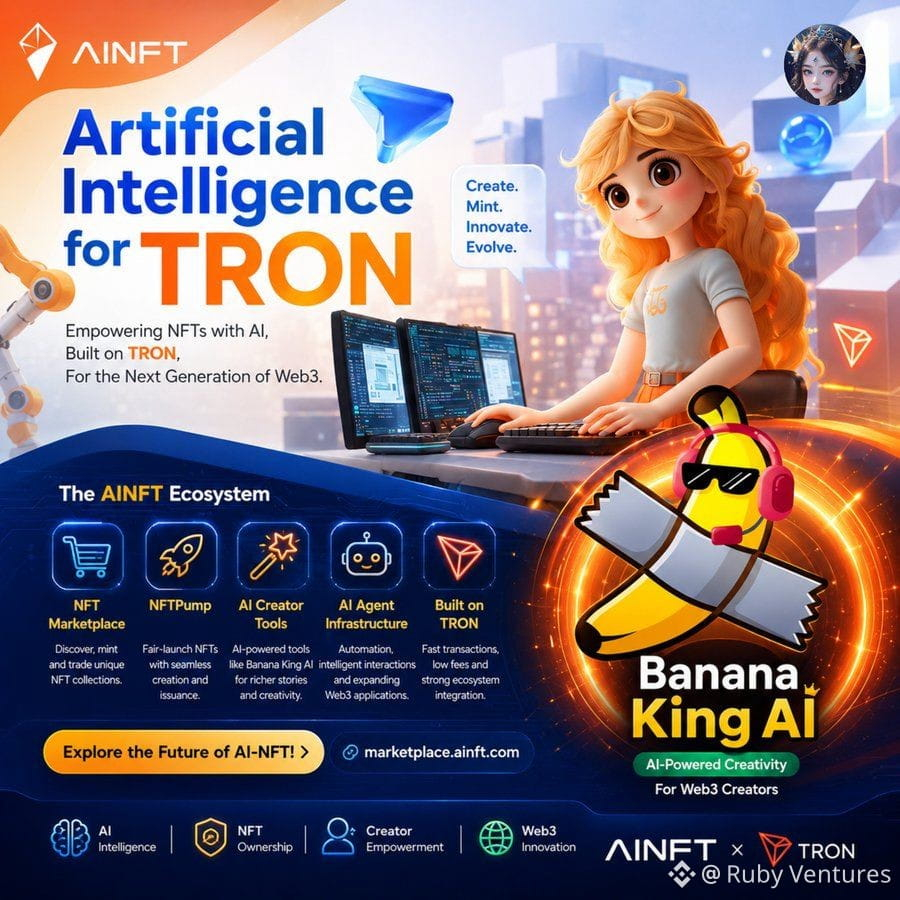
𝗔𝗜𝗡𝗙𝗧: 𝗪𝗵𝗲𝗿𝗲 𝗡𝗙𝗧𝘀 𝗦𝘁𝗼𝗽 𝗕𝗲𝗶𝗻𝗴 𝗦𝘁𝗮𝘁𝗶𝗰 𝗔𝘀𝘀𝗲𝘁𝘀 @AINFTcom
The NFT narrative is changing.
In the early days, NFTs were mainly about ownership, scarcity, and digital collectibles.
But the next stage of Web3 could be very different: digital assets that can create, interact, automate, and deliver real utility.
That is where AINFT is becoming particularly interesting within the TRON ecosystem.
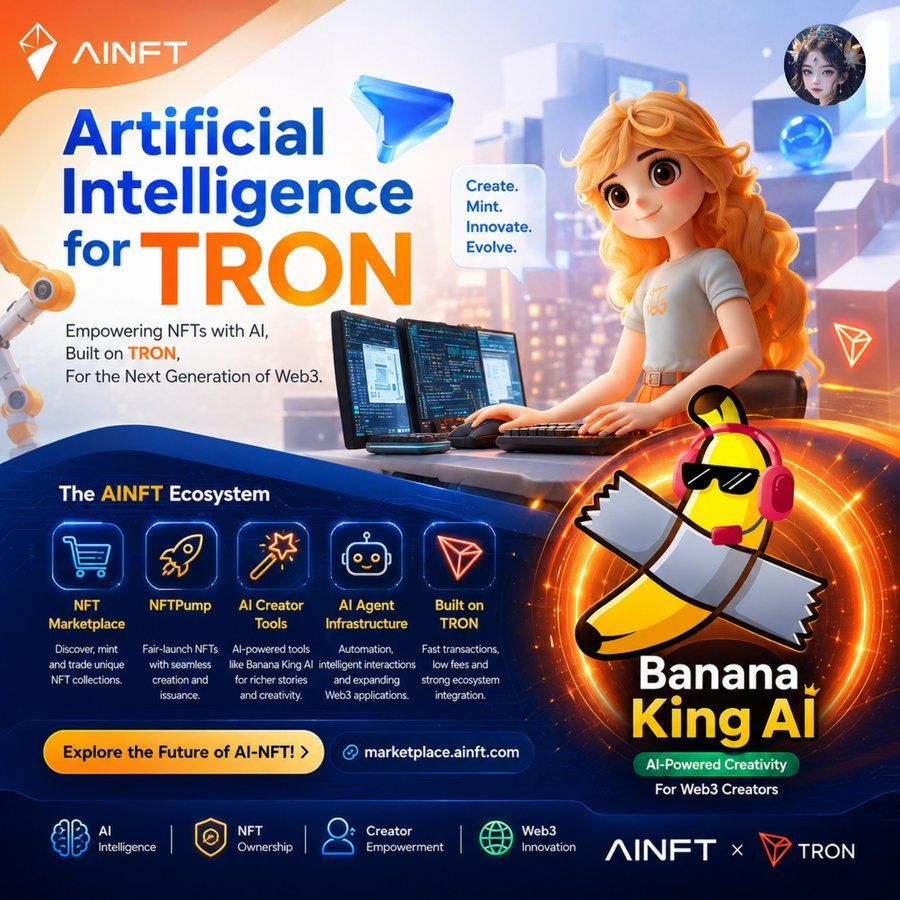
Instead of building only another NFT marketplace, AINFT is bringing together NFT trading, AI-powered creation, fair-launch infrastructure, and AI agents into a broader digital-asset ecosystem.
𝗙𝗿𝗼𝗺 𝗢𝘄𝗻𝗲𝗿𝘀𝗵𝗶𝗽 𝘁𝗼 𝗨𝘁𝗶𝗹𝗶𝘁𝘆
A traditional NFT can represent an image, membership, character, or collectible.
AINFT explores what happens when that asset becomes part of a larger intelligent ecosystem.
Creators can discover and trade collections through the marketplace, while tools such as NFTPump can simplify NFT issuance and fair-launch creation.
AI-powered tools such as Banana King AI add another layer by helping creators develop richer concepts, stories, and digital experiences.
The most interesting direction, in my view, is the combination with AI agent infrastructure.
If NFTs can eventually interact with applications, respond to users, automate actions, or participate in on-chain environments, their role could move far beyond simple digital ownership.
@Justin Sun孙宇晨
@AINFTcom #AINFT #Tron
The NFT narrative is changing.
In the early days, NFTs were mainly about ownership, scarcity, and digital collectibles.
But the next stage of Web3 could be very different: digital assets that can create, interact, automate, and deliver real utility.
That is where AINFT is becoming particularly interesting within the TRON ecosystem.
Instead of building only another NFT marketplace, AINFT is bringing together NFT trading, AI-powered creation, fair-launch infrastructure, and AI agents into a broader digital-asset ecosystem.
𝗙𝗿𝗼𝗺 𝗢𝘄𝗻𝗲𝗿𝘀𝗵𝗶𝗽 𝘁𝗼 𝗨𝘁𝗶𝗹𝗶𝘁𝘆
A traditional NFT can represent an image, membership, character, or collectible.
AINFT explores what happens when that asset becomes part of a larger intelligent ecosystem.
Creators can discover and trade collections through the marketplace, while tools such as NFTPump can simplify NFT issuance and fair-launch creation.
AI-powered tools such as Banana King AI add another layer by helping creators develop richer concepts, stories, and digital experiences.
The most interesting direction, in my view, is the combination with AI agent infrastructure.
If NFTs can eventually interact with applications, respond to users, automate actions, or participate in on-chain environments, their role could move far beyond simple digital ownership.
@Justin Sun孙宇晨
@AINFTcom #AINFT #Tron
11
𝗔𝗜𝗡𝗙𝗧: 𝗪𝗵𝗲𝗿𝗲 𝗡𝗙𝗧𝘀 𝗦𝘁𝗼𝗽 𝗕𝗲𝗶𝗻𝗴 𝗦𝘁𝗮𝘁𝗶𝗰 𝗔𝘀𝘀𝗲𝘁𝘀 @AINFTcom
The NFT narrative is changing.
In the early days, NFTs were mainly about ownership, scarcity, and digital collectibles.
But the next stage of Web3 could be very different: digital assets that can create, interact, automate, and deliver real utility.
That is where AINFT is becoming particularly interesting within the TRON ecosystem.
Instead of building only another NFT marketplace, AINFT is bringing together NFT trading, AI-powered creation, fair-launch infrastructure, and AI agents into a broader digital-asset ecosystem.
𝗙𝗿𝗼𝗺 𝗢𝘄𝗻𝗲𝗿𝘀𝗵𝗶𝗽 𝘁𝗼 𝗨𝘁𝗶𝗹𝗶𝘁𝘆
A traditional NFT can represent an image, membership, character, or collectible.
AINFT explores what happens when that asset becomes part of a larger intelligent ecosystem.
Creators can discover and trade collections through the marketplace, while tools such as NFTPump can simplify NFT issuance and fair-launch creation.
AI-powered tools such as Banana King AI add another layer by helping creators develop richer concepts, stories, and digital experiences.
The most interesting direction, in my view, is the combination with AI agent infrastructure.
If NFTs can eventually interact with applications, respond to users, automate actions, or participate in on-chain environments, their role could move far beyond simple digital ownership.
@JustinSun
@AINFTcom #AINFT #Tron
𝗔𝗜𝗡𝗙𝗧: 𝗪𝗵𝗲𝗿𝗲 𝗡𝗙𝗧𝘀 𝗦𝘁𝗼𝗽 𝗕𝗲𝗶𝗻𝗴 𝗦𝘁𝗮𝘁𝗶𝗰 𝗔𝘀𝘀𝗲𝘁𝘀 @AINFTcom
The NFT narrative is changing.
In the early days, NFTs were mainly about ownership, scarcity, and digital collectibles.
But the next stage of Web3 could be very different: digital assets that can create, interact, automate, and deliver real utility.
That is where AINFT is becoming particularly interesting within the TRON ecosystem.
Instead of building only another NFT marketplace, AINFT is bringing together NFT trading, AI-powered creation, fair-launch infrastructure, and AI agents into a broader digital-asset ecosystem.
𝗙𝗿𝗼𝗺 𝗢𝘄𝗻𝗲𝗿𝘀𝗵𝗶𝗽 𝘁𝗼 𝗨𝘁𝗶𝗹𝗶𝘁𝘆
A traditional NFT can represent an image, membership, character, or collectible.
AINFT explores what happens when that asset becomes part of a larger intelligent ecosystem.
Creators can discover and trade collections through the marketplace, while tools such as NFTPump can simplify NFT issuance and fair-launch creation.
AI-powered tools such as Banana King AI add another layer by helping creators develop richer concepts, stories, and digital experiences.
The most interesting direction, in my view, is the combination with AI agent infrastructure.
If NFTs can eventually interact with applications, respond to users, automate actions, or participate in on-chain environments, their role could move far beyond simple digital ownership.
@Justin Sun孙宇晨
@AINFTcom #AINFT #Tron
The NFT narrative is changing.
In the early days, NFTs were mainly about ownership, scarcity, and digital collectibles.
But the next stage of Web3 could be very different: digital assets that can create, interact, automate, and deliver real utility.
That is where AINFT is becoming particularly interesting within the TRON ecosystem.
Instead of building only another NFT marketplace, AINFT is bringing together NFT trading, AI-powered creation, fair-launch infrastructure, and AI agents into a broader digital-asset ecosystem.
𝗙𝗿𝗼𝗺 𝗢𝘄𝗻𝗲𝗿𝘀𝗵𝗶𝗽 𝘁𝗼 𝗨𝘁𝗶𝗹𝗶𝘁𝘆
A traditional NFT can represent an image, membership, character, or collectible.
AINFT explores what happens when that asset becomes part of a larger intelligent ecosystem.
Creators can discover and trade collections through the marketplace, while tools such as NFTPump can simplify NFT issuance and fair-launch creation.
AI-powered tools such as Banana King AI add another layer by helping creators develop richer concepts, stories, and digital experiences.
The most interesting direction, in my view, is the combination with AI agent infrastructure.
If NFTs can eventually interact with applications, respond to users, automate actions, or participate in on-chain environments, their role could move far beyond simple digital ownership.
@Justin Sun孙宇晨
@AINFTcom #AINFT #Tron
1
11
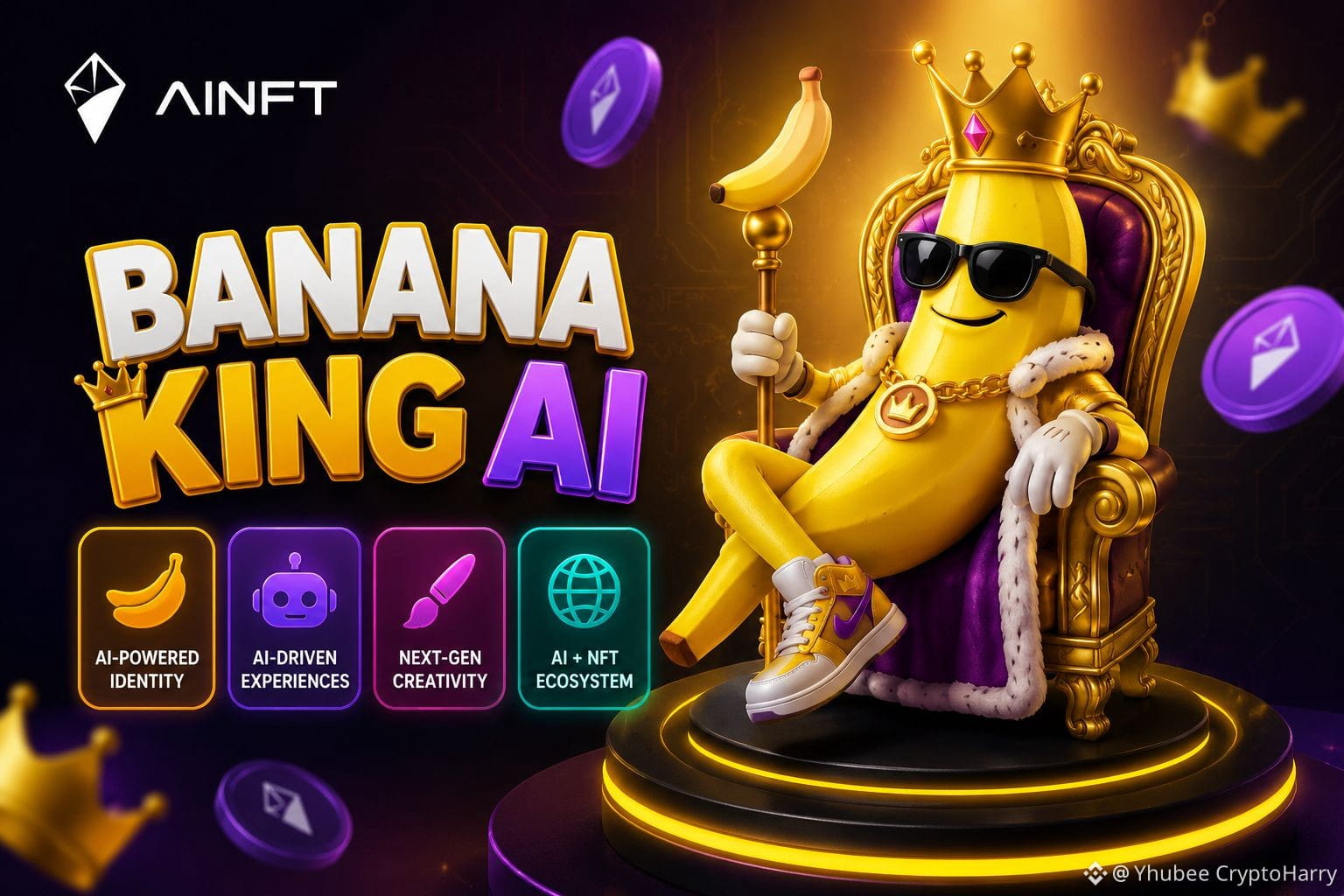
𝗧𝗛𝗘 𝗞𝗜𝗡𝗚𝗗𝗢𝗠 𝗢𝗙 𝗔𝗜 𝗝𝗨𝗦𝗧 𝗚𝗢𝗧 𝗔 𝗡𝗘𝗪 𝗥𝗨𝗟𝗘𝗥! 👑🤖
Imagine a digital character that combines AI, creativity, NFTs, and Web3 into one wild idea.
That’s the world of Banana King AI. 🍌👑
But this is about more than creating another character for the internet. Banana King AI represents an exploration of how artificial intelligence can turn imagination into interactive digital experiences.
Through the broader @AINFTcom ecosystem, the boundaries between AI-generated creativity, NFTs, and intelligent digital agents are being explored in new and unexpected ways.
👑 𝗛𝗲𝗿𝗲’𝘀 𝘄𝗵𝗮𝘁 𝗺𝗮𝗸𝗲𝘀 𝗕𝗮𝗻𝗮𝗻𝗮 𝗞𝗶𝗻𝗴 𝗔𝗜 𝘀𝘁𝗮𝗻𝗱 𝗼𝘂𝘁:
🍌 A fun and unforgettable AI-powered identity.
🤖 A look at what AI-driven digital experiences could become.
🎨 Creativity enhanced by next-generation technology.
🌐 A unique part of the growing AI + NFT ecosystem within AINFT.
And the most exciting part may still be ahead.
As AI keeps evolving, digital characters like Banana King AI could become more than something we simply view on a screen. They could participate in interactive experiences, help form communities, and become part of entirely new creative ecosystems.
So, the question is no longer just what AI can create.
It’s what happens when those creations start becoming interactive. 🍌
👑 Banana King AI is here, and AINFT is exploring what comes next.
Step into the ecosystem at AINFT.com.
The future of digital creativity might just be a little bananas.
@JustinSun
#AINFT #TRONEcoStar #BananaKingAI
𝗧𝗛𝗘 𝗞𝗜𝗡𝗚𝗗𝗢𝗠 𝗢𝗙 𝗔𝗜 𝗝𝗨𝗦𝗧 𝗚𝗢𝗧 𝗔 𝗡𝗘𝗪 𝗥𝗨𝗟𝗘𝗥! 👑🤖
Imagine a digital character that combines AI, creativity, NFTs, and Web3 into one wild idea.
That’s the world of Banana King AI. 🍌👑
But this is about more than creating another character for the internet. Banana King AI represents an exploration of how artificial intelligence can turn imagination into interactive digital experiences.
Through the broader @AINFTcom ecosystem, the boundaries between AI-generated creativity, NFTs, and intelligent digital agents are being explored in new and unexpected ways.
👑 𝗛𝗲𝗿𝗲’𝘀 𝘄𝗵𝗮𝘁 𝗺𝗮𝗸𝗲𝘀 𝗕𝗮𝗻𝗮𝗻𝗮 𝗞𝗶𝗻𝗴 𝗔𝗜 𝘀𝘁𝗮𝗻𝗱 𝗼𝘂𝘁:
🍌 A fun and unforgettable AI-powered identity.
🤖 A look at what AI-driven digital experiences could become.
🎨 Creativity enhanced by next-generation technology.
🌐 A unique part of the growing AI + NFT ecosystem within AINFT.
And the most exciting part may still be ahead.
As AI keeps evolving, digital characters like Banana King AI could become more than something we simply view on a screen. They could participate in interactive experiences, help form communities, and become part of entirely new creative ecosystems.
So, the question is no longer just what AI can create.
It’s what happens when those creations start becoming interactive. 🍌
👑 Banana King AI is here, and AINFT is exploring what comes next.
Step into the ecosystem at AINFT.com.
The future of digital creativity might just be a little bananas.
@Justin Sun孙宇晨
#AINFT #TRONEcoStar #BananaKingAI
Imagine a digital character that combines AI, creativity, NFTs, and Web3 into one wild idea.
That’s the world of Banana King AI. 🍌👑
But this is about more than creating another character for the internet. Banana King AI represents an exploration of how artificial intelligence can turn imagination into interactive digital experiences.
Through the broader @AINFTcom ecosystem, the boundaries between AI-generated creativity, NFTs, and intelligent digital agents are being explored in new and unexpected ways.
👑 𝗛𝗲𝗿𝗲’𝘀 𝘄𝗵𝗮𝘁 𝗺𝗮𝗸𝗲𝘀 𝗕𝗮𝗻𝗮𝗻𝗮 𝗞𝗶𝗻𝗴 𝗔𝗜 𝘀𝘁𝗮𝗻𝗱 𝗼𝘂𝘁:
🍌 A fun and unforgettable AI-powered identity.
🤖 A look at what AI-driven digital experiences could become.
🎨 Creativity enhanced by next-generation technology.
🌐 A unique part of the growing AI + NFT ecosystem within AINFT.
And the most exciting part may still be ahead.
As AI keeps evolving, digital characters like Banana King AI could become more than something we simply view on a screen. They could participate in interactive experiences, help form communities, and become part of entirely new creative ecosystems.
So, the question is no longer just what AI can create.
It’s what happens when those creations start becoming interactive. 🍌
👑 Banana King AI is here, and AINFT is exploring what comes next.
Step into the ecosystem at AINFT.com.
The future of digital creativity might just be a little bananas.
@Justin Sun孙宇晨
#AINFT #TRONEcoStar #BananaKingAI
25

AEON, Expanding What $NFT Can Do
A useful connection is taking shape as AEON and @AINFTcom bring $NFT into AI native payments and real world commerce. The partnership gives the token another path beyond traditional trading.
With AEON handling settlement, $NFT can connect users and AI systems with digital services and everyday merchant payments. It is another step toward making crypto assets more useful in the growing AI economy.
@AEON_Pay
#AEON #NFT #AINFT #AIPayments
AEON, Expanding What $NFT Can Do
A useful connection is taking shape as AEON and @AINFTcom bring $NFT into AI native payments and real world commerce. The partnership gives the token another path beyond traditional trading.
With AEON handling settlement, $NFT can connect users and AI systems with digital services and everyday merchant payments. It is another step toward making crypto assets more useful in the growing AI economy.
@AEON_Pay
#AEON #NFT #AINFT #AIPayments
A useful connection is taking shape as AEON and @AINFTcom bring $NFT into AI native payments and real world commerce. The partnership gives the token another path beyond traditional trading.
With AEON handling settlement, $NFT can connect users and AI systems with digital services and everyday merchant payments. It is another step toward making crypto assets more useful in the growing AI economy.
@AEON_Pay
#AEON #NFT #AINFT #AIPayments
2
541
·
--
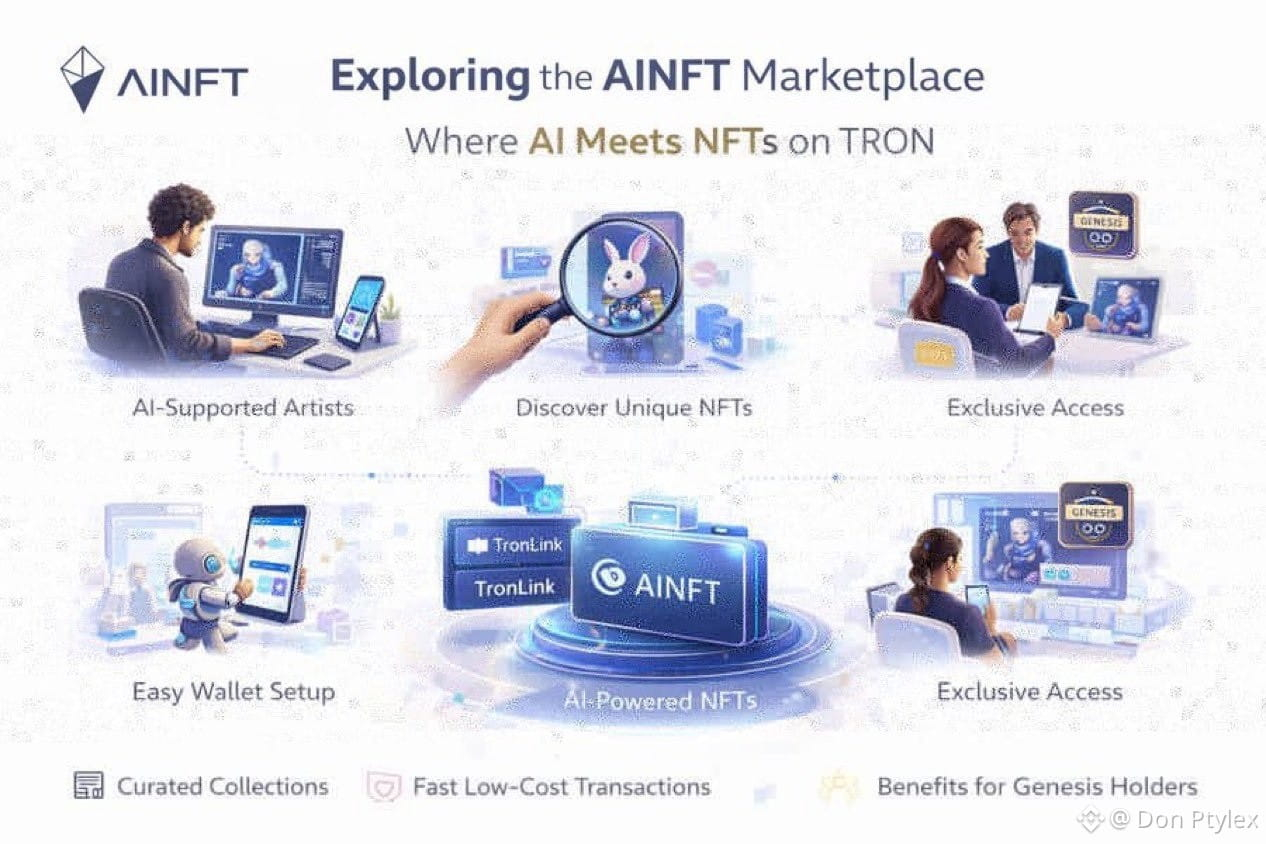
Most NFT marketplaces answer one question:
"Who owns this asset?"
AINFT is asking a far more interesting one:
"What if the asset could evolve?"
Built on the TRON ecosystem, AINFT is redefining NFTs by combining artificial intelligence with digital ownership, creating assets that are designed to do more than simply sit in a wallet.
The experience starts with simplicity.
🔹 Install TronLink
🔹 Connect your wallet
🔹 Explore the ecosystem
No complicated onboarding. No unnecessary barriers. Within minutes, you're navigating a marketplace that feels curated, intuitive, and built for discovery rather than endless scrolling.
That difference matters.
Instead of getting lost in thousands of low-quality listings, collectors can spend more time discovering meaningful projects, while creators gain better visibility for their work.
TRON's infrastructure makes the experience even better:
⚡ Fast transaction confirmations
💸 Low transaction fees
🚀 Smooth buying, selling, and minting
Removing friction keeps creativity and trading moving.
But AINFT goes beyond being an NFT marketplace.
It is building an ecosystem where creators are rewarded for innovation, communities become more engaged, and collectors unlock additional value through Genesis NFTs, including VIPClub access, exclusive drops, premium experiences, and early ecosystem opportunities.
Behind every NFT is another critical layer—storage.
Powered by BTFS, digital assets are stored across a decentralized network instead of relying on a single server, making NFT metadata more resilient, durable, and censorship-resistant.
And perhaps the most exciting innovation is still unfolding.
AINFT is exploring intelligent NFTs—digital assets that can evolve, interact, and integrate with AI-powered experiences.
Imagine NFTs that aren't static collectibles but programmable digital entities capable of adapting over time.
For creators, that means limitless creative possibilities.
For collectors, it introduces dynamic assets with utility beyond ownership.
@JustinSun
#AINFT #TRONEcoStar
Most NFT marketplaces answer one question:
"Who owns this asset?"
AINFT is asking a far more interesting one:
"What if the asset could evolve?"
Built on the TRON ecosystem, AINFT is redefining NFTs by combining artificial intelligence with digital ownership, creating assets that are designed to do more than simply sit in a wallet.
The experience starts with simplicity.
🔹 Install TronLink
🔹 Connect your wallet
🔹 Explore the ecosystem
No complicated onboarding. No unnecessary barriers. Within minutes, you're navigating a marketplace that feels curated, intuitive, and built for discovery rather than endless scrolling.
That difference matters.
Instead of getting lost in thousands of low-quality listings, collectors can spend more time discovering meaningful projects, while creators gain better visibility for their work.
TRON's infrastructure makes the experience even better:
⚡ Fast transaction confirmations
💸 Low transaction fees
🚀 Smooth buying, selling, and minting
Removing friction keeps creativity and trading moving.
But AINFT goes beyond being an NFT marketplace.
It is building an ecosystem where creators are rewarded for innovation, communities become more engaged, and collectors unlock additional value through Genesis NFTs, including VIPClub access, exclusive drops, premium experiences, and early ecosystem opportunities.
Behind every NFT is another critical layer—storage.
Powered by BTFS, digital assets are stored across a decentralized network instead of relying on a single server, making NFT metadata more resilient, durable, and censorship-resistant.
And perhaps the most exciting innovation is still unfolding.
AINFT is exploring intelligent NFTs—digital assets that can evolve, interact, and integrate with AI-powered experiences.
Imagine NFTs that aren't static collectibles but programmable digital entities capable of adapting over time.
For creators, that means limitless creative possibilities.
For collectors, it introduces dynamic assets with utility beyond ownership.
@Justin Sun孙宇晨
#AINFT #TRONEcoStar
"Who owns this asset?"
AINFT is asking a far more interesting one:
"What if the asset could evolve?"
Built on the TRON ecosystem, AINFT is redefining NFTs by combining artificial intelligence with digital ownership, creating assets that are designed to do more than simply sit in a wallet.
The experience starts with simplicity.
🔹 Install TronLink
🔹 Connect your wallet
🔹 Explore the ecosystem
No complicated onboarding. No unnecessary barriers. Within minutes, you're navigating a marketplace that feels curated, intuitive, and built for discovery rather than endless scrolling.
That difference matters.
Instead of getting lost in thousands of low-quality listings, collectors can spend more time discovering meaningful projects, while creators gain better visibility for their work.
TRON's infrastructure makes the experience even better:
⚡ Fast transaction confirmations
💸 Low transaction fees
🚀 Smooth buying, selling, and minting
Removing friction keeps creativity and trading moving.
But AINFT goes beyond being an NFT marketplace.
It is building an ecosystem where creators are rewarded for innovation, communities become more engaged, and collectors unlock additional value through Genesis NFTs, including VIPClub access, exclusive drops, premium experiences, and early ecosystem opportunities.
Behind every NFT is another critical layer—storage.
Powered by BTFS, digital assets are stored across a decentralized network instead of relying on a single server, making NFT metadata more resilient, durable, and censorship-resistant.
And perhaps the most exciting innovation is still unfolding.
AINFT is exploring intelligent NFTs—digital assets that can evolve, interact, and integrate with AI-powered experiences.
Imagine NFTs that aren't static collectibles but programmable digital entities capable of adapting over time.
For creators, that means limitless creative possibilities.
For collectors, it introduces dynamic assets with utility beyond ownership.
@Justin Sun孙宇晨
#AINFT #TRONEcoStar
5
·
--
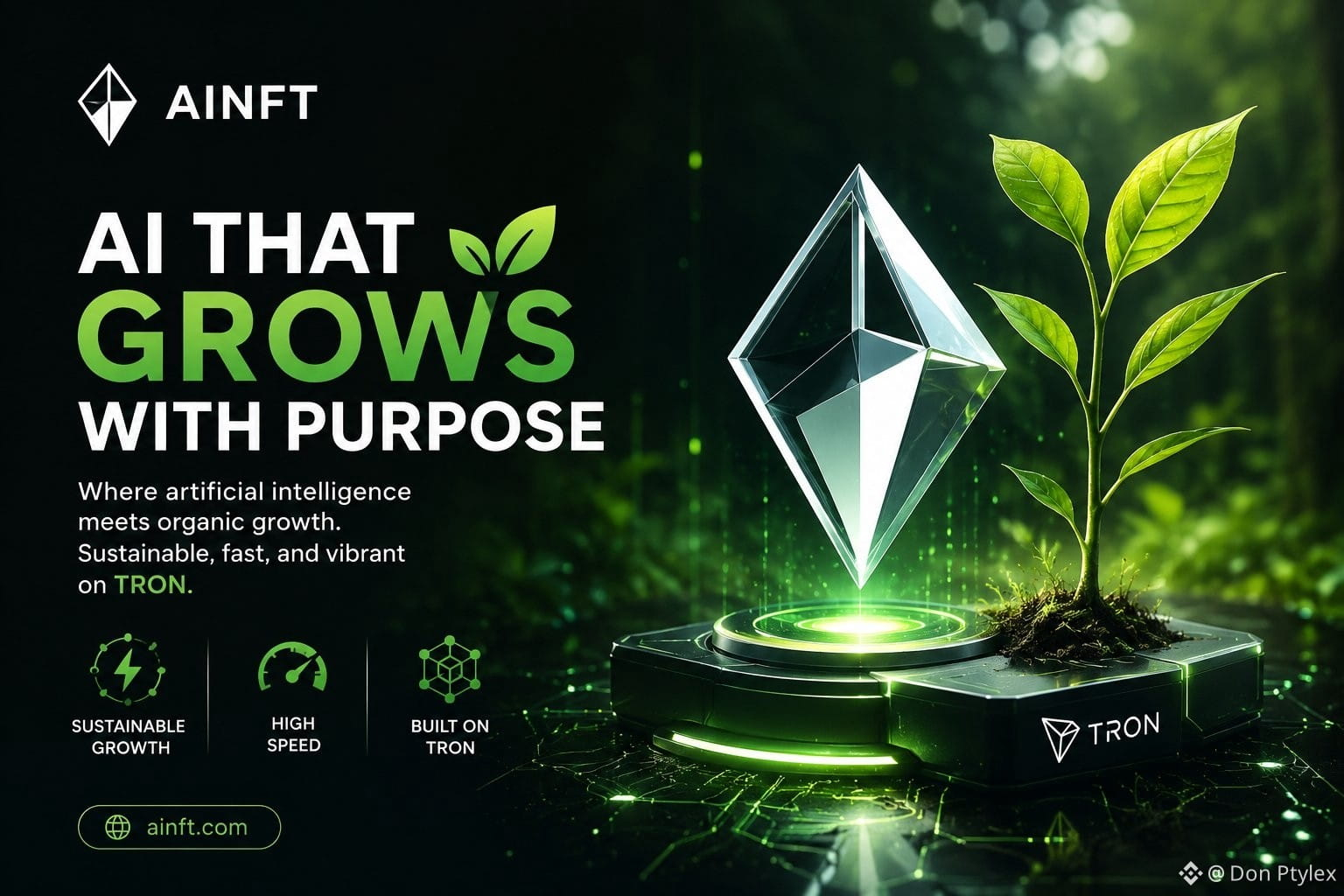
AI That Grows With Purpose
Artificial intelligence isn't just about faster computation—it's about creating systems that evolve, adapt, and generate lasting value. The future belongs to platforms that combine cutting-edge AI with scalable infrastructure, making innovation both accessible and sustainable.
Built on the speed, efficiency, and reliability of the TRON ecosystem, AINFT is helping redefine how developers, creators, and businesses interact with AI. From intelligent automation to decentralized AI applications, the focus is shifting from experimentation to real-world utility.
Every model trained, every workflow automated, and every idea brought to life contributes to an ecosystem where technology and growth move hand in hand.
🌿 Growth isn't measured by hype alone. It's measured by the communities built, the problems solved, and the opportunities unlocked for everyone.
Here's to another day of building smarter, innovating faster, and pushing the boundaries of what's possible with decentralized AI.
The future of AI isn't just intelligent—it's sustainable, open, and powered by Web3.
#AINFT #TRONEcoStar
@JustinSun
AI That Grows With Purpose
Artificial intelligence isn't just about faster computation—it's about creating systems that evolve, adapt, and generate lasting value. The future belongs to platforms that combine cutting-edge AI with scalable infrastructure, making innovation both accessible and sustainable.
Built on the speed, efficiency, and reliability of the TRON ecosystem, AINFT is helping redefine how developers, creators, and businesses interact with AI. From intelligent automation to decentralized AI applications, the focus is shifting from experimentation to real-world utility.
Every model trained, every workflow automated, and every idea brought to life contributes to an ecosystem where technology and growth move hand in hand.
🌿 Growth isn't measured by hype alone. It's measured by the communities built, the problems solved, and the opportunities unlocked for everyone.
Here's to another day of building smarter, innovating faster, and pushing the boundaries of what's possible with decentralized AI.
The future of AI isn't just intelligent—it's sustainable, open, and powered by Web3.
#AINFT #TRONEcoStar
@Justin Sun孙宇晨
Artificial intelligence isn't just about faster computation—it's about creating systems that evolve, adapt, and generate lasting value. The future belongs to platforms that combine cutting-edge AI with scalable infrastructure, making innovation both accessible and sustainable.
Built on the speed, efficiency, and reliability of the TRON ecosystem, AINFT is helping redefine how developers, creators, and businesses interact with AI. From intelligent automation to decentralized AI applications, the focus is shifting from experimentation to real-world utility.
Every model trained, every workflow automated, and every idea brought to life contributes to an ecosystem where technology and growth move hand in hand.
🌿 Growth isn't measured by hype alone. It's measured by the communities built, the problems solved, and the opportunities unlocked for everyone.
Here's to another day of building smarter, innovating faster, and pushing the boundaries of what's possible with decentralized AI.
The future of AI isn't just intelligent—it's sustainable, open, and powered by Web3.
#AINFT #TRONEcoStar
@Justin Sun孙宇晨
7

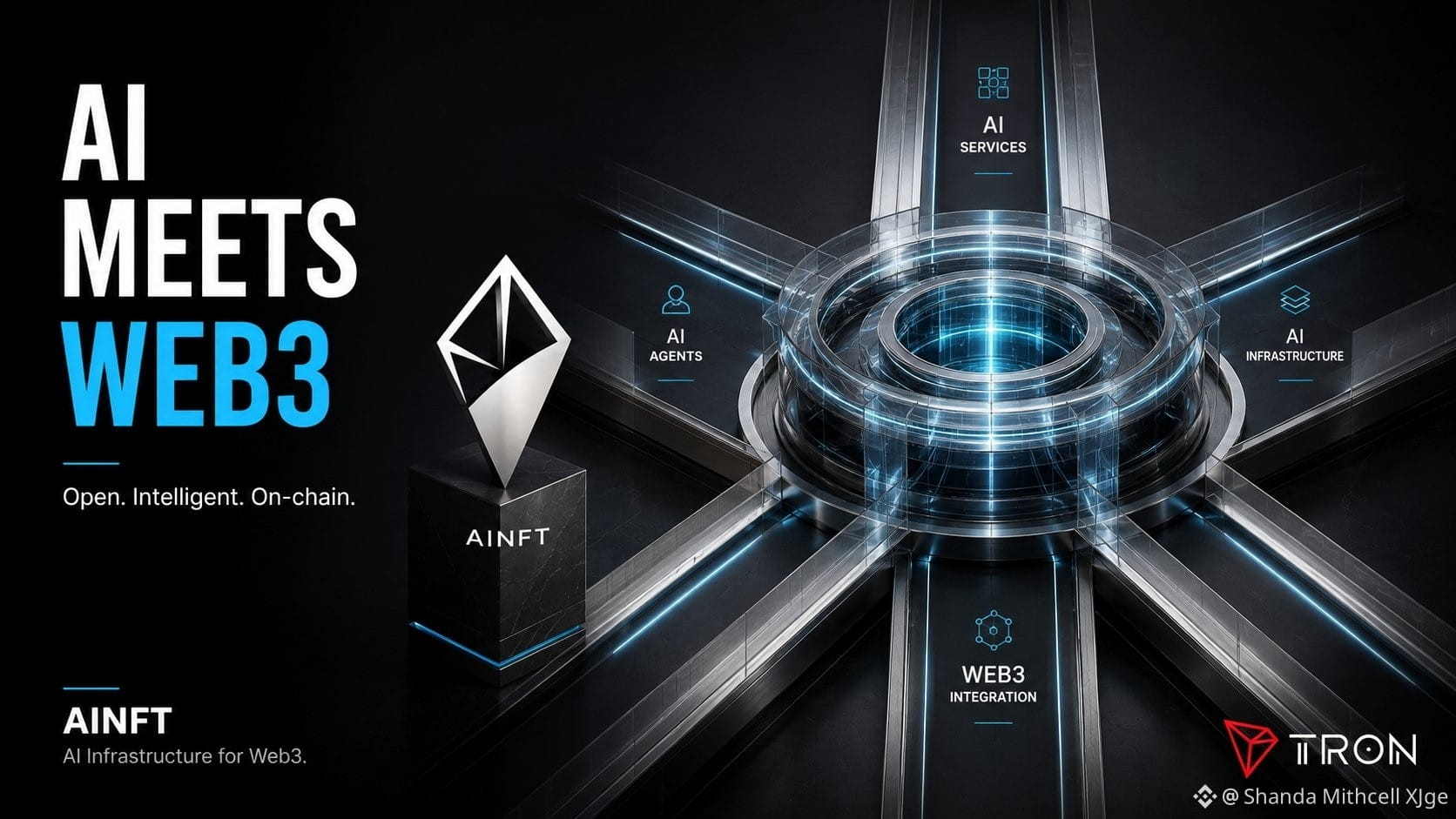
AI in Web3 is moving beyond chatbots.
The next step is building infrastructure that lets AI become part of the decentralized ecosystem itself.
That's the direction AINFT is taking.
While the team is teasing "something new", the bigger story is how the ecosystem continues to expand around AI-native tools, not just AI models.
From wallet-native AI services to decentralized model infrastructure like AINFT Grid, the goal is to make AI more open, composable, and integrated with Web3.
Meanwhile, the network already reflects meaningful adoption, with 2.15M+ holders and millions of on-chain transfers, showing that development is being matched by an active community.
If you're following where AI and blockchain intersect, AINFT is one ecosystem worth keeping an eye on.
@JustinSun #AINFT #TRON. #TRONEcoStar
AI in Web3 is moving beyond chatbots.
The next step is building infrastructure that lets AI become part of the decentralized ecosystem itself.
That's the direction AINFT is taking.
While the team is teasing "something new", the bigger story is how the ecosystem continues to expand around AI-native tools, not just AI models.
From wallet-native AI services to decentralized model infrastructure like AINFT Grid, the goal is to make AI more open, composable, and integrated with Web3.
Meanwhile, the network already reflects meaningful adoption, with 2.15M+ holders and millions of on-chain transfers, showing that development is being matched by an active community.
If you're following where AI and blockchain intersect, AINFT is one ecosystem worth keeping an eye on.
@Justin Sun孙宇晨 #AINFT #TRON. #TRONEcoStar
The next step is building infrastructure that lets AI become part of the decentralized ecosystem itself.
That's the direction AINFT is taking.
While the team is teasing "something new", the bigger story is how the ecosystem continues to expand around AI-native tools, not just AI models.
From wallet-native AI services to decentralized model infrastructure like AINFT Grid, the goal is to make AI more open, composable, and integrated with Web3.
Meanwhile, the network already reflects meaningful adoption, with 2.15M+ holders and millions of on-chain transfers, showing that development is being matched by an active community.
If you're following where AI and blockchain intersect, AINFT is one ecosystem worth keeping an eye on.
@Justin Sun孙宇晨 #AINFT #TRON. #TRONEcoStar
7
·
--
gm. someone in the gc dropped this AINFT stat sheet on me today and i had to double check i was reading it right.
$NFT put up $5.52M in 24h volume, up 21.59% from the day before, with liquidity holding steady at $4.31M. holder count is past 2.15M and total transfers just crossed 7.91M on TRON.
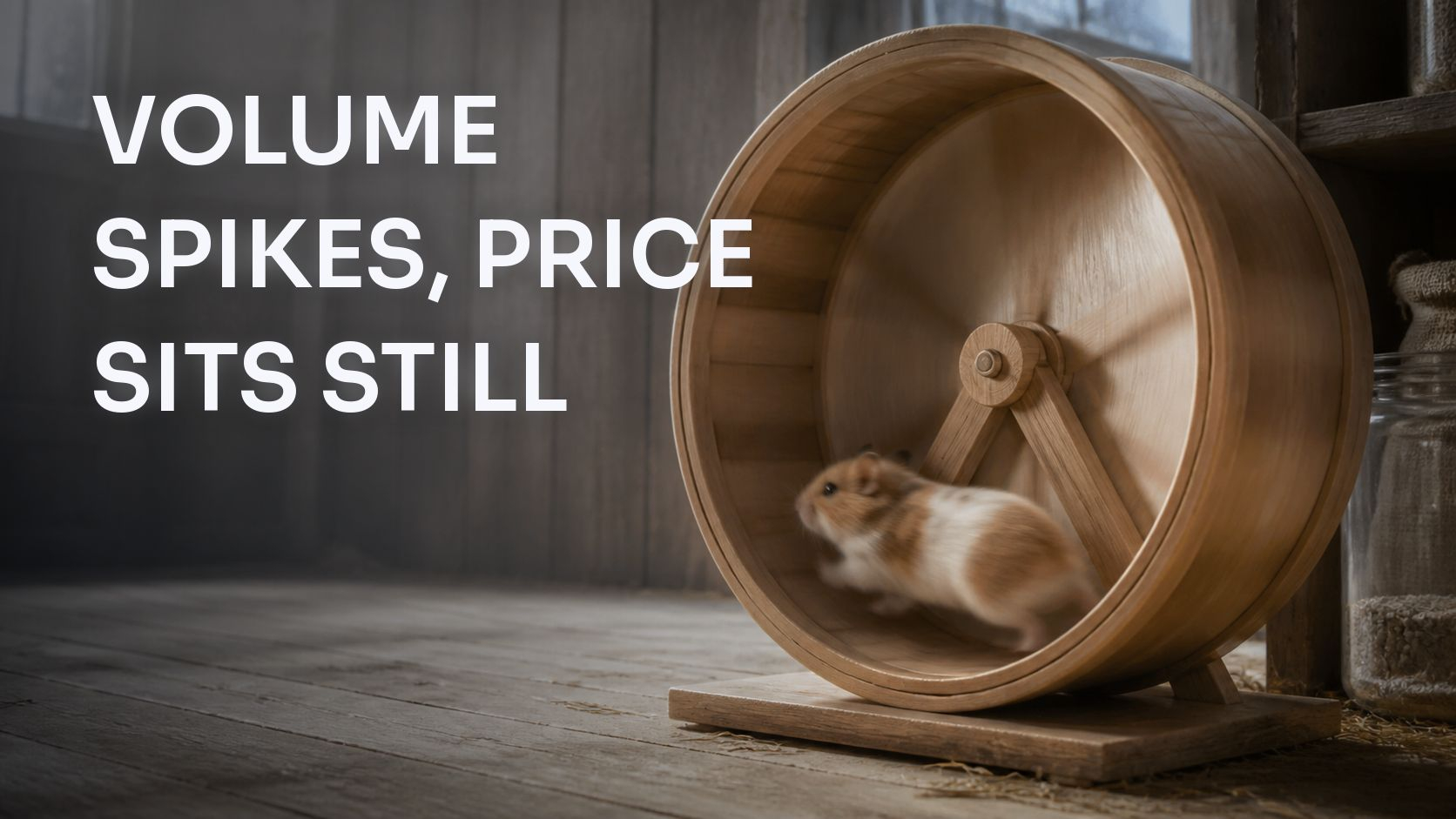
here's the part that bugs me. all that volume and the price only moved 1.56% this week, sitting at $0.062776. that's a token getting shuffled between people who already hold it.
the project is leaning hard into the APENFT to AINFT rebrand, pitching itself as an AI infrastructure play now instead of just an art chain. that's their own framing, not a verified pivot. i want to see the AI side actually ship before i call this more than a name change with good timing.
volume without price movement is either accumulation or exhaustion. we don't know which one yet.
#AINFT
gm. someone in the gc dropped this AINFT stat sheet on me today and i had to double check i was reading it right.
$NFT put up $5.52M in 24h volume, up 21.59% from the day before, with liquidity holding steady at $4.31M. holder count is past 2.15M and total transfers just crossed 7.91M on TRON.
here's the part that bugs me. all that volume and the price only moved 1.56% this week, sitting at $0.062776. that's a token getting shuffled between people who already hold it.
the project is leaning hard into the APENFT to AINFT rebrand, pitching itself as an AI infrastructure play now instead of just an art chain. that's their own framing, not a verified pivot. i want to see the AI side actually ship before i call this more than a name change with good timing.
volume without price movement is either accumulation or exhaustion. we don't know which one yet.
#AINFT
$NFT put up $5.52M in 24h volume, up 21.59% from the day before, with liquidity holding steady at $4.31M. holder count is past 2.15M and total transfers just crossed 7.91M on TRON.
here's the part that bugs me. all that volume and the price only moved 1.56% this week, sitting at $0.062776. that's a token getting shuffled between people who already hold it.
the project is leaning hard into the APENFT to AINFT rebrand, pitching itself as an AI infrastructure play now instead of just an art chain. that's their own framing, not a verified pivot. i want to see the AI side actually ship before i call this more than a name change with good timing.
volume without price movement is either accumulation or exhaustion. we don't know which one yet.
#AINFT
159

Article
💎 AINFT: La Fusión de Inteligencia Artificial y NFT que Está Revolucionando el Espacio1. ¿QUÉ ES AINFT Y POR QUÉ ESTÁ CAMBIANDO TODO?
En el mundo de las criptomonedas y la tecnología blockchain, constantemente vemos innovaciones que redefinen lo que creíamos posible. Pero pocas veces nos encontramos con un proyecto que no solo mejora lo existente, sino que crea una categoría completamente nueva. AINFT es precisamente eso: la fusión revolucionaria entre Inteligencia Artificial (IA) y Tokens No Fungibles (NFTs).🤖✨
Durante años, los NFTs han sido vistos mayormente como arte digital coleccionable, imágenes de perfil o piezas estáticas que se compran y venden. AINFT llega para romper ese molde por completo, demostrando que los tokens no fungibles pueden ser mucho más que archivos digitales: pueden ser activos vivos, inteligentes y en constante evolución.📈
2. ¿QUÉ ES EXACTAMENTE UN AINFT?
Un AINFT es un token no fungible que integra capacidades de inteligencia artificial directamente dentro del activo. A diferencia de un NFT tradicional —que es estático, no cambia y solo almacena información visual—, un AINFT puede:
- 🧠 Aprender de sus interacciones: Cuanto más interactúas con él, más se adapta y evoluciona.
- 🗣️ Responder y comunicarse: Puede generar texto, imágenes, audio o incluso video de forma autónoma.
- 🔄 Transformarse con el tiempo: Su apariencia, atributos y características no son fijas; cambian según su experiencia y su entorno.
- 🎯 Tomar decisiones autónomas: En ciertos casos, puede reaccionar de manera independiente a estímulos externos.
- 🌐 Conectar con otros sistemas: Puede integrarse con otras aplicaciones, plataformas y tecnologías dentro del ecosistema Web3.
3. LOS 5 PILARES DE AINFT — ¿POR QUÉ ES TAN REVOLUCIONARIO?
A. INTELIGENCIA QUE APRENDE:
Cada AINFT funciona con modelos de IA que mejoran con el tiempo. No es un código programado para hacer siempre lo mismo: es un sistema que procesa información, reconoce patrones y optimiza su propio rendimiento. Cuanto más se usa, más valioso se vuelve. Es como entrenar a un compañero digital que cada día sabe más. 📈
B. CREATIVIDAD SIN LÍMITES:
La IA integrada permite que cada AINFT genere contenido original de forma continua: nuevas imágenes, frases, diseños, música… lo que hoy tienes no será igual a lo que tendrás dentro de un mes. Tu AINFT se convierte en un creador digital autónomo, produciendo obras únicas que nadie más en el mundo posee. 🖼️✨
C. UTILIDAD REAL MÁS ALLÁ DEL COLECCIONISMO:
Los NFTs tradicionales sufrieron mucho por la falta de utilidad real. AINFT resuelve eso de raíz:
- 🕹️ Videojuegos: Personajes con personalidad propia, que aprenden tu estilo de juego y se adaptan a ti.
- 🤖 Asistentes digitales: Tu AINFT puede organizar tareas, dar recomendaciones o gestionar tus activos.
- 🏫 Educación: Tutores personalizados que se adaptan a tu ritmo de aprendizaje.
- 🏢 Empresas: Identidades digitales verificables, certificados inteligentes, activos de clientes que evolucionan.
- 🌐 Metaverso: Avatares que hablan, piensan y se comportan como seres humanos digitales.
D. PROPIEDAD TOTAL Y VERIFICABLE:
Al estar construido sobre blockchain, eres el único dueño de la inteligencia de tu AINFT. Nadie puede apagarla, modificarla o quitártela. La IA no pertenece a una empresa centralizada: te pertenece a ti. Eso abre un nuevo paradigma donde la inteligencia también puede ser propiedad personal. 🔐⚡
E. UN ECOSISTEMA EN EXPANSIÓN:
AINFT no es un proyecto aislado: es una infraestructura que conecta IA, blockchain, NFTs y aplicaciones descentralizadas. Cada día se suman nuevos desarrolladores, creadores y plataformas que integran esta tecnología, creando una red donde los AINFT pueden interactuar entre sí, intercambiar información y colaborar en tareas conjuntas. Es el nacimiento de una nueva economía digital basada en inteligencia distribuida. 🌍🤝
4. RIESGOS Y CONSIDERACIONES — SIEMPRE CON PRUDENCIA:
Ningún proyecto está exento de desafíos, y es importante ser transparente:
- ⚠️ Es una tecnología nueva: Aún estamos en los primeros pasos. Muchos casos de uso están en desarrollo y el camino puede tener obstáculos.
- ⚠️ Volatilidad del mercado: Como todo activo cripto, su precio puede experimentar subidas y bajadas importantes.
- ⚠️ Adopción masiva: Falta que el público general entienda y valore lo que es un AINFT. Eso tomará tiempo.
- ✅ Pero la tendencia es clara: La IA llegó para quedarse, y la combinación con blockchain es inevitable. Quienes entiendan esto desde ahora, estarán un paso adelante.
5. CONCLUSIÓN:
No se trata de reemplazar a los seres humanos, sino de crear herramientas que amplíen nuestras capacidades. Un AINFT puede ser tu asistente, tu compañero creativo, tu personaje de juego, tu identidad digital… y todo eso, de tu propiedad, sin intermediarios y sin límites. 🔮✨
El futuro no se trata de archivos estáticos que compramos y guardamos. El futuro son entidades digitales que viven, aprenden y crecen con nosotros. Y ese futuro, ya comenzó. 🚀💎
#AINFT #InteligenciaArtificial #NFT #Blockchain
$NFT
💎 AINFT: La Fusión de Inteligencia Artificial y NFT que Está Revolucionando el Espacio
1. ¿QUÉ ES AINFT Y POR QUÉ ESTÁ CAMBIANDO TODO?
En el mundo de las criptomonedas y la tecnología blockchain, constantemente vemos innovaciones que redefinen lo que creíamos posible. Pero pocas veces nos encontramos con un proyecto que no solo mejora lo existente, sino que crea una categoría completamente nueva. AINFT es precisamente eso: la fusión revolucionaria entre Inteligencia Artificial (IA) y Tokens No Fungibles (NFTs).🤖✨
Durante años, los NFTs han sido vistos mayormente como arte digital coleccionable, imágenes de perfil o piezas estáticas que se compran y venden. AINFT llega para romper ese molde por completo, demostrando que los tokens no fungibles pueden ser mucho más que archivos digitales: pueden ser activos vivos, inteligentes y en constante evolución.📈
2. ¿QUÉ ES EXACTAMENTE UN AINFT?
Un AINFT es un token no fungible que integra capacidades de inteligencia artificial directamente dentro del activo. A diferencia de un NFT tradicional —que es estático, no cambia y solo almacena información visual—, un AINFT puede:
- 🧠 Aprender de sus interacciones: Cuanto más interactúas con él, más se adapta y evoluciona.
- 🗣️ Responder y comunicarse: Puede generar texto, imágenes, audio o incluso video de forma autónoma.
- 🔄 Transformarse con el tiempo: Su apariencia, atributos y características no son fijas; cambian según su experiencia y su entorno.
- 🎯 Tomar decisiones autónomas: En ciertos casos, puede reaccionar de manera independiente a estímulos externos.
- 🌐 Conectar con otros sistemas: Puede integrarse con otras aplicaciones, plataformas y tecnologías dentro del ecosistema Web3.
3. LOS 5 PILARES DE AINFT — ¿POR QUÉ ES TAN REVOLUCIONARIO?
A. INTELIGENCIA QUE APRENDE:
Cada AINFT funciona con modelos de IA que mejoran con el tiempo. No es un código programado para hacer siempre lo mismo: es un sistema que procesa información, reconoce patrones y optimiza su propio rendimiento. Cuanto más se usa, más valioso se vuelve. Es como entrenar a un compañero digital que cada día sabe más. 📈
B. CREATIVIDAD SIN LÍMITES:
La IA integrada permite que cada AINFT genere contenido original de forma continua: nuevas imágenes, frases, diseños, música… lo que hoy tienes no será igual a lo que tendrás dentro de un mes. Tu AINFT se convierte en un creador digital autónomo, produciendo obras únicas que nadie más en el mundo posee. 🖼️✨
C. UTILIDAD REAL MÁS ALLÁ DEL COLECCIONISMO:
Los NFTs tradicionales sufrieron mucho por la falta de utilidad real. AINFT resuelve eso de raíz:
- 🕹️ Videojuegos: Personajes con personalidad propia, que aprenden tu estilo de juego y se adaptan a ti.
- 🤖 Asistentes digitales: Tu AINFT puede organizar tareas, dar recomendaciones o gestionar tus activos.
- 🏫 Educación: Tutores personalizados que se adaptan a tu ritmo de aprendizaje.
- 🏢 Empresas: Identidades digitales verificables, certificados inteligentes, activos de clientes que evolucionan.
- 🌐 Metaverso: Avatares que hablan, piensan y se comportan como seres humanos digitales.
D. PROPIEDAD TOTAL Y VERIFICABLE:
Al estar construido sobre blockchain, eres el único dueño de la inteligencia de tu AINFT. Nadie puede apagarla, modificarla o quitártela. La IA no pertenece a una empresa centralizada: te pertenece a ti. Eso abre un nuevo paradigma donde la inteligencia también puede ser propiedad personal. 🔐⚡
E. UN ECOSISTEMA EN EXPANSIÓN:
AINFT no es un proyecto aislado: es una infraestructura que conecta IA, blockchain, NFTs y aplicaciones descentralizadas. Cada día se suman nuevos desarrolladores, creadores y plataformas que integran esta tecnología, creando una red donde los AINFT pueden interactuar entre sí, intercambiar información y colaborar en tareas conjuntas. Es el nacimiento de una nueva economía digital basada en inteligencia distribuida. 🌍🤝
4. RIESGOS Y CONSIDERACIONES — SIEMPRE CON PRUDENCIA:
Ningún proyecto está exento de desafíos, y es importante ser transparente:
- ⚠️ Es una tecnología nueva: Aún estamos en los primeros pasos. Muchos casos de uso están en desarrollo y el camino puede tener obstáculos.
- ⚠️ Volatilidad del mercado: Como todo activo cripto, su precio puede experimentar subidas y bajadas importantes.
- ⚠️ Adopción masiva: Falta que el público general entienda y valore lo que es un AINFT. Eso tomará tiempo.
- ✅ Pero la tendencia es clara: La IA llegó para quedarse, y la combinación con blockchain es inevitable. Quienes entiendan esto desde ahora, estarán un paso adelante.
5. CONCLUSIÓN:
No se trata de reemplazar a los seres humanos, sino de crear herramientas que amplíen nuestras capacidades. Un AINFT puede ser tu asistente, tu compañero creativo, tu personaje de juego, tu identidad digital… y todo eso, de tu propiedad, sin intermediarios y sin límites. 🔮✨
El futuro no se trata de archivos estáticos que compramos y guardamos. El futuro son entidades digitales que viven, aprenden y crecen con nosotros. Y ese futuro, ya comenzó. 🚀💎
#AINFT #InteligenciaArtificial #NFT #Blockchain
$NFT
En el mundo de las criptomonedas y la tecnología blockchain, constantemente vemos innovaciones que redefinen lo que creíamos posible. Pero pocas veces nos encontramos con un proyecto que no solo mejora lo existente, sino que crea una categoría completamente nueva. AINFT es precisamente eso: la fusión revolucionaria entre Inteligencia Artificial (IA) y Tokens No Fungibles (NFTs).🤖✨
Durante años, los NFTs han sido vistos mayormente como arte digital coleccionable, imágenes de perfil o piezas estáticas que se compran y venden. AINFT llega para romper ese molde por completo, demostrando que los tokens no fungibles pueden ser mucho más que archivos digitales: pueden ser activos vivos, inteligentes y en constante evolución.📈
2. ¿QUÉ ES EXACTAMENTE UN AINFT?
Un AINFT es un token no fungible que integra capacidades de inteligencia artificial directamente dentro del activo. A diferencia de un NFT tradicional —que es estático, no cambia y solo almacena información visual—, un AINFT puede:
- 🧠 Aprender de sus interacciones: Cuanto más interactúas con él, más se adapta y evoluciona.
- 🗣️ Responder y comunicarse: Puede generar texto, imágenes, audio o incluso video de forma autónoma.
- 🔄 Transformarse con el tiempo: Su apariencia, atributos y características no son fijas; cambian según su experiencia y su entorno.
- 🎯 Tomar decisiones autónomas: En ciertos casos, puede reaccionar de manera independiente a estímulos externos.
- 🌐 Conectar con otros sistemas: Puede integrarse con otras aplicaciones, plataformas y tecnologías dentro del ecosistema Web3.
3. LOS 5 PILARES DE AINFT — ¿POR QUÉ ES TAN REVOLUCIONARIO?
A. INTELIGENCIA QUE APRENDE:
Cada AINFT funciona con modelos de IA que mejoran con el tiempo. No es un código programado para hacer siempre lo mismo: es un sistema que procesa información, reconoce patrones y optimiza su propio rendimiento. Cuanto más se usa, más valioso se vuelve. Es como entrenar a un compañero digital que cada día sabe más. 📈
B. CREATIVIDAD SIN LÍMITES:
La IA integrada permite que cada AINFT genere contenido original de forma continua: nuevas imágenes, frases, diseños, música… lo que hoy tienes no será igual a lo que tendrás dentro de un mes. Tu AINFT se convierte en un creador digital autónomo, produciendo obras únicas que nadie más en el mundo posee. 🖼️✨
C. UTILIDAD REAL MÁS ALLÁ DEL COLECCIONISMO:
Los NFTs tradicionales sufrieron mucho por la falta de utilidad real. AINFT resuelve eso de raíz:
- 🕹️ Videojuegos: Personajes con personalidad propia, que aprenden tu estilo de juego y se adaptan a ti.
- 🤖 Asistentes digitales: Tu AINFT puede organizar tareas, dar recomendaciones o gestionar tus activos.
- 🏫 Educación: Tutores personalizados que se adaptan a tu ritmo de aprendizaje.
- 🏢 Empresas: Identidades digitales verificables, certificados inteligentes, activos de clientes que evolucionan.
- 🌐 Metaverso: Avatares que hablan, piensan y se comportan como seres humanos digitales.
D. PROPIEDAD TOTAL Y VERIFICABLE:
Al estar construido sobre blockchain, eres el único dueño de la inteligencia de tu AINFT. Nadie puede apagarla, modificarla o quitártela. La IA no pertenece a una empresa centralizada: te pertenece a ti. Eso abre un nuevo paradigma donde la inteligencia también puede ser propiedad personal. 🔐⚡
E. UN ECOSISTEMA EN EXPANSIÓN:
AINFT no es un proyecto aislado: es una infraestructura que conecta IA, blockchain, NFTs y aplicaciones descentralizadas. Cada día se suman nuevos desarrolladores, creadores y plataformas que integran esta tecnología, creando una red donde los AINFT pueden interactuar entre sí, intercambiar información y colaborar en tareas conjuntas. Es el nacimiento de una nueva economía digital basada en inteligencia distribuida. 🌍🤝
4. RIESGOS Y CONSIDERACIONES — SIEMPRE CON PRUDENCIA:
Ningún proyecto está exento de desafíos, y es importante ser transparente:
- ⚠️ Es una tecnología nueva: Aún estamos en los primeros pasos. Muchos casos de uso están en desarrollo y el camino puede tener obstáculos.
- ⚠️ Volatilidad del mercado: Como todo activo cripto, su precio puede experimentar subidas y bajadas importantes.
- ⚠️ Adopción masiva: Falta que el público general entienda y valore lo que es un AINFT. Eso tomará tiempo.
- ✅ Pero la tendencia es clara: La IA llegó para quedarse, y la combinación con blockchain es inevitable. Quienes entiendan esto desde ahora, estarán un paso adelante.
5. CONCLUSIÓN:
No se trata de reemplazar a los seres humanos, sino de crear herramientas que amplíen nuestras capacidades. Un AINFT puede ser tu asistente, tu compañero creativo, tu personaje de juego, tu identidad digital… y todo eso, de tu propiedad, sin intermediarios y sin límites. 🔮✨
El futuro no se trata de archivos estáticos que compramos y guardamos. El futuro son entidades digitales que viven, aprenden y crecen con nosotros. Y ese futuro, ya comenzó. 🚀💎
#AINFT #InteligenciaArtificial #NFT #Blockchain
$NFT
7
1
145

·
--
🚀 Huge Move for Web3 AI: AINFT Just Integrated Gemini 3.5 Flash🔥
The race to merge AI + blockchain is accelerating fast, and AINFT is making sure users get frontier-level intelligence directly inside a permissionless Web3 environment.
Gemini 3.5 Flash is now fully live across the AINFT ecosystem — bringing faster responses, stronger reasoning, and powerful coding capabilities to both Web Chat and API users.
⚡ Why this matters:
• Blazing-fast inference for real-time conversations and workflows
• Stronger coding + complex reasoning abilities
• Better cost efficiency for developers and heavy AI users
• Wallet-powered access with no traditional gatekeepers
This isn’t just another AI integration.
AINFT is building a true decentralized AI gateway where users can access top-tier models like Gemini, Claude, Grok, and more directly through their wallets — no friction, no unnecessary barriers.
Whether you’re:
🧠 Brainstorming creative ideas
💻 Building AI agents
⚙️ Automating workflows
🎨 Creating Web3 applications
🚀 Developing next-gen dApps
…Gemini 3.5 Flash gives builders a faster and more capable toolset to work with.
What makes this especially exciting is how perfectly it fits the future of AI-powered Web3 ecosystems like TRON and beyond.
Fast AI + decentralized ownership + open access = massive innovation potential.
AINFT continues pushing the boundaries by making frontier AI models accessible in a truly open and wallet-native way.
The future of decentralized AI infrastructure is heating up fast. ⚡
#AINFT #TRONEcoStar @JustinSun
@AINFTcom
🚀 Huge Move for Web3 AI: AINFT Just Integrated Gemini 3.5 Flash🔥
The race to merge AI + blockchain is accelerating fast, and AINFT is making sure users get frontier-level intelligence directly inside a permissionless Web3 environment.
Gemini 3.5 Flash is now fully live across the AINFT ecosystem — bringing faster responses, stronger reasoning, and powerful coding capabilities to both Web Chat and API users.
⚡ Why this matters:
• Blazing-fast inference for real-time conversations and workflows
• Stronger coding + complex reasoning abilities
• Better cost efficiency for developers and heavy AI users
• Wallet-powered access with no traditional gatekeepers
This isn’t just another AI integration.
AINFT is building a true decentralized AI gateway where users can access top-tier models like Gemini, Claude, Grok, and more directly through their wallets — no friction, no unnecessary barriers.
Whether you’re:
🧠 Brainstorming creative ideas
💻 Building AI agents
⚙️ Automating workflows
🎨 Creating Web3 applications
🚀 Developing next-gen dApps
…Gemini 3.5 Flash gives builders a faster and more capable toolset to work with.
What makes this especially exciting is how perfectly it fits the future of AI-powered Web3 ecosystems like TRON and beyond.
Fast AI + decentralized ownership + open access = massive innovation potential.
AINFT continues pushing the boundaries by making frontier AI models accessible in a truly open and wallet-native way.
The future of decentralized AI infrastructure is heating up fast. ⚡
#AINFT #TRONEcoStar @Justin Sun孙宇晨
@AINFTcom
The race to merge AI + blockchain is accelerating fast, and AINFT is making sure users get frontier-level intelligence directly inside a permissionless Web3 environment.
Gemini 3.5 Flash is now fully live across the AINFT ecosystem — bringing faster responses, stronger reasoning, and powerful coding capabilities to both Web Chat and API users.
⚡ Why this matters:
• Blazing-fast inference for real-time conversations and workflows
• Stronger coding + complex reasoning abilities
• Better cost efficiency for developers and heavy AI users
• Wallet-powered access with no traditional gatekeepers
This isn’t just another AI integration.
AINFT is building a true decentralized AI gateway where users can access top-tier models like Gemini, Claude, Grok, and more directly through their wallets — no friction, no unnecessary barriers.
Whether you’re:
🧠 Brainstorming creative ideas
💻 Building AI agents
⚙️ Automating workflows
🎨 Creating Web3 applications
🚀 Developing next-gen dApps
…Gemini 3.5 Flash gives builders a faster and more capable toolset to work with.
What makes this especially exciting is how perfectly it fits the future of AI-powered Web3 ecosystems like TRON and beyond.
Fast AI + decentralized ownership + open access = massive innovation potential.
AINFT continues pushing the boundaries by making frontier AI models accessible in a truly open and wallet-native way.
The future of decentralized AI infrastructure is heating up fast. ⚡
#AINFT #TRONEcoStar @Justin Sun孙宇晨
@AINFTcom
12
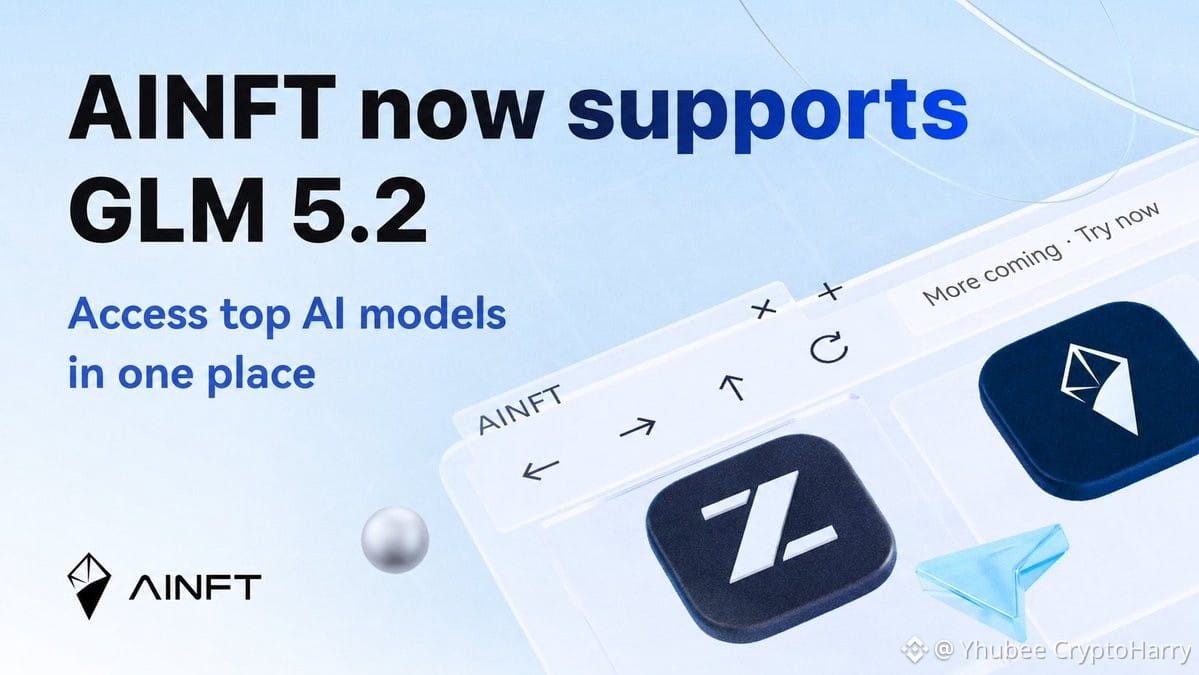
The AI landscape moves quickly, and staying current means having access to the latest models.
GLM 5.2 is now available on AINFT, with support for both API and Web Chat, making it easy to use the model directly or integrate it into your own applications.
What's available:
✅ GLM 5.2 on AINFT
✅ API and Web Chat access
✅ Function Calling support
✅ Access to 26+ leading AI models
✅ Seamless model comparison and switching
One of AINFT's strengths is convenience. Instead of managing multiple platforms, users can access models from OpenAI, Anthropic, Google, DeepSeek, MiniMax, Moonshot AI, Z.ai, and more from a single interface.
For developers, creators, researchers, and AI enthusiasts, that means faster testing, easier experimentation, and greater flexibility.
The future of AI isn't just about better models—it's about making them easier to access and use.
GLM 5.2 is the latest addition to AINFT's growing AI ecosystem.
Try it here: chat.ainft.com/chat
#AINFT #TRONEcoStar @TRONDAO
The AI landscape moves quickly, and staying current means having access to the latest models.
GLM 5.2 is now available on AINFT, with support for both API and Web Chat, making it easy to use the model directly or integrate it into your own applications.
What's available:
✅ GLM 5.2 on AINFT
✅ API and Web Chat access
✅ Function Calling support
✅ Access to 26+ leading AI models
✅ Seamless model comparison and switching
One of AINFT's strengths is convenience. Instead of managing multiple platforms, users can access models from OpenAI, Anthropic, Google, DeepSeek, MiniMax, Moonshot AI, Z.ai, and more from a single interface.
For developers, creators, researchers, and AI enthusiasts, that means faster testing, easier experimentation, and greater flexibility.
The future of AI isn't just about better models—it's about making them easier to access and use.
GLM 5.2 is the latest addition to AINFT's growing AI ecosystem.
Try it here: chat.ainft.com/chat
#AINFT #TRONEcoStar @TRON DAO
GLM 5.2 is now available on AINFT, with support for both API and Web Chat, making it easy to use the model directly or integrate it into your own applications.
What's available:
✅ GLM 5.2 on AINFT
✅ API and Web Chat access
✅ Function Calling support
✅ Access to 26+ leading AI models
✅ Seamless model comparison and switching
One of AINFT's strengths is convenience. Instead of managing multiple platforms, users can access models from OpenAI, Anthropic, Google, DeepSeek, MiniMax, Moonshot AI, Z.ai, and more from a single interface.
For developers, creators, researchers, and AI enthusiasts, that means faster testing, easier experimentation, and greater flexibility.
The future of AI isn't just about better models—it's about making them easier to access and use.
GLM 5.2 is the latest addition to AINFT's growing AI ecosystem.
Try it here: chat.ainft.com/chat
#AINFT #TRONEcoStar @TRON DAO
1
49
·
--
Bullish
$NFT 🔥 $AINFT – While Everyone Sleeps, Opportunity Grows 🔥
Most people chase hype.
Smart investors watch projects with strong liquidity, active communities, and long-term potential. 👀
💎 Massive market presence
💎 Millions in liquidity
💎 AI + NFT narrative still alive
💎 Built for those who think ahead
The market transfers wealth from the impatient to the patient.
🚀 Today's fear can become tomorrow's FOMO.
Will $AINFT surprise the market when the next wave of attention arrives?
📈 Some are selling. 📈 Some are watching. 📈 A few are quietly accumulating.
Which one are you? 🔥👇
#AINFT #NFT #AI #Crypto #Altcoin #CryptoGem #BinanceSquare #BullRun #DiamondHands #HODL #DYOR 🚀💎🔥
$NFT 🔥 $AINFT – While Everyone Sleeps, Opportunity Grows 🔥
Most people chase hype.
Smart investors watch projects with strong liquidity, active communities, and long-term potential. 👀
💎 Massive market presence
💎 Millions in liquidity
💎 AI + NFT narrative still alive
💎 Built for those who think ahead
The market transfers wealth from the impatient to the patient.
🚀 Today's fear can become tomorrow's FOMO.
Will $AINFT surprise the market when the next wave of attention arrives?
📈 Some are selling. 📈 Some are watching. 📈 A few are quietly accumulating.
Which one are you? 🔥👇
#AINFT #NFT #AI #Crypto #Altcoin #CryptoGem #BinanceSquare #BullRun #DiamondHands #HODL #DYOR 🚀💎🔥
Most people chase hype.
Smart investors watch projects with strong liquidity, active communities, and long-term potential. 👀
💎 Massive market presence
💎 Millions in liquidity
💎 AI + NFT narrative still alive
💎 Built for those who think ahead
The market transfers wealth from the impatient to the patient.
🚀 Today's fear can become tomorrow's FOMO.
Will $AINFT surprise the market when the next wave of attention arrives?
📈 Some are selling. 📈 Some are watching. 📈 A few are quietly accumulating.
Which one are you? 🔥👇
#AINFT #NFT #AI #Crypto #Altcoin #CryptoGem #BinanceSquare #BullRun #DiamondHands #HODL #DYOR 🚀💎🔥
2
36
·
--
✨ Big News from the AI x Web3 Frontier✨
AINFT has officially leveled up! 🚀 We’ve completed our seamless Solana integration, bringing effortless wallet logins and buttery-smooth experiences to the world of decentralized AI. No more friction — just pure, magical interaction between humans and intelligent agents on-chain.
This is more than a tech upgrade. It’s the bridge to a future where AI feels truly yours, borderless and unstoppable. 🌉
And we’re not stopping there! 🔥
We’re thrilled to join forces with TRON ecosystem and b.ai for the AI Pizza Day celebration! 🍕
Get ready for:
• 2,000 USDT Prize Pool
• 500,000 AI Points up for grabs
Whether you’re building, trading, or just vibing with AI agents, this is your moment to dive in, earn, and feast on the future.
Huge shoutout to the entire TRON ecosystem for the momentum — from JUST’s milestone celebrations to BitTorrent’s global dominance. The energy is electric.
#AINFT #TRONEcoStar
@JustinSun
@AINFTcom
✨ Big News from the AI x Web3 Frontier✨
AINFT has officially leveled up! 🚀 We’ve completed our seamless Solana integration, bringing effortless wallet logins and buttery-smooth experiences to the world of decentralized AI. No more friction — just pure, magical interaction between humans and intelligent agents on-chain.
This is more than a tech upgrade. It’s the bridge to a future where AI feels truly yours, borderless and unstoppable. 🌉
And we’re not stopping there! 🔥
We’re thrilled to join forces with TRON ecosystem and b.ai for the AI Pizza Day celebration! 🍕
Get ready for:
• 2,000 USDT Prize Pool
• 500,000 AI Points up for grabs
Whether you’re building, trading, or just vibing with AI agents, this is your moment to dive in, earn, and feast on the future.
Huge shoutout to the entire TRON ecosystem for the momentum — from JUST’s milestone celebrations to BitTorrent’s global dominance. The energy is electric.
#AINFT #TRONEcoStar
@Justin Sun孙宇晨
@AINFTcom
AINFT has officially leveled up! 🚀 We’ve completed our seamless Solana integration, bringing effortless wallet logins and buttery-smooth experiences to the world of decentralized AI. No more friction — just pure, magical interaction between humans and intelligent agents on-chain.
This is more than a tech upgrade. It’s the bridge to a future where AI feels truly yours, borderless and unstoppable. 🌉
And we’re not stopping there! 🔥
We’re thrilled to join forces with TRON ecosystem and b.ai for the AI Pizza Day celebration! 🍕
Get ready for:
• 2,000 USDT Prize Pool
• 500,000 AI Points up for grabs
Whether you’re building, trading, or just vibing with AI agents, this is your moment to dive in, earn, and feast on the future.
Huge shoutout to the entire TRON ecosystem for the momentum — from JUST’s milestone celebrations to BitTorrent’s global dominance. The energy is electric.
#AINFT #TRONEcoStar
@Justin Sun孙宇晨
@AINFTcom
41
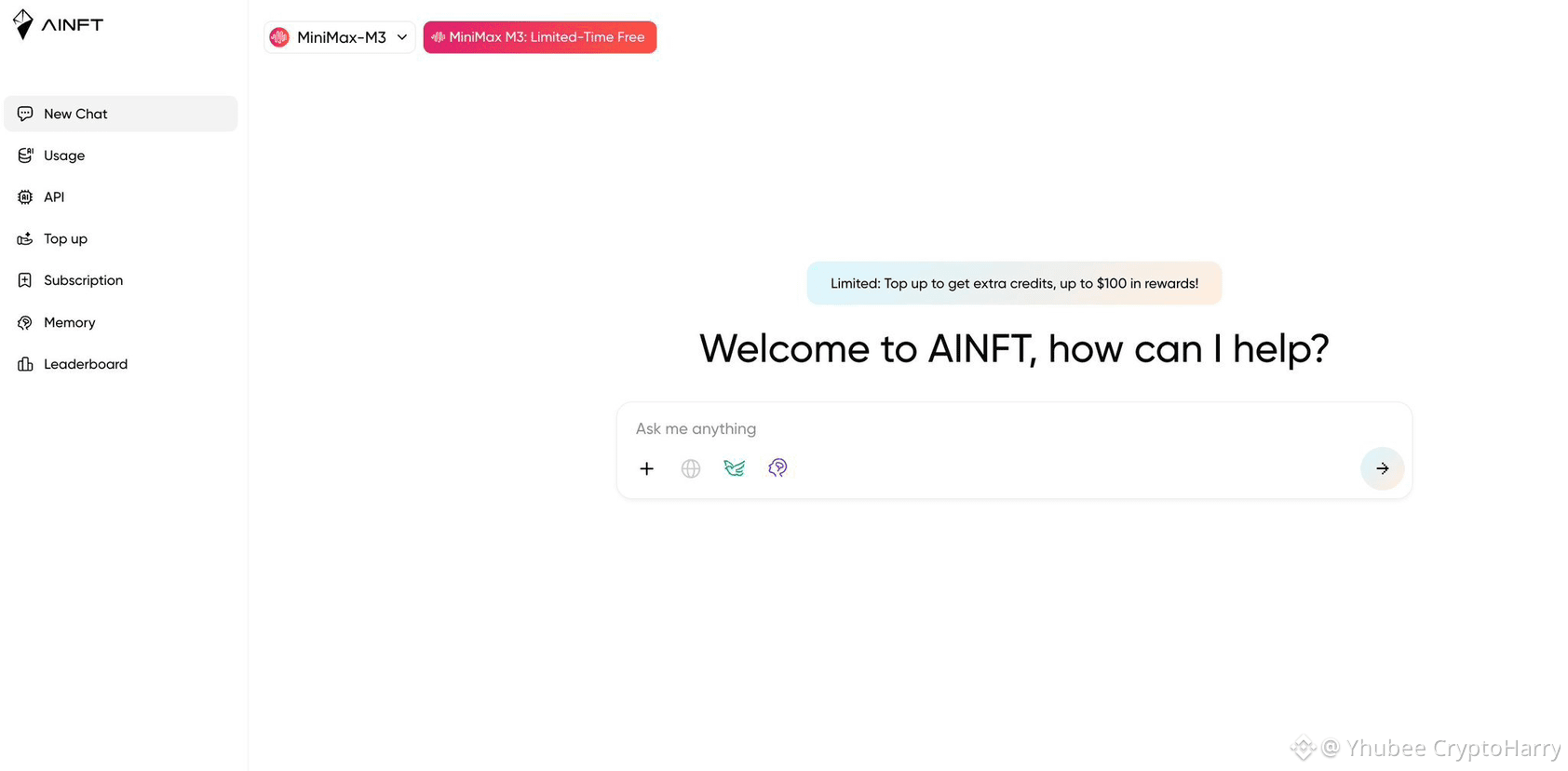
AINFT is opening limited-time free access to MiniMax M3, bringing advanced multimodal AI tools closer to creators, developers, and Web3 builders.
As part of the B.AI ecosystem, this initiative focuses on reducing barriers to AI adoption while expanding access to next-generation capabilities.
What users get:
🎁 7 days free access to MiniMax M3
💎 Up to 1,000,000 free credits for eligible new users
🚀 Deposit incentives to extend usage benefits
🤖 Advanced AI for content, coding, research, automation, and creative workflows
🌐 Built for developers, creators, entrepreneurs, and Web3 innovation
This campaign goes beyond free access, it enables real experimentation with powerful AI tools that can speed up building, improve creativity, and unlock new product ideas without upfront cost barriers.
A simple entry point into the next wave of AI-driven creation.
#AINFT #TRON #TRONEcoStar @JustinSun
AINFT is opening limited-time free access to MiniMax M3, bringing advanced multimodal AI tools closer to creators, developers, and Web3 builders.
As part of the B.AI ecosystem, this initiative focuses on reducing barriers to AI adoption while expanding access to next-generation capabilities.
What users get:
🎁 7 days free access to MiniMax M3
💎 Up to 1,000,000 free credits for eligible new users
🚀 Deposit incentives to extend usage benefits
🤖 Advanced AI for content, coding, research, automation, and creative workflows
🌐 Built for developers, creators, entrepreneurs, and Web3 innovation
This campaign goes beyond free access, it enables real experimentation with powerful AI tools that can speed up building, improve creativity, and unlock new product ideas without upfront cost barriers.
A simple entry point into the next wave of AI-driven creation.
#AINFT #TRON #TRONEcoStar @Justin Sun孙宇晨
As part of the B.AI ecosystem, this initiative focuses on reducing barriers to AI adoption while expanding access to next-generation capabilities.
What users get:
🎁 7 days free access to MiniMax M3
💎 Up to 1,000,000 free credits for eligible new users
🚀 Deposit incentives to extend usage benefits
🤖 Advanced AI for content, coding, research, automation, and creative workflows
🌐 Built for developers, creators, entrepreneurs, and Web3 innovation
This campaign goes beyond free access, it enables real experimentation with powerful AI tools that can speed up building, improve creativity, and unlock new product ideas without upfront cost barriers.
A simple entry point into the next wave of AI-driven creation.
#AINFT #TRON #TRONEcoStar @Justin Sun孙宇晨
1
83
·
--
⚽ The world plays. The future builds.
As the world gears up for the FIFA World Cup 2026 — the ultimate stage of passion, skill, and unity — a different kind of game is unfolding behind the scenes.
One where innovation doesn’t just entertain millions… it powers the next era of intelligence.
That’s the message from AINFT.
From the roar of the stadium to the quiet hum of decentralized compute networks, AINFT (evolved from APENFT on TRON DAO) is bridging two worlds:
• The human spirit of creation (football, art, culture)
• The machine intelligence of tomorrow (AI agents, on-chain models, autonomous ecosystems)
Why this matters:
AINFT is building the infrastructure layer for an intelligence-driven internet on TRON DAO:
✅ Decentralized AI compute — open, scalable, accessible
✅ On-chain attribution for models, data & contributions
✅ Autonomous AI agents that can create, trade, govern & interact
✅ Intelligent digital assets that evolve beyond static NFTs
Imagine AI creators generating dynamic football art, agents managing fan communities, and intelligent systems rewarding real-world passion with on-chain value.
The pitch is global. The builders are decentralized. The future is being tokenized.
Welcome to the game. Welcome to AINFT.
🔗 Dive in: AINFT Official
#AINFT #TRONEcoStar
@AINFTcom @JustinSun
⚽ The world plays. The future builds.
As the world gears up for the FIFA World Cup 2026 — the ultimate stage of passion, skill, and unity — a different kind of game is unfolding behind the scenes.
One where innovation doesn’t just entertain millions… it powers the next era of intelligence.
That’s the message from AINFT.
From the roar of the stadium to the quiet hum of decentralized compute networks, AINFT (evolved from APENFT on TRON DAO) is bridging two worlds:
• The human spirit of creation (football, art, culture)
• The machine intelligence of tomorrow (AI agents, on-chain models, autonomous ecosystems)
Why this matters:
AINFT is building the infrastructure layer for an intelligence-driven internet on TRON DAO:
✅ Decentralized AI compute — open, scalable, accessible
✅ On-chain attribution for models, data & contributions
✅ Autonomous AI agents that can create, trade, govern & interact
✅ Intelligent digital assets that evolve beyond static NFTs
Imagine AI creators generating dynamic football art, agents managing fan communities, and intelligent systems rewarding real-world passion with on-chain value.
The pitch is global. The builders are decentralized. The future is being tokenized.
Welcome to the game. Welcome to AINFT.
🔗 Dive in: AINFT Official
#AINFT #TRONEcoStar
@AINFTcom @Justin Sun孙宇晨
As the world gears up for the FIFA World Cup 2026 — the ultimate stage of passion, skill, and unity — a different kind of game is unfolding behind the scenes.
One where innovation doesn’t just entertain millions… it powers the next era of intelligence.
That’s the message from AINFT.
From the roar of the stadium to the quiet hum of decentralized compute networks, AINFT (evolved from APENFT on TRON DAO) is bridging two worlds:
• The human spirit of creation (football, art, culture)
• The machine intelligence of tomorrow (AI agents, on-chain models, autonomous ecosystems)
Why this matters:
AINFT is building the infrastructure layer for an intelligence-driven internet on TRON DAO:
✅ Decentralized AI compute — open, scalable, accessible
✅ On-chain attribution for models, data & contributions
✅ Autonomous AI agents that can create, trade, govern & interact
✅ Intelligent digital assets that evolve beyond static NFTs
Imagine AI creators generating dynamic football art, agents managing fan communities, and intelligent systems rewarding real-world passion with on-chain value.
The pitch is global. The builders are decentralized. The future is being tokenized.
Welcome to the game. Welcome to AINFT.
🔗 Dive in: AINFT Official
#AINFT #TRONEcoStar
@AINFTcom @Justin Sun孙宇晨
10
·
--
Bearish
$NFT
{alpha}(CT_195TFczxzPhnThNSqr5by8tvxsdCFRRz6cPNq)
showing increasing bearish pressure after failing to hold higher intraday levels. Volume remains weak while price trades below short-term momentum zones, signaling possible continuation toward lower support areas.
Confirmed SHORT Entry: Below 0.0000002730
Targets: 0.0000002640 → 0.0000002560
Invalidation: Strong recovery above 0.0000002810
Sellers still control the short-term structure unless buyers reclaim resistance with volume confirmation.
#AINFT #CryptoSignals #NFT
$NFT
showing increasing bearish pressure after failing to hold higher intraday levels. Volume remains weak while price trades below short-term momentum zones, signaling possible continuation toward lower support areas.
Confirmed SHORT Entry: Below 0.0000002730
Targets: 0.0000002640 → 0.0000002560
Invalidation: Strong recovery above 0.0000002810
Sellers still control the short-term structure unless buyers reclaim resistance with volume confirmation.
#AINFT #CryptoSignals #NFT
showing increasing bearish pressure after failing to hold higher intraday levels. Volume remains weak while price trades below short-term momentum zones, signaling possible continuation toward lower support areas.
Confirmed SHORT Entry: Below 0.0000002730
Targets: 0.0000002640 → 0.0000002560
Invalidation: Strong recovery above 0.0000002810
Sellers still control the short-term structure unless buyers reclaim resistance with volume confirmation.
#AINFT #CryptoSignals #NFT
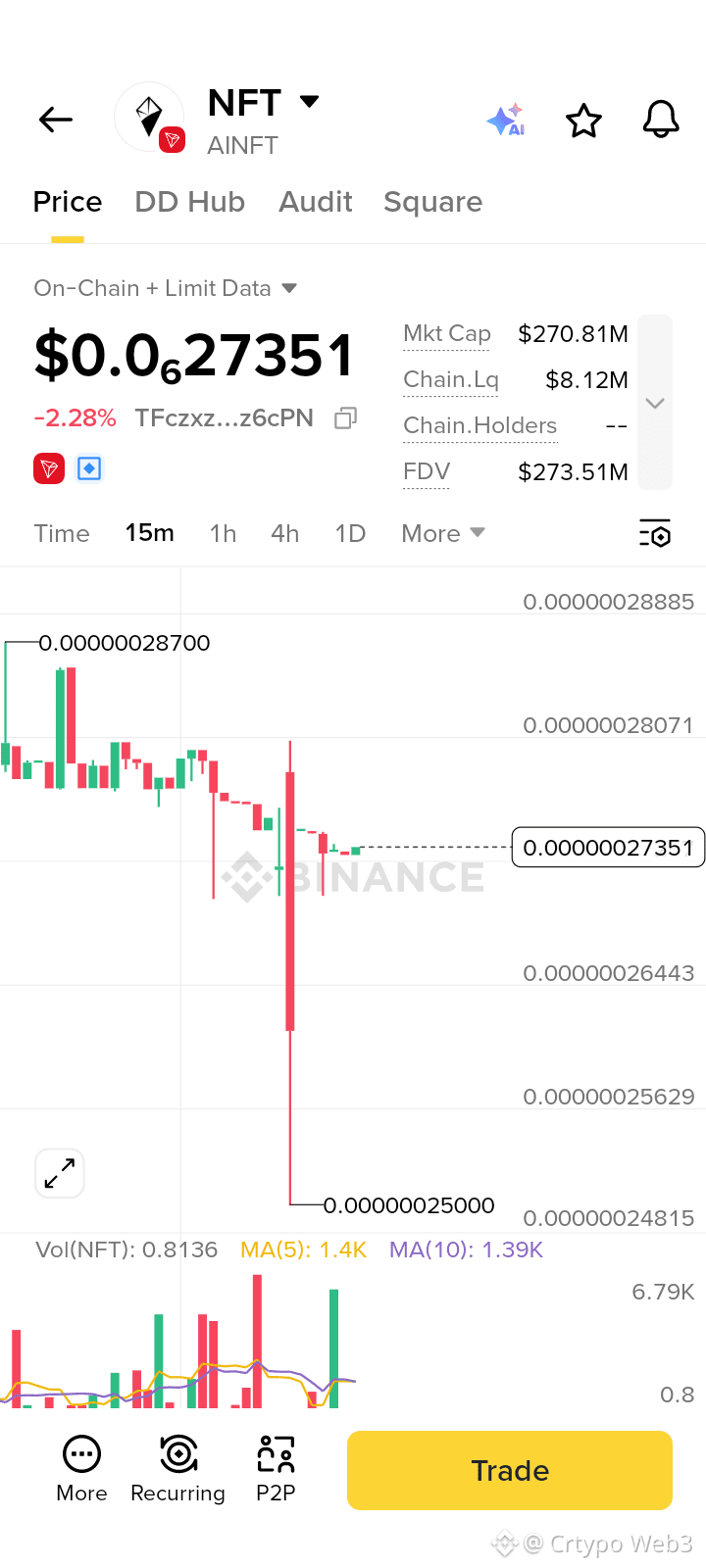
243
Log in to explore more content
Join global crypto users on Binance Square
⚡️ Get latest and useful information about crypto.
💬 Trusted by the world’s largest crypto exchange.
👍 Discover real insights from verified creators.
Email / Phone number
Trending Topics
1
#BitcoinReboundsTo$79K
17,830 views
149 Discussing
2
#SouthKoreaCryptoTaxDelayPetitionTops50000
4,221 views
134 Discussing
3
#SolanaTransactionV1GoesLiveOnMainnet
1,987 views
87 Discussing
4
#RussianCentralBankFlagsCryptoAsFinancialRisk
3,489 views
140 Discussing
5
#GrayscalePutsXRPAt26.11%InAdvisorPortfolio
11,186 views
232 Discussing
6
#PhiladelphiaSemiconductorIndexFalls5.9%
3,985 views
150 Discussing
7
#SECChairUrgesCongressToAdvanceClarityAct
12,164 views
145 Discussing
8
#FedHikeOddsRiseTo89%
98,309 views
1,156 Discussing
9
#RLUSDSupplyHitsRecord$2.442B
7,330 views
69 Discussing
10
#AvalancheIntegratesIntoUAEPassDigitalVault
85,024 views
1,062 Discussing